Support

Borovsk

About

Borovsk is a truly picturesque corner at the junction of the Kaluga and Moscow regions, nestled comfortably on the hills along the banks of the winding Protva River. The town looks as if it stepped off an old postcard: narrow streets, preserved merchant mansions, and the golden domes of churches create a unique appearance. Located just 100 kilometers from the capital, it is a perfect example of how soulful and profound Russia can be.

Despite its modest size and population of about 11,000 people, the town possesses a unique energy and the status of a district administrative center. It is a true open-air museum, where the centuries-old history of Borovsk is felt at literally every step. Founded back in the 14th century, it is known not only as an ancient outpost but also as the cradle of Old Belief, a place where spiritual traditions were formed and foundations were challenged.

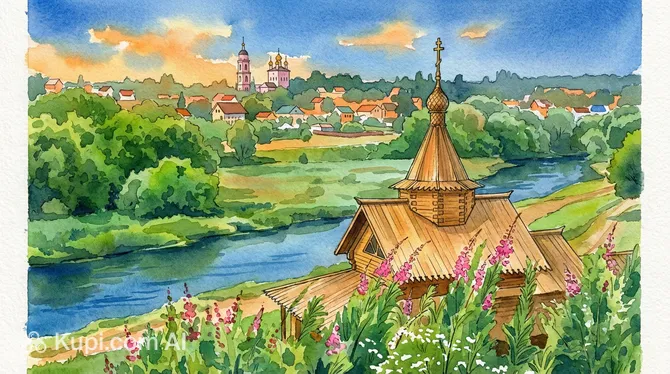
Borovsk. Illustration.
Source: Kupi.com AI

The main feature of Borovsk is the harmonious combination of nature and architecture. Strolling here, you will see unique carved wooden houses neighboring majestic monastery walls. Travelers come here to climb the high banks for breathtaking panoramas or to take a boat trip along the Protva, enjoying the silence of the surroundings. The town is also famous for its modern street art—wall murals depicting scenes from the past.

Borovsk enchants with its slow pace and cozy atmosphere. It is an ideal place for those who want to take a break from the city bustle, immerse themselves in provincial silence, and learn more about the region's cultural heritage. The town is always glad to see guests and is ready to reveal its secrets to everyone who decides to walk its hilly streets.

Weather Overview

Borovsk's climate can be described as humid continental, with distinct seasonality typical of central Russia. This makes the town attractive to visit all year round, although each season provides its own unique experiences. Expect a comfortable, moderately warm summer with occasional rain and a frosty, snowy winter.

The winter months bring stable cold: in January, the average temperature stays around -6.2°C, and at night it can drop to -8.4°C. This time is ideal for leisurely walks through the snow-covered streets, though you should dress warmly. Spring arrives gradually: March often retains a winter character with an average temperature of -1.8°C, but by May the air warms up to a pleasant 12°C, reaching 17.1°C on sunny days.

Summer is considered the best time for traveling in the region. The warmest month, July, pleases with an average temperature of about 18.7°C and daytime highs up to 23°C. However, be prepared for precipitation: rain is not uncommon in summer, especially in July, when up to 15 wet days are recorded. September brings a mild "Indian summer" (averaging 12.8°C), but by November it cools down to 0°C. To plan your perfect trip and choose suitable clothing, we recommend checking the weather in Borovsk for your visit dates in advance.

Average monthly temperature

Average monthly precipitation

Interesting Facts

In addition to the main attractions, Borovsk keeps many fascinating secrets and stories that reveal themselves only to inquisitive travelers. This town knows how to surprise with its deep past and creative present, offering guests something more than just beautiful views.
  • Open-air gallery. One of the town's most striking features is its unique street art. Local artists have turned the walls of ordinary houses into canvases, depicting historical scenes, portraits of famous residents, and landscapes. These frescoes create the effect of a "parallel city" where the past lives side-by-side with the present.

  • Cradle of theoretical astronautics. Borovsk played an important role in the life of Konstantin Tsiolkovsky. It was here that the great scientist lived, taught, and developed his first ideas about space flight before becoming a world-famous theorist. The house-museum where he lived is preserved in the town, allowing visitors to touch the genius's daily life.

  • Symbol of Old Believer resilience. The town's history is inextricably linked with the tragic pages of the church schism. Protopope Avvakum and the famous Boyarynya Morozova, who became a symbol of unwavering faith, were imprisoned here. A chapel was built in the town to commemorate these events.

  • Legends of underground tunnels. Like many ancient towns, Borovsk is shrouded in mystery. Local legends say that a network of ancient underground passages hides beneath the historical center, where merchant treasures may still be stored, waiting for their discoverers.

How to Get There

Borovsk is conveniently accessible from the capital, making a trip here quite easy and pleasant. The main flow of tourists arrives via transport hubs in Moscow or Kaluga, combining a train or plane with a bus or taxi. To plan your route in maximum detail, we recommend studying all the ways to get to the city.

Borovsk does not have its own airport, so travelers usually use the air hubs of Moscow or Kaluga. The nearest major hub is Vnukovo International Airport (IATA: VKO), located in Moscow. It is about 65 km from Borovsk, and the journey by car or taxi takes about 2 hours. This is perhaps the most convenient option for those flying via the capital.

Another popular option is Sheremetyevo Airport (IATA: SVO), the country's largest aviation hub. It is located in the north of Moscow, approximately 104 km from the destination. The journey from here to Borovsk will be longer, taking about 3 hours by taxi, depending on traffic. It is also worth considering the regional Grabtsevo Airport (IATA: KLF) in Kaluga. It is 73 km away, and the transfer from there will take about 2 hours and 10 minutes.

For clarity, here is a summary of the main airports:

AirportPassenger trafficDistance
Vnukovo16 mln66 km
Grabtsevo100 00073 km
Domodedovo15.6 mln93 km
Sheremetyevo36.3 mln104 km
Zhukovsky1.7 mln113 km

Rail travel is one of the most popular ways to get to these parts, although there is no railway station in Borovsk itself. The nearest and most convenient arrival point is Balabanovo station in the town of the same name, which is just 11.8 km from the center of Borovsk. From the station, you can quickly reach the town by minibus or taxi in about 40 minutes.

Trains to Balabanovo regularly depart from Moscow, from a major transport hub—Kievsky Railway Station. This is one of the capital's busiest stations, providing frequent and reliable service. You can also consider Nara station in the town of Naro-Fominsk (26.3 km from Borovsk) if the train schedule to Balabanovo does not suit you.

Below is information about the nearest railway stations:

StationPassenger trafficDistance
Balabanovo Station12 km
Obninskoye Station1.5 mln15 km
Maloyaroslavets Railway Station750 00022 km
Nara Station1.5 mln26 km
Kievsky Station25 mln35 km

Main Attractions

Borovsk is a town where every stone breathes history, and the streets resemble the pages of an open book. Here, ancient shrines stand alongside unique art objects, creating a one-of-a-kind atmosphere for walking. Here is a list of the main places you must see to feel the spirit of this ancient town.

The absolute landmark and spiritual center of the town is the St. Paphnutius Borovsk Monastery. Founded in the 15th century, this monastery impresses with its powerful white-stone walls and towers that protected the town for centuries. Tourists come here to enjoy the majestic architecture, visit the Cathedral of the Nativity of the Mother of God, and feel the peace that reigns in the monastery's well-kept grounds.

A unique feature of the town that sets it apart from other small Russian towns is the frescoes of Vladimir Ovchinnikov. A local artist turned the walls of ordinary residential buildings, fences, and administrative buildings into a real open-air gallery. The paintings depict scenes from Borovsk's past, famous residents, funny scenes, and philosophical poems. A walk through the town turns into an exciting quest to find these wall paintings.

For those interested in the history of science and space, the Tsiolkovsky Memorial House-Museum is a mandatory stop. It was in Borovsk that the great scientist lived for over 10 years, working as a teacher and creating his first theoretical works on interplanetary flights. The museum recreates the authentic atmosphere of that time, allowing visitors to touch the genius's daily life and learn how the dream of conquering space was born in a quiet province.

For the best views, head to the Church of the Intercession of the Holy Virgin on the High. This is a rare example of 17th-century wooden architecture, built without a single nail by local craftsmen. The church is located on a high hill, offering perhaps the most breathtaking panorama of the Protva River bend and the surrounding distances. It is an ideal place for landscape photography and quiet nature contemplation.

Local Cuisine

The gastronomic scene in Borovsk harmoniously complements its image as an ancient merchant town. You shouldn't look for trendy restaurants with molecular cuisine here; food in Borovsk is primarily a tribute to Russian traditions—hearty, simple, and home-style delicious. Local establishments focus on the historical atmosphere, offering guests dishes familiar from childhood but prepared with special warmth.

One of the main gastronomic experiences for tourists is visiting monastery refectories. Monastery pastries are famous throughout the area: be sure to try the hot pies with cabbage, potatoes, or apples, as well as the fresh, fragrant bread baked according to old recipes. This is an ideal option for a quick snack while walking between sights.

While in the Kaluga region, you cannot ignore the famous regional dessert—Kaluga dough. Contrary to the name, this is not a semi-finished product but a ready-made delicacy resembling spicy soft cookies or a thick paste. It is made from rye rusks, honey, and a set of spices (cinnamon, cloves, cardamom). In Borovsk, this treat can be found in souvenir shops and tea houses; it makes an excellent sweet gift from your trip.

As for drinks, the traditions of Russian tea drinking are honored here. Local cafes will offer you fragrant ivan-tea or herbal blends collected in environmentally friendly areas of the region. In the cold season, sbiten—an ancient hot drink based on honey and spices—warms you up perfectly, and in summer, tourists enjoy cool bread kvass or mead.

The food culture in the town is characterized by calmness and coziness. Most establishments are concentrated in the historical center, often in renovated merchant mansions. It is customary to eat slowly here, enjoying the view of ancient churches or the Protva River. Tourists often choose small tea houses or family cafes where they can taste rich shchi, hand-made pelmeni, or stew in pots.

Travel Tips

A trip to Borovsk is an opportunity to touch living history and take a break from the hustle and bustle of metropolises. To ensure your journey through this cozy corner, of which Russia has so many, goes perfectly and leaves only pleasant impressions, we have prepared a list of important practical recommendations.

  1. Clothing and footwear. Borovsk is located on hilly terrain, so comfortable shoes with a flat, non-slip sole are a must for comfortable walks. Given the large number of active churches and the monastery, women are recommended to have a head covering (scarf) and a skirt below the knees, while men should refrain from visiting holy sites in shorts and t-shirts.

  2. Transport. The historical center of the town is compact, and it is best to move around it on foot—this way you won't miss the famous wall frescoes. Public transport is represented by buses, but they run at intervals. For trips to remote attractions or the station, it is more convenient to use a taxi; popular Russian aggregators work here, but waiting for a car may take a bit longer than in large cities.

  3. Finances. Although bank cards are accepted in most supermarkets and cafes, we strongly recommend having cash with you. It will be needed for buying souvenirs from local craftsmen, paying at the market, church donations, or in small tea houses. ATMs are available, but they are mainly concentrated in the central part of the town.

  4. Health and safety. The town is very quiet and safe for tourists. However, it is worth noting that there may be no 24-hour pharmacies here, so prepare a small travel first-aid kit with necessary medications in advance. In the dark, some streets are poorly lit, so a charged phone with a flashlight will not be superfluous.

  5. Communication and navigation. Mobile connection and internet from major operators work stably. Nevertheless, we suggest downloading offline maps of the town before your trip. The streets of Borovsk are winding and sometimes confusing, and a navigator will help you not only find your way but also build a route to the most interesting paintings on the walls of houses.

  6. Local etiquette. Borovsk is a town with strong Old Believer and Orthodox traditions. A calm, respectful style of communication is accepted here. Greet shopkeepers and museum staff. On the grounds of the Paphnutius-Borovsk Monastery, behave with restraint, observe silence, and do not photograph monks without their personal permission.

  7. What to avoid. Under no circumstances should you damage the wall paintings or leave "autographs" on buildings. Vladimir Ovchinnikov's frescoes are the heart of modern Borovsk, and locals are very protective of their preservation. Also, avoid loud noise and bustle near residential houses in the historical center—tranquility is valued here.

  8. Pro tip. Be sure to plan a visit to the observation deck at the wooden church on the High closer to sunset. The view of the Protva River bend and the endless distances during the "golden hour" is the best place for memorable photos and a meditative end to the day.

Borovsk is a place where time flows at its own special pace. Follow these simple tips, show respect for local traditions, and the town will surely reciprocate, revealing its most secret mysteries and beauties.

Entertainment & Nightlife

Entertainment and nightlife in Borovsk have their own unique character, dictated by the rhythm of an ancient provincial town. If you are looking for loud night clubs with DJs, neon bar signs, and dancing until dawn, this town might surprise you with its silence. Borovsk falls asleep quite early, and "nightlife" here is, above all, cozy dinners, leisurely walks under the starry sky, and watching sunsets.

The center of evening attraction is not a specific "bar district," but the observation decks and the historical center. The main evening "show" of the town is the sunset on the High. Tourists and locals gather by the wooden church to watch the sun go down over the horizon, painting the Protva river valley and the monastery domes in golden tones. After sunset, life concentrates in a few cafes and restaurants that stay open until 10:00 PM or 11:00 PM.

Since the choice of establishments is limited, the guests themselves create the evening's atmosphere. There is no strict dress code or face control; the crowd consists of intellectual travelers, pilgrims, and local families. For evening leisure, it is worth paying attention to the restaurants at local hotels or cozy tea houses. For example, the tea house "On the High" is popular, where you can spend an evening over a cup of tea with a river view, or cafes in the town center serving Russian cuisine. Such places often play quiet music, and you can chat peacefully without the city noise.

Practical tips for the town at night:

  • Opening hours: Be prepared for the fact that most dining establishments close by 10:00 PM, and shops may close even earlier. Plan your dinner in advance.
  • Transport: Public transport does not run at night. If you stay late visiting or in a cafe, calling a taxi through an app can be problematic due to a shortage of cars. It is better to have the numbers of local taxi services handy.
  • Safety and lighting: Borovsk is a safe town, and you can walk here peacefully. However, street lighting in the private sector and on the outskirts can be sparse or non-existent. Be sure to bring a flashlight for night walks.

Daytime entertainment in Borovsk is cultural and educational. There are no large amusement parks or shopping malls with cinemas (the nearest are in neighboring Obninsk). The main daytime leisure activities include visiting the Museum of Local Lore, exploring exhibitions at the Museum and Exhibition Center, or walking the "pilgrim's path." For outdoor enthusiasts, paddleboarding on the Protva River is available in the warm season, allowing you to see the town from a completely new perspective.

Parks & Museums

Borovsk is a town where the boundaries between museum halls and natural landscapes are virtually erased. Here, green hills and the winding banks of the Protva River serve as natural scenery for ancient monuments, and the streets turn into art galleries. For tourists exploring what Russia has to offer in terms of small historical towns, Borovsk offers a harmonious combination of outdoor walks and a deep dive into culture.

Speaking of green zones, it is impossible not to mention the town's unique natural surroundings. The very name "Borovsk" comes from the word "bor" (pine forest), and centuries-old pine forests still embrace the town, creating a healing microclimate.

ETNOMIR Ethnographic Park-Museum is perhaps the largest and most impressive park in the town's vicinity. It is a huge open-air space where the culture, architecture, and daily life of different peoples of the world are presented on an area of 140 hectares. Here, in one day, you can visit a nomad's yurt, walk down a street of Old Europe, and look into a Russian hut. The park is ideal for family holidays: master classes and festivals are held here, and there are themed hotels.

For a quieter, more contemplative rest within the town limits, the Natural Landscape of the Tekizhensky Ravine is perfect. This is a picturesque green area with well-maintained paths, springs, and a font, located in the very heart of Borovsk. A walk here allows you to enjoy the silence of the forest and the singing of birds without leaving the town. This place is especially loved by locals for its coolness in the summer heat and the beauty of its autumn leaves.

The cultural life of the town is concentrated in its museums, which preserve the memory of great events and people.

The Borovsk Museum of History and Local Lore is located on the main square and is the key to understanding the town's complex fate. The exhibition covers periods from ancient archaeological finds to 19th-century merchant life and the tragic events of the War of 1812. Special attention is paid to the history of the Old Believers, which allows for a deeper understanding of the spiritual roots of this place.

The Museum and Exhibition Center (in the building of a former Old Believer cathedral) is a unique venue combining history and art. The building itself is an architectural monument from the beginning of the 20th century. Inside, exhibitions by contemporary artists, photographers, and decorative art masters are often held, and the permanent exhibition tells the story of the town's cultural code and its famous natives.

Among the architectural gems of the town, Merchant Shokin's Estate stands out. This wooden house with exquisite carving resembling lace is considered one of the most beautiful buildings in the town. It clearly demonstrates the skill of local architects of the past. It is also worth noting the Church of Boris and Gleb—a majestic 18th-century structure that did not close even during the Soviet years, preserving its ancient interiors and sacred atmosphere.

For those looking for corners hidden from tourists' eyes, we suggest finding the "Lace House" not by a map, but simply by wandering through the alleys around Lenin Street. And if you want to see the town as artists painted it, go down to the pedestrian bridge over the Protva early in the morning when the fog rises over the water—this is perhaps the most photogenic and authentic view of Borovsk.
Getting Around

Borovsk's transport system perfectly reflects its intimate and cozy character. Since the town is small and compact, there is no need for a complex network of subways, tram, or trolleybus lines. The main and only form of public transport consists of buses and fixed-route taxis (marshrutkas). They run on several internal routes, connecting the historical center with residential areas like Rosha and remote villages, and providing a vital link to the railway station in neighboring Balabanovo.

To move around the town, tourists most often use marshrutkas, which run quite regularly during the day. The most popular directions for travelers are the routes going from the central square (Lenin Square) to the St. Paphnutius Borovsk Monastery or towards the Institute of Animal Physiology. Transport usually consists of small-capacity buses (PAZ or foreign-made minibuses). Stops are marked with signs, but locals will always tell you the best place to stand to catch the right vehicle.

The fare payment system in Borovsk is simple and straightforward. There are no complex transport cards or multi-zone tickets as in metropolises. Payment is made directly to the driver upon entry. The fare for travel within the town is fixed and low. Although terminals for contactless payment with bank cards or smartphones have already appeared in many buses, we strongly recommend always having cash (small bills and coins) with you, as the equipment may work inconsistently, especially on suburban routes.

An important alternative to public transport is the taxi. Popular Russian aggregators (such as Yandex Go) operate in the town, making calling a car convenient and familiar for tourists. However, it should be noted that the number of cars on the line can be limited, especially during peak hours or late in the evening, so waiting times can sometimes be long. In such cases, local taxi services remain a reliable option, and their numbers can be obtained at hotel receptions or found online.

The main advice for a tourist in Borovsk is to rely on their own feet. The historical center of the town is so compact and picturesque that it is best explored on foot. This will allow you not to miss the famous wall frescoes and to enjoy the views from the observation decks, where transport simply cannot reach. Public transport should be considered more as a means of reaching remote objects (the monastery, ETNOMIR) or as a way to get to the station. Remember that bus traffic in the town dies down quite early, around 8:00–9:00 PM, so plan your evening returns in advance.

Accommodation

Accommodation in Borovsk perfectly matches the spirit of this ancient town: you won't find high-rise chain hotels or luxury five-star resorts here. The town's hospitality is represented by cozy mini-hotels, often located in renovated historical buildings, guest houses, and holiday retreats surrounded by nature. This format allows tourists not just to spend the night, but to continue their immersion into the atmosphere of a merchant province even during their rest.

When choosing a place to stay, you should consider the purpose of your trip. The historical center of the town (the area around Lenin Square and adjacent streets) is the ideal choice for those who want to be within walking distance of the main attractions, wall murals, and cafes. Life here flows slowly, and even in the center, it is very quiet in the evenings.

Another popular area for staying is near the St. Paphnutius Borovsk Monastery, on the outskirts of town. Pilgrims and those seeking solitude and spiritual peace often stay here. If you are interested in an unusual experience, it is worth paying attention to the town's surroundings, where an ethnographic park is located. There, you can live in stylized ethnic dwellings—from yurts to traditional huts—turning your stay into a separate adventure.

The price range in Borovsk can be described as budget and mid-range. The cost of living here is generally lower than in the major tourist centers of the Golden Ring. You can book accommodation through popular Russian online platforms; however, many small guest houses prefer direct communication by phone or through messaging apps.

Booking tip: Despite its small-town status, Borovsk is extremely popular with tourists from Moscow and neighboring regions on weekends and holidays. The town's small number of rooms fills up quickly, so we strongly recommend booking accommodation in advance (at least 1–2 weeks), especially if you plan a trip for the summer or during religious holidays.

Nearby Cities

For those who want to explore the surroundings, Borovsk serves as an excellent starting point for day trips to several interesting nearby places. The town's location allows you to reach the unique historical and scientific centers of the region in just an hour or an hour and a half.

Only 12 kilometers away is Obninsk—Russia's first science city. This place presents an interesting contrast to patriarchal Borovsk: instead of ancient churches, the spirit of Soviet modernism and science reigns here. Tourists come here to see the world's first nuclear power plant (now functioning as a museum) and to walk through the town's cozy parks, where nuclear energy was born.

A little further south lies ancient Serpukhov. This city, like Borovsk, is rich in spiritual heritage: the famous Vysotsky and Vladychny monasteries are located here. In addition, Serpukhov is famous for its historical and art museum, often called the "Little Tretyakov Gallery" for its rich collection of paintings. A trip here will allow you to dive deeper into the history of Russian architecture and art.

Lovers of literature and estate culture should visit Chekhov. The main point of attraction here is the Melikhovo State Literary and Memorial Museum-Reserve, located nearby. It was here that the great Russian writer Anton Pavlovich Chekhov lived and worked, and today guests can walk along the same alleys, see the famous wing where "The Seagull" was written, and feel the atmosphere of the 19th-century creative intelligentsia.

CityPopulationDistance
Yermolino10 1207 km
Obninsk115 02912 km
Balabanovo25 60812 km
Belousovo9 28817 km
Maloyaroslavets27 79122 km

These nearby destinations provide an insight into the diverse culture and landscapes of the region, making your trip even more fulfilling.

Shopping & Souvenirs

Shopping in Borovsk is not about chasing world brands or high fashion, but rather a cozy immersion into provincial life and a search for unique local treasures. The town cannot boast of huge malls, but it offers tourists something more valuable: authentic souvenirs, local farm products, and handmade items. Here, shopping becomes part of the cultural program, allowing you to take away a piece of the warmth and history of this ancient place.

The main commercial life of the town is concentrated around the historical center, specifically on Lenin Square and the adjacent street. The historic Shopping Rows are rightfully considered the heart of local trade. This is not just a place for shopping, but a real architectural monument that has served as a center of attraction for merchants and townspeople for centuries. Today, these galleries and neighboring merchant mansions house small shops, stalls, and pharmacies where you can find both essential goods and interesting artistic products.

There are no large shopping and entertainment centers in Borovsk in the usual metropolitan sense. Trade here is intimate, represented by small private stores and department stores that meet the basic needs of residents. If the goal of your shopping is to update your wardrobe in brand boutiques or visit large chain stores, locals recommend heading to neighboring Obninsk (only a 15–20 minute drive), where the choice of clothing and electronics is significantly wider.

The Town Market adds a special flavor to the town. This is the place where you can buy fresh seasonal vegetables, fruits, berries, and mushrooms gathered in the surrounding forests. The market comes alive early in the morning, and this is the best place to buy products from local farmsteads: homemade cottage cheese, sour cream, pickles, and honey. Visiting the market is a great way to feel the true taste of life in the Russian heartland.

In terms of souvenirs, Borovsk is capable of pleasantly surprising. The main gastronomic brand that every tourist must buy is the famous Kaluga dough. This ancient delicacy, something between a gingerbread and a pastry, is sold in souvenir shops and tea houses. It is also worth paying attention to products from the St. Paphnutius Monastery: fragrant yeast-free bread, honey cakes, and sbiten. Art lovers will enjoy magnets and postcards with reproductions of Vladimir Ovchinnikov's famous Borovsk frescoes or ceramics from local craftsmen. Space-themed souvenirs associated with the name of Konstantin Tsiolkovsky are also popular.

Shops in Borovsk operate on a standard schedule for small towns. Grocery supermarkets are usually open from 8:00 AM to 10:00 PM, while souvenir shops and general stores are open from 9:00–10:00 AM to 6:00–7:00 PM. On weekends, some small spots may close earlier. Regarding payment, bank cards are accepted in chain stores and most tourist spots; however, in the market, on public transport, and at small kiosks, cash remains the preferred and sometimes the only method of payment.

The Tax Free system (VAT refund) is not common in Borovsk, as the town is not a duty-free trade zone and is primarily oriented toward domestic tourism and the sale of goods that do not fall under this category.

Reached the end of the page?

That means the route is fully explored