Support

Chekhov

About

Chekhov is a cozy and picturesque town in the Moscow region, located just 74 kilometers from the capital. It lies on the banks of the Lopasnya River, surrounded by forests and fields, creating a unique atmosphere of peace and tranquility. Thanks to its compact size and convenient transport links, the town has become a popular weekend getaway destination, allowing travelers to take a break from the rhythm of the metropolis.

Even though the town was officially established only in 1954, these lands have a rich past. You can learn more about the development of the region through the history of Chekhov, which dates back centuries. With a population of about 70,000, the town maintains a friendly provincial lifestyle where every corner breathes culture and the memory of extraordinary people.

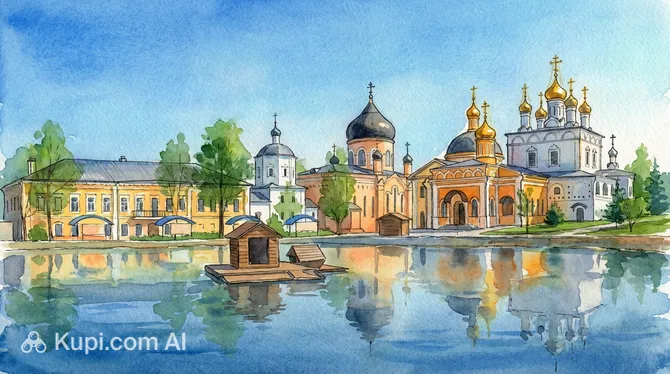
Chekhov. Illustration.
Source: Kupi.com AI

The town's main feature, attracting tourists from across the country and abroad, is its inseparable connection with the name of Anton Pavlovich Chekhov. It was in the outskirts of the town, at the Melikhovo estate, that the great writer lived during his most productive years and wrote his famous works. This connection makes the town an important point on the cultural map of a country like Russia.

Chekhov is an ideal choice for those seeking inspiration and wishing to experience the authentic atmosphere of the Russian provinces. It serves as an excellent starting point for excursions to literary sites, ancient churches, and the natural attractions of the Moscow region. Come here for leisurely walks and an immersion into the unique cultural heritage of the region.

Weather Overview

The climate in Chekhov is moderately continental, providing a distinct change of seasons and making the town interesting to visit at any time of year. Winters are generally snowy and moderately cold: in January, the average temperature stays around -6.3°C, and the number of days with precipitation can reach 14–16 per month. This season gives the old estates and parks a special fairytale charm.

Spring arrives gradually; while March still retains a winter chill, by May the air warms up to a comfortable 12.2°C. Summer brings warmth that is perfect for long walks: in July, the hottest month, the average temperature is about 19.0°C, with daytime highs often reaching 23°C. There is also sufficient rainfall in summer—averaging 9 to 15 rainy days per month.

Expect warm summers with occasional rain and cold, damp winters. In autumn, temperatures gradually drop, reaching 6.8°C in October as nature prepares for its winter sleep. To ensure your trip is as comfortable as possible, we recommend checking the current weather in Chekhov in advance and dressing for the season.

Average monthly temperature

Average monthly precipitation

Interesting Facts

In addition to the main attractions, Chekhov holds many fascinating secrets and unexpected historical parallels that reveal themselves only to curious travelers. Here are a few facts to help you see this town in a new light:

  • A "Pushkin Nest" in Chekhov's town. Surprisingly, the town's history is closely intertwined with the fate of Alexander Pushkin. Descendants of the great poet lived in the Lopasnya-Zachatye estate, and his widow, Natalya Goncharova, was a frequent guest here. The estate grounds still house the family necropolis where many members of the Pushkin family are buried.

  • Reflections on the Coat of Arms. The soaring seagull that adorns the town's coat of arms is not there by chance. It is a tribute to the writer's creative peak: it was in the vicinity of the town, at the Melikhovo estate, that Anton Pavlovich wrote his world-famous play "The Seagull," as well as "Uncle Vanya." This symbol serves as a reminder that the local atmosphere inspired the playwright to create his greatest masterpieces.

  • More than just a name. The town's name is not just a formal tribute to a celebrity, but a recognition of his actual service to the residents. Anton Pavlovich was a true guardian angel for the local peasants: he worked for free as a zemstvo doctor, used his royalties to build rural schools and libraries, and even personally participated in examining the village children.

How to Get There

Thanks to its proximity to the capital, reaching the town is quite easy. The transport network here is well-developed, allowing tourists to choose between a private car, a bus, or a train. You can find all the details and explore the routes in more depth on the how to get to Chekhov page.

Chekhov itself does not have an airport, so travelers arriving from afar typically use the Moscow aviation hubs. The most convenient option is Domodedovo International Airport (IATA: DME), located in Moscow. It is only 40 km from Chekhov, and a taxi or transfer takes about 1 hour and 20 minutes. It is a major hub with a huge passenger flow, handling flights from all over the world.

Another popular option is Vnukovo International Airport (IATA: VKO), also located in Moscow. The distance to Chekhov is about 50 km, and the driving time is approximately 1 hour and 35 minutes. For those arriving in the north of the capital, Sheremetyevo International Airport (IATA: SVO) is available, though it is much further away at 91 km, meaning the journey could take over 2.5 hours.

For convenience, here is summary information on the main airports:

AirportPassenger trafficDistance
Domodedovo15.6 mln40 km
Vnukovo16 mln50 km
Zhukovsky1.7 mln62 km
Sheremetyevo36.3 mln91 km
Grabtsevo100 00097 km

Rail travel is one of the most reliable ways to reach the town, as it avoids traffic jams. You can arrive directly at Chekhov Station, which is located right in the town of Chekhov, just 1.9 km from the center. Suburban trains run here regularly from Moscow's Kursky Railway Station, as well as trains heading toward Tula and Serpukhov.

If a direct route doesn't suit you, you can consider traveling via Podolsk station in the city of Podolsk, located about 36 km from Chekhov. This is a major transport hub with a very high passenger flow, from which you can quickly reach your destination by taxi or bus in about 1 hour and 15 minutes.

Below is information about the nearest railway stations:

StationPassenger trafficDistance
Chekhov Railway Station2 km
Stolbovaya Station12 km
Serpukhov Railway Station1.5 mln24 km
Mikhnevo Station32 km
Podolsk Railway Station20 mln36 km
Domodedovo Station7.8 mln38 km

Main Attractions

The town of Chekhov and its surroundings are a true treasure trove for lovers of Russian literature, history, and spiritual architecture. Here, every stone holds the memory of great people, and the picturesque landscapes are as inspiring today as they once were for the classics. A trip here is unthinkable without visiting several iconic sites that form the cultural core of the region.

The A.P. Chekhov Museum-Reserve "Melikhovo" is undoubtedly the main jewel of the region. It was here, in this cozy estate, that Anton Pavlovich lived for seven years and wrote his famous plays "The Seagull" and "Uncle Vanya." Tourists come here to stroll along the famous "Alley of Love," look inside the main manor house containing the writer's original belongings, and see the very wing where his masterpieces were born. The vibrant theatrical life adds a special atmosphere to the place: plays and festivals are regularly held in Melikhovo, allowing visitors to dive deeper into the world of Chekhov's characters.

In the very center of the town lies the unique Lopasnya-Zachatye Estate, often called the "Pushkin Nest." This magnificent Baroque architectural monument is closely linked to the names of Alexander Pushkin's descendants, who lived here for many years. Interestingly, it was within the walls of this house that the manuscript of "The History of Peter," which the poet had been working on, was discovered. A walk through the estate park with its cascading ponds offers a sense of traveling back in time to the era of noble estates.

For those seeking spiritual peace, the Ascension Davidov Pustyn is a must-visit. Founded in 1515, this men's monastery impresses with its grandeur and the beauty of its architectural ensemble. The monastery is located in a scenic spot on the banks of the Lopasnya River and houses many sacred relics. The colorful domes of the churches, the well-kept grounds, and the monastery's rich history attract pilgrims and tourists from all over the country wishing to touch ancient Orthodox traditions.

An essential part of visiting Davidov Pustyn is a trip to the Holy Spring in Talezh. This place is famous for its incredibly well-maintained grounds, where nature and architecture blend into one. Here, you can not only collect pure spring water but also take a dip in the specially equipped font rooms. The silence, the ringing bells of a small chapel, and the scenic views make Talezh an ideal place for spiritual rest and rejuvenation.

Another interesting location within the town limits is the Museum of A.P. Chekhov's Letters. It is situated in the building of the old post and telegraph office, which was opened with the direct involvement of the writer. It is an intimate and very soulful museum where you can learn the history of the 19th-century Russian postal service and even participate in interactive programs by writing a letter with a quill pen. This site perfectly completes the picture of Anton Pavlovich's charitable activities in the region.

Local Cuisine

The gastronomic map of Chekhov is inextricably linked with the traditions of classical Russian cuisine. Local establishments focus on dishes characterized by home-style comfort and heartiness—the kind that might have graced the writer's own table in the 19th century. Travelers should definitely try the rich borscht or shchi, hot handmade dumplings (pelmeni), and, of course, golden-brown homemade pies with a wide variety of fillings.

Seasonal gifts of nature hold a special place in the culinary life of the town. Thanks to its location among forests, menus often feature dishes made with fresh mushrooms and wild berries. Natural product lovers will appreciate the rich selection of farm delicacies: delicious cottage cheese, sour cream, craft cheeses, natural honey, and meat products can be found both in restaurants and on local stalls.

For those seeking something truly exotic in the heart of the Moscow region, Chekhov has a surprising treat. At nearby eco-farms, you can taste and purchase unique products made from alpaca milk. Delicate yogurts and rare types of cheese made from this milk have become a signature of gastro-tourism in the area, attracting fans of new taste sensations.

As for drinks, there is a cult of traditional tea drinking here. You can find tea sets in the style of a bygone era in souvenir shops and museums, while cafes will offer you fragrant herbal tea with homemade jam. Fresh local dairy drinks and traditional Russian mors (cranberry or lingonberry juice) are also popular and excellent for quenching thirst after a walk.

Dining culture in Chekhov is unpretentious and soulful. Locals and tourists alike enjoy attending regular farmers' markets. These are not just places to shop, but real events where you can try homemade pickles, fresh pastries, and immerse yourself in an atmosphere of lively communication. Gastronomic souvenirs, such as a jar of local honey or craft sweets, make excellent mementos of the trip.

Travel Tips

Preparing for a trip to Chekhov doesn't require complex arrangements, but knowing a few local nuances will help make your journey truly comfortable and worry-free. We have gathered practical recommendations that will be useful both when planning your route and during walks through the famous literary estates.

  1. Clothing and Dress Code. The main feature of a trip to Chekhov is long walks through parks and museum-reserves. At any time of year, choose the most comfortable footwear without heels. In winter, warm clothing and waterproof shoes are essential, as it can be windy and snowy at the estates. If you plan to visit the Ascension Davidov Pustyn, observe the dress code: women are recommended to cover their heads with a scarf and wear a skirt below the knees, while men should wear long trousers.

  2. Transport. Buses and minibuses run within the town itself, but it is more convenient to reach distant attractions (like Melikhovo or Talezh) by taxi or private car. Popular taxi aggregators (e.g., Yandex Go) work well here. If traveling by public transport, be sure to check return schedules in advance, as intervals between buses can increase in the evening.

  3. Finances. The official currency is the Russian ruble. Most museums, supermarkets, and cafes accept bank cards (Mir payment system). However, cards from foreign banks may not work, so international tourists will need to carry cash. Cash will also come in handy for buying souvenirs at small stalls, making donations in churches, or paying for minibus fares.

  4. Health and Safety. The town is quiet and safe for tourists. Pharmacies are easy to find in the town center and near the station; some are open 24/7. In the summer, when going for a walk in Melikhovo or to the spring in Talezh, be sure to use mosquito and tick repellent, as these sites are surrounded by forest.

  5. Communication and Navigation. The main language of communication is Russian; museum staff may understand some English, but this is rare in shops or on transport. We recommend downloading offline maps (like 2GIS or Yandex Maps) before your trip: mobile internet can be unstable in some low-lying and forested areas of the region.

  6. Local Etiquette. The townspeople are friendly and value politeness. It is customary to say hello when entering museums and small shops. On the grounds of monasteries and the holy spring, behave modestly, keep noise to a minimum, and do not play loud music. Photography inside churches is only allowed with permission from the clergy.

  7. What to Avoid. Don't try to visit all the main estates and monasteries at a "frantic pace" in just a couple of hours—the distances between sites are significant, and the atmosphere calls for leisure. Also, avoid bathing in the Holy Spring in inappropriate attire (in bikinis or swimming trunks outside of closed font rooms), as this may offend the feelings of believers.

  8. Useful Tip. If you are heading to the spring of St. David in Talezh, be sure to bring empty water bottles. The local spring water is famous for its taste and purity, and many tourists come here specifically to stock up on it.

Chekhov is a place where time flows a little slower, allowing you to enjoy the beauty of nature and history. By following these simple tips, you can avoid minor hassles and focus entirely on the wonderful atmosphere of this hospitable region.

Entertainment & Nightlife

Nightlife in Chekhov is characterized by a calm and measured rhythm, which fits its status as a cozy town in the Moscow region. You won't find noisy metropolitan raves or massive nightclubs operating until dawn here. Locals and tourists prefer to spend their evenings in a "lounge" format: cozy dinners, meetups in gastro-bars, or visits to the cinema. Most activity is concentrated in the town center and around major shopping areas.

The main hub for evening relaxation is the "Carnival" shopping and entertainment center, located on Moskovskaya Street. This is the primary meeting spot for young people and couples. It houses the modern "Matrix" cinema, where you can catch late-night screenings of the latest releases. The surrounding area also features popular chain cafes and food courts that stay open late into the evening.

For those looking for a more relaxed atmosphere with music and drinks, the town has several restaurants and bars that transform into venues with dance floors or karaoke on weekends. Teahouse-style establishments (chaikhana) are popular, offering hookahs, cocktails, and Eastern cuisine. The crowd is generally casual, and the dress code is relaxed, although you might want to dress up a bit more for a restaurant visit on a Friday night.

Practical tips for evening walks:

  • Safety: Chekhov is a quite safe town. Central streets (such as Chekhov and Moskovskaya streets) are well-lit and suitable for walking. However, as with any place, it is best to avoid unlit outskirts and park areas late at night.
  • Transport: Public transport (buses) stops running quite early. The most reliable way to get to your hotel at night is to call a taxi via popular apps (like Yandex Go), as hailing a car on the street is not common practice here.
  • Prices: The average bill in Chekhov's bars and evening restaurants is noticeably lower than in Moscow, which is a pleasant surprise for visitors from the capital.

If you want to vary your leisure time during the day, Chekhov offers excellent cultural options. Be sure to visit the Chekhov City Theater, famous for its heartfelt productions. For nature and silence lovers, the City Park of Culture and Leisure, located along the cascade of ponds on the Terebenka River, is the perfect place for a leisurely promenade before dinner.

Parks & Museums

Chekhov offers travelers a wonderful blend of natural beauty and deep cultural context. The town and its surroundings are literally immersed in the greenery of ancient estate parks, while museum collections carefully preserve the heritage of the Golden Age of Russian literature, making every walk here educational and inspiring.

Among the green zones, the City Park of Culture and Leisure, stretching along a scenic cascade of ponds on the Terebenka River, holds a special place. It is a favorite walking spot for locals, where modern, well-maintained embankments with wooden boardwalks sit alongside shaded alleys. Here, you can rent a boat, feed the ducks, or simply relax on a bench, enjoying the silence and the water views. The park's landscape is perfect for leisurely contemplation, especially during the golden autumn.

No less impressive is the park of the Lopasnya-Zachatye estate. This is a unique example of 18th-19th-century landscape art, preserving features of both formal and picturesque styles. Strolling along its paths, you will see seven ponds dug during the time of the first owners and century-old trees that remember Pushkin's descendants. The park creates an atmosphere of seclusion and is ideal for those seeking peace away from the urban bustle.

The main cultural center of the region is undoubtedly the State Literary and Memorial Museum-Reserve of A.P. Chekhov "Melikhovo". This is not just a museum, but the writer's entire world: the main house, the wing where "The Seagull" was written, a school built by Anton Pavlovich, and the outpatient clinic. The exposition detailedly recreates life at the end of the 19th century, allowing you to see the playwright's personal belongings, manuscripts, and photographs. The "Apothecary Garden," where medicinal herbs are grown just as Chekhov himself did, adds a special charm to the museum.

In the town itself, it is worth visiting the intimate and cozy Museum of A.P. Chekhov's Letters. It is located in the historic building of the post and telegraph office, opened in 1896 at the writer's initiative. The exhibition is dedicated to the history of the postal service in Russia and the author's epistolary heritage. Here, you can see antique postal scales, stamps, a postmaster's uniform, and learn how communication worked over a hundred years ago.

Another important point of attraction is the Lopasnya-Zachatye estate museum. Inside the magnificent Baroque mansion, the "Owners and Guests of the Estate" exhibition tells of the site's connections with the families of the Pushkins, Lanskys, and Goncharovs. The house interiors have been restored with great precision, allowing visitors to immerse themselves in the atmosphere of noble life from past centuries.

Among the significant architectural monuments is the Church of the Conception of St. Anne, located on the estate grounds. This white-stone church with a tented bell tower, built at the end of the 17th century, is a beautiful example of Moscow Baroque. Near the church lies the necropolis of A.S. Pushkin's descendants, which gives the place a special historical status.

For a unique experience, take the opportunity to send a postcard directly from the Museum of Letters. Staff will offer you the chance to write a message with a real quill pen, seal it with wax, and drop it into an antique mailbox. Such a note from the town of Chekhov will be a great souvenir for friends or a warm memory for yourself.
Getting Around

The public transport system in Chekhov is simple and easy to understand, allowing tourists to plan their movements without extra stress. Since the town is quite compact, there is no metro, tram, or trolleybus system. The main burden of passenger transport is carried by buses and minibuses (marshrutkas). The route network covers central streets, residential areas, and connects the town with key tourist spots in the surrounding area, such as Melikhovo or Talezh.

The central transport hub is the bus station, located in the immediate vicinity of the railway station. Most routes depart from here. Buses run strictly according to a schedule, which is generally followed. Minibuses often duplicate popular routes and run faster, but they can be less comfortable during peak hours. Public transport typically operates from 5:30–6:00 AM until about 11:00 PM, so for late returns, it is better to plan for alternative options.

Payment in the region is largely digital. The most convenient way for a tourist is to pay with a standard bank card or a smartphone with NFC. Terminals are located with the driver or on the handrails at the entrance. Locals often use the "Strelka" transport card (a regional version of the capital's travel cards), which offers discounts for frequent trips, but buying one for a short visit is not necessary—a bank card will suffice. Cash payment is possible, but on some routes, the fare may be higher, and drivers do not always have change for large bills.

For route planning, we highly recommend using mobile apps like Yandex Maps or 2GIS. They show bus movements in real-time, help build the optimal route, and provide up-to-date schedules. This is especially important if you plan to visit outlying estates, as the intervals for suburban buses can reach 40–60 minutes, so it's best to time your departure in advance.

As a convenient alternative, taxi services work very well in the town, with Yandex Go being the most popular. A car can be called via the app, arrival usually takes no more than 5–7 minutes, and prices for trips within the town are quite affordable. This is an ideal option for groups or families, especially if you want to save time traveling to distant attractions.

During the warmer months, from spring to autumn, kicksharing (electric scooter rental) is available in Chekhov. Rental stations for popular services can be found in the town center, near parks, and shopping malls. It’s a great way to get from one location to another while enjoying the good weather. Carsharing is also possible, but before you set out, be sure to check the rental termination zones in your operator's app, as not all services allow leaving cars in this town.

Accommodation

The hotel infrastructure in Chekhov and its surroundings is primarily focused on domestic tourism and short weekend trips. While it is difficult to find five-star international chain hotels here, there is a wide range of cozy mini-hotels, guest houses, and country clubs. The level of service in Russia is constantly improving, and Chekhov is no exception: many establishments offer decent comfort at reasonable prices.

For those traveling independently or by train, staying in the central part of the town is the optimal choice. This ensures walking distance to the railway station, the bus station, and city infrastructure. Town hotels here typically fall into the "standard" category and provide the basic set of services needed for a comfortable night's sleep before a busy day of sightseeing.

However, if you have a car, we highly recommend considering accommodation options outside the town limits. In the area of the Melikhovo estate and the village of Talezh, you can find picturesque park-hotels and recreation centers. In recent years, the glamping format—comfortable relaxation in nature in modern tents or eco-cabins—has been actively developing here. Staying in a forested area allows you to fully immerse yourself in the atmosphere of "Chekhovian" places and enjoy the quiet.

When planning your trip, it is important to consider seasonality. Since the town is close to the metropolis, the main flow of tourists occurs on Saturdays and Sundays. During these days, as well as on public holidays, the demand for quality accommodation rises sharply. It is recommended to book rooms in popular country clubs at least 2–3 weeks in advance. On weekdays, the rush subsides, and you can find available options even on the day of arrival, often at more attractive prices.

The price range can be described as mid-range and budget. The cost of living here is usually lower than in the popular tourist centers of the Golden Ring. Most accommodation options are listed on major Russian aggregators, but it is sometimes more advantageous to book small private guest houses directly, confirming the terms by phone.

Nearby Cities

For those who want to explore the surrounding area, Chekhov serves as an excellent starting point for day trips to several interesting nearby locations:

Just 26 km from the town is the ancient city of Serpukhov. It is a true open-air museum, ideal for history and architecture buffs. The city is famous for its majestic monasteries—Vysotsky and Vladychny—as well as the famous Cathedral Hill, which offers stunning panoramic views. Additionally, a trip in this direction allows you to visit the Prioksko-Terrasny Nature Reserve to see bison in their natural habitat.

Another popular destination is Podolsk, located about 30 km away. The main jewel in the vicinity of this large industrial center is the Dubrovitsy estate. Tourists come here to see the unique Church of the Sign, built in the Baroque style and crowned with a golden crown instead of a traditional dome—a sight that leaves an indelible impression.

Lovers of science and industrial history will find Obninsk—the country's first "science city"—fascinating. Here, you can learn about the history of nuclear energy and stroll through the cozy streets of a city that played a vital role in the development of Soviet and Russian science.

CityPopulationDistance
Klimovsk56 23923 km
Serpukhov125 81726 km
Podolsk299 66031 km
Protvino35 80735 km
Pushchino21 28137 km

These nearby destinations offer a glimpse into the diverse culture and landscapes of the region.

Shopping & Souvenirs

Shopping in Chekhov is more of a pleasant addition to a rich cultural program than the primary goal of a trip. The town does not claim to be a high-fashion center, so you won't find luxury brand boutiques or massive outlets here. However, the infrastructure is well-developed enough to provide tourists with everything they need: from everyday goods and clothing to unique local souvenirs imbued with the spirit of Russian literature.

The town's main commercial life is concentrated in its central part. The primary artery for shoppers is Moskovskaya Street and the intersecting Chekhov Street. Strolling here, you will encounter many small shops, pharmacies, mobile phone stores, and bookstores. It is a quiet area where shopping can be combined with viewing city architecture and relaxing in public squares.

For those accustomed to modern shopping formats, the main attraction is the "Carnival" shopping and entertainment center. This is the largest complex in the town, located on Moskovskaya Street. Under one roof, you'll find stores of popular Russian clothing and footwear brands, electronics, cosmetics, and children's goods. It is a convenient place to buy everything in one go and then grab a bite at the food court.

Markets give the town a special local flavor. The most bustling is the Privokzalny Market, located near the railway and bus stations. You can always buy fresh seasonal products here. In summer and autumn, locals bring gifts from the forest: mushrooms, blueberries, wild strawberries, as well as homemade pickles and vegetables from their own gardens. This is the best place to feel the true taste of provincial life.

The choice of souvenirs in Chekhov is inextricably linked with the name of the great writer. The most interesting keepsakes should be sought not in ordinary shops, but in the souvenir stalls at the museums (in Melikhovo or the Museum of Letters). From here, people bring home:

  • Gift editions of A.P. Chekhov's books and postcards with his quotes.
  • Retro-style writing supplies: quill pens and inkwells.
  • The famous "Chekhov" jam (gooseberry or cherry), prepared according to old recipes.
  • Local farm products: cheeses, honey, and herbal blends.

Most major stores and shopping centers are open daily from 10:00 AM to 10:00 PM. Small private shops and souvenir kiosks may close earlier—around 7:00 PM or 8:00 PM. Activity at the markets starts early in the morning and winds down by 4:00 PM or 5:00 PM.

Regarding payments, bank cards from the "Mir" payment system are widely accepted in supermarkets and shopping centers. However, if you plan to shop at the market, in souvenir kiosks, or small stores, we strongly recommend having cash on hand. The Tax-Free system is virtually non-existent in Chekhov, as it is geared toward large tourist hubs and luxury stores, which are not present here.

Reached the end of the page?

That means the route is fully explored