Support

Dikson

About

Welcome to Dikson, a legendary settlement often referred to as the "Capital of the Arctic." Situated on the edge of the Arctic Ocean, this unique destination offers a glimpse into life at one of the northernmost inhabited points on the planet. For travelers seeking true isolation and the raw beauty of the North, Dikson provides an atmosphere unlike anywhere else.

Located in the Krasnoyarsk Krai of the Russian Federation, Dikson sits on the shores of the Kara Sea. The settlement is geographically distinct, divided into two parts: one on the mainland and the other on Dikson Island, separated by a strait. With a small population of just over 1,000 residents, the community is tight-knit and resilient, adapted to the harsh but mesmerizing polar climate where winter dominates for most of the year.
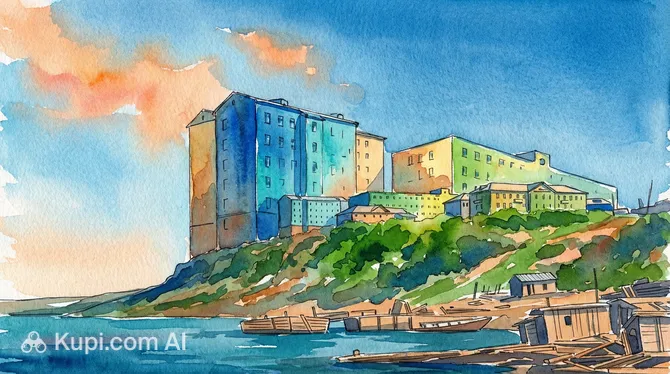
Dikson. Source: Kupi.Binoculars

The history of Dikson is deeply intertwined with the heroic era of polar exploration and the development of the Northern Sea Route. Founded in 1915, it has served as a crucial base for Arctic expeditions, weather stations, and radio communications throughout the 20th century. Monuments to polar explorers and the brave sailors who defended the port stand as silent witnesses to its storied past.

Visitors are drawn to Dikson primarily for its extreme natural phenomena. It is one of the best places to witness the spectacular Northern Lights (Aurora Borealis) shimmering over the frozen tundra. The experience of the Polar Night, when the sun does not rise for months, and the contrasting Midnight Sun of summer, offers a surreal perspective on time and nature. The rugged Arctic landscapes make it a bucket-list destination for adventurous souls.

If you are ready to venture to the "edge of the world," Dikson awaits with its icy grandeur and profound silence. It is a place for those who wish to test their limits and experience the true spirit of the Arctic.

Weather Overview

The climate in Dikson is strictly Arctic, characterized by long, harsh winters and very short, cool summers. Due to its location on the edge of the Kara Sea, the weather is often severe, with temperatures remaining below freezing for the majority of the year. Travelers should be prepared for a true polar environment where the cold is a constant companion.

Winter dominates the calendar, with January typically being the coldest month, featuring an average temperature of -22.8°C and lows dipping to -25.2°C. The freezing conditions persist well into spring; even in May, the average temperature remains around -4.4°C. For a more comprehensive forecast and monthly breakdown, you can consult the detailed guide to the weather in Dikson before packing your expedition gear.

Summer is brief and chilly, offering a fleeting glimpse of milder weather. August is generally the warmest month, with average temperatures rising to 8.9°C and daily highs reaching approximately 10.9°C. While the volume of precipitation is incredibly low—often recorded at just 1mm or 2mm per month—the frequency of precipitation events is notable. For instance, September sees up to 15 wet days despite the low accumulation, meaning damp conditions are common even when it isn't snowing heavily. Expect persistent cold and dry air in winter, shifting to cool, damp conditions during the short summer window.

Interesting Facts

Beyond the frozen landscapes and polar lights, Dikson holds a collection of unique traits that define its character as a true frontier outpost. Here are some intriguing details about this remote settlement that reveal its distinct identity.

  • A Town Divided: Dikson is geographically split into two separate parts: the mainland settlement and the historic district located on Dikson Island. Separated by a 1.5-kilometer strait, the two sections rely on boats for connection during the brief summer, while in winter, the frozen sea becomes a natural bridge allowing vehicles to drive directly across the ice.

  • International Origins: The settlement was not named after a local explorer, but rather in honor of Oscar Dickson, a Swedish merchant and philanthropist. The name was given by the renowned explorer Baron Adolf Erik Nordenskiöld in the 19th century to recognize Dickson's financial support for Arctic expeditions.

  • Total Isolation: There are absolutely no roads or railways connecting Dikson to the rest of the Russian Federation. This "island" of civilization in the vast tundra is accessible solely by aircraft or ships navigating the Northern Sea Route, preserving a sense of solitude that is rare in the modern world.

  • A Musical Landmark: Despite its small size and remoteness, the town is famous in popular culture thanks to a well-known song simply titled "Dikson." This melody serves as an unofficial anthem, celebrating the romanticism of polar exploration and the resilience of those who call this icy region home.

How to Get There

Reaching this remote Arctic outpost is an adventure in itself, requiring careful planning due to its isolation from the mainland's road and rail networks. For travelers looking to experience the "Capital of the Arctic," air travel is the primary method of access. You can find all ways to reach the city and essential travel details on our dedicated transport page.

The settlement is served by its own local aviation hub, Dikson Airport (DKS). Situated on an island just off the mainland coast, it is approximately 5 km from the center of the settlement. A taxi or local transport ride to the town center generally takes about 30 minutes, though this can vary significantly depending on the season and ice conditions crossing the strait. This facility is a small regional hub with low passenger volume, primarily connecting Dikson to larger regional centers like Norilsk.

For clarity, here is a summary of the main airport serving the area:

Airport Name City Passenger Traffic Km from City
Dikson Dikson Small 4.9

Due to its extreme northern location and lack of ground infrastructure connecting it to the rest of the country, Dikson does not have a railway station. The settlement is completely isolated from the federal railway network, meaning trains are not a viable option for reaching this destination. Visitors must rely exclusively on air transport or, in specific logistical instances, maritime routes along the Northern Sea Route.

Main Attractions

For travelers venturing to this remote edge of the world, the attractions of Dikson are not typical tourist sites but rather powerful symbols of human resilience and polar history. The settlement is a living museum of Arctic exploration, where monuments and abandoned structures tell the story of the Northern Sea Route and the heroic defense of the Soviet Arctic during World War II.

One of the most significant landmarks is the Monument to the Defenders of Dikson, located on the mainland at Yuzhnaya Sopka. This memorial complex commemorates the events of August 1942, when the small local garrison and the crew of the icebreaker Sibiryakov heroically repelled an attack by the heavy German cruiser Admiral Scheer. The site features a striking obelisk with three bayonets symbolizing the army, navy, and air force, along with a historical 152-mm naval gun. Standing here offers a panoramic view of the Kara Sea and a poignant connection to the only World War II battle fought in the Siberian Arctic.

In the center of the settlement stands the Monument to Nikifor Begichev, a legendary Russian seaman and polar explorer. Begichev played a crucial role in the discovery of new lands and the rescue of lost expeditions in the early 20th century. His grave and monument serve as a tribute to the fearless pioneers who mapped these dangerous waters. For visitors, it is a place to pay respects to the explorers who made life in these extreme latitudes possible.

The Dikson Seaport itself is a major point of interest, holding the title of the northernmost port in Russia. Often called the "Gateway to the Arctic," this facility is the lifeline of the settlement and a historic hub for the Northern Sea Route. While it is an industrial zone, the sight of massive icebreakers and cargo ships navigating the icy waters is a mesmerizing spectacle that underscores the strategic importance of this outpost.

For those interested in the eerie atmosphere of abandoned places, the Historic Settlement on Dikson Island offers a hauntingly beautiful experience. Separated from the mainland by a strait, the island was the site of the first radio station built in 1915. Today, it is largely uninhabited, resembling a "ghost town" with empty Soviet-era buildings, an old club, and the original weather station. Walking among these silent structures provides a surreal glimpse into the past and the stark reality of life in the High North.

Local Cuisine

The local cuisine in Dikson is entirely shaped by its extreme Arctic location and the harsh climate. You will not find gourmet restaurants or trendy street food stalls here; instead, the food culture is defined by survival, tradition, and the resources of the tundra and the sea. The diet is high in calories and protein, designed to help residents withstand the freezing temperatures and long winters.

The absolute highlight of the gastronomic experience in this region is stroganina. This traditional northern dish consists of raw, frozen fish—typically broad whitefish (chir), muksun, or nelma—shaved into thin, curling slices. It is served immediately while still frozen and dipped into a mixture of salt and black pepper. Another local favorite is sugudai, a salad made from fresh raw fish marinated with oil, vinegar, onions, and spices. These dishes are not just food; they are a way to consume essential vitamins that are otherwise hard to come by in the Far North.

Meat dishes primarily revolve around venison (reindeer meat), which is a staple in the diet of indigenous peoples and locals alike. It can be prepared in various ways, from simple stews and soups to dried meat or hearty dumplings (pelmeni). Due to the difficulty of transporting fresh produce, berries gathered from the tundra during the short summer—such as cloudberries, lingonberries, and blueberries—are prized ingredients. They are often preserved as jams or compotes to be enjoyed throughout the long winter.

When it comes to drinks, hot tea is the most important beverage, consumed in large quantities to stay warm. It is often brewed strong and sometimes flavored with local herbs or dried berries. Regarding alcoholic beverages, vodka is the standard choice in this region, often accompanied by pickled snacks or stroganina. You might also encounter homemade tinctures infused with northern berries, offering a sweet yet potent taste of the local flora.

Tourists should be aware that the dining scene in Dikson is extremely limited. There are no commercial restaurants in the conventional sense. Most social eating takes place in the warmth of private homes, where hospitality is a core value. For visitors, food is typically acquired at local grocery stores, which rely on the "Northern Delivery" (Severny Zavoz) for supplies, or at small canteens serving workers and airport staff. Fresh fruits and vegetables are rare luxuries, making the reliance on local fish and preserved goods a defining characteristic of your visit.

Travel Tips

Visiting Dikson is more of a polar expedition than a standard sightseeing trip, requiring thorough preparation and a respect for the extreme environment. To ensure your journey to the "Capital of the Arctic" is safe and memorable, here are some essential practical tips to help you navigate life on the edge of the world.

  1. Clothing and Gear: Dress for extreme cold, regardless of the season. The "onion principle" is vital here: wear multiple layers including thermal underwear, a fleece mid-layer, and a high-quality, windproof down parka. Waterproof, insulated boots are non-negotiable, as you will be walking on snow and ice. Even in summer, temperatures can hover near freezing, so bring a warm hat, gloves, and a scarf. Don't forget sunglasses to protect your eyes from the blinding glare of the sun reflecting off the snow.

  2. Transportation: Public transport in the traditional sense does not exist in Dikson. The settlement is small enough to navigate on foot, though walking can be challenging during blizzards. There are no car rental agencies or ride-hailing apps. Locals often get around using private vehicles, snowmobiles, or all-terrain vehicles. Be aware that moving between the mainland and the island depends on the season: by boat in summer, by helicopter in the shoulder season, and by driving across the frozen ice in winter.

  3. Finances: Cash is absolute king in this remote outpost. While some shops may accept cards, internet connections can be unstable, rendering terminals useless. There are very few ATMs, and if they are out of service, you will have no way to access funds. Bring enough Russian Rubles in cash to cover your entire stay, including accommodation, food, and emergency expenses.

  4. Health and Safety: The most unique danger in Dikson is the local wildlife; polar bears frequently wander near or even into the settlement. Always stay vigilant, never walk alone on the outskirts, and listen to local warnings. Medical facilities are basic, designed for primary care rather than complex emergencies. Bring a comprehensive first-aid kit with all necessary prescription medications, as the local pharmacy may have limited stock or irregular hours.

  5. Communication: Do not expect to find English speakers in Dikson. The primary language is Russian, and knowledge of it is essential for daily interactions. Download an offline translation app and an offline map of the region before you arrive, as mobile internet (typically MTS or Megafon) can be slow or intermittent. A satellite phone is a wise investment for serious expeditions outside the town limits.

  6. Local Etiquette: In the North, hospitality is a survival mechanism. If you are invited into a local home, always remove your shoes at the door; this is a strict rule to keep the living space clean and dry. It is polite to bring a small gift, such as tea or sweets. Respect the resilience of the locals who live in these harsh conditions; avoid complaining about the cold or lack of luxury amenities.

  7. What to Avoid: Never photograph military installations, border guard posts, or the airport infrastructure without explicit permission. Dikson is a strategic border zone, and unauthorized photography can lead to serious legal trouble. Additionally, avoid underestimating the weather; a sunny day can turn into a life-threatening blizzard in minutes, so never venture far without notifying someone of your plans.

  8. Additional Tip: Be mindful of the "Northern Delivery" system. Shops in Dikson are stocked via infrequent shipments by sea or air. If you see a specific food item or supply you need, buy it immediately, as it may not be replenished for weeks or months. Fresh produce is a rarity, so treat it as a luxury.

By packing the right gear and respecting the rules of the Arctic, you will be well-equipped to embrace the raw beauty of Dikson. This is a place where nature dictates the rules, and following them ensures a truly profound travel experience.

Entertainment & Nightlife

When it comes to nightlife and entertainment, Dikson defies the standard definition found in bustling cities. You will not find neon-lit districts, thumping nightclubs, or cocktail bars lining the streets here. Instead, the "nightlife" is defined by the literal night—the long, dark Polar Night—and the tight-knit community spirit that warms it. For a tourist, the evening entertainment is less about commercial venues and more about experiencing the profound solitude of the Arctic and the unique social atmosphere of a frontier settlement.

The social heart of the settlement is undoubtedly the Cultural and Leisure Center (often referred to locally as the House of Culture). This venue serves as the primary gathering spot for residents, hosting everything from holiday concerts and movie screenings to community dances and local celebrations. In a town without dedicated commercial bars, this center provides a rare opportunity to mingle with locals and witness the genuine camaraderie that sustains life in the High North. The atmosphere here is informal, welcoming, and deeply traditional.

Dining and drinking in the evening are largely domestic affairs. Since there are no commercial restaurants or pubs open late, social life revolves around private kitchen tables. If you are lucky enough to connect with locals, you might be invited to a "kitchen gathering," which is the truest form of Arctic nightlife. Here, over cups of hot tea or stronger spirits, stories of polar bears and icebreakers are shared. For provisions, you must rely on local grocery stores like Sever (North) or other small provision shops, but be mindful that they close relatively early, so stocking up before the evening sets in is essential.

Safety is a critical consideration for any night activity in Dikson. The streets are unlit in many areas and can be treacherous due to snow and ice. However, the greatest danger comes from wildlife; polar bears are a very real threat and can wander into the settlement under the cover of darkness. Night walks are strongly discouraged unless you are in a group and carrying flares or noise-making devices. Taxis are not readily available in the conventional sense, so all movement should be planned in advance, ideally with a local guide or vehicle.

During the brief windows of daylight or the twilight of the shoulder seasons, entertainment shifts to cultural appreciation. The School Museum of Combat Glory is a notable daytime stop, offering insights into the military history of the region, specifically the defense of Dikson during WWII. While small, it is curated with passion. Additionally, the surrounding tundra serves as an open-air theater of nature, where the main performance is the silent, shifting dance of the Aurora Borealis overhead.

Parks & Museums

In Dikson, the concept of parks and cultural venues takes on a completely different meaning compared to typical tourist cities. You will not find manicured botanical gardens or grand national museums here. Instead, the "parks" are the boundless expanses of the Arctic tundra and the icy coast, while the museums are intimate, community-run spaces that preserve the incredible history of polar exploration and wartime heroism.

The most significant natural area associated with the settlement is the Great Arctic State Nature Reserve. Dikson serves as a gateway to this massive protected territory, which is the largest nature reserve in Eurasia. While you cannot simply "stroll" through it like a city park, the surrounding tundra offers a raw, untouched wilderness that is breathtaking in its severity. Visitors can observe the unique Arctic flora, such as mosses and lichens, and potentially spot wildlife like reindeer, Arctic foxes, and, with caution, polar bears in their natural habitat.

For a more accessible connection to nature, the Coast of the Kara Sea acts as the town's primary promenade. In summer, the rocky shores provide a starkly beautiful setting for walking and contemplating the vastness of the Arctic Ocean. The contrast between the dark water and the lingering patches of snow creates a dramatic landscape that photographers and nature lovers find mesmerizing. It is a place to experience the profound silence of the North, broken only by the sound of wind and waves.

Cultural life in Dikson is concentrated in small but meaningful venues. The Dikson Art Gallery is a surprising and delightful find in such a remote location. Established to bring culture to the High North, it houses a collection of paintings, graphics, and sculptures, many of which were donated by artists who visited the Arctic or were inspired by its landscapes. It stands as a testament to the human need for beauty even in the harshest conditions.

History buffs should visit the Museum of Combat and Labor Glory, typically located within the local school or community center. This museum is the custodian of the settlement's memory, featuring exhibits dedicated to the development of the Northern Sea Route and the daily life of polar explorers. A significant portion of the collection focuses on the defense of Dikson during World War II, displaying artifacts, photographs, and documents that tell the story of the brave garrison that repelled the German cruiser Admiral Scheer.

Among the historical landmarks, the Monument to Tessem and Knudsen is particularly poignant. It honors Peter Tessem and Paul Knutsen, two Norwegian explorers from Roald Amundsen's expedition who tragically perished near Dikson in 1919 while carrying scientific data. The monument stands on the rocky coast, symbolizing the international history of Arctic exploration and the perilous nature of these early journeys.

For a truly authentic experience, try to arrange a visit to the memorial complex on Dikson Island with a local guide. While the mainland settlement is where life happens today, the island holds the "old town" atmosphere. Walking among the historic weather station buildings and the old port infrastructure feels like stepping into an open-air museum of the Soviet Arctic, offering a visceral connection to the past that no indoor exhibit can match.

Getting Around

When planning a trip to Dikson, it is essential to adjust your expectations regarding public transportation. Unlike typical urban centers, this remote Arctic settlement does not possess a developed network of metros, trams, trolleybuses, or fixed-route city buses. The infrastructure is minimal, reflecting the small population and the extreme environment. Visitors should not expect to find scheduled public transit stops or route maps; instead, getting around is largely a matter of walking or arranging private transport.

The only semblance of a regular bus service is often the connection between the settlement and the airport, or occasional shuttles transporting workers. These schedules are generally tied to flight arrivals and departures rather than a standard timetable. If you need to travel distances that are too far to walk, such as from the airport to the town center, you will likely rely on these specific transfers or private arrangements. There are no commercial minibus routes circulating through the streets.

For most travelers, the primary "alternative" to public transport is the local taxi service, which operates quite informally. You will not find ride-hailing apps or branded taxi fleets here. Instead, transport is provided by local residents using their private vehicles. To secure a ride, you typically need to call a local phone number provided by your accommodation or ask a resident for assistance. In the winter months, snowmobiles and specialized all-terrain vehicles become the standard mode of transport, navigating the snow-covered tracks where standard cars cannot pass.

A unique and critical feature of Dikson's transport "system" is the connection between the mainland and Dikson Island. This crossing defines local logistics. During the short summer navigation period, small boats or cutters ferry passengers across the strait. In the depth of winter, the frozen sea transforms into an ice road, allowing vehicles to drive directly across the bay. However, during the transition seasons of spring and autumn or when the ice is unstable, the only link may be a helicopter, which is weather-dependent and significantly more expensive.

Regarding payment, the system is strictly cash-based. There are no electronic travel cards, transport apps, or credit card terminals in vehicles. You must carry small denominations of physical currency to pay drivers directly. Prices are usually fixed for specific trips (e.g., airport to town) rather than metered. It is advisable to check the current rate with your host before entering a vehicle to avoid confusion.

Practical advice for tourists is simple: be prepared to walk. The settlement is compact enough that most points of interest on the mainland are within walking distance of each other. However, given the potential for blizzards and extreme cold, you should always dress appropriately even for short strolls. If you require a vehicle, arrange it in advance through your lodging, as hailing a ride from the street is rarely an option. Always have a backup plan, as severe weather can halt all forms of transport, including the crucial crossing between the island and the mainland, at a moment's notice.

Accommodation

Accommodation in Dikson is extremely limited, reflecting its status as a remote working settlement rather than a conventional tourist destination. Travelers should not expect the variety found in standard cities; there are no luxury resorts, international chains, or hostels with backpacker vibes. The available options are purely functional, designed primarily to house shift workers, meteorologists, and the occasional expedition member. Facilities are generally basic, offering warmth and shelter rather than amenities or style.

The primary accommodation option is typically a small, local hotel (often referred to simply as a "gostinitsa") located within the settlement on the mainland. These establishments usually offer simple rooms with shared or private facilities, depending on the category. The decor is often reminiscent of the Soviet era, though clean and heated—a critical factor in this climate. In addition to the main hotel, some visitors may find lodging in converted apartments or guest rooms rented out by locals, though these are not advertised on major global booking platforms.

When choosing where to stay, the mainland settlement is the only practical choice for tourists. While the historic part of Dikson is located on the island, it is largely abandoned and lacks functioning infrastructure for overnight guests. Staying on the mainland ensures you are close to the few grocery stores, the administrative center, and the airport connection. Attempting to stay elsewhere would pose significant logistical challenges and safety risks due to the harsh weather and wildlife.

Booking in advance is absolutely essential. You cannot simply arrive in Dikson and expect to find a room, as capacity is very low and often fully booked by workers or government officials. Since these properties rarely appear on international booking websites (like Booking.com or Airbnb), arrangements must typically be made via direct phone calls or through a tour operator specializing in Arctic travel. Confirming your reservation before you board your flight is a mandatory step for a successful trip.

Regarding costs and payment, prices tend to be in the mid-range bracket, which might seem high relative to the basic quality of the accommodation. This pricing reflects the immense cost of maintaining buildings and utilities in the High Arctic. Crucially, payment is almost exclusively cash-only. Credit card terminals are virtually non-existent in local lodgings, so you must bring enough Russian Rubles to cover your entire stay. Be prepared for a "no-frills" experience where the luxury is simply being warm and safe at the edge of the world.

Nearby Cities

Given the immense scale of the Russian Arctic, the concept of "nearby" takes on a different meaning here. Dikson serves as a remote outpost where the closest major neighbors are located hundreds of kilometers away across the tundra. These cities act as significant regional hubs and industrial centers within this vast territory, representing the nearest points of substantial infrastructure and population in an otherwise sparsely inhabited landscape.

The most prominent neighbor in the region is Norilsk, an industrial powerhouse and the world's northernmost city with a population exceeding 100,000. It stands as a testament to human resilience in extreme conditions, offering a stark look at Soviet industrial architecture. While it is the closest major settlement, it is still separated from Dikson by a vast expanse of wilderness, functioning primarily as a logistical key to the area rather than a next-door neighbor.

Further to the west lies Salekhard, a unique city distinguished by being the only settlement in the world situated directly on the Polar Circle. It serves as a cultural center for the indigenous Nenets people and is famous for its "Mammoth" monument and the Shemanovsky Museum, which houses incredible archaeological finds preserved in the permafrost.

Another key regional hub is Novy Urengoy, often referred to as the "Gas Capital" of the country. Unlike the historic trading posts of the North, this is a relatively young city that demonstrates modern urban planning in a subarctic climate. It provides a glimpse into the massive energy industry that drives the economy of this frozen territory.

City Population Distance (km)
Norilsk 179554 536
Novy Urengoy 130000 840
Vorkuta 77314 903
Salekhard 51188 936
Nadym 44940 941

These destinations highlight the diversity of the Russian North, ranging from industrial giants to cultural capitals, all connected by the shared challenges of the Arctic environment.

Shopping & Souvenirs

Shopping in Dikson is a unique experience that offers a fascinating insight into the logistics of life in the High Arctic. Visitors should adjust their expectations immediately: there are no boutiques, department stores, or souvenir shops in the traditional sense. Retail here is purely utilitarian, focused on survival and daily necessities. The "shopping scene" consists of a handful of general stores that stock everything from canned food and frozen fish to household chemicals and warm socks. For a tourist, entering these stores is like stepping into a museum of the "Northern Delivery" system, where the availability of goods depends entirely on the arrival of the last ship or plane.

There are no specific shopping districts or commercial streets. The few operating stores are scattered within the residential area of the mainland settlement, often located on the ground floors of apartment buildings or in standalone wooden structures. You can easily walk between them, but do not expect window shopping. These establishments serve the local community's basic needs, and their inventory reflects the harsh reality of isolation—fresh fruit might be a luxury, while high-calorie preserved foods are staples.

It is important to clarify that shopping malls do not exist in Dikson. The settlement's population and infrastructure do not support large commercial centers. The closest experience to a "department store" would be a larger general store (often referred to as a "universalny magazin" or "univermag") where food, clothing, and hardware are sold under one roof to maximize efficiency in the cold climate.

Similarly, there are no open-air markets or bazaars. The extreme climate renders outdoor trading impossible for most of the year. However, the "market" concept exists informally. Locals may sometimes sell fresh catch (fish) or gathered berries directly, but this is not an organized activity for tourists. If you are looking for local produce, your best bet is to ask around or visit the main grocery stores where local fish might be stocked in the freezers.

When it comes to souvenirs, you will not find fridge magnets or branded t-shirts in a dedicated gift shop. The best keepsakes from Dikson are edible and authentic to the region. Look for local fish such as muksun or omul, often sold frozen, smoked, or dried. Cloudberry jam (moroshka) is another prized item, capturing the taste of the short Arctic summer. Occasionally, you might find simple handicrafts or postcards at the post office or the airport, but these are rare. The true souvenir here is often just a simple item that has traveled with you to the edge of the world.

Opening hours are generally standard, typically from 9:00 AM to 7:00 PM or 8:00 PM, though smaller shops may close for a lunch break in the afternoon. On weekends, hours may be reduced. Payment methods are a critical consideration: while some stores may technically have card terminals, internet connection failures are common, rendering them useless. It is absolutely essential to carry sufficient cash in Russian Rubles for all your purchases. Prices will be significantly higher than on the mainland, reflecting the immense cost of transporting goods to this remote location.

Tax-free shopping or VAT refunds are not applicable in Dikson. The settlement operates far outside the international tourism circuit, and no mechanisms for tax refunds exist. Treat your purchases here as a contribution to the local economy of one of the most isolated communities on Earth.

Reached the end of the page?

That means the route is fully explored