Support

Kanash

About

Kanash is more than just a dot on the map; it is an important transport hub and a cozy city located in the heart of the Chuvash Republic. It is often called the "railway capital" of the region, as it is here that key lines connecting various parts of the country intersect. The atmosphere of the city is permeated with the rhythm of travel and dynamics, yet it maintains the calm and steady pace characteristic of small towns.
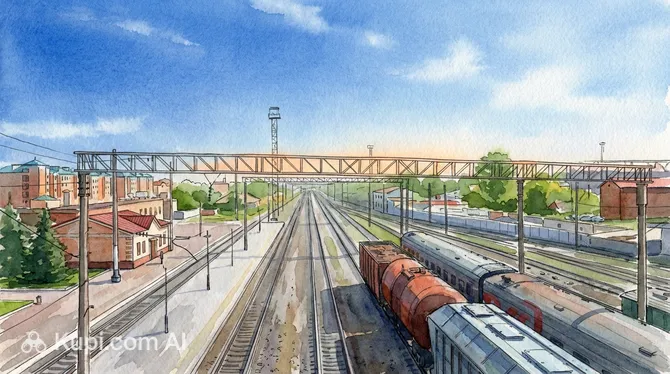
Kanash. Illustration.
Source: Kupi.com AI

Geographically, the city is located in the center of the European part of the state, which is Russia. The climate here is temperate continental, with warm summers and snowy winters, making it comfortable to visit at any time of year. The city's population is about 45,000 people, which creates a sense of intimacy and friendliness.

The unique history of Kanash is inextricably linked to the development of the railway. Founded at the end of the 19th century as the Shikhrany station, it eventually transformed into a significant city. The name "Kanash" itself translates from the Chuvash language as "council," symbolizing unity and harmony.

Tourists should visit the Museum of Local Lore, where they can learn about the ethnography and daily life of the Chuvash people. The architectural landmark and hallmark of the city is the railway station building, which impresses with its monumentality. For leisurely walks, the city park of culture and leisure—a favorite meeting spot for locals—is an excellent choice.

A visit to Kanash will be an interesting experience for those who want to see the non-touristy, authentic life of the region and feel the hospitality of Chuvashia. Make a stop here to soak up the spirit of a city that connects paths and destinies.

Weather Overview

The climate in this region is temperate continental, which guarantees travelers a distinct change of seasons. Winter here is usually frosty and snowy: the coldest month is January, with an average temperature of about -9.7°C, though nighttime lows can drop to -12°C. This time of year requires tourists to have warm clothing, as frosty days are common.

The summer season brings comfortable warmth, perfect for walking. July is traditionally the warmest month: average values stay around +19.9°C, and daytime maximums often reach +25°C. Expect a warm summer with occasional rain and cold, dry winters, although August may offer the fewest rainy days of the year.

Transitional seasons can be quite unpredictable. In autumn, especially in October, the highest number of days with precipitation is observed, so an umbrella will be useful. To choose the perfect time for your visit and pack the right wardrobe, we recommend checking what weather in Kanash is forecast for your travel dates.

Average monthly temperature

Average monthly precipitation

Interesting Facts

In addition to its status as a major transport hub, Kanash hides many curious details from the eyes of the transit passenger. Here are a few facts that will allow you to see this city in a new light:

  • The Geographic Heart of the Region. Kanash is located almost exactly in the geometric center of the Chuvash Republic. It is this unique location, rather than chance, that predetermined its destiny as the main logistics crossroads connecting the north and south, west and east of the region.

  • A "Hospital" for Trains. The city is famous for one of the most powerful railway carriage repair plants that Russia possesses. The scale of production is such that a significant portion of the freight wagons circulating across the country received their "second life" in the workshops of Kanash.

  • A Man-Made Forest. The locals' favorite relaxation spot—the city park—is a monument to human industriousness. It is not a natural woodland but a green zone planted by hand in the mid-20th century by railway workers and local enthusiasts who turned a wasteland into a blooming garden.

  • Memory of Shikhrany. Although the city was renamed almost a century ago, its historical name—Shikhrany—has not disappeared without a trace. This word can still be heard in the colloquial speech of local residents when they speak about the old part of the settlement or the railway station, paying tribute to their roots.

How to Get There

Kanash is rightfully considered one of the key transport hubs of the Volga region, so getting here is quite simple, especially by rail. However, if you prefer air travel, you will need to use the airports of neighboring cities, as there is no airport in the city itself. You can find all ways to get to the city to plan the most convenient route.

The nearest airport to the city is Cheboksary (CSY), located in the regional capital. The distance to Kanash is about 65 km. A taxi or bus ride from there will take approximately 1.5–2 hours. This option is convenient for those traveling domestically. If you are looking for more flight options, you should consider Kazan Airport (KZN). This is a large international hub located in the city of Kazan, 112.8 km from Kanash. The journey from Kazan Airport takes about 3 hours by car.

For clarity, here is summary information on the main airports used to reach Kanash:

AirportPassenger trafficDistance
Cheboksary Airport577 00065 km
Kazan Airport5.2 mln113 km
Yoshkar-Ola Airport23 000135 km
Baratayevka600 000145 km
Saransk Airport120 000213 km

The railway is the most popular and direct way to get to the city. The main gateway to the city is Kanash Station. It is located right within the city limits, just 1.4 km from the center, allowing tourists to be in the heart of things immediately upon arrival. Thanks to its status as a major railway hub, many long-distance trains stop here, connecting Moscow, Kazan, and the Ural and Siberian regions.

Below is information about railway stations in the city and the surrounding areas:

StationPassenger trafficDistance
Kanash Railway Station1.5 mln1 km
Buinsk Railway Station200 00045 km
Vurnary Station150 00032 km
Ibresi Station120 00038 km
Urmary Station150 00034 km
Tsivilsk Railway Station36 km
Shumerlya Railway Station69 km
Cheboksary Railway Station400 00069 km
Sviyazhsk Station150 00072 km

Main Attractions

Kanash is a city with a rich history, inextricably linked to the railway and the culture of Chuvashia. Despite its compact size, it offers several iconic sites that help visitors better understand the spirit of the republic's "railway capital." A walk through these attractions will allow you to immerse yourself in the atmosphere of the past and enjoy the tranquility of a provincial town.

The Kanash Museum of Local Lore is perhaps the main cultural point on the city map. The museum's collection includes thousands of exhibits telling the story of Kanash's formation and its transformation from a small station into a major transport hub. The ethnographic hall is of particular interest, showcasing household items, national clothing, and jewelry of the Chuvash people. It is an ideal place for those who want to get acquainted with local traditions and the history of the region.

A true symbol of the city is the Railway Station. It is not just a transport terminal, but a majestic architectural monument from the mid-20th century. The building impresses with its monumentality and harmonious forms, reflecting the important status of the station. For many travelers, their acquaintance with the city begins here, and this architectural ensemble immediately sets a grand tone for the visit.

For leisurely walks in the fresh air, the City Park of Culture and Leisure is perfect. It is a green oasis in the center of the urban landscape and a favorite relaxation spot for locals and guests alike. Here you can escape the hustle and bustle, stroll through shady alleys, or simply enjoy nature. The park is especially beautiful in the warm season when it becomes a hub for families and young people.

History and technology enthusiasts should see the Locomotive Monument, erected in honor of the workers of the steel tracks. This monument emphasizes Kanash's unbreakable bond with the railway and serves as a tribute to generations of railway workers. The powerful locomotive on its pedestal looks impressive and is a great location for commemorative photos.

The spiritual center of the city is the Church of St. Nicholas. This is one of the oldest buildings in Kanash, preserved since the early 20th century. The church attracts attention with its austere yet expressive architecture and a particularly peaceful atmosphere. A visit to the church allows you to touch the pre-revolutionary history of the city and feel its spiritual roots.

Local Cuisine

The gastronomic scene of Kanash is a harmonious blend of classic Russian cuisine and the unique culinary traditions of Chuvashia. A trip here would be incomplete without trying local national dishes, which are characterized by their heartiness, simplicity, and the use of natural farm products. Food here is not just about satisfying hunger, but a way to demonstrate the hospitality for which this region is famous.

The main delicacy that you should definitely try is shartan. This is a traditional Chuvash sausage made from lamb or beef, which is baked in an oven until a crispy crust forms. Shartan is considered a gastronomic symbol of the region and an excellent souvenir. Also, look out for khuply—a large yeast pie filled with meat and potatoes, often prepared for holidays but also found on the menus of local establishments.

Fans of first courses will enjoy shurpe (or kakai-shurpi)—a hearty soup made from offal, which has a rich flavor and aroma. This dish provides energy and warms you up perfectly in cold weather. If you prefer something lighter, try the local vareniki (dumplings) with cottage cheese and green onions or with berries, which are prepared here with special care.

As for drinks, Chuvashia has long been known as a land of hop growers. A staple of any feast is Chuvash beer (săra)—a national drink brewed according to ancient recipes. It can be either alcoholic or non-alcoholic, resembling a thick kvass. Cultured milk drinks such as ayran or katyk are also popular and perfectly refreshing in the summer heat.

The dining culture in Kanash is quite democratic. You won't find pretentious fine-dining restaurants here, but the city abounds with cozy cafes and canteens where the food is tasty and home-style. Many establishments are located near the railway station and in the city center. Tourists are also recommended to visit the local market: there you can buy fresh honey, homemade cheese, and the famous shartan directly from local producers.

Travel Tips

A trip to Kanash promises to be peaceful and enlightening if you take into account a few important nuances of staying in a small Russian city beforehand. We have prepared a list of practical recommendations to help you feel confident and comfortable in Chuvashia's "railway capital."

  1. Clothing and Seasonality. The climate here dictates its own rules: winters can be snowy and frosty, so be sure to bring a warm jacket, a hat, and, most importantly, non-slip shoes. In summer, the weather is comfortable, and light clothing made from natural fabrics is suitable, but bring a windbreaker for cool evenings. If you plan to visit churches, women are recommended to have a headscarf, and men should avoid wearing shorts.
  2. Transport Accessibility. Kanash is a compact city, and many distances can easily be covered on foot. Public transport consists of buses and marshrutkas that run along the main streets. There is no metro or tram system. For fast travel, it's most convenient to use popular Russian taxi apps—prices here are very affordable compared to major cities.
  3. Finances and Payment. The official currency is the Russian ruble. In supermarkets and large establishments, bank cards (from Russian payment systems) are accepted, but for visiting the market, small kiosks, or paying for a marshrutka ride, be sure to have cash, preferably in small denominations. ATMs of major banks are concentrated in the center and near the station. Tipping in cafes is welcomed (around 10%) but is at your discretion.
  4. Health and Safety. The city is generally quiet and safe for tourists. However, as elsewhere, basic precautions should be followed: do not walk alone on the outskirts at night and keep an eye on your belongings at the station. Pharmacies are available in all districts, but 24-hour points are easier to find in the center or near the railway station.
  5. Language and Connectivity. The main language of communication is Russian, which everyone understands. Locals also speak the Chuvash language. English may not be common outside of hotels, so download an offline translator and maps in advance. SIM cards from major operators can be purchased in mobile phone stores in the center or near the station (a passport is required).
  6. Local Etiquette. Residents of Kanash, like all of Chuvashia, are known for their hospitality and calm nature. It is customary to say hello when entering small shops or approaching passers-by. It will be a sign of respect if you learn a few words in the local language, such as the greeting "Salam." In public places, restraint and quiet speech are valued.
  7. What to Avoid. Do not negatively compare the level of service or infrastructure with million-plus cities—locals are proud of their cozy town. Also, avoid crossing railway tracks in unauthorized places: there is very heavy train traffic in Kanash, and this is not only prohibited but also extremely dangerous.
  8. Useful Life Hack. If you want to buy an authentic Chuvash delicacy—shartan—it's best to go to the city market in the morning. There you can find products from local farmers, which are often tastier and fresher than store-bought versions. Bargaining is acceptable but within reasonable limits.

Kanash is a city that reveals itself to those who know how to appreciate details and are not in a hurry. By following these simple tips, you can avoid everyday inconveniences and focus on getting to know the culture and atmosphere of this interesting transport hub.

Entertainment & Nightlife

Entertainment and nightlife in Kanash have their own unique provincial rhythm, quite different from bustling metropolises. The city goes to sleep relatively early, and you won't find districts with endless rows of nightclubs or bars. Evening leisure here primarily consists of cozy gatherings in cafes, karaoke, or playing billiards with friends. Most activity is concentrated in the central part of the city, along Lenin Avenue, as well as near the railway station, where life hums around the clock due to transit passengers.

For those looking for a place to relax in the evening, local mixed-format cafes and restaurants are the best choice. During the day, they operate as dining establishments, but closer to night, they turn up the music and the atmosphere becomes more relaxed. Popular forms of entertainment among locals include karaoke and saunas with lounge rooms, which are often rented by large groups for celebrations. The dress code in most places is casual; casual style is appropriate everywhere, face control is virtually non-existent, but a neat appearance is expected.

In terms of specific locations, it is worth looking at establishments near the city park and the central square. Here you can find cafes with European and Japanese cuisine, serving cocktails and hookahs. Another point of interest is the City Palace of Culture, which serves not only as a concert venue but also as a cinema—an excellent option for a quiet evening before visiting a restaurant.

Practical tips for tourists:

  • Operating Hours: Most cafes and bars close by midnight or 1:00 AM. Only a few snack bars near the station may operate 24/7.
  • Prices: The average bill in Kanash establishments will pleasantly surprise guests from larger cities—dinner with drinks will cost significantly less than in the regional capital.
  • Safety: Central streets are well-lit and safe for walking until late evening. However, given its nature as a transport hub, it is better to avoid unlit outskirts and residential private sectors at night.
  • Transport: Public transport does not run at night. The most reliable way to get to your hotel is to call a taxi via popular mobile apps; cars arrive quickly, and trips around the city are inexpensive.

Regarding daytime entertainment, it complements the city's calm atmosphere. In addition to park walks, guests can catch a movie at local halls or visit shopping centers. Kanash is a city where entertainment is intimate, allowing you to rest from the rush and enjoy simple human connection.

Parks & Museums

Kanash offers travelers a harmonious combination of industrial aesthetics and cozy spaces for relaxation. Despite its status as a major transport hub, the city has places where you can enjoy the silence of nature or immerse yourself in the local cultural code, which is closely intertwined with the history of railways and the traditions of Chuvashia.

The main green oasis of the city is the City Park of Culture and Leisure. It is a favorite spot for walks for both locals and guests, where shady alleys provide relief from the summer heat and well-maintained paths invite a leisurely stroll. The park was created in the middle of the last century through "community construction," which gives it special historical value. There are rides for children, city festivals are held here, and in winter, a skating rink is set up. For those seeking solitude, the squares in the central part of the city are suitable, such as the relaxation zone by the City Palace of Culture, where you can rest on a bench with a book.

The cultural heart of the city is rightfully considered the Kanash Museum of Local Lore. This is a must-visit for anyone who wants to understand how a small station turned into the "railway capital" of the region. The museum's exhibition is divided into several halls: the historical department tells the story of the construction of the Moscow–Kazan railway, while the ethnographic hall introduces the rich culture of the Chuvash people, showcasing national costumes, jewelry, and household items. Local artists and craftsmen also frequently hold exhibitions here.

Among the architectural landmarks, the Railway Station building dominates. Built in the Stalinist Empire style, it impresses with its grandeur and monumentality, resembling the palaces of culture from that era. No less significant is the L-3558 Locomotive Monument, set on a pedestal as a tribute to the labor of railway workers. History lovers should pay attention to the Church of St. Nicholas—one of the city's oldest buildings that preserves the spirit of pre-revolutionary times—and the old water tower, which is an unofficial symbol of the bygone era of steam locomotives.

For those looking for unusual experiences, we suggest walking across the pedestrian bridge over the railway tracks at sunset. From here, an industrial panorama opens up of endless lines of trains and junctions, allowing you to fully feel the rhythm of this city that lives by movement. This is an excellent spot for atmospheric photos and reflections on the roads that connect a vast country like Russia.

Getting Around

The public transport system in Kanash is simple and compact, perfectly matching the city's size. You won't find a metro, trams, or trolleybuses here. The main burden of passenger transport is carried by buses and marshrutkas (fixed-route taxis). The route network is designed to connect key areas—the railway station, the center, the bus station, and residential districts (Vostochny and Zapadny).

The most popular mode of transport is marshrutkas (minibuses) and small-class buses (PAZ). They run quite frequently during the day, with intervals on popular routes being 5–15 minutes. Route numbers and key stops are usually listed on signs behind the windshield. This is the most budget-friendly way to move around the city, allowing you to reach almost any landmark or institution.

Regarding fare payment, cash still dominates in Kanash. The fare is fixed and very affordable. Payment is usually made to the driver upon boarding. In recent years, terminals for contactless bank card payments have begun to appear in some buses; however, tourists are strongly advised to always have small cash with them, as terminals may not work or may be absent.

It is important for tourists to consider the transport schedule. Active movement starts early in the morning, around 6:00 AM, but ends quite early by metropolitan standards. After 8:00 PM or 9:00 PM, catching a marshrutka becomes problematic, and intervals between vehicles increase significantly. There are no special short-term transit passes or tourist transport cards in the city; payment is made for each trip separately.

An excellent alternative to public transport is the taxi. Both local dispatch services (ordered by phone) and popular federal aggregators (via mobile apps) operate in the city. Prices for trips around the city are low, and cars are dispatched quickly. This is the most reliable way to get to the station with heavy luggage or return to your hotel late in the evening.

Car-sharing and kick-sharing services (electric scooter rentals) have not yet become widespread in Kanash, unlike in large regional centers. During the warm season, you might find bicycle or scooter rentals for recreation in the park, but using them as a full-fledged transport to get from point A to point B is not always convenient. Given the short distances, many tourists prefer to get around the center on foot, enjoying the city's atmosphere.

Accommodation

The choice of accommodation in Kanash corresponds to its status as a small provincial city and a major transport hub. Here you won't find luxury five-star resorts or global hotel chain giants. The bulk of the room stock consists of small, cozy middle-class hotels, mini-hotels, and budget hostels aimed at transit passengers and business travelers. The level of service provided is quite sufficient for a comfortable rest for one or two nights.

When choosing a place to stay, you should be guided by the purpose of your visit. The most popular area for tourists is the station square and adjacent streets. This is a strategically convenient location: it's easy to reach your train from here, and there are 24-hour shops and cafes nearby. If you prefer quiet and plan to explore the sights, it's better to consider options in the city center, near Lenin Avenue and the city park. There is less noise from the railway and a calmer atmosphere here.

In addition to classic hotels, the short-term apartment rental segment is well-developed in Kanash. This is an excellent alternative for families or those who prefer home comforts and the ability to cook their own meals. Apartments often offer more modern renovations and flexible check-in conditions, which can be convenient for non-standard arrival schedules.

Booking Tip: Given that Kanash is a city through which a huge flow of passengers passes, the demand for accommodation can be unpredictable. Good rooms at reasonable prices are often taken quickly, especially during summer vacations or holidays. Therefore, we strongly recommend booking your accommodation in advance, at least a few days before arrival.

The price range in the city can be characterized as budget and mid-range. The cost of living here is significantly lower than in the regional capital or large tourist centers. To book, you can use popular Russian online aggregators or find contact information for local hotels on maps and call them directly. It's worth noting that in small private guest houses or when renting apartments, payment in cash or by transfer may be required.

Nearby Cities

For those who want to explore the surrounding area, Kanash serves as an excellent starting point for day trips to several interesting nearby places. Thanks to its favorable geographic location and well-developed railway connections, tourists can easily reach the capitals of neighboring republics and get acquainted with the culture of the Volga region.

Just an hour's drive away is Cheboksary—the capital of Chuvashia and one of the most well-maintained cities on the Volga. Here, it is worth taking a walk along the beautiful gulf, seeing the Mother-Patroness monument, and visiting the unique Beer Museum. This is an ideal option for a light and informative trip that allows for a deeper dive into Chuvash traditions.

For lovers of grand excursions, Kazan is an excellent choice. This ancient city with a thousand-year history captures the imagination with its blend of Eastern and Western cultures. The white-stone Kremlin, the Kul Sharif Mosque, and the Bauman pedestrian street will provide plenty of impressions. You can reach Kazan from Kanash by electric train or regular train, making the journey comfortable and fast.

If you are attracted by unusual architecture, pay attention to the city of Yoshkar-Ola. The capital of Mari El is known for its Bruges Embankment, built in the Flemish style, and its dynamic clock with moving figures of the apostles. This place seems to transport guests to a fairytale Europe in the middle of the Russian forests.

CityPopulationDistance
Tsivilsk14 71839 km
Kozlovka8 86660 km
Zvenigovo11 50461 km
Novocheboksarsk126 62666 km
Volzhsk54 51967 km

These nearby destinations provide an overview of the region's diverse culture and landscapes, significantly enriching your travel program.

Shopping & Souvenirs

Shopping in Kanash is more practical and utilitarian than recreational. You won't find massive malls with luxury brands here, but the city offers excellent opportunities to buy high-quality local products and unique goods that are hard to find in other regions. The retail sector here is oriented toward the daily needs of residents, but for a tourist, it's a chance to acquire authentic items without the tourist markup.

The main shopping life of the city is concentrated along the main transport artery—Lenin Avenue. Walking down this street, you can find many small shops selling clothes, shoes, mobile phone stores, and jewelry shops. This is a classic example of provincial street retail, where modern signs stand alongside historical buildings. This is the most convenient place to shop while strolling through the center.

For a more concentrated shopping experience, visit the local shopping centers. One of the most popular is Essen Mall. It is a modern family-style complex with clothing stores, home appliance shops, and a large grocery supermarket. Locals also frequently visit Mercury Mall, which offers a wide selection of home goods and daily necessities.

The special flavor of the city can be felt at the Central Market. This is a place where life buzzes from early morning. People come here for the freshest farm products: cottage cheese, honey, vegetables, and fruits. The market is interesting not only for its food but also for its rows of clothing and household goods, where you can find inexpensive and practical items. The atmosphere here is lively and friendly, and moderate bargaining with sellers is welcomed.

Speaking of souvenirs, Kanash is famous for its felted products. The "Sever" felt boot factory operates in the city, so valenki (felt boots) are perhaps the most useful and symbolic gift from your trip. They are high quality, warm, and often decorated with beautiful embroidery. Also, be sure to buy gastronomic souvenirs: the famous Chuvash meat delicacy shartan and candies from the Cheboksary factory Akkond, which are sold in many branded stores in the city.

Most shops and shopping centers are open daily from 09:00 or 10:00 to 21:00. The market follows its own schedule: it's better to arrive in the morning, as many stalls close after 15:00. Regarding payment, bank cards are widely accepted in supermarkets and shopping centers. However, for purchases at the market, in small kiosks, or souvenir stalls, it is highly recommended to have cash on hand.

The Tax Free system is not available in Kanash. This service is primarily available in large tourist centers and metropolitan areas of the country, so you should not count on a VAT refund for purchases made here.

Reached the end of the page?

That means the route is fully explored