Support

Kansk

About

Kansk is a colorful historical city in the Krasnoyarsk Krai, stretching along the banks of the Kan River. It attracts travelers with its authentic atmosphere, preserved ancient architecture, and its significant role in the development of Siberia. A trip here allows you to see the real heartland for which Russia is famous.

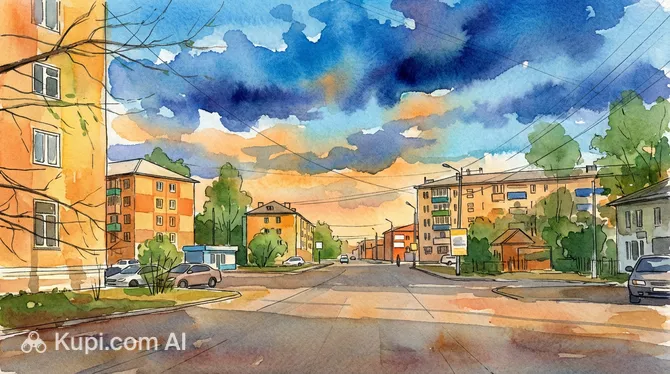
Kansk. Illustration.
Source: Kupi.com AI

The city's rich past is inextricably linked to the Great Moscow Tract. The history of Kansk dates back to 1636, when an ostrog (fort) was founded here to protect lands and develop trade. Today, a walk through the city streets feels like a small journey back in time: here you can find merchant mansions and architectural monuments that create the unique look of the central district.

Among the main attractions, the majestic Tsar's Gate—a Triumphal Arch restored in memory of the visit of Tsesarevich Nicholas—stands out. Furthermore, the city is known for its unexpected and creative approach to culture: the annual International Kansk Video Festival turns this Siberian corner into a center for contemporary art and experimental cinema. A visit to Kansk will be an interesting discovery for those seeking a peaceful rhythm of life and a touch of Siberian tradition.

Weather Overview

The city's climate is distinctly continental, meaning there is a significant difference between the seasons. Winter here is long and frosty: in January, the average temperature drops to -18.6°C, and on the coldest nights, it can reach -23.3°C. Snow cover remains stable, but the amount of precipitation in winter months is minimal, making the air dry and quite clear.

Summer brings comfortable warmth to the region, allowing you to enjoy Siberian nature. The warmest month is July, with an average of +19.0°C, while daytime temperatures can warm up to +24.0°C. Expect a warm summer with occasional rain and cold, dry winters. The highest number of rainy days occurs in September, so if you are planning an autumn trip, be sure to bring an umbrella. To choose the perfect time for your visit, check the latest information on what the weather in Kansk will be like in the coming days.

Average monthly temperature

Average monthly precipitation

Interesting Facts

In addition to its main attractions, Kansk holds many fascinating secrets and unexpected cultural parallels. This Siberian city is capable of surprising even seasoned travelers with its legends and modern art objects.

  • Siberian "Cannes": The city is often jokingly called a twin of the French Cannes due to the similarity of their names. This linguistic coincidence became the foundation for a serious cultural event—the International Kansk Video Festival. Every year, experimental directors gather here, turning the taiga city into a center for avant-garde cinema.

  • Its Own Palm Alley: To support its cinematic image and connection to the French Riviera, the city "grew" its own palm trees. These are creative art objects created by artists that ironically play on the contrast between the harsh Siberian climate and the image of a southern resort.

  • The Legend of the "Bloody" River: There is a dark but beautiful legend about the origin of the name of the Kan River. According to the legend, during an ancient battle, the river water turned red, and locals called it "kan," which translates from Turkic languages as "blood." However, linguists offer a more prosaic version: in the language of the ancient Yeniseian Ket people, the word simply meant "river."

  • Victory Air Bridge: During World War II, Kansk was an important node on the legendary "Alsib" (Alaska-Siberia) air route. It was here that American fighters and bombers supplied under Lend-Lease landed and underwent maintenance before being sent to the front.

How to Get There

When planning a trip to this Siberian city, keep in mind that there are no direct flights to the city itself. However, the region's well-developed transport network allows for a comfortable journey with transfers. You can find out more about how to get to Kansk or check the main options below.

Since Kansk does not have its own airport, it is most convenient for tourists to use the air gateways of the neighboring regional center. The nearest major hub is Krasnoyarsk International Airport (KJA), located in the city of Krasnoyarsk, approximately 200 km from the destination. This is the main hub receiving flights from many domestic and international cities. The journey from here by intercity bus or taxi takes a few hours.

An alternative for domestic flights is Cheremshanka Airport (KCY), also located near Krasnoyarsk (about 197 km from Kansk). It serves regional routes and may be convenient for those flying from neighboring regions.

Below is information about the nearest airports:

AirportPassenger trafficDistance
Cheremshanka300 000197 km
Krasnoyarsk International Airport4.3 mln200 km
Boguchany15 000263 km

Rail travel is one of the most popular and reliable ways to reach the city, as it sits on the historical Trans-Siberian Railway. The main gateway for those arriving by train is Kansk-Yeniseysky Station. The station is very conveniently located: just 2.2 km from the center, allowing for a quick trip to your hotel or attractions via local transport.

Also within transport reach is the large Ilanskaya station, located 21.9 km from the center of Kansk. This is an important railway junction with high traffic, where many long-distance trains stop, providing travelers with additional options for route planning.

List of railway stations serving this direction:

StationPassenger trafficDistance
Kansk-Yeniseysky Station800 0002 km
Ilanskaya Station400 00022 km
Zaozyornaya Station150 00069 km
Reshoty Station70 00093 km
Sayanskaya Station150 00098 km
Uyar Railway Station250 00098 km
Kanifolnaya Station20 000101 km

Main Attractions

The attractions of Kansk are a blend of the historical heritage of Siberian merchants and spiritual architecture. A walk through the city allows you to see monuments that tell stories of the times when Siberia was being settled and the Great Tea Road passed through here.

The undisputed symbol of the city is the "Tsar's Gate" Triumphal Arch. This majestic monument was originally built in 1891 to honor the passage of Tsesarevich Nicholas Alexandrovich, the future Emperor Nicholas II, through the city. Although the original structure did not survive, the arch was restored in 2006 using old blueprints and photographs. Today, it adorns Predmostnaya Square and serves as a popular spot for tourist photos.

Fans of ancient architecture should visit the Holy Trinity Cathedral. This was the first stone building in Kansk, constructed in the Siberian Baroque style back in the early 19th century. The church survived difficult times during the Soviet period but has since been returned to the faithful and carefully restored. Now, its snow-white walls and golden domes are a major architectural landmark of the historical center, creating a special atmosphere of peace.

To immerse yourself in the region's history, stop by the Kansk Museum of Local Lore. It is housed in a building that is itself an architectural monument from the early 20th century. The museum's halls contain rich collections detailing the life of indigenous peoples, the history of the Moscow Tract, and merchant life. Here you can see rare ethnographic exhibits and learn more about the nature of the Krasnoyarsk Krai.

Another important cultural site is the Kansk Drama Theater. Founded over a hundred years ago, it is considered one of the oldest in the region. The theater building attracts attention with its classical architecture, while its repertoire combines time-tested classics with modern productions, making it an excellent venue for evening cultural leisure.

Local Cuisine

A gastronomic journey to Kansk is an introduction to authentic Siberian cuisine, famous for its heartiness and natural taiga products. Local culinary traditions were shaped by the harsh climate, so the food here is substantial, warming, and incredibly delicious. Many dishes are based on the gifts of the forest and rivers: game, fish, mushrooms, berries, and cedar nuts.

The main dish that every guest of the region must try is Siberian pelmeni. Unlike the usual versions, the filling here is often made from several types of meat, sometimes adding game (elk or venison) for a special aroma. Another delicacy is suguday. This is an appetizer made from fresh local fish, quickly marinated with onions, oil, salt, and black pepper. You can also often find dishes made from bracken fern on local menus; it is harvested here on an industrial scale and is fried with meat or served as a spicy appetizer.

Among drinks, vitamin-rich mors (berry drinks) made from taiga berries like lingonberry, cranberry, or sea buckthorn hold a special place. They perfectly quench thirst and boost the immune system. For fans of hot drinks, it’s worth ordering herbal tea with added thyme, oregano, or the famous Sagan-Dailya—a toning plant popular in Siberia. As for alcoholic beverages, the signature items are infusions on cedar nuts ("kedrovuha") or forest berries, which are often brought back as souvenirs.

The food culture in Kansk is democratic and hospitable. Small, cozy cafes and canteens serving simple home-style food in large portions are popular here. Tourists are also encouraged to visit the city market. This is the best place to buy fresh cedar nuts, dried mushrooms, smoked fish, and local honey, as well as to chat with locals and learn the secrets of preparing taiga treats.

Travel Tips

A trip to Kansk is an opportunity to immerse yourself in the authentic atmosphere of the Siberian heartland, but a journey to this region requires some preparation. To ensure your visit is as comfortable as possible and free of surprises, we have prepared a list of practical recommendations to help you feel confident.

  1. Clothing and Equipment. Your choice of wardrobe depends directly on the season. Winters here are harsh, so be sure to bring thermal underwear, a hooded down jacket, warm mittens, and waterproof boots with thick soles. In summer, the weather is comfortable, but a windbreaker will be useful for evening walks by the Kan River. If you plan trips into nature, bring mosquito and tick repellents—this is a necessity in Siberia.
  2. Transport Accessibility. The main public transport in the city consists of buses and minibuses (marshrutkas) that run along the main streets. There are no metros or trams here. For ease of movement, we recommend installing taxi apps (like Yandex Go) that work in the city or saving the numbers of local dispatch services. The city center is quite compact, and many attractions can be explored on foot.
  3. Financial Matters. The local currency is the Russian ruble. Bank cards (from Russian payment systems) are widely accepted in supermarkets, cafes, and hotels. However, it is highly recommended to carry cash in small denominations: you will need it for bus fares, market purchases, or at small kiosks. ATMs of major banks are available in the central part of the city.
  4. Safety and Medicine. Kansk is a quiet city, but basic precautions are always a good idea: watch your belongings in crowded places and avoid walking in unlit outskirts at night. Pharmacies are common in the center, and there are 24-hour duty points. The emergency services number is 112.
  5. Communication and Navigation. The main language is Russian; English is mostly spoken by young people, so an offline translator on your phone will be useful for foreign guests. For navigating the area, it's best to download 2GIS maps—in Siberian regions, this service is often more accurate and detailed than global alternatives. Wi-Fi is available in most cafes and hotels.
  6. Local Etiquette. Siberians value sincerity and simplicity. When entering a private home or apartment, always remove your shoes. In conversation, locals may seem reserved at first, but they are very helpful if you need assistance. A standard greeting is a handshake for men and a verbal greeting for women.
  7. What to Avoid. Don't underestimate the Siberian climate: even if the sun is shining brightly, in winter the temperature can feel much lower due to the wind—don't go for long walks without a hat. Also, avoid drinking alcohol in public places (parks, streets)—this is prohibited by law and socially discouraged.
  8. Local Hack. If you want to bring home a real Siberian gift, head to the central market rather than a souvenir shop. That's where locals buy the freshest cedar nuts, taiga honey, and dried mushrooms at fair prices.

By following these simple tips, you can avoid daily inconveniences and focus on the main thing—getting to know the history and culture of this interesting Siberian city. We wish you a pleasant and safe trip to Kansk!

Entertainment & Nightlife

Nightlife in Kansk has its own special, measured rhythm, distinct from the hustle and bustle of major metropolises. Here you won't find an abundance of noisy clubs with neon signs at every turn; however, the city offers guests cozy options for evening leisure. After sunset, locals and tourists prefer to spend time in cafes, cinemas, or strolling along the illuminated central streets.

The main hub for cinema lovers and those seeking quiet relaxation is the Cosmos Cinema. This is a modern entertainment complex where you can watch the latest releases in comfortable halls with high-quality sound. "Cosmos" is popular with both young people and couples, often serving as the starting point for an evening route before dinner at one of the nearby establishments.

For those who want to dance or spend time with friends, several evening-format venues operate in the city. On weekends, it can be quite lively here, with musical programs and themed evenings. The atmosphere in local bars and cafes is generally democratic, and the dress code is casual but neat, allowing you to feel comfortable and appropriate.

In terms of safety, Kansk is a fairly quiet city, but travelers are recommended to observe standard precautions after dark. To get around the city at night, especially to areas far from the center, it is wiser to use a taxi rather than walking. Popular aggregators and local dispatch services operate in the city, so the wait for a car usually doesn't take long.

Connoisseurs of cultural leisure should check the schedule at the Drama Theater. An evening performance is a wonderful alternative to noisy entertainment and allows you to enjoy professional acting in the historical atmosphere of one of the region's oldest theaters.

Parks & Museums

The green zones and cultural institutions of Kansk offer a chance to take a break from the city bustle and dive deeper into the history of Eastern Siberia. City parks here harmoniously coexist with elements of the taiga, while museums carefully preserve the chronicles of the region's development, showing what life is like in the heart of Russia.

The central spot for outdoor walks is the City Park of Culture and Leisure. This is a unique natural corner, representing part of a real pine forest preserved within the city limits. Tourists value it for its healing coniferous air and centuries-old pines that create a majestic atmosphere. Here you can not only stroll through shady alleys but also find entertainment for the whole family: the park features amusement rides and relaxation zones.

For a more intimate setting, Korostelev Square, located in the historical center, is ideal. This well-maintained space with paved paths and benches is perfect for a small break during a city tour. The square also serves a memorial function: monuments related to the region's revolutionary past are installed here, adding an educational context to your walk.

The main guardian of historical memory is the Kansk Museum of Local Lore. It is located in the historic building of the former "Furor" cinema, which is considered an architectural landmark in its own right. The museum's exhibition will interest travelers with its diversity: it features archaeological finds, a rich collection of merchant life items, church utensils, and ethnographic materials telling the story of the indigenous peoples of the Yenisei region.

Connoisseurs of art should visit the City Exhibition Hall. This is Kansk's main art venue, where exhibitions by local painters, photographers, and masters of decorative and applied arts are regularly held. Visiting the hall allows you to see Siberia through the eyes of contemporary artists and appreciate the creative potential of a city known for its non-standard approach to culture.

Local tip: if you are looking for solitude and beautiful views, go for a walk along the Kan River embankment in the Sosnovaya Rosha (Pine Grove) area. This place isn't always mentioned in official guidebooks, but it's where the most picturesque panoramas of the river and taiga open up, especially impressive during sunset hours.

Getting Around

The public transport system in Kansk is simple and straightforward, which is typical for small Siberian cities. There is no complex metro network or electric transport (tram service was discontinued in 2004), so the main means of transport for locals and tourists are buses and commercial marshrutkas (minibuses). The route network is quite extensive and connects the historical center with the railway station, residential areas, and settlements on both banks of the Kan River.

Fares are usually paid directly inside the vehicle to the conductor or the driver upon exiting. The cost of a trip within the city is fixed and very affordable. In recent years, municipal transport has been actively equipped with terminals for contactless bank card payments; however, tourists are strongly advised to always have cash in small denominations. In private minibuses or in case of a connection failure, the terminal might not work, and having change in your pocket will save you time and nerves.

When planning your travel, keep the transport schedule in mind. Buses start running early in the morning, around 06:00, but in the evening, especially after 20:00–21:00, the intervals between trips significantly increase, and the number of runs decreases. To avoid waiting too long at a stop, use navigation apps. In this region, 2GIS works best: the service accurately shows route maps, stop locations, and helps build the optimal path.

As a comfortable alternative to buses, taxi services are well-developed in the city. Popular federal aggregators (such as Yandex Go) operate here, alongside local phone-based dispatch services. Thanks to the city's compact size and the lack of serious traffic jams, a taxi ride is inexpensive and allows you to quickly reach any point. Car-sharing and city bike rental systems are not currently common in Kansk, but the central part of the city is quite suitable for walking.

Accommodation

The choice of accommodation in Kansk reflects its status as a small Siberian city and an important transit hub. You won't find luxury five-star resorts or major international hotel chains here. The basis of the room stock consists of small private hotels, economy and mid-range hotels, as well as short-term apartment rentals. The service level in most places is modest but quite sufficient for a comfortable rest after a journey or sightseeing.

When choosing an area to stay, tourists should consider the purpose of their visit. If you want to explore history and architecture, it is better to stay in the central part of the city (the area around Korosteleva Square and Lenin Street). From here, it is easy to walk to the Triumphal Arch, the cathedral, and the museum. For those traveling via the Trans-Siberian or making a transfer, hotels near the railway station and Ilanskaya station are the optimal choice to save time on logistics.

Car travelers following the "Siberia" highway will find it convenient to look at motels at the city's entrance and exit. These roadside complexes often offer secure parking, which is critical for those driving their own vehicle. Apartments are also popular in the city: locals actively rent out flats by the day, which can be more economical for families or large groups who prefer home comforts and the ability to cook for themselves.

The price range for accommodation in Kansk can be described as budget-friendly and accessible. The cost of a room here is significantly lower than in the regional capital. However, given the small number of high-quality options, we recommend booking your accommodation in advance. This is especially true during the International Kansk Video Festival, when guests from all over the country flock to the city, and vacancies in the best hotels fill up very quickly. Note that not all small hotels are listed on major international platforms, so it sometimes makes sense to check local directories or call directly.

Nearby Cities

For those who want to explore the surrounding area, Kansk serves as an excellent starting point for day trips to several interesting nearby locations:

CityPopulationDistance
Zaozyorny10 28668 km
Uyar13 16799 km
Biryusinsk8 497133 km
Zheleznogorsk100 740136 km
Tayshet33 364146 km

The most popular destination for a short trip is Krasnoyarsk. The regional capital, located just a few hours' drive away, offers tourists a rich cultural program and stunning natural views. The city's main trademark is the "Krasnoyarsk Stolby" National Park with its unique rock formations, as well as the majestic Yenisei River embankment and the famous Paraskeva Pyatnitsa Chapel, depicted on the ten-ruble banknote.

Another interesting option for a visit, though further away, is Achinsk. This is one of the oldest cities in the region, which will appeal to history and architecture enthusiasts. Here you can stroll along ancient streets, see the Kazan Cathedral, and the building of the former women's gymnasium, immersing yourself in the atmosphere of Siberian merchant life from past centuries.

These nearby destinations provide an insight into the diverse culture and landscapes of the region.

Shopping & Souvenirs

Shopping in Kansk is more practical and gastronomic in nature than recreational. You won't find high-fashion global brand boutiques or massive outlets here; however, the city offers excellent opportunities to purchase quality local products and essential goods. For tourists, shopping here is primarily a chance to touch Siberian life and buy authentic gifts of the taiga, which Russia is rich in.

The city's main commercial life is concentrated in its historical center. The primary shopping artery is Lenin Street and the adjacent blocks around Korosteleva Square. Strolling here, travelers will encounter many small clothing stores, mobile shops, bookstores, and jewelry salons. This is a convenient place for a leisurely promenade where shopping can be combined with viewing old merchant architecture.

For those who prefer a modern shopping format, several large shopping complexes operate in the city. The most popular and extensive is the Port-Arthur Mall. This is a universal spot where mass-market clothing stores, electronics shops, children's goods, and a food court are all gathered under one roof. It's also worth mentioning TsUM—the city's oldest department store, which maintains traditional retail practices and offers a wide range of home goods and souvenirs.

You can experience the true flavor of Siberian trade at the Central Market. This place is a must-visit for every tourist. It's where locals buy the freshest farm products: meat, homemade cottage cheese, sour cream, and seasonal vegetables. Special attention should be paid to the stalls with forest gifts: dried and salted mushrooms, forest berries (lingonberries, cranberries), and, of course, a variety of fish.

As for souvenirs from Kansk, it's best to bring back edible gifts that convey the taste of Siberia. Topping the list are cedar nuts and cedar oil, as well as the famous pine cone jam. Local herbal blends (sagan-dailya, Ivan-tea) and natural honey make excellent gifts. For non-edible souvenirs, birch bark products (boxes, cases) and warm items made of natural wool, such as mittens or socks, are popular and indispensable in the harsh climate.

Most shops and shopping centers are open daily from 10:00 to 21:00 or 22:00. Small street stalls may close earlier, around 19:00. Bank card payments are accepted almost everywhere in supermarkets and malls. However, if you plan to visit the market or buy souvenirs from private artisans, it is highly recommended to have cash on hand, as not all sellers have terminals.

The Tax Free system (VAT refund for foreign citizens) operates in Russia, but in smaller cities like Kansk, finding stores connected to this program is extremely difficult. Travelers should not count on tax-free forms here; it is better to plan this procedure when making large purchases in major cities or capital regions.
Reached the end of the page?

That means the route is fully explored