Support

Kungur

About

Kungur is a fascinating city, nestled comfortably on the banks of the picturesque Sylva River, where the Urals meet the Kama region. Located approximately 80 kilometers from Perm, Kungur has historically served as an important crossroads of trade routes and a unique "gateway" to the Urals, sitting at the junction of Europe and Asia. Today, it is one of the significant cultural and tourist centers of the Perm Territory in Russia, attracting visitors with its authenticity and rich history.
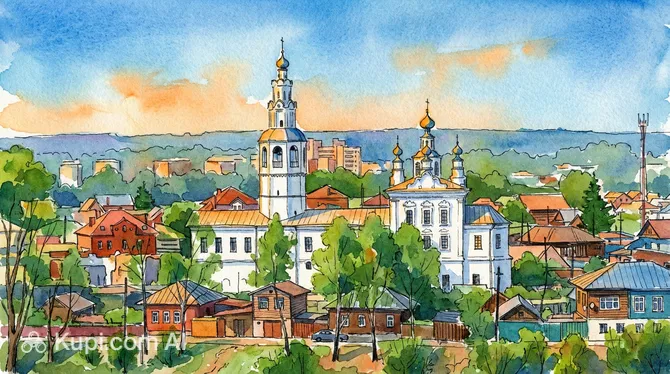
Kungur. Illustration.
Source: Kupi.com AI

Kungur is home to about 65,000 people, making it one of the notable cities in the region. The city has managed to preserve its unique provincial charm: there is no bustle of a metropolis here, but a friendly atmosphere prevails, and wide streets are decorated with numerous ancient buildings and architectural monuments. Kungur harmoniously combines the past and the present, offering guests a chance to immerse themselves in a slow pace of life and enjoy the fresh Ural air.

The main jewel of the city is, undoubtedly, the famous Kungur Ice Cave—one of the largest and most beautiful karst caves in the country, striking for its ice formations and mysterious grottoes. However, Kungur is not only about natural wonders. The city is famous for its merchant past, which is reflected in numerous historic mansions. Here you can visit interesting museums, stroll through cozy squares and historical streets, discovering new facets of this unique place.

If you appreciate authenticity, love to discover unexplored corners, and want to feel the spirit of a true Russian province, Kungur will be a pleasant discovery for you. This city offers a unique opportunity to touch history and enjoy the beauty of Ural nature.

You can find more interesting facts on the history of the city of Kungur page.

Weather Overview

The weather in Kungur is characterized by distinct seasons: warm summers and cold winters. In summer, especially in July, the average temperature reaches 18.7°C, with maximum values potentially rising to 23.7°C. Winters here are frosty: in January, the average temperature is about -12.3°C, while the minimum can drop to -14.9°C. Precipitation is distributed throughout the year, with a slight increase in the summer months (up to 3 mm in June and July). In winter, especially in January, there is also a significant number of days with precipitation (14 days), which mostly falls as snow. Expect a warm summer with occasional rain and cold, snowy winters. For more detailed information, you can check the Kungur climate.

Average monthly temperature

Average monthly precipitation

Interesting Facts

In addition to widely known attractions such as the famous Ice Cave, Kungur holds many surprising stories and little-known details that make it a truly unique city. Here are just a few of them:

  • In Kungur, there is a symbolic sign called the "Navel of the Earth." Although it is an art object, many locals believe that the geographical center of the Perm Territory is located right here, giving this place special significance.

  • Every year, the sky over Kungur is colored with dozens of bright hot air balloons during the "Sky Fair" ballooning festival. This spectacular sight attracts participants and spectators from all over the country and is one of the city's hallmarks.

  • The famous Kungur Ice Cave served not only as a tourist site but also as an unusual filming location for movies. Furthermore, even wedding ceremonies have been held in its unique ice grottoes.

  • Kungur is the birthplace of Semyon Ulyanovich Remezov—an outstanding cartographer, historian, and ethnographer of the 17th and 18th centuries. He created the first detailed geographical atlases of Siberia, known as the "Remezov Sketchbook."

  • The city pays tribute to its rich tea traditions, which flourished thanks to the merchant class and its location on the Great Siberian Tract. A monument to the samovar is installed in Kungur, symbolizing hospitality and the history of the tea trade.

How to Get There

When planning a trip to Kungur, travelers can take advantage of several convenient ways to reach this unique city in the Perm Territory. The main transport hubs connecting Kungur with other regions are the nearest airports and railway stations.

For those who prefer air travel, the nearest major airport is Bolshoe Savino (PEE). It is located in the city of Perm, about 77 km from Kungur. This is an international airport with significant passenger traffic, serving many domestic and international flights. The trip from Bolshoe Savino airport to Kungur by car or taxi usually takes about 2 hours 15 minutes. From Perm to Kungur, you can also get by bus or suburban train.

Another important air hub that can be considered is Koltsovo International Airport (SVX) in Yekaterinburg. This is one of the largest airports in Russia, located at a distance of about 246 km from Kungur. Despite the greater distance, thanks to its developed infrastructure and large number of flights, it can be a convenient option. Traveling by car or taxi from Koltsovo to Kungur will take approximately 6 hours 30 minutes. There is also regular bus and train service from Yekaterinburg to Kungur.

It is also worth mentioning Izhevsk Airport (IJK), located in the city of Izhevsk, about 221 km from Kungur. This is an airport with lower passenger traffic, but it can serve as an alternative if flights to Perm or Yekaterinburg prove less convenient.

For clarity, here is summary information on the main airports through which you can reach Kungur:

AirportPassenger trafficDistance
Bolshoye Savino2.0 mln77 km
Izhevsk Airport900 000221 km
Koltsovo8.0 mln246 km

In addition to air travel, Kungur is easily accessible by rail. This is a traditional and convenient way to get to the city, especially from neighboring regions.

Directly in Kungur is the Kungur Railway Station. It is located just 1.5 km from the city center, making arrival by train as comfortable as possible. The station serves both long-distance trains and suburban electric trains, connecting Kungur with many Russian cities.

If your route passes through Perm, the major railway station Perm I is located about 77 km from Kungur. From there, you can easily reach Kungur by electric train, bus, or taxi. The travel time will be about 1.5–2 hours, depending on the chosen mode of transport.

Below is information about the railway stations relevant for a trip to Kungur:

StationPassenger trafficDistance
Kungur Railway Station400 0001 km
Kukushtan Station150 00035 km
Perm-2 Railway Station4.4 mln78 km
Overyata Station400 00097 km
Chad Railway Station66 000104 km
Krasnoufimsk Railway Station350 000105 km

Furthermore, Kungur has good road connections. Important highways pass through or in the immediate vicinity of the city, making travel by private car or intercity bus also a convenient option for many tourists.

Main Attractions

Kungur, an ancient merchant city in the Perm Territory, attracts travelers with its rich history and unique attractions. Here, everyone will find something of interest, from mysterious natural wonders to architectural monuments reflecting the city's glorious past.

The main jewel of Kungur and its hallmark is undoubtedly the Kungur Ice Cave. It is one of the largest karst caves in the European part of Russia, famous for its ice grottoes, crystal-clear underground lakes, and whimsical dripstone formations. Tours along equipped routes allow you to plunge into the mysterious world of permafrost and learn many interesting facts about the geology of this unique natural monument, which is beautiful at any time of year.

A reflection of the city's rich trading past is the Gostiny Dvor. This monumental architectural complex, built in the 19th century, was once the heart of merchant life in Kungur. A walk through its ancient galleries allows you to imagine the bustling trade of past centuries. Today, Gostiny Dvor continues to be an important public space, where fairs and cultural events are sometimes held.

No less interesting is the Monument to Nikitka the Flyer, erected in honor of a local daredevil who, according to legend, attempted to fly on homemade wings. This sculpture has become one of the symbols of the city, personifying the human desire for dreams and the unknown. It is a popular spot for photos and a reminder of the rich folklore of the Kungur region.

For connoisseurs of spiritual architecture and history, the Ascension Cathedral is a significant site. Built in the mid-19th century, this beautiful church is one of the oldest stone buildings in the city. Its majestic appearance and preserved interior decoration attract both pilgrims and tourists interested in the Orthodox culture and architecture of the Urals.

Local Cuisine

The cuisine of Kungur is a fascinating journey into the world of Ural and merchant traditions, where simple but incredibly hearty dishes are valued. Local gastronomic customs are closely linked to the gifts of nature: forest mushrooms, berries, river fish, and game often appear in recipes. This is a cuisine that warms and surprises with its authenticity, offering guests the chance to try dishes prepared with soul.

Be sure to try the famous ukha (fish soup) made from Sylva fish—it is prepared here according to special recipes passed down from generation to generation. Another pride of Kungur is its variety of pies. They are baked with fish, meat, cabbage, and, of course, with aromatic Ural mushrooms. At local gastronomic festivals, you can taste hand-made pelmeni (dumplings), smoked fish, and homemade cheeses that reflect the richness of local culinary arts.

A special place in Kungur's culture is occupied by tea. This is not just a drink, but an entire ceremony, emphasized by the presence of a samovar monument in the city. Aromatic buns and gingerbread (pryaniki) are traditionally served with tea. In addition to tea, it is worth paying attention to local herb and berry tinctures—these are not only tasty but also an authentic souvenir that will remind you of Ural hospitality.

You can immerse yourself in the atmosphere of local cuisine in numerous cafes and restaurants where old recipes are carefully preserved. At farmers' markets, you will find homemade pickles, forest berry jams, and fresh honey. Street food in Kungur is represented by fresh pastries—hot pies and buns with various fillings, convenient to grab while walking around the city. In recent years, gastronomic festivals have been gaining popularity, where you can not only try local delicacies but also participate in masterclasses.

Travel Tips

Planning a trip to Kungur? Wonderful! This ancient city in the Perm Territory, famous for its Ice Cave and rich history, warmly welcomes travelers. To ensure your adventure goes smoothly and leaves only pleasant impressions, we have prepared a few practical tips.

  1. Seasonal Clothing and Essentials: The climate in Kungur is continental, with warm summers and frosty, snowy winters. In summer (June–August), bring light clothing, but don't forget a sweater or windbreaker for evening walks. Be sure to bring comfortable shoes, as you will be walking a lot, especially if you plan to visit the Kungur Ice Cave—the temperature there is around +5°C year-round, so even in summer, a warm sweater will come in handy. In winter (December–February), warm multi-layered clothing is necessary: a down jacket or fur coat, hat, scarf, gloves, and warm waterproof boots. In spring and autumn, the weather is changeable, so layering is your best friend. Don't forget an umbrella or raincoat. When visiting active churches, women are recommended to cover their heads and shoulders, and men should wear trousers.

  2. Getting Around the City: Kungur is a small city, and many central attractions are within walking distance of each other. The main form of public transport is buses. The route network is quite well-developed. Taxis can be called by phone or through popular apps in Russia (such as Yandex Go). The cost of trips around the city is generally low. Car rental may be needed if you plan to explore the surroundings, but it is not a necessity for moving within the city limits.

  3. Financial Matters: The official currency in Russia is the Russian Ruble (RUB). You can exchange currency at bank branches. Bank cards (the "Mir" system) are accepted in most shops, cafes, and hotels. Extremely important: before your trip, check current information on the possibility of using your international bank cards (Visa, Mastercard, etc.) within Russia, as there may be significant restrictions. It is always useful to have some cash with you, especially for small shops, markets, or paying for public transport. There are ATMs in the city. Tipping in cafes and restaurants is welcomed (usually 5–10% of the bill) but remains at your discretion.

  4. Health and Safety: There are pharmacies in Kungur where you can purchase necessary medications; some may operate 24/7—check the schedule in advance. For emergency medical assistance, call 112. It is recommended to have travel insurance. Kungur is generally a safe city for tourists. Observe standard precautions: keep an eye on your belongings in crowded places, do not leave valuables unattended, and avoid walking in poorly lit and deserted areas after dark.

  5. Language and Communication: The official language is Russian. English is not widely spoken, mostly among young people and workers in the tourism sector. It will be very helpful to learn a few basic phrases in Russian, such as "Privét" (Hello), "Spasíbo" (Thank you), "Pozháluysta" (Please/You're welcome), "Skól'ko stóit?" (How much does it cost?), and "Gde nakhóditsya...?" (Where is...?). A local SIM card with internet access can be purchased at mobile phone shops upon presentation of a passport. Wi-Fi is available in most hotels and in many cafes and restaurants.

  6. Local Etiquette and Communication: Residents of Kungur, like most Russians, may seem reserved upon first meeting, but they are usually helpful and ready to assist. It is customary to greet with a handshake (especially between men). In public places, try not to be loud or attract unnecessary attention. Showing respect for local traditions and culture is always appreciated.

  7. What to Avoid: Avoid taking photos of people without their permission—this may be perceived negatively. It is also better to refrain from discussing sensitive political topics to avoid misunderstandings. Show respect to monuments and historical sites.

  8. Special Tip – Ice Cave and "Sky Fair": The main jewel of Kungur is undoubtedly the Kungur Ice Cave. Take care of tickets in advance, especially during the tourist season. Remember that it is always cold inside the cave (about +5°C), so warm clothing is necessary even in summer. And if your trip falls at the end of June or beginning of July, you have a chance to attend the spectacular annual hot air balloon festival "Sky Fair of the Urals"—it is truly an unforgettable sight when the sky over the city is colored with dozens of balloons.

We hope these tips help you better prepare for your trip and fully enjoy every moment of your stay in hospitable and unique Kungur. Happy discoveries!

Entertainment & Nightlife

Kungur, a charming Ural city, offers its guests not only daytime excursions to historical sites but also opportunities for evening relaxation. The nightlife here is more quiet and cozy in character rather than noisy and club-oriented, which corresponds to the overall atmosphere of an ancient merchant town. The main entertainment is concentrated around several central streets where you can find places for a pleasant pastime after a busy day.

In the evening in Kungur, you can stop by local cafes and bars, many of which offer not only drinks but also snacks or full dinners. The atmosphere in such establishments is usually friendly and conducive to conversation. Some restaurants also stay open until late evening, allowing you to enjoy local or European cuisine in a calm setting. As for nightclubs in their classic sense, the choice in a small city will likely be limited; the focus shifts towards venues with live music or themed evenings in bars. Night markets are not a characteristic feature of the city's evening life.

Main activity in the evening is concentrated in the center of Kungur, for example, on streets such as Gogol Street, Lenin Street, or Karl Marx Street, where most cafes and restaurants are located. The crowd here is mostly local, along with tourists looking to relax after excursions. There is no specific dress code in most establishments; a neat casual style is welcomed. Opening hours are usually until midnight or slightly later, especially on weekends.

The best time for evening outings is after 20:00, when the daytime hustle subsides. Prices in Kungur's entertainment venues are generally quite moderate, especially when compared to the regional center, making evening leisure quite affordable. For moving around the city at night, it is recommended to use taxi services. Several local taxi companies operate in Kungur, and a car can be ordered by phone. Public transport runs less frequently in the evening, so a taxi will be a more reliable option.

Kungur is generally a peaceful city. However, as in any other place, it is worth taking standard precautions after dark: avoid poorly lit and deserted streets, especially if you are alone. Central areas where establishments are concentrated are generally safe enough for walking.

Since specific data on popular nightlife venues (such as bars or clubs with a `LandingKey` for creating links) was not provided in this request, we cannot recommend specific places. To find current and popular spots, we advise checking online maps, travel portals with reviews, or simply taking a walk through the city center—you are sure to find a cozy place to your taste. Often, local residents or your hotel staff become the best advisors.

During the day, Kungur offers many cultural activities. Guests of the city can visit the Museum of Merchant History, explore ancient churches, or walk along the picturesque embankments. The main attraction, of course, remains the Kungur Ice Cave, tours of which are available throughout the day. For families with children, the city park may be of interest. The city's theatrical life may be represented by local troupes, whose schedule should be checked in advance.

Parks & Museums

Kungur is a city where history and nature are harmoniously interwoven, offering travelers both peaceful green corners and rich cultural experiences in its museums. Here everyone will find something for the soul, whether it's a walk through picturesque places or a dive into the past of this amazing Ural city.

Among the natural attractions and leisure spots in Kungur, the area around the famous Kungur Ice Cave holds a special place. Although the cave itself is the main magnet, the adjacent forest park zone is also perfect for walks in the fresh air, offering beautiful views and the chance to enjoy Ural nature. Additionally, the embankment of the Sylva River, which flows through the city, is a popular place for leisurely strolls and relaxing by the water, especially in the warm season. The City Park of Culture and Leisure traditionally serves as a place for family leisure, offering rides and space for activities.

The cultural heritage of Kungur is carefully preserved in its museums. A key institution is the Kungur Historical-Architectural and Art Museum-Reserve. Its exhibitions tell the story of the region from ancient times, the development of the city, its crafts, and the daily life of its residents. Of particular interest is the Museum of Merchant History, as Kungur was an important trading center known for its fairs and the tea route. Here you can learn about the lives and activities of famous Kungur merchant dynasties. For art lovers, the city has an Art Museum featuring works by local and Russian artists.

Besides museums, the city itself is a kind of open-air museum. Walking through its streets, you can see many historical buildings reflecting its rich past. Pay attention to architectural gems such as the Tikhvin Church with its recognizable silhouette and the Transfiguration Church. The Gostiny Dvor complex, a reminder of the city's trading glory, is also interesting. Don't forget to take a photo at the amusing "Navel of the Earth" monument, which has become one of the symbols of modern Kungur.

For a complete impression of Kungur, we recommend not limiting yourself to the main attractions. Stroll through the old streets with preserved wooden buildings—this will allow you to feel the atmosphere of a provincial town more deeply. Also, look for local souvenir shops where you can find products made of selenite—a stone for which this region is famous.

Getting Around

Moving around Kungur is quite simple thanks to the established public transport system, which will help you reach the main points of the city and its surroundings. Although the city is small, knowing the basic ways to travel will make your journey more comfortable.

The basis of public transport in Kungur consists of buses and fixed-route taxis (locally known as "marshrutkas"). Buses follow approved routes, connecting various city districts and suburban areas. Marshrutkas often offer more flexible and faster travel options, sometimes duplicating bus lines or covering specific directions. They are particularly convenient for quick trips over short and medium distances.

The payment system in Kungur is predominantly cash-based. As a rule, you can pay for the ride directly to the driver or the conductor when entering the vehicle. The fare is usually low and fixed for city routes. It is best to check on the spot about the availability of special travel passes or transport cards for multiple trips, as such systems may not always be available or may have limited application.

You can buy a ticket for a bus or marshrutka directly inside the vehicle. Public transport usually begins operating early in the morning (around 6:00–7:00) and ends late in the evening (until 22:00–23:00), but schedules may vary depending on the specific route and day of the week. It is recommended to check the schedule in advance, especially if you plan to travel in the morning or evening hours.

As an alternative to public transport in Kungur, you can always use taxi services. Local taxi companies operate in the city, and popular mobile apps for ordering a car may also be available. This is a convenient option for trips with luggage, at night, or if you prefer individual comfort. Car-sharing services or developed bike rental systems are usually less common in cities of this scale, so taxis remain the main alternative to buses and marshrutkas.

Accommodation

In Kungur, tourists have access to a diverse range of accommodation options capable of satisfying various preferences and budgets. Travelers can find inexpensive guesthouses and hostels, as well as more comfortable mid-range hotels. Renting apartments is also popular, especially for families or those who prefer more privacy and a home-like atmosphere.

When choosing a place to stay in Kungur, it is worth paying attention to the central districts, where the main infrastructure is concentrated and from where it is convenient to reach the city's attractions. If the main goal of your trip is to visit the famous Kungur Ice Cave, consider accommodation options closer to it or with convenient transport links. In the city, you will find both small private hotels and hotels with a wider range of services, specific options for which can be explored on popular booking platforms.

When planning a trip to Kungur, especially during the peak tourist season or during major events such as the famous "Sky Fair" ballooning festival, it is recommended to book your accommodation in advance. This will allow you to choose the best option in terms of price and quality, and also guarantees availability.

The price range for accommodation in Kungur varies from budget options to mid-level. You can book accommodation through popular online platforms and aggregators, or by directly contacting the administration of the chosen hotel or guesthouse. Many accommodation properties offer different types of rooms and additional services to make your stay as comfortable as possible.

Nearby Cities

For those who want to explore the surrounding area, Kungur serves as an excellent starting point for day trips to several interesting nearby places. Here are a few ideas for such outings:

  • Perm: Located just 77 km from Kungur, Perm, the regional capital, offers a rich cultural program. Here you will find numerous museums (such as the Perm State Art Gallery), theaters (including the famous Opera and Ballet Theater), as well as interesting architectural sites and street art objects. This is an excellent choice for those looking for a diverse urban experience.
  • Lysva: Approximately 91 km from Kungur is Lysva—a city with a rich industrial history, known for its metallurgical plant and the Museum of Enamel. Surrounded by picturesque Ural landscapes, the city also offers opportunities for nature lovers, such as visiting the Lysva River or the surrounding forests.

More detailed information about the nearest cities, including distance from Kungur and population size, is presented in the table below. These destinations will help you get to know the region better:

CityPopulationDistance
Zvezdnyy1050 km
Sylva10 44868 km
Perm1 048 00577 km
Osa20 89990 km
Lysva61 75291 km

Each of these directions is unique in its own way and will allow you to get a more complete picture of the diversity of culture, history, and natural beauty of the Perm Territory, making your trip from Kungur even more rewarding.

Shopping & Souvenirs

Shopping in Kungur offers tourists the opportunity to purchase unique local products and souvenirs reflecting the rich history and culture of this Ural city. While you won't find massive malls with global brands here, Kungur is famous for its craft traditions, especially stone and ceramic products.

The main retail outlets are concentrated in the central part of the city, on Karl Marx, Gogol, and Lenin streets. Here you can find various stores, from grocery to hardware, as well as small souvenir shops. A walk along these streets will allow you to combine sightseeing of historical buildings with searching for interesting purchases.

There are several shopping centers of local significance in Kungur, such as TC "Megamart" or TC "Kit," where you can buy everyday goods, clothing, and electronics. However, do not expect the same variety as in large metropolises.

Special attention should be paid to the city market. Kungur's Central Market is a place where you can buy fresh local products, farm goods, and find inexpensive items and perhaps interesting handmade products from local artisans. The market atmosphere will help you better feel the flavor of the city.

The main souvenirs from Kungur are undoubtedly products made of selenite—the "moonstone" mined in the vicinity of the city. These can be animal figurines, caskets, candle holders, and jewelry. Ceramic products, magnets with views of the famous Kungur Ice Cave and other attractions, as well as local honey and herbal blends, are also popular. Sometimes you can find leather and wood products from local craftsmen.

Most shops in Kungur operate on a standard schedule: approximately from 10:00 to 19:00 or 20:00 on weekdays, with shorter hours on weekends. Large grocery stores may have longer opening hours. Card payments are common in most outlets, especially in supermarkets and chain stores, but it is better to have cash with you at markets and in small souvenir shops.

The Tax Free system for value-added tax refunds for foreign tourists is generally not applied in Kungur stores, as the city is oriented more towards domestic tourism, and the system itself has limited application in Russia.

Reached the end of the page?

That means the route is fully explored