Support

Shuya

About

Shuya is one of the ancient and distinctive cities of Russia, located in the Ivanovo region. This city, with its rich history and unique atmosphere, attracts travelers with its coziness, picturesque landscapes of the Teza River, and well-preserved merchant architecture. Shuya harmoniously combines the spirit of the past with the calm flow of modern life, offering guests a chance to immerse themselves in the authentic Russian province.

The city is located approximately 300 kilometers northeast of Moscow. The population of Shuya is about 58,000 people, making it one of the significant cultural and historical centers of the region. The climate here is humid continental, with warm summers and snowy winters, allowing visitors to enjoy the beauty of the city at any time of year.
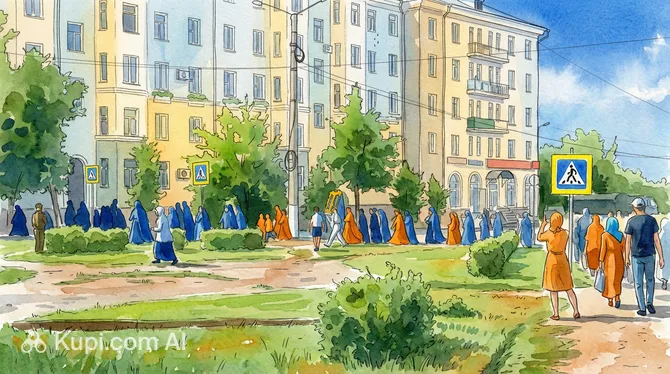
Shuya. Illustration.
Source: Kupi.com AI

Shuya is famous for its architectural monuments, among which the Resurrection Cathedral holds a special place with its famous 106-meter bell tower—one of the tallest freestanding Orthodox bell towers in the world. The city is also known as one of the historical centers of soap making and the textile industry. A walk through the historical center of Shuya will allow you to see numerous 19th-century merchant mansions that create the city's unique appearance.

A visit to Shuya will give you many pleasant impressions and allow you to touch the rich history and culture of the Russian heartland. It is a wonderful place for those seeking a peaceful holiday and wanting to get to know the real Russia.

You can find more interesting facts on the history of Shuya page.

Weather Overview

In Shuya, the climate is humid continental, so you can enjoy all four seasons in all their beauty. In summer, it is usually warm: the average July temperature is about +19.0°C, with maximum values reaching +23.5°C, and occasional rains (about 3 mm of precipitation). Winters in Shuya are frosty, with an average January temperature of about -7.9°C (minimum temperatures drop to -10.1°C). Although the total amount of winter precipitation is low (about 2 mm per month), snow falls quite often (for example, in January up to 14 snowy days), creating a real winter wonderland. Spring and autumn are pleasant transitional seasons with gradual temperature changes. To get a more detailed idea of the weather in Shuya by month, you can check the information on the Shuya climate page.

Average monthly temperature

Average monthly precipitation

Interesting Facts

Shuya is not only a city with rich history and beautiful architecture but also a place that holds fascinating facts and urban legends. Here are just a few of them:

  • The official coat of arms of Shuya depicts a golden bar of soap on a red background. This symbol is no accident—the city has been famous for its soap-making traditions since ancient times, and Shuya soap was known throughout Russia.

  • The famous 106-meter bell tower of the Resurrection Cathedral is not only one of the tallest in Russia but is also considered one of the tallest active freestanding Orthodox bell towers in the world. Its ringing can be heard for many kilometers around.

  • The famous Silver Age poet Konstantin Balmont was born and spent his childhood near Shuya, at the Gumnishchi estate. The landscapes and atmosphere of the Shuya region were reflected in his early work.

  • Shuya was one of the significant centers of icon painting. A unique icon-painting tradition developed here, known as the "Shuya school of icon painting," distinguished by a special style and color palette. The famous Shuya-Smolensk Icon of the Mother of God is a prime example of this.

How to Get There

There are several main ways to reach the ancient city of Shuya, with air travel followed by a transfer and rail trips being the most popular. The choice of the optimal route will depend on your starting point and personal travel preferences.

Although Shuya does not have its own airport, travelers can use airports in neighboring cities. The closest and most convenient option is Ivanovo Airport (IWA), located in the city of Ivanovo, about 27 km from Shuya. This is a regional airport, and the journey from there to Shuya by taxi or bus takes about 1 hour. Another option is Yaroslavl Airport (IAR), which is in the city of Yaroslavl, approximately 107 km from Shuya. This is also a regional airport, and the road from there to Shuya takes about 3 hours. For those flying from more distant regions or looking for international flights, the large international Strigino Airport (GOJ) in Nizhny Novgorod is worth considering. It is located about 165 km from Shuya, and the transfer from there can take about 4-4.5 hours.

For clarity, here is summary information on the main airports from which you can reach Shuya:

AirportPassenger trafficDistance
Ivanovo Airport100 00027 km
Yaroslavl Airport83 557107 km
Kostroma Airport25 000107 km
Strigino1.5 mln165 km
Zhukovsky1.7 mln246 km

Rail service is another convenient way to get to Shuya. Shuya Railway Station is located directly in the city, just 0.4 km from the center. This is a small station that accepts suburban trains and some long-distance trains, making it very convenient for arriving right in the heart of the city. If your route passes through the regional center, the large Ivanovo Railway Station is located in the city of Ivanovo, about 33 km from Shuya. From there, you can easily reach Shuya by bus, shuttle bus (marshrutka), or taxi; such a trip takes approximately 40-60 minutes.

Here is information about the railway stations that may be useful when planning a trip to Shuya:

StationPassenger trafficDistance
Shuya Railway Station0 km
Kaminsky Station33 km
Ivanovo Railway Station1.5 mln33 km
Gorkino Station37 km
Furmanov Railway Station150 00046 km
Teykovo Railway Station150 00048 km

Additionally, you can reach Shuya by private car via a well-developed road network or by using long-distance bus services. Regular bus services connect Shuya with Moscow, Ivanovo, and other cities in the region. We recommend checking current schedules and routes on the carriers' websites or at local bus stations.

Main Attractions

Shuya, despite its small size, offers guests many interesting places that tell the story of the rich history and culture of this distinctive city. Here are several key attractions to include in your itinerary:

The central gem among the architectural treasures of Shuya is the Resurrection Cathedral. Its grand 106-meter bell tower, one of the tallest freestanding Orthodox bell towers in Europe, is visible from afar and serves as the city's unofficial symbol. The cathedral impresses with its majesty and rich interior decoration, being an important spiritual center and a point of attraction for pilgrims and tourists interested in Russian church architecture.

You can learn about one of Shuya's most famous traditions—soap making—at the unique Soap Museum. Here you will immerse yourself in the history of this ancient craft, see how soap was made in the old days, and get acquainted with a collection of soap from different eras and product samples from local masters. It is a fascinating place where you can not only learn a lot but also purchase original fragrant souvenirs.

Fans of poetry and history will find the Konstantin Balmont Literary and Local Lore Museum very interesting. It is dedicated to the life and work of the famous Silver Age poet, whose childhood years were spent in the Shuya region at the Gumnishchi estate. The museum's exhibitions also tell the story of the region's history and culture, presenting the daily life and traditions of local residents, making it an important center for preserving cultural heritage.

The M.V. Frunze Shuya Historical, Art and Memorial Museum is definitely worth a visit. This is the city's largest museum, possessing rich collections covering the history of the region from ancient times, Russian and foreign art, as well as ethnography. A separate exhibition is dedicated to the life and activities of Mikhail Frunze, who was connected to the city's history in the early 20th century. The museum offers a deep dive into the past of Shuya and its surroundings.

Local Cuisine

The gastronomic scene in Shuya is an immersion into the world of traditional Russian cuisine, where hearty, home-cooked dishes prepared with soul are highly valued. Here you can enjoy flavors familiar since childhood and discover authentic recipes passed down through generations. The city's cuisine reflects its historical character and the coziness of the Russian province, offering guests simple yet incredibly delicious treats.

Be sure to try the rich shchi (cabbage soup) or aromatic borscht—classics of Russian culinary art that take on a special homemade flavor in Shuya. Don't miss the chance to taste the famous handmade pelmeni (dumplings) or various pies—filled with cabbage, meat, fish, or sweet berry fillings. Crepes (blini), especially with local jam or sour cream, are also an excellent choice for breakfast or dessert. These dishes are often prepared from local, seasonal products, which adds to their freshness and authenticity.

Among traditional drinks in Shuya, kvass is popular—refreshing and invigorating, especially in the summer heat. You should also try berry mors (fruit drinks) and aromatic herbal teas that will warm you up in cool weather. Among alcoholic beverages, besides traditional Russian vodka, you can find local herbal or berry infusions (nastoykas), which can be an interesting gastronomic discovery.

You can eat in Shuya at cozy cafes and restaurants, many of which specialize in Russian cuisine. A hospitable atmosphere reigns here, perfect for a slow meal. Locals often prefer establishments with home-style cooking where you can enjoy quality food at reasonable prices. For tourists, this is a great opportunity to get acquainted with the culinary traditions of the region and feel like part of local life.

Travel Tips

Planning a trip to cozy Shuya? To ensure your journey goes smoothly and leaves only pleasant impressions, we have prepared some practical tips to help you better navigate this historical city in Russia.

  1. Clothing and seasonal items: The climate in Shuya is humid continental. In summer (June-August), bring light clothing, but don't forget a sweater or light jacket for evening walks and in case of rain. In winter (December-February), warm layered clothing, a hat, gloves, a scarf, and waterproof warm shoes are necessary, as it can be snowy and frosty. In spring and autumn, the weather is changeable, so dress in layers. Be sure to bring comfortable shoes for walking around the city. When visiting churches, such as the famous Resurrection Cathedral, women are recommended to cover their heads and shoulders and wear a skirt or dress below the knees; men should wear trousers. Don't forget a plug adapter (type C/F).

  2. Getting around the city: Shuya is a small city, and its historical center can easily be explored on foot. The main form of public transport is buses. Schedules and routes can be checked at stops or with locals. Taxis are also available; you can use local taxi companies or ride-hailing apps if they are popular in the region. Renting a car for moving around Shuya itself is likely unnecessary, but it may be useful if you plan to explore the surroundings of the Ivanovo region.

  3. Financial matters: The national currency is the Russian Ruble (RUB). You can exchange currency at bank branches. "Mir" system cards are accepted everywhere. The operation of international cards (Visa, Mastercard) issued outside Russia may be limited, so it is recommended to have enough cash with you. ATMs are available in bank branches and in the city center. An approximate daily budget (excluding accommodation) might be 2000-4000 rubles, depending on your plans. Tips in restaurants and cafes are usually 5-10% of the bill if you liked the service, but are not strictly mandatory.

  4. Health and safety: Pharmacies (look for the "Аптека" sign) are available in the city; check in advance which ones operate 24/7. If you need medical assistance, tourists should call 103 (ambulance) or 112 (emergency services number). Having travel medical insurance is highly recommended. Shuya is generally considered a safe city, but follow standard precautions: watch your belongings, especially in crowded places, and avoid walking in poorly lit areas after dark. It is better to buy bottled drinking water.

  5. Language and communication: The official language is Russian. English proficiency among the local population may be low, especially outside the tourist infrastructure. Learn a few basic phrases in Russian, such as: "Zdravstvuyte" (Hello), "Spasibo" (Thank you), "Pozhaluysta" (Please/You're welcome), "Skol'ko stoit?" (How much does it cost?), "Gde nakhoditsya...?" (Where is...?). A SIM card from a Russian operator can be purchased at mobile shops upon presentation of a passport. Wi-Fi is available in some hotels and cafes.

  6. Local etiquette and communication: Locals are generally helpful and hospitable. Politeness is valued during communication. It is customary to remove outdoor shoes when entering a home. If you are invited to visit, a small token of appreciation (like flowers or sweets for tea) would be appropriate. In public places, try not to make noise and be respectful of others.

  7. What to avoid: Try to avoid discussing sensitive political topics to prevent awkward situations. Do not take photos of people without their permission, especially in churches or if they clearly show reluctance. Do not speak disparagingly about local traditions or lifestyle—respect for culture is always appreciated.

  8. Souvenirs and local features: Shuya is known for its soap-making traditions. Be sure to visit the Soap Museum and bring back fragrant handmade Shuya soap as a souvenir—this is a truly authentic gift. Also, pay attention to local handicrafts that can be found at markets or in souvenir shops.

We hope these tips help you better prepare for your trip to Shuya and enjoy every moment in this charming corner of Russia. We wish you an unforgettable journey and vivid impressions!

Entertainment & Nightlife

Shuya, being a city with a rich history and a measured pace of life, offers its guests and residents various options for leisure, including in the evening. Although you won't find the noisy and 24-hour nightlife of a metropolis here, Shuya provides opportunities for a pleasant end to the day in a cozy setting.

Evening and night entertainment in Shuya is mainly characterized by a calm and friendly atmosphere. The main places for evening relaxation are local cafes and bars, some of which may stay open until late evening, offering visitors drinks, snacks, and a chance to socialize. Occasionally, especially on weekends or holidays, discos or themed evenings may be organized in the city, for example, at local cultural centers or in establishments with a dance floor. The crowd at such events is predominantly local, and the style of the venues is democratic and informal.

Main evening venues are usually concentrated in the central part of the city, near the main streets. There are no specialized nightlife districts in Shuya, but the city center is where it is easiest to find a cafe or bar operating at a later hour. Most establishments close by midnight or 1:00 AM. As a rule, there is no dress code, or it is casual. Prices in these venues are usually moderate. For moving around after dark, taxis are the most convenient option and can be called by phone from one of the local services.

Regarding safety, Shuya is generally considered a peaceful city. Nevertheless, standard precautions during evening and night hours are always wise: try to avoid poorly lit and deserted places, especially if you are walking alone. The central streets, where evening spots are usually located, are generally more lively. If you plan to stay out late, it is recommended to have the phone numbers of local taxi services ready in advance.

Since information about specific bars, clubs, or restaurants operating at night, as well as their current schedules, can change, we recommend checking recent reviews and data on online maps or travel portals before your trip to Shuya. Often, you can learn about the most interesting and popular places from locals—"word of mouth" works perfectly in small towns.

During the day, Shuya offers its guests more traditional cultural entertainment. You can visit the Konstantin Balmont Literary and Local Lore Museum, the interesting Soap Museum, or the M.V. Frunze Shuya Historical, Art and Memorial Museum. Pleasant additions to your holiday include walks along the picturesque historical streets, viewing the majestic Resurrection Cathedral with its famous bell tower, or relaxing in one of the city's squares. Local cultural centers may also be active, offering various events and performances.

Parks & Museums

Shuya hospitably opens the doors not only of its historical streets but also of its cozy green zones, offering guests a harmonious combination of outdoor relaxation and immersion in a rich cultural heritage. City parks and squares are excellent places for slow walks, while museums tell fascinating stories about the past and present of this distinctive corner of Russia.

For those seeking relaxation in the fresh air, the City Park of Culture and Leisure will be a pleasant discovery. This is a traditional place for many Russian cities where you can walk along shaded alleys, sit on a bench enjoying the silence, or simply take a break from the city bustle. Another wonderful place for walks is the Teza river embankment. It offers picturesque views, and the steady flow of the river sets a peaceful mood. It is especially pleasant to be here in the warm season, enjoying the fresh river breeze.

Among Shuya's cultural treasures, the Soap Museum holds a special place. This is not just an exhibition, but a real immersion into one of the city's most famous traditions—soap making. Here you will learn the secrets of ancient masters, see unique exhibits, and even be able to purchase fragrant souvenirs, making it a must-visit for curious tourists. Fans of literature and regional history should certainly visit the Konstantin Balmont Literary and Local Lore Museum. It not only introduces the life and work of the famous Silver Age poet, whose childhood was spent on Shuya land, but also reveals many pages of the region's history and daily life.

For a deeper acquaintance with the history and art of the region, head to the M.V. Frunze Shuya Historical, Art and Memorial Museum. Its rich collections cover various eras and aspects of city life and its surroundings, from archaeological finds to works of art and ethnographic exhibits. Walking through Shuya, you will also constantly encounter 19th-century historical buildings and merchant mansions, which are themselves living exhibits creating the city's unique atmosphere. And, of course, one cannot overlook the majestic Resurrection Cathedral with its famous 106-meter bell tower, which dominates the city skyline and serves as an important spiritual center.

To fully feel the spirit of Shuya, try combining museum visits with leisurely walks through its ancient streets, paying attention to the details of intricate wood carving and the stonework of old houses. After a day full of cultural programming, it will be pleasant to relax in one of the small city squares, such as the square on Lenin Square or the square near the Pavlovsky Palace, observing the flow of local life. This will allow you not only to see the main attractions but also to feel the authentic atmosphere of this charming city.

Getting Around

Getting around Shuya is quite simple, especially if you plan to explore its historical center and main districts. Public transport in the city is represented mainly by buses, which connect different parts of Shuya and are the most affordable way to travel for tourists and locals. There are also shuttle buses (marshrutkas) running in the city, offering faster or more direct routes to popular destinations.

The fare payment system in Shuya is generally simple and straightforward. Most often, payment is made in cash directly to the driver or the conductor (if there is one) upon entering the bus or marshrutka. The fare is usually low and fixed for city routes. The possibility of using specialized transport cards or mobile apps for fare payment for a short-term tourist visit may be limited, so it is recommended to carry small amounts of cash for convenience.

Tickets can usually be purchased right inside the vehicle. Buses and marshrutkas in Shuya usually begin operating early in the morning and finish in the late evening. However, exact schedules for specific routes and intervals may vary, especially on weekends and holidays. To plan your trips, it is recommended to check the current schedule at bus stops or ask local residents, who are always ready to help.

In addition to public transport, you can always use taxi services in Shuya. You can call a car through local taxi companies or possibly via mobile apps popular in Russia if they are active in the city. Given the compact size of Shuya, many central attractions are within walking distance of each other, making walking a pleasant and convenient way to get to know the city. Organized bicycle rentals may not be as widespread as in large tourist centers, but in the warm season, it can be a good alternative for independent exploration of the city's picturesque corners.

In general, the transport system of Shuya should not cause difficulties for travelers. Its relative simplicity and the city's compactness make it easy to combine different ways of moving around for a comfortable and exciting study of all the sights of this charming historical place.

Accommodation

In Shuya, travelers will find various accommodation options to suit different preferences and budgets. The city offers guests a choice from inexpensive guest houses and hostels to more comfortable small hotels and apartments available for short-term rent. While you shouldn't expect luxury resorts here, the coziness and hospitality of local accommodation options will make your stay pleasant.

Most accommodation options are concentrated in the central part of Shuya or in its immediate vicinity. This is the most convenient area for tourists, as it provides easy access to major attractions like the Resurrection Cathedral, the Soap Museum, and the Konstantin Balmont Literary and Local Lore Museum. Staying in the center also ensures good access to cafes, restaurants, and shops. Some guest houses may be located on quiet side streets, allowing you to enjoy the peaceful atmosphere of the ancient city.

When planning a trip to Shuya, especially during popular tourist seasons (such as summer or during local festivals), it is recommended to book your accommodation in advance. This will help you secure the best choice and more favorable prices. Accommodation options in Shuya generally fall into the budget and mid-range price categories. You can book housing through popular online platforms and aggregators or directly by contacting the chosen hotel or guest house. Some private owners also offer apartments or rooms through local listings.

Nearby Cities

For those who want to explore the surrounding area, Shuya serves as an excellent starting point for day trips to several interesting nearby places:

Among them, the following stand out particularly:

  • Ivanovo (about 29 km): Known as the "city of brides" and the historical center of the textile industry, Ivanovo attracts admirers of Constructivist architecture and those interested in Russia's industrial heritage. Here you can visit the Museum of Ivanovo Chintz or walk along streets with unique Soviet-era buildings.

  • Kovrov (about 54 km): A city of military glory, Kovrov has a rich history associated with the defense industry and weapons production. Tourists might be interested in the Kovrov Historical and Memorial Museum and exhibitions dedicated to famous gunsmiths.

  • Vladimir (about 99 km): The ancient capital of North-Eastern Rus and one of the key cities of the Golden Ring. Vladimir impresses with its 12th-century white-stone cathedrals, such as the Assumption and Demetrius Cathedrals, as well as the famous Golden Gate, all of which are included in the UNESCO World Heritage List.

More detailed information about some nearby cities is presented in the table:

CityPopulationDistance
Kokhma30 16118 km
Ivanovo406 93329 km
Rodniki23 92437 km
Furmanov33 90547 km
Yuzha12 59550 km

These nearby destinations provide insight into the diverse culture, history, and landscapes of the region. Each of these trips can be a fascinating addition to your stay in Shuya, expanding your horizons and providing new experiences.

Shopping & Souvenirs

Shuya is not the kind of city people go to for large-scale shopping in modern malls; however, it offers a unique opportunity to purchase authentic local goods and souvenirs that will remind you of your trip to this cozy corner of Russia. Shopping here is more like a leisurely walk through small shops and stalls where you can find something truly special and soak up the spirit of an ancient Russian city. Shuya is primarily famous for its soap and textile products, which is unsurprising given its proximity to Ivanovo—the country's textile capital.

Main shopping spots in Shuya are concentrated in the central part of the city. Walking along the main streets, such as Sovetskaya or Lenin Square and the adjacent alleys, you will find most of the shops. Here you can find grocery stores as well as outlets selling clothing, footwear, household goods, and, of course, souvenirs. The atmosphere here is far from the hustle and bustle of large shopping centers, allowing you to enjoy the selection process.

You likely won't find large modern shopping centers that residents of metropolises are used to in Shuya. The city preserves its historical appearance, and trade here is conducted mainly in the form of individual shops or small department stores. This gives shopping a special, more intimate character. Instead of giant malls, you can find Soviet-style department stores or small modern shopping pavilions.

An important part of commercial life in Shuya, as in many Russian provincial towns, is the Central Market. Here you can buy fresh local products: vegetables, fruits, dairy products, and meat. The market also often sells inexpensive clothing, shoes, and household items. Occasionally, you can find craftsmen offering their products here, or grandmothers selling homemade preserves and knitted items—it's a great place to feel the local flavor.

The main souvenir that you should definitely bring back from Shuya is, of course, Shuya soap. It can be found in various forms—from traditional bars to handmade shaped soap with diverse aromas. Also, given the location in the Ivanovo region, look for textile products: linen tablecloths, towels, and bed linen. Souvenir shops offer items with city symbols, magnets, postcards, and folk crafts characteristic of the region.

Shops in Shuya usually operate from 9:00-10:00 AM to 6:00-7:00 PM. Grocery stores and some supermarkets may have longer working hours. On weekends, the hours of some shops may be reduced. Regarding payment methods, most retail outlets accept "Mir" system bank cards. However, when going to small shops or the market, it is recommended to have a sufficient amount of cash, as cashless payments may not be available everywhere. Cards from international payment systems issued outside Russia may not be accepted.

The possibility of Tax Free (VAT refund) for foreign tourists in Shuya shops is generally not provided. In Russia, this system operates in a limited number of large stores in big cities and for specific groups of goods, and Shuya is usually not among them.

Reached the end of the page?

That means the route is fully explored