Snezhinsk is a city with a truly special atmosphere, located in Russia, in the Chelyabinsk region. It is known primarily as one of Russia's two federal nuclear centers—it is home to the Academician E.I. Zababakhin Russian Federal Nuclear Center (RFNC-VNIITF). This status as a closed administrative-territorial formation (ZATO) leaves an imprint on the entire way of life in the city, which was founded in 1957.
Geographically, Snezhinsk is situated in the picturesque Southern Urals, on the border of the Chelyabinsk and Sverdlovsk regions. The city stretches along the shores of Lake Sinara and is surrounded by other bodies of water, such as Sungul and Silach, as well as dense forests, creating beautiful natural landscapes. The climate here is humid continental, with distinct seasons. The city's population is approximately 51,000 people.
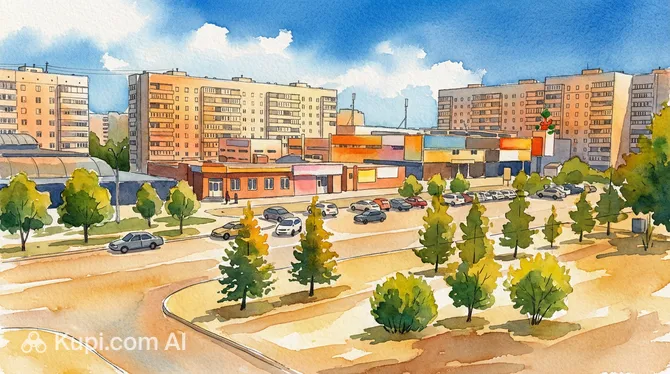
The key feature of Snezhinsk is, undoubtedly, its scientific potential and historical mission. However, the city is attractive not only for its connection to the atomic program. Firstly, there is the amazing nature of the Urals, offering opportunities for relaxation and walks. Secondly, the city itself is interesting for its planned Soviet development, characteristic of science cities (naukograds). Despite its closed status, Snezhinsk has its own cultural life: there are theaters, museums, and community centers supporting the creative activity of its citizens.
Snezhinsk is not just a point on the map, but a place with a unique history and destiny, where scientific thought, strategic importance, and the beauty of Ural nature are intertwined. It represents a striking example of how the country's scientific centers were created and developed, and it remains an important scientific outpost to this day.
You can find more interesting facts on the history of Snezhinsk page.