Support

Sysert

About

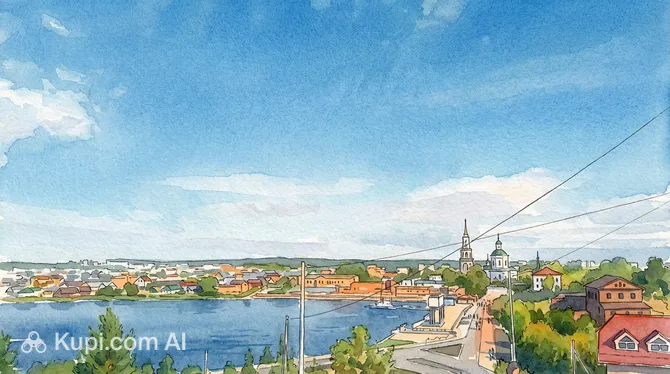
Sysert is a cozy and original city located in the Sverdlovsk Region of Russia, on the eastern slopes of the Ural Mountains. This small city with a population of about 21,000 people attracts visitors with its rich history, its connection to the famous storyteller Pavel Bazhov, and its picturesque nature. The climate here is moderate continental, with warm summers and snowy winters, making it an attractive destination to visit at any time of year.

Sysert. Illustration.
Source: Kupi.com AI

One of the main reasons to visit Sysert is its literary heritage. It was here that Pavel Petrovich Bazhov, the author of the famous Ural tales, was born and spent his childhood. Guests can immerse themselves in the atmosphere of his works by visiting places connected with the writer's life. Additionally, the city has a rich industrial history associated with the old Sysert Ironworks, which played a key role in the region's development. The surrounding nature will also not leave you indifferent: picturesque ponds, dense forests, and clean air create excellent conditions for relaxation and walks.

Sysert is a place where history harmoniously intertwines with the beauty of Ural nature. If you are looking for a peaceful holiday, want to touch the origins of Ural folk tales, and enjoy the beauty of an old factory town, be sure to plan a trip to Sysert.

You can find more interesting facts on the history of the city of Sysert page

Weather Overview

The weather in Sysert is determined by a continental climate, which brings clearly defined seasons. This means that travelers can expect both a real Russian winter and a warm, sunny summer, each of which is attractive in its own way for exploring the city and its picturesque surroundings.

The winter months, from December to February, are characterized by average temperatures ranging from -10.8°C to -13.3°C, with nightly minimums reaching -16.3°C. A feature of the local winter is its dryness: very little precipitation falls, about 1 mm per month, and snow is infrequent, about 7-8 days per month. Summer, especially July, pleases with warmth: the average temperature stays around +18.9°C, and daytime maximums can rise to +24.2°C. In the summer months (June-August), the amount of precipitation is slightly higher—about 2 mm per month, and the number of rainy days is 11-13. Thus, when planning your trip, expect a warm summer with occasional rain and cold, mostly dry winters with a small amount of snow. For more detailed information on the climate and the current forecast, see the weather in Sysert page.

Average monthly temperature

Average monthly precipitation

Interesting Facts

In addition to its famous connections with Pavel Bazhov and its rich industrial history, Sysert holds many fascinating secrets and little-known pages in its biography. Here are just a few that can surprise even a seasoned traveler:

  • The name of the city Sysert has Finno-Ugric rather than Russian roots. It is believed to originate from the Mansi words: "sis" (or "sys")—meaning "damp," "rotten," or "boggy," and "sert" (or "sart")—"river." Thus, the name can be translated as "river flowing through a marshy area" or "boggy river," reflecting the landscape features at the time the settlement was founded.

  • Not far from Sysert, hidden among the forests, lies the amazingly beautiful Lake Talkov Kamen. This is not a creation of nature in its pure form, but a former talc quarry that eventually filled with the purest water. Today, its emerald surface framed by sheer cliffs 20-30 meters high attracts tourists, photographers, and even divers, as the lake's depth reaches 32 meters.

  • Sysert was famous for its porcelain factory, whose products were valued throughout the country and beyond. A special feature of Sysert porcelain was the skillful hand-painting, often featuring unique Ural motifs, including the famous floral pattern known as the "Sysert rose." Each piece was unique in its own way.

  • In the 18th century, the Sysert Plant and its workers were at the center of turbulent historical events. During the Peasant War led by Yemelyan Pugachev (1773-1775), the plant was occupied by rebel detachments, and a significant portion of the craftsmen and working people joined the uprising, hoping for a better life.

How to Get There

The most convenient way to reach Sysert is by air or rail, followed by a transfer by car or bus. The city of Sysert itself does not have its own airport, but the nearest major air hubs are located in neighboring regional centers, from where Sysert can be reached in a relatively short time.

The main and most convenient option for air travelers is Koltsovo International Airport (SVX), located in Yekaterinburg. This is one of the largest airports in Russia, receiving flights from many Russian cities and from abroad. The distance from Koltsovo Airport to Sysert is approximately 26 km, and a trip by taxi or car will take about 50-60 minutes. From the airport, you can also reach the Southern Bus Station in Yekaterinburg, from which buses to Sysert depart regularly.

Another possible, though more distant, option is Balandino International Airport (CEK) in Chelyabinsk. It is located at a distance of about 141 km from Sysert, which means a car trip of approximately 3.5-4 hours. It is also worth mentioning Roshchino Airport (TJM) in Tyumen, but it is located significantly further away—about 285 km from Sysert.

For clarity, here is summary information on the main airports through which you can reach Sysert:

AirportPassenger trafficDistance
Koltsovo8.0 mln26 km
Balandino2.2 mln141 km
Roshchino2.6 mln285 km

Railway communication is also a popular way to get to the region. The largest railway hub nearby is the Yekaterinburg-Passazhirsky station in Yekaterinburg. From here to Sysert is about 37 km, and you can get there by taxi or suburban bus in about 1 hour to 1 hour 20 minutes. Trains from all over Russia arrive at this station.

Closer to Sysert are several smaller railway stations. For example, the Sysert station (despite its name, it is located in the city of Aramil) is about 24 km from the center of Sysert; from there, you can reach the city in about 50-60 minutes. There is also the Aramil Railway Station in Aramil, the distance from which to Sysert is about 24 km, and the travel time by car is also about 50-60 minutes. Within the city of Sysert itself, there is the Maramzino station, but it is located at some distance from the central part of the city (about 31 km), and the road from there to the center will take about 1 hour to 1 hour 10 minutes. From these stations to your destination in Sysert, it is most convenient to travel by taxi or local bus, after checking the schedule.

Here is information about some railway stations that can be used for a trip to Sysert:

StationPassenger trafficDistance
Aramil Railway Station250 00024 km
Polevskoy Railway Station150 00033 km
Yekaterinburg-Passazhirsky Station25 mln37 km
Bazhenovo Station250 00043 km
Verkhny Ufaley Railway Station260 00061 km

In addition, Sysert can be reached by private car or intercity bus from Yekaterinburg and other nearby cities in the Sverdlovsk Region. It is recommended to study public transport routes and schedules in advance.

Main Attractions

The Pavel Petrovich Bazhov House-Museum is a landmark site in Sysert and a must-visit for everyone coming to the city. It was here that the childhood and youth of the famous Ural storyteller, author of "The Malachite Box," were spent. Visiting the museum is a unique opportunity to touch the origins of the writer's creativity and see the environment in which he grew up and which inspired him to create his magical tales.

The museum carefully preserves the atmosphere of the late 19th and early 20th centuries. Guests can see the personal belongings of Bazhov and his family, everyday objects from that time, and learn many interesting facts about the writer's life and the history of Sysert. The exhibition allows for a deeper understanding of the world of Ural legends and traditions that Bazhov so masterfully described in his works. This place really immerses you in the atmosphere of the old Urals.

The historical Sysert Plant of the Turchaninovs-Solomirskys is another important attraction testifying to the city's rich industrial past. Founded in the 18th century, this ironworks was one of the key enterprises of the Urals, playing a significant role in the region's development.

Although the plant does not operate as a production enterprise today, its ancient buildings and structures attract attention as monuments of industrial architecture. A walk through its territory (where permitted and safe) allows you to imagine the scale of past production. For those interested in industrial history and architecture, this place offers a unique opportunity to look into the past and appreciate Sysert's contribution to the industrial heritage of Russia.

The Church of Saints Simeon the God-Receiver and Anna the Prophetess is not only a spiritual center but also one of the oldest architectural landmarks in Sysert. This beautiful stone church, built at the end of the 18th century with funds from the factory owners, is a striking example of Ural architecture of that time.

The church impresses with its classical appearance and harmonious proportions. Having survived various historical ups and downs, including closure during the Soviet period, it has been restored and is currently active. Visitors can appreciate its interior decoration, enjoy the peace and quiet, and learn more about the history of Orthodoxy in the Urals. This place is of interest not only to pilgrims but to all connoisseurs of ancient architecture.

For lovers of nature and unusual landscapes, Lake Talkov Kamen will be a true discovery. Located in the picturesque surroundings of Sysert, this place is a former talc quarry that over time filled with crystal-clear emerald water. Today, it is one of the most photographed and popular natural attractions in the region.

The lake is surrounded by high, almost vertical rocky shores covered with pine forest, creating an impressive and somewhat rugged landscape. The water in the lake is so transparent that on a sunny day, you can see submerged tree trunks and stones at the bottom. Talkov Kamen attracts those looking to escape the city bustle, enjoy the silence, take stunning photos, and in the summer season, even take a swim, although the water here is quite cool. This is an ideal place for those who appreciate the beauty of Ural nature.
Local Cuisine

The gastronomic scene of Sysert, while not claiming metropolitan scale, can pleasantly surprise you with its authenticity and commitment to the traditions of Ural cuisine. Here you can taste dishes prepared with heart, often according to recipes passed down from generation to generation, making an introduction to local food an integral part of a trip through this region.

Be sure to try the famous Ural pelmeni—they are prepared here with various fillings, from the classic meat (often made from several types of meat) to mushroom or even radish. Another iconic dish is shangi, open round pastries with mashed potatoes, cottage cheese, or thick sour cream, which are great for satisfying hunger after long walks. Do not miss the opportunity to taste hearty soups, such as shchi or borscht, prepared home-style, as well as dishes made from local mushrooms and berries, which the Ural forests are so rich in—these can be both fried mushrooms and pies with berry filling.

Regarding drinks, you should pay attention to traditional Russian kvass, which is especially refreshing in the summer heat, and aromatic mors made from wild berries—cranberries, lingonberries, and blueberries. Tea lovers will appreciate local herbal blends, including the famous Ivan-chai (willowherb), which has a pleasant taste and beneficial properties. As for alcoholic beverages, in some establishments you can find products from Ural breweries or traditional Russian tinctures on berries and herbs.

The food culture in Sysert leans toward home comfort and simplicity. The main places to eat are small cafes and canteens offering Russian and Ural cuisine. There are not many trendy gastropubs or fine dining restaurants here, but there are establishments with simple but truly delicious food, where quality ingredients and a warm welcome are valued. In summer, you can find fresh vegetables, fruits, as well as berries and mushrooms collected in the surrounding forests at local markets, which are also an important part of the local diet.

Gastronomic Sysert is, first and foremost, an opportunity to touch real Ural cuisine, try dishes made from fresh local products, and feel the warmth of local hospitality. It's not about exquisite delicacies, but about hearty, tasty, and understandable food that warms you up and leaves pleasant memories of your trip to this original Ural city.

Travel Tips

Welcome to Sysert! To ensure your trip to this charming corner of the Urals goes smoothly and leaves only pleasant memories, we have prepared some practical tips. They will help you better navigate and enjoy every moment of your journey.

  1. Clothing and items for the season:

    The climate in Sysert is continental, with clearly defined seasons. In summer (June-August), take light clothing, but don't forget a sweater or light jacket for cool evenings, as well as a raincoat or umbrella in case of precipitation. In winter (December-February), you will need very warm clothing: thermal underwear, a warm down jacket or fur coat, a hat, scarf, mittens, and insulated waterproof footwear. For the transitional seasons (spring, autumn), layered clothing and a waterproof jacket are suitable. A key element of your wardrobe at any time of year is comfortable shoes for walking. Russian sockets are types C and F. When visiting active churches, women are recommended to cover their heads and shoulders, and men should wear trousers.

  2. Getting around Sysert:

    Sysert is a small city, so many of its central corners and attractions can be explored on foot, enjoying the atmosphere. The main form of public transport is buses and marshrutkas; it's best to check their routes and schedules locally. For more comfortable travel, especially for long distances or with luggage, you can use the services of local taxi companies or popular Russian ride-hailing apps, such as "Yandex Go." Car rental in Sysert itself may be limited; if you plan to actively explore the surroundings, consider rental options in Yekaterinburg.

  3. Finances and expenses:

    The official currency is the Russian ruble (RUB). It is better to exchange currency in advance at banks in Yekaterinburg or use ATMs directly in Sysert, although the choice of banks and conditions may be more limited. Bank cards of the Russian "Mir" payment system are accepted almost everywhere. UnionPay cards may be accepted at some retail outlets. We strongly recommend carrying a certain amount of cash, especially for payment in small shops, markets, or for intercity transport. Before your trip, be sure to check current information regarding the use of your international bank cards. ATMs are available in bank branches. Tipping in cafes and restaurants (5-10%) is welcomed if you enjoyed the service, but it is not strictly mandatory. In taxis, you can round up the amount.

  4. Health and safety:

    There are pharmacies in the city (look for the "Аптека" sign); some may be open 24 hours, but it's better to check in advance. It is recommended to carry a basic set of necessary medications. In case of emergency, call 103 (ambulance) or 112 (emergency services number). It is extremely important to take out travel medical insurance before your trip. Sysert is generally a quiet and safe city. Nevertheless, follow standard precautions: keep an eye on your personal belongings, especially in crowded places, and do not leave valuables unattended. Try to avoid walking on dark and deserted streets late at night.

  5. Language and communication:

    The main language of communication is Russian. The level of English proficiency among the local population, especially the older generation, may be low. Knowing a few basic phrases in Russian (e.g., "Zdravstvuyte" - Hello, "Spasibo" - Thank you, "Pozhaluysta" - Please, "Skolko stoit?" - How much does it cost?, "Gde nakhoditsya...?" - Where is...?) will significantly facilitate your stay and will be warmly received by locals. A SIM card from a Russian operator (MTS, Beeline, MegaFon, Tele2) can be purchased at mobile phone shops upon presentation of a passport. Wi-Fi is available in some hotels and cafes. For navigation and searching for information about sites and organizations, it is convenient to use the "Yandex Maps" or 2GIS apps.

  6. Local etiquette and communication:

    When addressing strangers or entering a room, it is customary to say hello ("Zdravstvuyte"). Handshaking is common among men when greeting. In public places, try to behave with restraint; loud talking or laughing may be perceived negatively. It is customary to remove outdoor shoes when entering a private home or apartment. Locals are generally helpful and hospitable, although they may seem reserved at first. Showing politeness and respect for local traditions is always appreciated.

  7. What to avoid:

    To ensure your trip is trouble-free, try to avoid discussing sensitive political topics as this may lead to misunderstandings. Also, refrain from taking close-up photos of people without their prior consent, especially regarding the older generation or filming in churches and private properties. You should not abuse alcohol in public places or behave provocatively.

  8. Special feature of Sysert—touching the tales:

    Sysert is not just a city, but the birthplace of the famous storyteller Pavel Bazhov. Try to soak up the unique atmosphere of his works by visiting memorial sites. You might be lucky enough to attend a themed festival or fair where you can buy handmade souvenirs inspired by Ural tales and gems. This is a wonderful opportunity to take home a piece of Ural magic.

We hope these tips help you better prepare for your trip and get the most enjoyment out of getting to know Sysert. We wish you unforgettable impressions and bright discoveries in this original Ural city!

Entertainment & Nightlife

Evening and nightlife in Sysert offers its own, calmer and more cozy format of relaxation, which differs from noisy metropolises. This small city with a population of about 21,000 people lends itself more to a pleasant evening spent in friendly company than to a vibrant club scene. Nevertheless, you can still find places here to relax after a busy day of sightseeing.

The basis of evening entertainment in Sysert consists of local cafes and some restaurants, which create a more peaceful atmosphere as twilight falls. Here you can have dinner, enjoy a cup of aromatic tea, or choose a stronger drink. As for nightclubs in their classical sense, in Sysert, with its measured pace of life, you will not find quarters with noisy venues or specialized bars open until dawn. Specialized listings of nightlife venues are generally absent, and finding a place open deep into the night can be difficult. Sometimes local Houses of Culture may organize dance evenings or themed events, but this is the exception rather than the rule. Concert venues, if any, are most often represented by the stage of the same House of Culture, where performances by local groups may take place.

The atmosphere in Sysert's evening venues is usually casual and friendly. The crowd is predominantly local, and there is no strict dress code unless a special gala event is planned. To find a suitable place for an evening out, it is worth taking a walk through the central part of the city or asking local residents—they can suggest cozy cafes. Most of these establishments are concentrated in the center or along the main streets.

When planning your evening leisure, keep in mind that establishments in Sysert are likely to close significantly earlier than in large cities. The optimal time for a visit is early evening. Prices in local cafes and restaurants are usually quite affordable. To get around the city in the evening, you can use local taxi services. It is recommended to book a car in advance, especially if you plan to return late.

In terms of safety, Sysert is a fairly quiet city. Central streets are generally well-lit, and evening walks here are usually safe. Nevertheless, it is always worth following standard precautions: keep an eye on your personal belongings and try to avoid poorly lit and deserted places late at night. You can call a taxi using the phone numbers of local services or through mobile applications available in the region, if any.

During the day, Sysert offers its guests many interesting cultural and natural attractions. You can immerse yourself in the world of Ural tales by visiting the P.P. Bazhov House-Museum or enjoy the beauty of nature at Lake Talkov Kamen. These daytime impressions will perfectly complement your stay in this original Ural city, compensating for the lack of a noisy nightlife.

Parks & Museums

Sysert, a city with a rich history and the literary heritage of Pavel Bazhov, offers its guests not only an immersion into the world of Ural tales but also wonderful opportunities for relaxation in the lap of nature and exploring local culture through fascinating museums. Here, everyone will find something to their liking, whether it's a walk through a picturesque park or studying historical exhibitions.

Among the green gems of the city and its surroundings, a special place is occupied by the "Bazhovskie Mesta" (Bazhov Places) Nature Park. This extensive park was created to preserve the unique natural landscapes that inspired the famous storyteller. Tourists can find equipped ecological trails of various difficulty levels, observation decks with magnificent views, clean forest air, and the chance to encounter representatives of the local flora and fauna. This is an ideal place for hiking, cycling, and simply connecting with nature. Another iconic natural attraction is Lake Talkov Kamen, a man-made wonder with emerald water and sheer rocky shores, offering unforgettable landscapes and coolness in the summer heat. For more leisurely walks within the city, the embankment of the Sysert Pond, around which the city historically formed, is perfect. From here, views of the old Sysert Plant buildings open up, and the embankment itself is a popular place for residents to relax and for local holidays to be held.

A cultural program in Sysert is unthinkable without visiting museums. The main one, of course, is the P.P. Bazhov House-Museum. Here, in the house where the writer spent his childhood years, you can plunge into the atmosphere of the late 19th and early 20th centuries, see the Bazhov family's personal belongings, and learn more about the life and work of the creator of "The Malachite Box." To deeper understand the history and life of this Ural corner, it is worth looking into the Sysert Museum of History and Local Lore. Its exhibitions usually tell about the city's development, the famous Sysert Plant, the unique nature of the region, and the people who left their mark on Sysert's history. Here you can see artifacts related to the industrial past and everyday objects of local residents.

Walking through Sysert, you will also notice significant historical and architectural sites, such as the complex of the ancient Sysert Plant of the Turchaninovs-Solomirskys and the majestic Church of Saints Simeon the God-Receiver and Anna the Prophetess, which complement the city's cultural profile.

For authentic impressions, we suggest that when heading to the "Bazhovskie Mesta" Nature Park, you choose one of the less crowded routes to fully enjoy the silence and beauty of the Ural forest. And in the city itself, do not pass by temporary exhibitions of local artists or craftsmen that may be held in the House of Culture or other public spaces—this is a chance to see unique works inspired by Bazhov's tales and perhaps purchase an original souvenir.

Getting Around

You can get around Sysert and its immediate surroundings using several types of transport. Given the size of the city, the transport system here is quite simple and oriented toward the needs of local residents, but it will also be understandable to tourists.

The main form of public transport in Sysert is buses and marshrutkas (shuttle taxis). They connect various districts of the city and also provide links with nearby settlements. There is no metro, trams, or trolleybuses in Sysert, which is typical for cities of this size. Bus routes run along key streets, stopping at equipped or designated stops.

The fare payment system in Sysert's public transport is generally quite simple. Most often, payment is made in cash directly to the driver when entering or exiting the bus/marshrutka. The fare is usually fixed within the city but may vary for suburban routes. It is best to check locally for the availability of any special travel cards or mobile applications for payment, as they may not be available or widely distributed in small cities. We recommend having small cash on hand for ease of payment.

Tourists planning to use public transport should note a few points. You can try to find bus schedules at stop complexes (though the information there may not always be up-to-date) or check with local residents. Also, information about routes can sometimes be found on online maps such as "Yandex Maps." Buses usually run from morning until evening, but the intensity of traffic may decrease in the evening hours and on weekends. Tickets as such (in the form of a paper slip) may not always be issued, especially in marshrutkas.

As an alternative to public transport, taxi services are always available in Sysert. You can call a car using the phone numbers of local taxi companies or through popular Russian mobile applications if they operate in the city (for example, "Yandex Go," as mentioned earlier for trips from Yekaterinburg). This is a more comfortable, though more expensive, way to travel, especially convenient for trips with luggage or to remote points. Car-sharing services or a developed bicycle rental system in a city of this scale are likely to be absent or very limited. For walks around the city center and visiting the nearest attractions, walking is an excellent option, as Sysert is a compact city.

There are no unique or historical types of transport, such as an old tram or cable car, in Sysert. The transport system here fulfills its main function—ensuring the movement of residents and guests of the city—being typical for small Ural towns.

Accommodation

When planning a trip to Sysert, you will find various accommodation options that can satisfy different preferences and budgets. Although the city is small, you can choose from cozy guest houses and apartments for daily rent to small private hotels. The choice may not be as wide as in major cities, but it offers comfort and the opportunity to experience local hospitality.

For tourists, the most convenient areas to stay are traditionally considered the central part of Sysert, as well as places located near the main attractions, such as the P.P. Bazhov House-Museum or the picturesque embankment of the Sysert Pond. By choosing accommodation in these areas, you can easily reach the sites you are interested in on foot and enjoy the atmosphere of an old Ural city.

While Sysert does not boast a large number of major hotel chains, you can find comfortable options in small private hotels or guest houses, which often offer a more homey and personalized atmosphere. Specific well-known hotels are not specified in the provided data, so it is recommended to study offers on popular online booking platforms or contact local tourist resources. Important tip: if your trip falls during the peak tourist season (usually summer) or during local festivals, such as those related to Bazhov's heritage, you should take care of booking accommodation in advance to ensure the best choice and prices.

The price range for accommodation in Sysert is generally quite affordable, especially compared to large tourist centers. You can find both budget options and more comfortable mid-range offers. You shouldn't expect luxury resorts here, but comfort and cleanliness are guaranteed in most cases. It is most convenient to book accommodation through well-known online aggregators or, in the case of private apartments and guest houses, sometimes by contacting the owners directly, whose contacts can be found on specialized websites or through recommendations.

Nearby Cities

For those who want to explore the surroundings, Sysert serves as an excellent starting point for day trips to several interesting nearby locations:

CityPopulationDistance
Aramil15 23621 km
Polevskoy61 85336 km
Yekaterinburg1 468 83339 km
Snezhinsk51 04848 km
Degtyarsk16 00149 km

These nearby destinations provide an insight into the region's diverse culture and landscapes, complementing the experience of visiting Sysert.

Shopping & Souvenirs

Shopping in Sysert is not so much a pursuit of fashion brands as it is an opportunity to touch the local flavor and purchase something truly unique to remember your trip to the Urals. The city is not famous for large shopping centers, but here you can find interesting souvenirs and products from local craftsmen, especially those related to the heritage of Pavel Bazhov and Ural crafts.

The main shopping points in Sysert are usually concentrated on the central streets of the city and near the main attractions. These can be small shops, souvenir stalls, and departments in local general stores. There are no specialized shopping streets comparable to those in large cities, but walking through the center, you will surely stumble upon interesting places to shop.

You most likely will not find large modern shopping centers in Sysert. However, there may be small shopping complexes or "trading rows" of local significance in the city, where a range of everyday goods and possibly souvenir products are presented. It is better to search for such places by focusing on the central part of the city.

Speaking of markets, a city market may operate in Sysert, where local residents sell seasonal vegetables, fruits, homemade preserves, and sometimes handmade products. Visiting such a market can be an interesting experience, allowing you to plunge into the daily life of the city and find fresh local products. It is also worth paying attention to possible craft fairs or souvenir stalls that may be organized during city holidays or festivals, especially those dedicated to Bazhov's work.

The main thing to go shopping for in Sysert is souvenirs. Pay attention to:

  • Products inspired by the tales of Pavel Bazhov: these could be painted boxes, figures of characters (Mistress of the Copper Mountain, Danila the Master), or items depicting the Malachite Box or the Stone Flower.
  • Products made from Ural stones: small souvenirs, jewelry made of malachite, jasper, or serpentine. Although the largest selection of stones can be found in Yekaterinburg, you can also find something interesting in Sysert.
  • Local crafts: look for Sysert porcelain, if it is still produced or sold as antiques or stylizations. Wood and birch bark products may also be found.
  • Gastronomic souvenirs: local honey, wild berry jam (cranberry, lingonberry), Ivan-chai, and other herbal blends.

Most shops in Sysert usually operate from 10:00 to 18:00 or 19:00. Small private shops may have their own schedule, including a lunch break. On weekends, especially on Sunday, some shops may be closed or operate on a reduced schedule. Regarding payment, most places accept Russian bank cards of the "Mir" system. However, it is strongly recommended to have sufficient cash (Russian rubles) with you, especially for purchases at the market, in small souvenir shops, or from private craftsmen.

The possibility of a Tax Free refund for tourists in Sysert's shops is generally not provided, as the city is not a major international tourist center with the corresponding infrastructure.

Reached the end of the page?

That means the route is fully explored