Support

Solikamsk

About

Solikamsk is not just a settlement on the map of the Perm Krai, but the true salt capital of the Urals with a unique atmosphere where industrial heritage is harmoniously intertwined with magnificent church architecture. Located in a picturesque spot by the tributaries of the Kama, this city is one of the oldest and most interesting historical centers for which Russia is famous. Today, about 95,000 people live here, creating a cozy yet lively environment for guests.
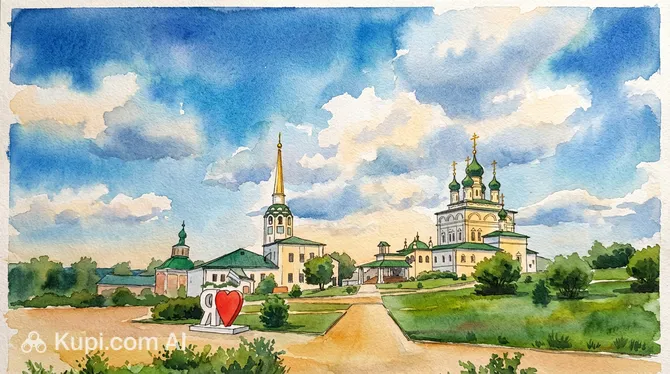
Solikamsk. Illustration.
Source: Kupi.com AI

The rich and eventful history of Solikamsk is inextricably linked with the extraction of "white gold" — salt. It was the salt works, which appeared here back in the 15th century, that gave the city its name and determined its development for centuries to come. Walking through the streets, you seem to be transported back in time, feeling the breath of merchant antiquity and the majesty of Ural traditions.

For tourists, the city is a veritable open-air museum. Among the main attractions, the majestic Holy Trinity Cathedral with its rich decor and the ancient Voivode's House, a rare example of 17th-century civil architecture, are worth highlighting. The unique Salt History Museum on the territory of the former Ust-Borovskaya Saltworks deserves special attention, where you can see the entire process of ancient production.

A visit to Solikamsk is an opportunity to touch the origins of mining civilization and enjoy the beauty of Russian architecture. The city warmly welcomes travelers at any time of year, offering fascinating excursions and immersion in the original culture of the Urals.

Weather Overview

The climate in Solikamsk is typical for the Northern Urals: a temperate continental climate with distinct seasonality prevails here. Winters here are frosty and long, and summer is moderately warm, which creates excellent conditions for excursion tourism without exhausting heat.

The coldest period falls in January, when the thermometer on average stays at -12.8°C, sometimes dropping below -15°C. Snow falls often, creating picturesque winter landscapes, as the number of days with precipitation in winter reaches 16 per month. Spring arrives gradually: negative temperatures still hold in March, and a stable "plus" is usually established only in April.

Summer pleases with comfortable coolness. July is considered the warmest month with an average temperature of about 18.5°C and maximums up to 23.3°C. However, you should be prepared for the whims of nature: even in the warm season, the weather in Solikamsk can be changeable, with frequent, but generally light, rains.

Expect a warm summer with occasional rain and cold, dry in terms of precipitation amount but snowy winters. Autumn comes quite quickly: already in September, the air cools down to an average of 9.8°C, and in November, stable frosts return.

Average monthly temperature

Average monthly precipitation

Interesting Facts

Besides its famous architectural monuments, Solikamsk hides many amazing stories and details that make getting to know the city truly exciting. Here are a few facts that will help you look at the salt capital from a new perspective:
  • Connection with Carl Linnaeus. In the 18th century, Solikamsk was home to one of the first private botanical gardens in Russia, founded by the industrialist Grigory Demidov. The garden was so rich in rare plants that Demidov corresponded and exchanged seeds with the famous Swedish naturalist Carl Linnaeus, who described some Siberian plants thanks specifically to specimens from Solikamsk.

  • Its own "Leaning Tower". The Cathedral Bell Tower in the city center has a noticeable tilt — the deviation from the vertical is about 2 meters. The building, built on swampy soil and wooden piles, sagged over time, creating a unique architectural silhouette that has become one of the city's symbols.

  • Home of "Red Salt". The famous Lyudmilinskaya brine well, which can still be seen in the city today, was drilled in 1906. Initially, they were looking for ordinary table salt, but they discovered salt with a reddish tint — potash. This accidental discovery marked the beginning of the entire potash industry in the Urals.

  • "Permyak — salty ears". It is believed that the roots of this famous saying go back specifically to the everyday life of Solikamsk salt workers. Porter workers carried huge sacks of salt on their shoulders, which spilled onto their heads and corroded the skin, causing their ears to become red and inflamed. This became a kind of professional mark for the locals.

How to Get There

When planning a trip to this historical corner of the Urals, it's worth thinking through the route in advance. Solikamsk has decent transport accessibility, however, given the geographical location, the journey often involves transfers in the regional center. You can read more about how to get to Solikamsk to choose the best option for your trip.

In Solikamsk itself, there is no airport that accepts regular passenger flights. The nearest major air gateway is Bolshoye Savino International Airport (IATA: PEE), located in the city of Perm. The distance from it to Solikamsk is about 200 km. Bolshoye Savino is a modern transport hub accepting flights from Moscow, Saint Petersburg, and other major cities. The trip from the airport to the final destination by intercity bus or taxi will take approximately 3.5–4 hours.

For clarity, here is summary information on the main airports:

AirportPassenger trafficDistance
Bolshoye Savino2.0 mln200 km

Rail communication is one of the most reliable ways to get to the city, especially in winter. A big advantage is that its own station, Solikamsk, operates here, located just 4.5 km from the city center. Suburban trains from Perm arrive here, making the trip quite comfortable and predictable in terms of time.

If there are no direct tickets, you can consider traveling to the Yaiva station in the town of Aleksandrovsk, located about 48 km from Solikamsk. From there, you can reach your destination by taxi or suburban bus in less than an hour. Also, major junction stations such as Chusovskaya operate in the region, but they are located at a considerable distance.

Below is information about the nearest railway stations:

StationPassenger trafficDistance
Solikamsk Railway Station5 km
Yayva Station40 00048 km
Vsevolodo-Vilva Station25 00063 km
Kizel Railway Station45 00086 km
Gubakha-Passazhirskaya Station104 km
Baskaya Station135 km

Main Attractions

Solikamsk is often called an open-air museum, and this is no exaggeration. The city's architectural ensemble is unique in that a large number of 17th–18th-century monuments have been preserved in a small area, creating a unique historical appearance. A walk through the city center will allow you to see masterpieces of "Ural Baroque" and rare examples of civil architecture.

The Salt History Museum is perhaps the most significant site for understanding the essence of the city. Located on the territory of the former Ust-Borovskaya Saltworks, it is the only wooden industrial complex of its kind in the world preserved to this day. Here, tourists can follow the entire path of creating "permyanka" salt — from brine-lifting towers and vats to huge salt pans and barns. This atmospheric place literally allows you to touch the wooden walls, soaked in salt over centuries of operation.

In the very heart of the city rises the Holy Trinity Cathedral, built at the end of the 17th century. This is a summer temple that amazes with its rich external decoration. The facades of the building are decorated with complex brick ornamentation that can be studied for hours. The cathedral is a brilliant example of Moscow Uzrochye and serves as the main landmark of the central square, recalling the times when the city was a wealthy center of trade.

Nearby is the Voivode's House — the oldest stone civil building in the Urals. Built in 1688, this house with thick walls and narrow loop-hole windows looks more like a small fortress. Intra-wall passages and vaulted chambers create a mysterious atmosphere. Today, it houses a museum exhibition telling the early history of Solikamsk and the life of its rulers.

It is impossible to ignore the Epiphany Church, which is famous for its unique decor. The walls of the temple are decorated with polychrome tiles that have retained the brightness of their colors after centuries. Inside the church is the department of ancient Russian art of the local history museum, which houses the famous icon of St. Nicholas the Wonderworker, gifted to the residents by Ivan the Terrible.

The architectural ensemble of the center is completed by the Cathedral Bell Tower. This majestic 60-meter structure stands on a massive base and has a noticeable tilt, which is why it is often compared to the Leaning Tower of Pisa. Having climbed to the observation deck, you can enjoy a panoramic view of the historical city center and the picturesque bends of the river, which will be an excellent end to the excursion.

Local Cuisine

A gastronomic journey to Solikamsk is an introduction to authentic Ural cuisine: hearty, warming, and based on the gifts of the taiga. Local culinary traditions were formed under the influence of a harsh climate, so the food here is calorie-rich and simple, but at the same time incredibly tasty.

The main hit that every tourist in the Perm Krai must try is posikunchiki. These are small fried pies, literally one or two bites in size, outwardly resembling vareniki. Their main feature is a juicy meat filling that squirts broth when bitten (hence, according to one version, the funny name). They are usually served by the dozen with a special "makalo" — a sauce based on vinegar, mustard, and pepper.

You cannot leave the Urals without tasting real pelmeni. In local establishments, they are prepared according to old recipes, often using not only the usual pork and beef for the filling but also game meat — elk or bear meat. Dishes with forest mushrooms are also popular, especially with milk mushrooms and saffron milk caps, which are salted here in a special way, echoing the city's history as a salt capital.

Among the drinks, natural mors (fruit drinks) from northern berries stand out: cranberries, lingonberries, and cloudberries. They are perfectly toning after long walks. As a warming aperitif or gastronomic souvenir, tourists often choose "Perm Balm" — a dark, thick drink infused with dozens of types of medicinal herbs, roots, and fruits.

The food culture in Solikamsk is quite democratic. You won't find an abundance of fine-dining restaurants here, but there are enough cozy cafes and pelmeni houses in the city, located mainly in the historical center. Many establishments try to maintain the atmosphere of a merchant city, offering guests traditional Russian pastries — shangi and rasstegai, which are perfect for a quick but hearty snack.

Travel Tips

A trip to Solikamsk is an immersion into the atmosphere of the old merchant Urals, where every stone breathes history. To make your trip to the "salt capital" as comfortable as possible and without surprises, we have prepared a list of proven practical recommendations.

  1. Clothing and Equipment: Given the Ural climate, the principle of layering in clothing is relevant here all year round. In winter, warm shoes with non-slip soles (icy conditions are frequent) and thermal underwear are mandatory. In summer, mosquito and midge repellents will come in handy, especially if you plan to walk by the river or visit the Botanical Garden. Since there are many active churches in the city, women are recommended to have a headscarf, and men should avoid shorts when visiting sacred sites.
  2. Transport: The historical city center is quite compact, and it is most pleasant to explore on foot. For trips to remote areas (for example, Borovsk), it is convenient to use the city bus network, which is quite well developed. Also, popular taxi aggregators (for example, Yandex Go) operate in the city, which is often faster and more comfortable than public transport, especially in the evening. Car rental is available mainly in Perm; car-sharing is not developed within Solikamsk itself.
  3. Finances: Most supermarkets, cafes, and hotels accept bank cards (Mir payment system). However, for buying souvenirs in small shops, paying for travel in some buses, or visiting small museums, it's better to always have cash with you. ATMs of major Russian banks are concentrated in the center and shopping malls, but there may be fewer of them on the outskirts.
  4. Health and Safety: Solikamsk is a quiet and safe city, but basic precautions won't hurt. Pharmacies are marked with a green cross, many are open until 20:00–21:00, there are few 24-hour points, so it's better to assemble a personal first-aid kit in advance. In winter, be especially careful when passing by old buildings: snow or icicles may fall from the roofs.
  5. Communication and Navigation: Free Wi-Fi is available in hotels and large cafes, but on the street, rely on mobile internet. For orientation on the ground, it is best to use the 2GIS or Yandex Maps app, after downloading the offline version of the region, as communication outside the city may be unstable. English is not spoken everywhere, so an online translator will be useful for foreign guests.
  6. Local Etiquette: Residents of the Urals may seem reserved, but they are very responsive if you address them politely. It is customary to say hello when entering small shops or museums. In churches, keep quiet and turn off the sound of your mobile phone — these are not just tourist sites, but places of active religious life for the townspeople.
  7. What to Avoid: Do not try to break off a piece from salt walls or old wooden structures in museums — this destroys unique monuments. Also, you should not take pictures of clergy or parishioners in churches without their explicit consent.
  8. Additional Tip: If you want to bring back a truly authentic souvenir, look not just for magnets, but for products made of selenite (Ural ornamental stone) or locally produced cosmetic bath salt. The best souvenir shops are often located at museums; there you can also learn the most interesting city legends from the staff that are not written in guidebooks.

Solikamsk knows how to enchant with its northern beauty and depth of traditions. By following these simple tips, you can focus on the main thing — exploring the unique heritage of the city and enjoying its unique atmosphere.

Entertainment & Nightlife

The nightlife in Solikamsk, as befits an old Ural city, is quite measured and concentrated mainly on weekends. You won't find endless rows of neon signs like in megacities, but the city is ready to offer several decent places where you can spend a pleasant evening, dance, or enjoy dinner accompanied by live music. Most activity quiets down by midnight on weekdays, but on Friday and Saturday, the fun in popular establishments lasts until morning.

The epicenter of evening entertainment can safely be called 20-letiya Pobedy Street. It is along this city artery and in the adjacent blocks that most cafes, bars, and entertainment venues are located. This is a convenient landmark for tourists: being here, you will always find an open establishment. The crowd in local clubs is diverse but generally friendly; the dress style is casual, although some nightclubs have face control and a dress code (it's better to leave the tracksuit at the hotel).

Among the specific venues popular with locals and visitors, the bar-club Jam stands out. This is a versatile place combining the format of a restaurant and a dance floor. Themed parties are often held here, DJs perform, and the menu offers an excellent selection of cocktails and snacks. The atmosphere here is one of the liveliest in the city, so it's better to book a table for the weekend in advance.

For those who prefer a "dinner plus dancing" format, the resto-club Malinki is suitable. The establishment positions itself as a place for comfortable relaxation with karaoke and entertainment programs. This is a good choice for a group of friends who want not only to chat but also to show off their vocal talents.

If you are in the mood for a quieter evening leisure, pay attention to the Rus cinema. This is a classic cinema located in the city center where you can watch the latest releases in a cozy setting. Young people often walk nearby, and the building itself has a pleasant atmosphere of the good old "trip to the movies."

As for other types of recreation, in Solikamsk you can visit a bowling center or the "Sol-Arena" ice arena for active evening ice skating (check the public skating schedule). The cultural program of the evening will be perfectly complemented by attending a performance at the local drama theater, if your visit coincides with the theatrical season.

Practical tips and safety: Solikamsk is a quiet city, and walks along the central lit streets (like 20-letiya Pobedy or Revolyutsii Street) are safe even in the dark. However, it's better to avoid remote residential areas and unlit alleys at night. After establishments close (usually 04:00–06:00 in the morning for clubs), public transport no longer runs, so it is highly recommended to use taxi services. A car is easy to call through popular mobile apps — it's fast, inexpensive, and reliable. The average check in bars and clubs is moderate, but keep some cash with you in case the payment terminal is unavailable.

Parks & Museums

The cultural and natural heritage of Solikamsk goes far beyond the usual excursion routes. The city offers guests a unique combination of open-air industrial museums and green oases with a century-old history. Walks here are not just relaxation, but a real journey through time, where each site tells of the glorious past of the "salt capital" of which all of Russia is proud.

A special place in the hearts of citizens and tourists is occupied by the Solikamsk Botanical Garden named after G. A. Demidov. It is not just a park, but a living natural monument with an amazing destiny. Founded in 1731, it became the first private botanical garden in the country. It was from here that seeds of rare Siberian and Ural plants were sent to the famous Carl Linnaeus in Sweden. Today, you can stroll along well-kept alleys, see collections of rare flowers and shrubs, and visit the "Viburnum Grove." The garden is beautiful at any time of year, but especially picturesque in spring and summer when the lilacs bloom and the flowerbeds are fragrant.

The main guardian of historical memory is the Solikamsk Local History Museum. It is not one building, but an entire museum complex uniting architectural masterpieces in the city center. Its funds hold extremely rich collections:

  • Ancient Russian Art: unique Stroganov-style icons and wooden sculpture.
  • Numismatics and Ethnography: household items, coins, and clothing of the first settlers of the region.
  • Historical Exhibitions: the Voivode's House recreates the interiors of a 17th-century administrative office, allowing you to feel the atmosphere of a medieval administrative center.

It is impossible to talk about the museums of Solikamsk without mentioning the famous Salt History Museum. This is the only saltworks-museum in the world where the technological chain of the 19th century is fully preserved. The complex is located in the open air on the banks of the Kama River. Here you will see huge brine-lifting towers, black with time, salt vats, and pans. The museum territory is an atmospheric space where blacksmithing festivals and ethnographic holidays are regularly held.

For quiet walks in the fresh air, the area around the Lyudmilinskaya Salt Well is ideal. This place has become a kind of landscape-historical park. The well itself, which is over a hundred years old, still pours brine onto the surface. Wooden paths and relaxation zones are set up around it, where you can enjoy the silence and touch the source from which the history of the potash industry of the Urals began. This is a popular photo zone and a favorite meeting place for locals.

Getting Around

The public transport system in Solikamsk is quite simple and clear even for those who are here for the first time. Given the city's size and layout, the only type of municipal transport here is buses. There are no metros, trams, or trolleybuses in the city. The bus network connects the historical center with remote neighborhoods, including the large northern district of Borovsk, as well as with industrial zones and the railway station.

No special transport cards or travel tickets need to be purchased in advance to pay for the fare. Payment is made directly in the bus cabin to the conductor or driver upon entry. Both cash and bank cards are accepted, however, terminals may not work on all routes, so tourists are strongly recommended to always carry small cash bills. The fare is fixed and very affordable.

The transport schedule is oriented towards the rhythm of life of a factory town. The first trips hit the line early in the morning, around 6:00, and movement ends at approximately 22:00–23:00. Traffic intervals on the main routes connecting the center and Borovsk are 10–15 minutes during peak hours, but in the evening and on weekends, the wait can be longer. To avoid wasting time at stops, it is convenient to use the Yandex Maps or 2GIS mobile apps, which quite accurately display traffic patterns and allow you to build an optimal route.

An important feature of the city's geography is its significant length: the distance between the historical center and the northern part (Borovsk) is about 15–20 kilometers. Buses cover this path along the main highway, and the trip can take 30–40 minutes. This should be taken into account when planning excursions, as some attractions, such as the Salt History Museum, are in the northern part, while the main temples are in the southern part.

As an alternative to public transport, taxi services are popular in Solikamsk. Both local dispatch services and well-known federal aggregators (for example, Yandex Go) operate here, allowing you to call a car through an app in a couple of minutes. Prices for trips are moderate, making taxis a convenient option for returning to the hotel in the evening. Car-sharing and automated bike rental services are currently not represented in the city, so you should rely mainly on buses and taxis.

Accommodation

The choice of accommodation in Solikamsk corresponds to the city's status as a historical and industrial center of the Urals. Travelers should not expect luxury five-star resorts or the presence of large international chains here. The basis of the hotel fund consists of middle-class hotels (2–3 star level), Soviet-era hotels after renovation, as well as cozy private mini-hotels. In recent years, the segment of short-term apartment rentals has been gaining increasing popularity, which often becomes the most comfortable option for families with children or large groups.

When choosing a place to stay, the geography of the city plays a key role. For tourists, the ideal option would be accommodation in the historical center. Staying here, you will find yourself within walking distance of the main symbols of the city — the Trinity Cathedral, the Cathedral Bell Tower, and the Voivode's House. This will allow you not to waste time on the road and enjoy the atmosphere of the ancient city during evening walks. An alternative could be the northern district of Borovsk. It has a developed infrastructure and its own rhythm of life, but it is located at a considerable distance (about 15–20 km) from the main museum sites, so you will have to regularly use a bus or taxi.

When planning a trip, it is important to consider the specifics of Solikamsk as a major industrial hub. On weekdays, a significant portion of the room stock is occupied by specialists arriving on business trips to industrial enterprises. For this reason, it is strongly recommended to book accommodation in advance so as not to face a shortage of places upon arrival. This is especially relevant during major city holidays and festivals, such as "Solfest".

The price policy in the city is very democratic: budget and mid-range price segments prevail. The cost of an overnight stay here is usually lower than in the regional center, Perm. Popular Russian online aggregators are available for booking, but many small guest houses still work through direct booking by phone, which sometimes allows for quicker and more accurate clarification of accommodation details.

Nearby Cities

For those who want to explore the surroundings, Solikamsk serves as an excellent starting point for day trips to several interesting nearby places:

The nearest neighbor and "brother" in industrial power is the city of Berezniki, located just half an hour's drive away. It is often called the "Republic of Chemistry" on the Kama. Tourists will find the local history and art museum with its rich collection of icons and paintings interesting, as well as the unique architecture of the Soviet period. This is an ideal option for a short visit to compare two industrial centers of the Urals.

If you are ready to spend a little more time on the road, it is worth visiting the regional capital — Perm. This is a large cultural metropolis where you can see the famous Permian wooden sculpture in the art gallery, take a photo at the "Happiness is not far off" art object on the embankment, and attend modern theatrical productions. A trip to Perm will allow you to feel the rhythm of a big city and enjoy its rich cultural life.

CityPopulationDistance
Berezniki145 11529 km
Aleksandrovsk12 22273 km
Krasnovishersk15 35983 km
Kizel14 88385 km
Gubakha19 831103 km

These nearby destinations provide an insight into the region's diverse culture and landscapes.

Shopping & Souvenirs

Shopping in Solikamsk is more utilitarian in nature: it is difficult to find high-fashion boutiques here, but all the conditions have been created for comfortable everyday shopping and choosing memorable gifts. Trading activity in the city is geographically divided into two main zones: the historical center and the large northern district of Borovsk, which should be considered when planning your route.

In the historical center, trade is concentrated along the main transport artery — 20-letiya Pobedy Street. This is an ideal place for walking: the first floors of buildings are occupied by small clothing stores, mobile phone shops, bookstores, and pharmacies. The Bismarck shopping center is also located here, popular with residents of the central part of the city due to its convenient location and set of necessary home and household goods.

If you find yourself in the northern part of the city, in the Borovsk district, the center of attraction for shoppers here is the Europa shopping center. This is one of the most modern complexes in Solikamsk, featuring stores of popular Russian clothing and footwear brands, electronics salons, and a food court area. Europa is convenient for those staying in the northern neighborhoods or visiting the Salt History Museum located nearby.

For fresh produce and local flavor, head to the city markets. The counters here reflect the generous Ural nature. In the summer-autumn season, you can buy freshly picked forest berries (blueberries, cranberries, lingonberries), mushrooms, pine nuts, as well as homemade honey and pickles from the locals. It is better to have cash with you at the markets, as not all sellers have payment terminals.

The choice of souvenirs in Solikamsk is inextricably linked with its "salty" history. The city's main brand is, of course, salt. Tourists willingly buy gift sets of food salt with spices or cosmetic bath salt, often packed in bags with the city's symbols. Another popular souvenir is items made of selenite — "moonstone," traditional for the Perm Krai. From this soft mineral, local craftsmen carve elegant animal figurines and caskets.

Most large stores and shopping centers are open daily from 10:00 to 21:00 or 22:00. Small souvenir shops may finish work earlier — around 18:00–19:00. The Tax Free system (VAT refund) is not applied in local stores, so foreign tourists should not count on tax compensation.

Reached the end of the page?

That means the route is fully explored