Support

Prince Abdul Majeed bin Abdulaziz Airport

About the Airport

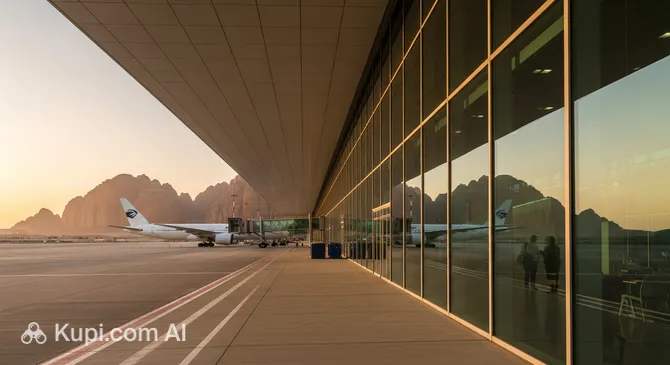
Prince Abdul Majeed bin Abdulaziz Airport. Source: Kupi.com Binoculars
This airport is not merely a transport hub, but a true gateway to the living history of Arabia. Prince Abdul Majeed bin Abdulaziz Airport welcomes travellers amidst mesmerising desert landscapes, setting the mood for an encounter with ancient Hegra even before baggage claim. Following a massive reconstruction, it has transformed into a modern and cosy boutique hub, harmoniously blended into the region's unique landscape. Your immersion into the atmosphere of the mysterious city of AlUla, where modern technology coexists with the eternity of the sands, begins here.
IATA Code ULH
ICAO Code OEAO
City AlUla
Distance to City Centre 25 km
Status International
Annual Passengers Capacity: 400,000 pax
Flight Schedule Please check official resources for details

Airport Features and Highlights

AlUla Airport has undergone significant modernisation to meet its status as the gateway to one of the Kingdom's most important tourism regions. * Design and Atmosphere: The terminal is designed using natural materials and a colour palette that reflects the beauty of the surrounding desert. The interiors create a sense of calm and luxury rarely found in large, busy hubs. * VIP Service: Given the resort's status, the airport is equipped with modern VIP halls and lounges, offering a high level of comfort and privacy for discerning guests. * Location: The airport is located just a 25–30 minute drive from major attractions, including the UNESCO World Heritage Site — Hegra. This makes travel logistics incredibly convenient. * Modern Technology: Despite its compact size, the airport is equipped with advanced security and navigation systems and was the first in the region to implement innovative digital air traffic control solutions.

Contact Information

  • Official Airport Website: Cluster 2 Airports (Operator)
  • Help Desk Phone: +966 14 884 0044 (available for international calls)
  • Airport Address: Prince Abdul Majeed bin Abdulaziz Airport, AlUla 43214, Saudi Arabia (approximately 25 km southeast of AlUla city centre)
  • Email: A direct public email for the airport administration is not listed. For official enquiries, it is recommended to use the contact form on the Cluster 2 operator's website.
  • Airport Social Media: News and updates are published on the accounts of the operating company Cluster 2 (Twitter/X, LinkedIn) or on the official pages of the tourism destination Experience AlUla.
  • Lost Luggage Information: Baggage tracing and lost property issues are handled by Swissport. Passenger email: ulh.pax@swissport.com. You can also contact the Lost & Found counter in the arrivals terminal.
  • Passenger Support Contacts: For immediate assistance on-site, please visit the information desks in the terminal or write to ulh.pax@swissport.com (for passenger service enquiries).

Getting to the Airport

Getting to the City and Transport Connections

The transport infrastructure in the region is actively developing; however, given the desert landscape and the specific nature of the resort, transport options here differ from typical metropolises. The airport is located approximately 25–35 minutes by car from the city centre and major hotels. The road passes through picturesque landscapes, so your journey begins immediately upon exiting the terminal.

Below are the main ways to reach your destination:

1. Hotel Transfers and Taxis

This is the most common and convenient option for tourists in AlUla. Most local resorts (such as Habitas, Banyan Tree, or Shaden) offer guest pick-up services.

  • Transfers: It is recommended to book in advance when reserving your accommodation. Drivers meet passengers with name signs in the arrivals area. This guarantees a fixed price and high-class comfort.
  • Taxis: Official taxis are usually stationed at the terminal exit. The cars are modern and air-conditioned.
    • Cost: A trip to the centre or major resorts usually costs between 100 and 150 SAR (Saudi Riyals), but it is better to agree on the price in advance or ensure the meter is used.
    • Apps: Ride-hailing services are popular in Saudi Arabia (e.g., Careem or Uber); however, in AlUla, wait times may be longer than in major cities like Riyadh.

2. Car Rental

For those wishing to explore the region independently and not depend on tour schedules, renting a car is the ideal choice. Distances between attractions (Hegra, Jabal Ikmah, Old Town) can be significant.

  • Counters for international and local rental companies (e.g., Budget, Lumi, Yelo) are available at the airport.
  • Recommendation: For trips through the desert and to remote rock formations, it is better to choose an SUV or crossover.
  • Documents: An International Driving Permit (IDP) and a credit card for the deposit will be required.

3. Public Transport

It is important to note that a classic public transport system (scheduled buses, metro, or trains) linking the airport to the city is currently absent. AlUla is an exclusive tourist destination focused on individualised service.

Within the tourism cluster itself, special tourist shuttles (hop-on hop-off) operate between attractions, but they do not serve the route from the airport.

4. Parking

A parking zone for short-term and long-term parking is equipped within the airport complex. The parking is within walking distance of the terminal, which is convenient for those dropping off passengers or leaving a rental car before departure.

Alternative Routes via Neighbouring Airports

Since direct flights to AlUla can be seasonal or limited, many travellers choose to fly into larger neighbouring cities, combining the trip with a road trip through Saudi Arabia.

Nearest airports:

  • Medina (approx. 3.5–4 hours by car): Prince Mohammad bin Abdulaziz International Airport — one of the region's main hubs. The road from here to AlUla is of good quality and popular with pilgrims and tourists.
  • Tabuk (approx. 3 hours by car): Tabuk Airport is located to the north and is convenient for those coming from Jordan or the north of the Kingdom.
  • Yanbu (approx. 3.5–4 hours by car): Yanbu Airport is suitable for diving enthusiasts wishing to combine a Red Sea holiday with a desert visit.
  • Neom (approx. 4 hours by car): Neom Bay Airport — the air gateway to the city of the future, located northwest of AlUla.

Also within reach (though significantly further and in another country) is Marsa Alam International Airport, however, this option requires crossing the Red Sea and borders, so it is rarely used as a transit point specifically for travel to AlUla.

Terminals and Map

Prince Abdul Majeed bin Abdulaziz Airport (ULH) stands apart from giant international hubs due to its intimacy and thoughtful ergonomics. It is a modern boutique airport where the structure is subordinated to the idea of maximum comfort and stress-free travel. The complex is designed so that the journey from the aircraft steps to the city exit takes minimal time.

Number of Terminals and Their Purpose

The airport infrastructure is divided into two key functional facilities serving different categories of passengers:

  • Main Passenger Terminal: This is where the vast majority of scheduled and charter flights arrive (both domestic from Riyadh or Jeddah, and international). It is a single building uniting arrivals and departures under one roof. Recent reconstruction has increased its capacity while maintaining a cosy atmosphere.
  • Executive Terminal: A separate building designed to service private aviation, government delegations, and VIP guests. This terminal is often cited as one of the most luxurious in the region, designed in a style that harmonises with the desert landscape, but it is closed to scheduled airline passengers.

Airport Layout and Service Zones

The main terminal has a simple linear structure where it is practically impossible to get lost. Navigation here is intuitive, and all signs are duplicated in English and Arabic.

Arrivals Zone:

Located on the ground level. After disembarking (usually via an aerobridge or apron bus), passengers enter the passport control area. Immigration counters operate here for international flights. After clearing control, you immediately enter the baggage claim hall where the baggage belts are located. The terminal exit is just a few dozen metres from the baggage carousel.

Departures Zone:

The entrance to the departures zone is equipped with initial screening systems. Inside, there is a spacious check-in hall with dedicated counters for various airlines (Saudia, flynas, flydubai, etc.). After checking in luggage, passengers undergo pre-flight security screening and enter the "airside" waiting area (Gate Area).

Terminal Features and Transfers

The main feature of AlUla Airport is the absence of long walks, trains, or shuttles between gates. The entire passenger journey is logical and compact.

  • Interiors and Amenities: The terminal interior actively uses natural stone and warm tones reminiscent of the rocks of Hegra. The waiting area features cafes with local snacks and coffee, souvenir shops, and comfortable seating.
  • Business Lounges: For premium class passengers, a lounge is available offering a more secluded environment before departure.
  • Transfers: Since there is only one terminal, transfers (if provided by your ticket) take place within a single building. The distance between the furthest gate and the control zone is minimal.

Processing Times

Thanks to the airport's compactness, procedures here are faster than in major Saudi cities, yet security standards are strictly observed.

  • For Departure: It is recommended to arrive at the airport 2 hours before a domestic flight and 3 hours before an international one. This allows ample time for calm check-in and screening.
  • On Arrival: Disembarking, passing passport control (for international flights), and collecting luggage usually take between 20 to 40 minutes. Queues are rarely long here, except during peak dates of the tourist season (winter and the "Winter at Tantora" festival).

Navigation Recommendations

AlUla Airport is one of the most tourist-friendly. You won't need a terminal map: all key points (toilets, prayer rooms, cafes, car rental counters) are within sight. If you have questions, airport staff generally speak good English and are ready to assist.

Airport History

Airport History: From Local Airfield to World-Class Hub

The history of AlUla's air gateway is a clear example of how quickly regional infrastructure can transform when it becomes part of a global strategy. The airport has journeyed from a modest runway for domestic flights to an award-winning international terminal in less than a decade.

Foundation and Early Years (2011)

The official birth date of the airport is considered to be 2011. Initially, it was built to serve the needs of the local population and rare travellers heading to the northwestern part of Saudi Arabia. At that time, it was a small regional airfield receiving flights exclusively from the Kingdom's major cities — Riyadh, Jeddah, and Medina. The infrastructure was basic, designed for a flow of about 100,000 passengers per year.

Era of Change: Vision 2030 Strategy

A key turning point in the airport's history came with the establishment of the Royal Commission for AlUla (RCU). Under the national "Vision 2030" programme, it was decided to turn the region into the world's largest living open-air museum. The old terminal ceased to meet the ambitious plans to welcome millions of tourists, and massive reconstruction began.

Massive Modernisation (2019–2021)

In 2019, a global renovation project for the airport was launched. The task was not just to increase the area, but to create a building that would itself become a landmark. Major changes included:

  • Capacity Increase: Upon completion in 2021, the airport could handle up to 400,000 passengers per year, four times the initial figures.
  • Expansion: The terminal was significantly expanded, adding new check-in counters, security zones, and comfortable waiting halls.
  • Technological Upgrades: The latest digital navigation and security systems were implemented.

Gaining International Status

One of the most significant milestones in ULH's history was March 2021, when the General Authority of Civil Aviation (GACA) officially approved the reception of international flights. This opened AlUla to the world. Shortly thereafter, the airport welcomed its first direct flights from Dubai (flydubai) and Paris, cementing its status as an international gateway to Arabian history.

Interesting Facts and Achievements

  • Architectural Triumph: The design of the renovated airport is inspired by the region's nature. The terminal's colour palette echoes the shades of sand and rocks, and the use of local materials allowed the building to blend harmoniously into the desert landscape.
  • Meeting Place for Leaders: In January 2021, the airport became the focus of the world press, hosting delegations of GCC heads of state for a historic summit held at the mirrored Maraya Concert Hall.
  • First of its Kind: AlUla Airport became the first in the Kingdom to join Cluster 2 — an operator created to manage and develop regional airports according to international standards.
  • Private Aviation: A new chapter appeared in the airport's recent history with the opening of a separate terminal for private aviation, offering exclusive service for guests arriving on business jets.

Services and Facilities

Services and Amenities in the Terminal

AlUla Airport (ULH) positions itself as a "boutique airport". You won't find endless labyrinths of Duty Free shops or noisy food courts typical of giant hubs here. Instead, the space is organised to ensure maximum comfort, silence, and exclusive service befitting the region's resorts.

Despite its compact size, the terminal is equipped with everything necessary for a comfortable wait for your flight.

Restaurants, Cafes, and Shopping

The dining and retail zone in the airport is small but carefully curated to introduce guests to local flair before heading into the city or to allow for souvenir shopping before departure.

  • Cafes and Snacks: Cosy coffee shops operate in the departure and arrival zones. Here you can order freshly brewed Arabic coffee with cardamom, classic cappuccinos, as well as light snacks, sandwiches, and pastries. Special attention is paid to local products — be sure to try desserts made with dates from the AlUla oasis.
  • Shops: In the departure zone, there are retail outlets offering products from local artisans, perfumes, premium dates, and commemorative souvenirs with Hegra and AlUla symbols. This is a great opportunity to buy gifts if you didn't manage to do so during your holiday.

VIP Halls and Premium Comfort Zones

Given that AlUla is a luxury destination, infrastructure for premium passengers is developed to a high standard.

  • Lounges: A comfortable business lounge is located in the "airside" departure zone. Guests are offered comfortable seating, an expanded menu of snacks and drinks, fresh press, and a more secluded atmosphere for work or relaxation. Access is usually granted to business class passengers and airline alliance loyalty cardholders.
  • Executive Terminal: A separate terminal is provided for private aviation passengers with its own relaxation areas, individual customs processing, and direct access to business jets.

Connectivity and Electronics

The airport is fully covered by a high-speed internet network, allowing you to stay connected anywhere in the terminal.

  • Wi-Fi: Free wireless internet access is provided to all passengers without time limits. The connection process is simple and usually requires authorisation via SMS.
  • Charging Stations: In the waiting halls at the gates, modern seats are installed, many of which are equipped with built-in USB ports and sockets for charging gadgets before the flight.

Financial Services

To handle monetary matters upon arrival or before departure, basic services are provided in the terminal.

  • ATMs: ATMs from local banks are installed in public areas, working with international payment systems (Visa, Mastercard, UnionPay) and the local Mada system. You can withdraw Saudi Riyals (SAR) here.
  • Currency Exchange: Currency exchange points are available, though their operating hours may depend on the international flight schedule. It is recommended to have a card or a minimum supply of cash if you are arriving on a late-night flight.

Medical Assistance and Safety

Passenger safety and health are a priority for the airport administration.

  • Medical Centre: Medical staff are on duty around the clock in the terminal, ready to provide first aid in case of illness. If necessary, airport staff will help call an ambulance for transport to a city hospital.
  • Pharmacy: A kiosk selling essentials and over-the-counter medications may operate on the premises.

Services for Passengers with Children

Saudi Arabia is traditionally friendly to family travellers. The airport provides:

  • Mother and child rooms equipped with changing tables and feeding areas.
  • Priority boarding for families with small children (depends on the specific airline's rules).

Accessibility

Following reconstruction, the terminal has become fully adapted for People of Determination (passengers with disabilities):

  • The building is equipped with ramps, wide doorways, and specialised restrooms.
  • Check-in counters and information desks have lowered sections for ease of communication.
  • Upon prior request, wheelchairs and staff escort from the airport entrance to aircraft boarding are provided (this service must be booked through the airline when purchasing a ticket).

Hotels and Accommodation

It is important to consider that there are no hotels directly on the airport grounds or within walking distance. The terminal is located in a desert area, remote from residential zones.

The nearest accommodation options are located in the tourist zones of AlUla (approximately 25–40 minutes by transfer or taxi):

  • Shaden Resort: A picturesque resort located closest to the airport from the city side.
  • Banyan Tree AlUla and Habitas AlUla: Luxury hotels in the Ashar Valley offering secluded villas.
  • Guesthouses in the Old Town: More budget-friendly accommodation options are found in the centre of AlUla.

Passengers with long layovers or early departures are recommended to book a transfer from their hotel in advance, as there is nowhere to sleep in the terminal itself.

Conference Rooms and Business Services

There is no full-scale business centre with conference halls for mass events inside the passenger terminal. Business meetings are usually held either in the VIP halls of the executive terminal or in hotel conference centres and the famous mirrored Maraya Concert Hall, which is a 30-minute drive from the airport.

Where to Eat

Gastronomy and Dining at the Airport

The gastronomic concept of Prince Abdul Majeed bin Abdulaziz Airport (ULH) fully reflects its status as a boutique hub. You won't find noisy food courts with familiar fast food here. Instead, passengers are offered cosy coffee shops and lounge areas where the focus is on product quality, a calm atmosphere, and an introduction to Arabian hospitality.

Important note: in accordance with Saudi Arabian law, alcohol is neither sold nor served at the airport (as in the entire country). The word "bar" here refers to juice bars (juices and smoothies) or coffee stations.

Cafes and Restaurants: What to Look For

Most establishments are concentrated in the Departures Zone (Airside), after passing passport control and security. This allows passengers to relax while waiting for their flight with a cup of coffee and a view of the runway and desert landscapes.

  • Main Departure Hall: Coffee shops offering "Grab & Go" menus and tables for a leisurely snack are located here. The assortment includes fresh pastries (croissants, danishes), sandwiches, wraps, salads, and desserts.
  • Arrivals Zone (Landside): In the public area for greeters and arrivals, a small kiosk or mobile coffee station usually operates where you can buy water, soft drinks, or coffee while waiting for a transfer.

Local Flavour: What to Try

Even if you have little time, do not miss the opportunity to taste the local specialities for which the AlUla region is famous.

  • AlUla Dates: The region is known for its date palms. Airport cafes often serve premium date varieties (such as Barni) as a standalone treat or as a complement to coffee.
  • Arabic Coffee (Gahwa): Traditional light-roasted coffee with cardamom and saffron. This is not just a drink, but part of the cultural code, perfectly invigorating before a flight.
  • Citrus Drinks: AlUla is also famous for its citrus orchards, so if fresh juices from local oranges or lemons are on the menu, be sure to try them.

Dietary Catering and Special Requests

The airport strives to meet the needs of various categories of travellers, although the choice of specialised food may be limited due to the small size of the terminal.

  • Halal: 100% of dishes and products presented at the airport are Halal.
  • Vegetarians: The assortment always includes cheese sandwiches, vegetable salads, hummus with flatbread, fruit slices, and yoghurts.
  • Vegans and Gluten-Free: The selection is more modest. It is recommended to look for fresh fruit, nuts, dates, or salads without dressing. If you have a strict diet, it is better to bring specialised snacks with you from your hotel.

Prices and Opening Hours

The pricing policy at ULH airport corresponds to the average level of international airports — prices here are higher than in the city, but product quality is maintained at a high level.

  • Average Bill: A cup of coffee and a sandwich/dessert will cost approximately 40–60 SAR.
  • Opening Hours: Catering establishments operate according to the flight schedule. They open well in advance of the first departure and close after the last plane leaves, so you won't be left without water or food, even if you are flying on a night flight.

Recommendations for Passengers

  • For a Quick Snack: The ideal option is to grab a coffee and croissant combo or a ready-made sandwich in the departure zone. Service here is very fast.
  • For a Full Meal: Given that there are no full-service restaurants with hot cuisine (steaks, pasta, etc.) at the airport, it is recommended to have a substantial lunch or dinner at your hotel or in the city before heading to the airport. The terminal's assortment is designed more for a light snack than a three-course meal.

Traveller Tips

Useful Tips for Passengers

Travelling through AlUla Airport (ULH) is part of your desert adventure. Although the airport is small and modern, knowing a few nuances will help make your departure or arrival as comfortable as possible and save you from unnecessary stress.

1. Plan Your Arrival Time

Although the airport is called "boutique", do not underestimate the time needed to complete formalities.

  • Domestic Flights: Arrive at least 2 hours before departure. This will allow you to check in luggage calmly and enjoy a coffee before the flight.
  • International Flights: It is recommended to be at the airport 3 hours in advance. Visa checks and passport control can take time, even if queues appear short.
  • Tip: It is better to spend an extra 30 minutes in a comfortable waiting hall with a desert view than to be stressed in a taxi approaching the terminal.

2. Seat Selection

Flying into or out of AlUla is a true aerial excursion. Don't miss the chance to see stunning landscapes.

  • Window Seat: This is a must! During descent or takeoff, breathtaking views of rock formations, endless sands, and oases open up. The landscape here looks extraterrestrial, and photos from the window turn out magnificent.
  • Time of Day: If possible, choose flights at sunset or sunrise. At these times, shadows from the rocks create incredible contrast, and the desert is painted in golden-pink tones.

3. Check-in and Security Screening

To save time, use digital services.

  • Online Check-in: Most airlines (Saudia, flynas, flydubai) open online check-in 24–48 hours in advance. Be sure to download your boarding pass to your phone, but keep in mind that on some international flights, you may be asked to approach the counter for a Visa Check.
  • Security: The screening procedure is standard but thorough. Be prepared to remove your belt, watch, and take your laptop out of your bag. Shoes are rarely asked to be removed, but this depends on the type of footwear.

4. Hand Luggage: Do's and Don'ts

Saudi Arabia has strict rules for importing and exporting items, which also apply to hand luggage.

  • Strict Ban: Under no circumstances attempt to carry alcohol (in any form or quantity), pork products, or any goods contradicting Islamic norms. This is punishable by law.
  • Liquids: The standard rule applies — containers no larger than 100 ml, packed in a transparent 1-litre bag.
  • Electronics: Power banks and spare lithium batteries must be in hand luggage only. They are prohibited in checked baggage and will be confiscated.
  • Drones: Importing drones without special permission from GACA (General Authority of Civil Aviation) is prohibited. If you do not have documents, the drone may be confiscated at customs.

5. Customs Control and Declarations

When crossing the border, be attentive to limits on importing and exporting valuables.

  • Cash, precious metals, or jewellery exceeding 60,000 SAR (or foreign currency equivalent) must be declared.
  • Medicines containing narcotic or psychotropic substances can only be carried with an official doctor's prescription translated into English or Arabic.

6. Tips for Transit Passengers

If AlUla is a transfer point (which is rare; it is usually the final destination), consider the following:

  • There is only one terminal, so transfers are quick without changing buildings.
  • If you have separate tickets (Self-transfer), allow at least 3 hours between flights, as you will have to collect luggage and check in again. Luggage storage facilities are currently not provided at the airport.

7. Saving Time and Money

  • Transfers: The most important rule for saving money is to book a transfer in advance through your hotel or online services. Taxis "from the curb" can cost significantly more, and using apps (Uber/Careem) does not always guarantee a quick car arrival in this location.
  • Food and Water: Prices at the airport are higher than in the city. If you want to save money, have a snack in the city before leaving. Bring an empty reusable bottle — after security, you can fill it with water at drinking fountains (if available) or ask for water at a cafe.

8. What to Do in Case of Flight Delay

Since the airport is small, leisure options are limited, but you can pass the time comfortably.

  • Connectivity: Connect to the free airport Wi-Fi to track flight status via the airline's app.
  • Rest: If the wait drags on and you don't have lounge access, take a seat by the panoramic windows in the general departure area. The seats there are quite comfortable.
  • Assistance: For long delays (more than 2–3 hours), contact an airline representative for a voucher for drinks or food. Staff in AlUla are usually very responsive and try to help tourists.

Reached the end of the page?

That means the route is fully explored