Support

مسجد بنو أنيف

About

Situated on a scenic hilltop in the city of Medina, the Banu Anif Mosque (also known as Masjid Musabbah) is a unique monument of early Islamic architecture. This small yet deeply revered building is constructed from dark basalt stone, characteristic of the local harrah landscape. A distinctive feature of the mosque is its lack of a roof, which creates a special atmosphere of connection with the sky and the surrounding nature.
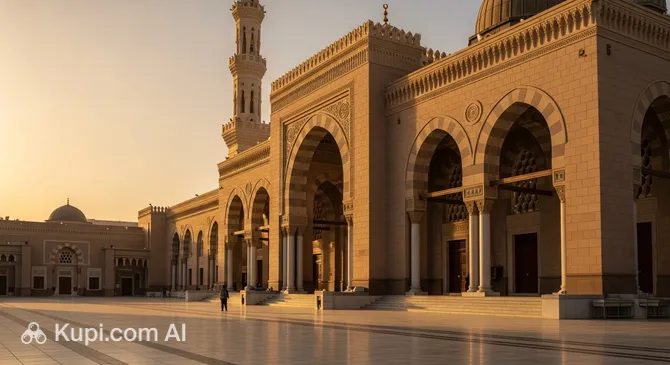
Banu Anif Mosque
Banu Anif Mosque. Иллюстрация. Источник: Kupi.com AI

The site represents an important historical milestone in Saudi Arabia, being linked to the Hijrah route and the Prophet's stay in these parts. A recent restoration, carried out while preserving all archaeological features, returned the mosque to its original austere appearance. The inner courtyard is decorated with white marble, which contrasts with the rugged black walls, while palm trees planted around the perimeter highlight the oasis-like character of the area.

Visitors come here to see the ancient mihrab and the original masonry, executed in a traditional style without excessive ornamentation. This place is considered a quiet sanctuary for those who want to escape the city bustle and touch the living history of the first centuries of Islam, preserved in stone and landscape.

Contacts

To visit this historical site in the city of Medina, travelers usually do not require a prior appointment or official tickets. As the site is an ancient monument, it does not have a separate customer service office or a direct phone number. It is best to check for current visiting information at tourist information centers in Saudi Arabia.

How to contactContact
AddressUnnamed Road, العصبة، المدينة المنورة 42318, Саудовская Аравия

What to Do

At the Banu Anif Mosque, visitors can enjoy a rare opportunity to pray under the open sky, feeling the light breeze and the tranquility of this historic district. Be sure to notice the basalt walls and architectural details restored using ancient construction techniques. This is a wonderful place for those seeking solitude and wanting to reflect in silence on the events of the past.

Photography enthusiasts will find interesting views here: the combination of dark rocks, white marble floors, and the greenery of palm trees in the courtyard creates a unique visual contrast. You can study the information boards, which tell in detail about the significance of the mosque and its role in the history of the Banu Unayf tribe. Special attention should be paid to the mihrab and the northern entrance, which are key elements of this authentic structure.

A visit to the mosque can be conveniently combined with a walk along the "Hijrah Route" and a tour of nearby historical wells, such as Bir Ghars. Many tourists prefer to spend time here at sunset, when the soft light highlights the texture of the ancient stone, and the absence of a roof allows one to watch the first stars appear in the sky, recreating the atmosphere of ancient times.

Getting There

Getting to this historical location is quite simple, as it is located in the Al-Asbah district, southwest of the famous Quba Mosque. If you are traveling from the center of Medina, the drive by car or taxi will take about 10–15 minutes. The main landmark is the Hijrah Route (Tariq al-Hijrah); the mosque will be on your right as you enter the city from the south.

For those who prefer walking, the site is within walking distance (approximately 1–2 km) from the Quba Mosque, allowing you to combine a visit to two important shrines. Parking spaces are available in the area, so arriving by rented transport will not cause any difficulties. Using navigation apps with the exact address or coordinates will help you quickly find the entrance, located on the north side of the building.

Ближайший город: Medina

History & Facts

The history of this site is inextricably linked with the life of the Prophet Muhammad (peace be upon him). According to tradition, he performed a prayer here while visiting a sick companion named Talha bin al-Bara, who lived among the Banu Anif tribe. The residents so cherished this event that they marked the site of the Prophet's prayer and later built a mosque here to preserve the memory of his visit.

Interestingly, the mosque has a second name—Masjid Musabbah. This arose from accounts that the Prophet performed his first morning prayer (Fajr) here upon arriving in Medina during the great migration—the Hijrah. It was here that he awaited the arrival of Ali bin Abi Talib and other companions before solemnly entering Tayba (the ancient name for Medina).

The Banu Anif tribe itself, after whom the site is named, is considered one of the oldest in the region. Historians believe they were descendants of the Amalekites and settled in the Yathrib oasis even before the arrival of the Aws and Khazraj tribes. Thus, the mosque walls, built of dark basalt, hold the memory of many centuries of the Arabian Peninsula's history.

For a long time, the building lay in ruins and was only recently fully restored as part of a large-scale program to preserve historical mosques. Restorers sought to preserve the original appearance as much as possible, using authentic materials—basalt and clay—so that modern visitors could see the mosque as described by medieval travelers.

Time Needed

To explore the mosque itself, take memorable photos of the basalt walls, and experience the silence of this place, 30 to 60 minutes is usually enough. This time is quite sufficient for performing prayer and a brief look at the information plaques telling the history of the Banu Anif tribe.

If you plan to include visits to neighboring historical wells (such as Bir Ghars) or a walk along the historical Hijrah Route in your itinerary, it is worth allowing about 2 hours for the visit. This will allow you to enjoy the unique atmosphere of ancient Medina without rushing and examine the architectural details of the restoration.

Working Hours

The Banu Anif Mosque is open for visitors 24/7, seven days a week. Thanks to its open architectural design, it is always ready to welcome worshippers and tourists wishing to see the landmark at any convenient time, whether it's early morning or late evening.

However, for the most comfortable viewing of the architectural details and basalt masonry, it is recommended to choose daylight hours. Before planning a visit during holidays in Saudi Arabia, it is worth checking official tourism resources for any restoration work.

Круглосуточно

Nearby

The surroundings of the Banu Anif Mosque offer travelers many interesting locations to further immerse themselves in the atmosphere of the region. Exploring this area is convenient to combine with visits to entertainment centers and parks, which perfectly complement a cultural and historical trip.

Below are some interesting places located relatively close by, where you can relax with your family or find entertainment for children:

NameDistance
Quba Mosque0.4 km
Quba Avenue1 km
Al Mughislah District Project2.8 km
Quba Walkway3 km
Quba Walkway3.1 km
Anbariya Mosque3.2 km
Hejaz Railway Museum3.3 km

Reached the end of the page?

That means the route is fully explored