Support

Santa Cruz

About

Welcome to Santa Cruz, a captivating destination that offers a glimpse into the raw beauty and traditional lifestyle of the Pacific. Located in the remote Temotu Province, this area is distinct from the rest of the Solomon Islands, boasting a unique culture and an atmosphere of serene isolation. Often serving as the primary gateway to the easternmost reaches of the archipelago, Santa Cruz invites travelers to explore a world where ancient customs are still vibrantly alive and nature remains largely untouched.

Geographically, Santa Cruz is situated far to the east of the main archipelago, making it an adventurous getaway for those seeking off-the-beaten-path experiences. The region is characterized by lush tropical rainforests, pristine coastlines, and a warm, humid climate that sustains its verdant landscapes. While the local population is relatively small, the communities here are known for their warm hospitality and deep connection to both the ocean and their ancestral land.
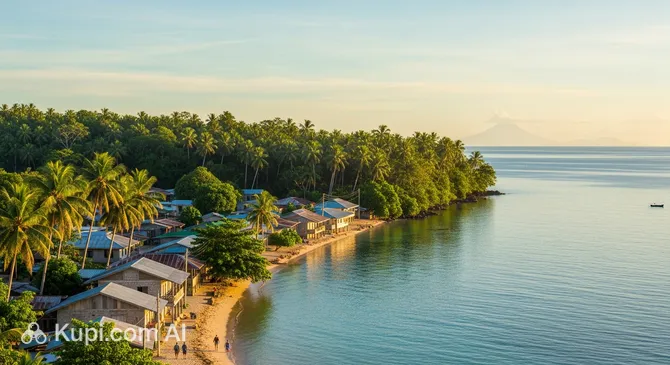
Santa Cruz. Source: Kupi.Binoculars

The history of Santa Cruz is rich with tales of early voyagers and significant encounters with European explorers, such as Álvaro de Mendaña in the 16th century. Today, visitors are drawn not only by the past but by the enduring traditions, most notably the crafting of red feather money. This unique currency, made from the scarlet feathers of the honeyeater bird, is still used in traditional ceremonies and marriages, representing a fascinating aspect of local heritage.

Beyond its cultural treasures, the area offers spectacular natural attractions. Travelers can witness the imposing silhouette of Tinakula, an active volcano that frequently emits smoke and fire, providing a dramatic backdrop visible from the coast. Whether you are interested in learning about the traditional oceangoing canoes known as tepukei or simply want to relax in a pristine paradise, Santa Cruz promises a truly unforgettable journey into the heart of the South Pacific.

Weather Overview

The climate in Santa Cruz is characterized by consistent warmth and high humidity throughout the year. Average temperatures are remarkably stable, fluctuating only slightly between 26.6°C and 27.5°C across the seasons. Days are generally hot with maximums reaching up to 28.4°C in January, while nights remain balmy with minimum temperatures rarely dropping below 26°C.

Travelers should be prepared for frequent rainfall, as the region experiences a very high number of wet days, ranging from 22 to 29 days per month. Expect warm conditions with regular showers throughout the year, rather than distinct dry seasons. To help you plan your activities and pack accordingly, viewing the detailed weather in Santa Cruz is highly recommended.

Interesting Facts

Beyond the volcanic silhouettes and dense jungles, Santa Cruz harbors secrets that span from ancient archaeology to modern digital realms. This unique cluster within the Solomon Islands offers more than just scenic beauty; it is a place of deep historical significance and surprising global connections.

  • The Real-Life "Watopia": In a surprising twist for modern cyclists, the geography of the virtual training world Zwift (specifically the "Watopia" course) is loosely based on the islands of Teanu and Naunonga within the Santa Cruz group. While millions ride these digital roads daily, few realize they are traversing a virtual recreation of this remote Pacific paradise.

  • Feather Money Complexity: The famous red feather money (tevau) is an engineering marvel as much as a currency. A single coil can require the tiny scarlet feathers of over 300 to 600 honeyeater birds (Myzomela cardinalis). Skilled craftsmen traditionally catch the birds, pluck the necessary feathers, and release them, maintaining a delicate ecological balance.

  • Ancient Lapita Roots: The islands are a treasure trove for archaeologists, containing some of the most significant Lapita pottery sites in the Pacific. Excavations in the region have unearthed intricate ceramic fragments dating back over 3,000 years, offering crucial clues about the ancient migration of the Austronesian people across the vast ocean.

  • Exclusive Wildlife: The isolation of the archipelago has fostered unique biodiversity found nowhere else on Earth. It is the only home of the Santa Cruz shrikebill (Clytorhynchus sanctaecrucis), an elusive bird species that dwells in the mossy cloud forests, making the islands a critical frontier for conservation and a bucket-list destination for dedicated ornithologists.

How to Get There

Reaching this remote part of the Solomon Islands is an adventure in itself, often involving a journey through the capital, Honiara. Due to its location in the eastern Temotu Province, travel options are somewhat limited compared to the main archipelago, but the destination is well worth the effort. For detailed information on flight schedules and maritime routes, you can read more about how to get to Santa Cruz.

The primary gateway for air travelers is Santa Cruz Island Airport (SCZ). It is a small regional facility that connects the province with the rest of the country. Located approximately 58.4 km from the heart of the area, the transfer by taxi or shuttle is a scenic drive that takes about 1 hour and 50 minutes. While the annual passenger traffic is low, ensuring a quiet and unhurried arrival experience, it remains the most vital link for tourists visiting this secluded paradise.

For clarity, here is a summary of the main airport:

Airport Name City Passenger Traffic Km from City
Santa Cruz Island Airport Santa Cruz Small 58.4

There are no railway services available in Santa Cruz or the surrounding islands. Transport within the region is primarily by road or small boats, which are essential for hopping between the coastal villages and nearby islets. Visitors should plan to rely on local taxis, trucks, or arranged transfers to navigate the area after arrival.

Main Attractions

Graciosa Bay is the geographical and historical heart of the area, offering a stunning natural harbor that cuts deep into the island of Nendö. This sheltered bay is not only scenic, with its calm waters and lush green backdrop, but it is also steeped in history as the site where Spanish explorer Álvaro de Mendaña attempted to establish a settlement in 1595. For tourists, it provides excellent opportunities for swimming, snorkeling, and kayaking in a serene environment, while history enthusiasts can contemplate the early interactions between European voyagers and the Pacific world.

Visible from the northern coast of Santa Cruz, Tinakula Volcano is a majestic and active stratovolcano that serves as a dramatic natural landmark. Rising abruptly from the ocean, its cone is often shrouded in smoke and ash, and on clear nights, the glow from its crater can sometimes be seen from the main island. While landing on the volcano itself is hazardous and rarely permitted, boat tours around its base offer an adventurous way to witness the raw power of nature and the abundant birdlife that thrives in the surrounding waters.

The provincial center of Lata is the bustling hub of the region and home to the main local market. A visit here offers an authentic slice of island life, where farmers and fishermen gather to sell fresh taro, coconuts, and the catch of the day. It is also one of the best places to interact with the friendly locals and potentially see the famous red feather money, which is still highly valued. The market area serves as a cultural crossroads, providing visitors with insight into the traditions and daily rhythms of the Temotu Province.

Local Cuisine

The culinary landscape of Santa Cruz is defined by its isolation and the abundance of its natural surroundings. Here, the concept of "farm-to-table" is not a trend but a way of life. The food is organic, fresh, and simple, relying heavily on the fertile volcanic soil and the surrounding ocean. Travelers should not expect extensive menus or international cuisine; instead, you will be treated to hearty, homemade meals that reflect the authentic flavors of the Temotu Province.

One of the most distinct culinary specialties of this region is Nambo. Unique to the Santa Cruz islands, these are dried breadfruit chips that have a texture similar to biscuits or jerky. Traditionally baked in earth ovens and dried over a fire, Nambo can be stored for months and was historically a vital food source for ocean voyagers. It is often eaten as a snack or softened in coconut milk. Alongside this, staples like taro, yam, and cassava form the base of most meals, often mashed into puddings and enriched with thick, creamy coconut milk.

Seafood lovers will find themselves in paradise, as the waters around Nendö and the smaller islets teem with life. Freshly caught tuna, reef fish, and crayfish are daily staples, typically grilled over open fires or poached in coconut cream with local "cabbage" (edible hibiscus leaves). Because commercial fishing is minimal, the catch is almost always sustainable and served within hours of leaving the ocean.

When it comes to beverages, the most refreshing option is undoubtedly a fresh young coconut, known locally as kulau. It is the standard drink for hydration in the tropical heat. For something stronger, you may find the local lager, SolBrew, in the provincial center of Lata, but alcohol availability can be limited in more remote villages. Kava is also consumed in the Solomon Islands, often as part of social or ceremonial gatherings, though it is less commercialized here than in neighboring Pacific nations.

The dining scene in Santa Cruz is informal and communal. There are very few standalone restaurants; instead, most visitors eat at their guesthouses or lodges, where hosts prepare daily meals based on what is available at the market that morning. For a taste of local life, a visit to the Lata Market is essential. Here, you can buy fresh fruits like pineapples, bananas, and papaya directly from the growers, or pick up a bag of Nambo to snack on while exploring the island.

Travel Tips

Traveling to Santa Cruz in the remote Temotu Province is a rewarding experience that requires a bit more preparation than your average holiday. To help you navigate this secluded paradise with ease and respect for the local way of life, here is a collection of practical advice for your journey.

  1. Clothing and Gear: Given the hot and humid tropical climate, pack lightweight, breathable fabrics like cotton or linen. However, modesty is key in the Solomon Islands; women should cover their thighs and shoulders, especially in villages, so bringing a sarong (lavalava) is very useful. Since rainfall is frequent, a lightweight raincoat or poncho is essential. Sturdy waterproof sandals or reef shoes are recommended for wet terrain and boat landings.

  2. Transportation: Public transport as you know it does not exist here. There are no trains, metros, or ride-hailing apps. The main way to get around the island of Nendö is by walking or hitching a ride on the back of a flatbed truck, which serves as the local "bus." For exploring the coastline or visiting nearby islets, you will need to hire a motorized canoe or "banana boat." Always negotiate the price before departing.

  3. Finances: The local currency is the Solomon Islands Dollar (SBD). Cash is absolute king in Santa Cruz. While there may be a bank branch in the provincial center of Lata, ATMs can be unreliable or out of service. It is highly advisable to withdraw ample cash in Honiara before flying out. Credit cards are virtually useless outside of the capital, so prepare small denominations for markets and transport.

  4. Health and Safety: Malaria and dengue fever are risks in this region, so packing strong insect repellent and taking prophylaxis medication is strongly recommended. Medical facilities in Lata are basic, handling only minor issues; serious emergencies require evacuation. Always drink bottled or boiled water, and carry a well-stocked personal first-aid kit, as pharmacies are not 24/7.

  5. Communication: English is the official language, but Solomon Islands Pijin is the lingua franca used by locals. Most people in Santa Cruz speak some English, but learning a few Pijin phrases like "Halo" (Hello) or "Tanggio" (Thank you) goes a long way. Mobile coverage is available in Lata via local providers (Telekom or Bmobile), but signal drops off quickly as you move away from the town center.

  6. Local Etiquette: The concept of kastom (custom/tradition) is strong here. Always ask for permission before entering a village or taking photos of people. Land ownership is taken seriously; you often need to pay a small "kastom fee" to the landowners to visit specific beaches, caves, or attractions. Removing your shoes before entering a home or guesthouse is standard practice.

  7. What to Avoid: Do not wear skimpy swimwear (bikinis or speedos) in public areas or villages, as it is considered offensive; reserve this for private resorts or secluded beaches if explicitly permitted. Also, avoid walking over areas marked as "tabu" (taboo), which may be indicated by specific leaves or markers—ignoring these can cause significant offense to the community.

  8. Power Supply: Electricity in Santa Cruz is not always guaranteed 24/7. Many guesthouses rely on solar power or generators that run only for a few hours in the evening. Bring a high-capacity power bank and a universal adapter (Type I plug) to keep your camera and phone charged for those stunning island photos.

By keeping these tips in mind, you will be well-equipped to embrace the slow, rhythmic pace of life in Santa Cruz. Respecting the local customs and coming prepared for the remote nature of the islands will ensure that your adventure is not only safe but deeply connected to the welcoming spirit of the Temotu people.

Entertainment & Nightlife

Entertainment and Nightlife:

Travelers planning a trip to Santa Cruz should adjust their expectations regarding nightlife. Unlike bustling tourist hubs, this remote region of the Solomon Islands does not offer nightclubs, discos, or neon-lit bar strips. Instead, the evening entertainment here is defined by tranquility, connection with nature, and the warm hospitality of the local community. The "nightlife" is authentically Pacific: sitting under a canopy of stars, listening to the ocean, and sharing stories with locals over a cold drink.

The center of social activity is the provincial town of Lata. While you will not find formal pubs or cocktail lounges, the area around the main wharf and the Lata Market often serves as a casual meeting point in the late afternoon and early evening. Here, locals and visitors might gather to purchase SolBrew (the national beer) from small bottle shops. The atmosphere is incredibly laid-back and informal; dress codes are non-existent, though modest attire is always respectful. Most social gatherings happen within the communal dining areas of local guesthouses, where guests unwind after a day of exploration.

A significant part of the evening culture involves Kava. While less commercialized than in other Pacific nations, drinking kava is a traditional way to relax and socialize. You may be invited by your hosts or a local guide to join a small session. This is a respectful and quiet affair, offering a unique insight into the community spirit of the Temotu Province. It is one of the most authentic "night out" experiences you can have here, usually taking place in private homes or semi-open community structures rather than public bars.

Practical advice for the evening is simple: everything closes early. Electricity is often generated by solar power or diesel generators that may be turned off around 10:00 PM or 11:00 PM. Therefore, it is best to start your evening early, right after sunset. There are no taxis cruising the streets at night; you will rely on walking or pre-arranged transport from your accommodation. Ensure you carry sufficient cash (Solomon Islands Dollars), as credit cards are not accepted at small local stores or bottle shops.

Regarding safety, Santa Cruz is generally very safe, but the lack of street lighting is a major factor. The streets of Lata and village paths become pitch black after dark. It is essential to carry a reliable flashlight or headlamp if you plan to walk anywhere at night. While crime is low, wandering alone in the dark is not recommended due to uneven terrain and the presence of stray dogs. Stick to the areas near your accommodation or the main town center where there is some activity.

During the day, entertainment shifts entirely to the outdoors, as there are no movie theaters, amusement parks, or shopping malls in the province. The "museums" here are living ones: the villages where ancient traditions like red feather money crafting are still practiced. Visitors spend their days snorkeling in the pristine waters of Graciosa Bay, hiking through the rainforest, or taking boat trips to view the active Tinakula Volcano. The thrill of Santa Cruz lies in its raw, unmanufactured adventure rather than man-made attractions.

Parks & Museums

In Santa Cruz, the concept of parks and museums takes on a different meaning. You will not find manicured city gardens or air-conditioned art galleries here. Instead, the island of Nendö itself serves as a vast, untamed natural park, while the local villages function as living museums where ancient traditions are breathed into life every day. The cultural and natural heritage of the Temotu Province is best experienced not by looking at exhibits behind glass, but by stepping directly into the rainforests and communities.

The Rainforests of Nendö act as the region's primary green space, covering the island's interior with dense, verdant jungle. Unlike urban parks with paved paths, this is a wild environment teeming with life. It is a paradise for nature lovers and birdwatchers, offering the chance to spot rare endemic species such as the Santa Cruz white-eye. Exploring these forests requires a sense of adventure and often a local guide, but the reward is an immersion in one of the most untouched ecosystems in the Pacific.

Graciosa Bay is effectively the area's largest natural recreational area. While not a park in the traditional sense, its calm, sheltered waters and fringing white sands provide the perfect setting for swimming, picnicking, and relaxing. The coastline here is framed by swaying palms and volcanic soil, offering a serene escape where visitors can connect with the raw beauty of the Solomon Islands. It is also a place of historical contemplation, being the site of early Spanish exploration.

Since there are no formal museums in Santa Cruz, the Red Feather Money "Workshops" in local villages serve as the region's most significant cultural galleries. The production of tevau—the traditional currency made from scarlet honeyeater feathers—is an intricate art form passed down through generations. Visiting a village to witness the binding of these feathers into coils is like stepping back in time. It offers a rare insight into a currency system that has survived for centuries and remains legally recognized in the province.

Another key cultural touchstone is the tradition of Tepukei Navigation. While there is no maritime museum, the boat sheds where these ancient ocean-going canoes are built and stored are fascinating places to visit. The tepukei is a marvel of Polynesian engineering, capable of traversing vast ocean distances. Seeing one up close and learning about the star-path navigation techniques from local master builders provides a deep appreciation for the maritime history of the Lapita people.

For a historical perspective, the Mendaña Landing Site within Graciosa Bay marks a significant chapter in Pacific history. It was here that the Spanish navigator Álvaro de Mendaña attempted to establish a colony in 1595. Although no grand monuments stand today, the site is a poignant landmark for history buffs, representing one of the earliest and most tragic encounters between Europeans and the islanders of the South Pacific.

Insider Tip: To truly experience the "museum" aspect of Santa Cruz, ask your guesthouse host to arrange a visit to a village that specializes in weaving or feather money crafting. These are not commercial tours; they are personal exchanges. Bringing a small gift, such as rice or tea, is a customary gesture of appreciation when entering these community spaces.

Getting Around

Navigating Santa Cruz requires a shift in perspective, as the public transport system here is informal, rustic, and entirely devoid of modern urban infrastructure. Visitors will not find subways, trams, trolleybuses, or scheduled municipal bus lines. Instead, the island relies on a network of privately owned vehicles and boats that connect the provincial center of Lata with the surrounding villages and coastal communities. This system is practical and communal, offering a genuine insight into the daily rhythm of local life.

The most common form of road transport is the "public truck." These are typically flatbed utility vehicles modified with wooden benches running along the sides of the cargo bed and covered by a canvas or metal roof for shade. They function similarly to a bus service, traveling along the main road that traverses Nendö Island. There are no designated bus stops; passengers simply wait by the roadside and wave to flag down a passing truck. If there is space on the benches, the driver will pull over to let you board.

Given the island's geography, water transport is just as essential as road travel. Fiberglass "banana boats" powered by outboard motors serve as water taxis, ferrying people and goods between coastal settlements and nearby islets that are inaccessible by road. These boats congregate at the main wharf in Lata or at specific beach landings. They can be hired privately or shared with other passengers to split the cost, functioning effectively as the region's marine minibus system.

Payment across all forms of transport is exclusively in cash. There are no travel passes, smart cards, or mobile payment apps available in Santa Cruz. Fares are generally fixed for specific routes or distances, but they are rarely displayed in writing. It is important to carry small denominations of the local currency, as drivers often have limited change. You typically pay the driver or their assistant upon reaching your destination. For shared trucks, the cost is very affordable, while private boat charters can be significantly more expensive due to fuel costs.

For those seeking more comfort or privacy, standard taxis are available, primarily based in Lata near the market and the airfield. These are usually sedans or 4WD vehicles. However, they do not operate with taximeters. It is crucial to agree on the fare with the driver before getting into the car to avoid any misunderstandings later. While ride-sharing apps and car-sharing services do not exist here, you can often arrange for a vehicle and driver for a half-day or full-day tour through your guesthouse.

Tourists should be aware that transport schedules are fluid and dictated by "island time" and daylight. Public trucks and boats are most active in the early morning, when locals travel to the market or work, and again in the late afternoon for the return journey. Service drops off sharply after sunset, and finding transport at night can be difficult without prior arrangement. Always plan your return trip well before dusk to ensure you are not left stranded.

Alternatives for getting around are limited but enjoyable for short distances. Walking is a common and pleasant way to explore the immediate area around Lata and Graciosa Bay. While there are no formal bike rental shops, some guesthouses may offer bicycles for guest use, providing a leisurely way to see the coast. Self-driving is rare for tourists, as rental cars without drivers are scarce and road conditions can be challenging for those unfamiliar with the terrain.

Accommodation

Accommodation in Santa Cruz reflects the remote and uncommercialized nature of the Temotu Province. Visitors should not expect international hotel chains, luxury high-rises, or extensive resort complexes. Instead, the region offers a modest selection of guesthouses, small lodges, and simple bungalows that provide a genuine and intimate connection with the local community. The focus here is on hospitality and authenticity rather than opulence, with most options offering basic but comfortable amenities suitable for adventurous travelers.

The primary area for accommodation is the provincial center of Lata and its immediate surroundings along Graciosa Bay. Staying in or near Lata is the most convenient option for tourists, as it places you close to the airport, the main wharf, and the market. This central location makes it easier to arrange transport and access the limited supplies available in town. For those seeking a quieter experience, there are a few small "resorts"—typically clusters of traditional leaf-thatched bungalows—situated right on the water's edge, offering stunning views of the bay and the distant Tinakula Volcano.

When planning your stay, it is crucial to understand that booking methods in Santa Cruz differ significantly from major tourist destinations. Very few, if any, local properties are listed on global online booking platforms. Direct booking is the standard procedure. This usually involves calling the proprietor directly or arranging the stay through the Solomon Islands Visitors Bureau in Honiara before you travel. Because communication infrastructure can be intermittent, it is highly recommended to confirm your reservation well in advance.

Price ranges are generally affordable to mid-range, though costs can be higher than expected for the level of amenities provided due to the expense of shipping goods to the province. Most accommodations operate on a cash-only basis. Credit card facilities are virtually non-existent at lodgings, so travelers must bring sufficient Solomon Islands Dollars to cover their entire stay. Be prepared for simple facilities; while some lodges offer private rooms with fans, others may have shared bathrooms and electricity that runs only on a generator schedule during the evening hours.

Nearby Cities

Given the isolation of the Temotu Province, the urban centers surrounding Santa Cruz are best viewed as regional connections or next destinations rather than convenient day trips. The significant stretches of ocean separating these islands mean that air travel is the primary method of reaching them. These hubs serve as essential gateways for travelers extending their journey through the archipelago.

One of the geographically closest significant towns is Kirakira, the provincial capital of Makira-Ulawa. Known for its relaxed atmosphere, it acts as a jumping-off point for exploring the rugged beauty of Makira Island. Visitors here can experience a distinct pace of life and visit local markets that highlight the produce of a different province.

Situated on the island of Guadalcanal, Honiara is the bustling capital and the primary logistics hub for the entire country. While it lies a considerable distance away, it is the vital connection point for reaching Santa Cruz. A visit to the capital offers a contrast to the tranquility of the outer islands, featuring World War II historical sites and a wider range of modern amenities.

City Population Distance (km)
Honiara 84520 711
Auki 7882 657
Gizo 6154 1082
Kirakira 3500 478
Buala 2813 792

These destinations provide a broader perspective on the diverse cultures and landscapes of the region, allowing travelers to piece together a complete picture of life across the Solomon Islands.

Shopping & Souvenirs

Shopping in Santa Cruz is a far cry from the commercialized retail experiences found in major cities or tourist hubs. There are no sprawling shopping malls, designer boutiques, or duty-free complexes here. Instead, the shopping scene is utilitarian and deeply connected to the local subsistence lifestyle. For visitors, this means an opportunity to engage with the community on a personal level, purchasing essential goods alongside residents and discovering unique, handcrafted items that reflect the rich cultural heritage of the Temotu Province.

The main commercial activity is concentrated in the provincial center of Lata. This small town serves as the economic heart of the region, but do not expect bustling high streets. The "shopping district" consists of a few general stores and Chinese-run trading posts scattered near the wharf and the airfield. These shops function as all-purpose suppliers, stocking everything from tinned food, rice, and bottled water to hardware, fishing gear, and basic clothing. For travelers, these are the go-to spots for restocking supplies, buying snacks, or purchasing local SIM cards and top-up vouchers.

Since there are no shopping malls, the Lata Market stands out as the premier shopping destination and the most vibrant spot in town. Located near the waterfront, this open-air market is where the pulse of the island beats strongest. It is strictly a fresh produce market rather than a souvenir bazaar. Here, local farmers and fishermen sell organic fruits, vegetables, root crops like taro and cassava, and the fresh catch of the day. It is the best place to buy drinking coconuts (kulau) or try local snacks like nambo (dried breadfruit chips).

When it comes to souvenirs, you will rarely find them in a standard store. The best keepsakes are authentic handicrafts purchased directly from the artisans in the villages. The region is famous for its intricate weaving, particularly baskets and bags made from pandanus or coconut fibers. Wood carvings, often depicting marine life or traditional canoes, are also prized. While the famous red feather money is a fascinating cultural currency, it is a high-value heritage item and generally not sold as a casual souvenir; however, smaller replicas or jewelry made from shells and seeds are beautiful and accessible alternatives.

Practicality is key when planning to shop in Santa Cruz. Cash is the only method of payment accepted in markets, general stores, and by village artisans. Credit cards are useless, and there are no ATMs outside of the basic banking facilities in Lata, which can be unreliable. Visitors should ensure they bring enough Solomon Islands Dollars (SBD) from Honiara. Store hours are generally limited, with most businesses opening around 8:00 AM and closing by 4:00 PM or 5:00 PM. Expect shops to close for a lunch break, and be aware that almost all commerce shuts down completely on Sundays in observance of religious customs.

Reached the end of the page?

That means the route is fully explored