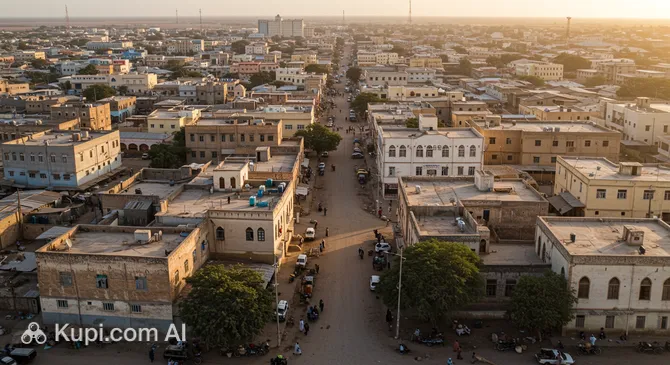
Baidoa is a dynamic and colorful city, serving as a vital administrative and economic hub of the South West State of Somalia. Located in the heart of the Bay region, this city attracts visitors with its authentic atmosphere and status as a cultural crossroads. Home to approximately 950,000 people, it is one of the most populous and vibrant places in the central part of the country.
Baidoa. Illustration.
Source: Kupi.com AI
The city is renowned for its unique ethno-cultural diversity. Baidoa's rich heritage dates back to the medieval period, when it was founded by the Madanle clan, who were famous as skilled masters of deep-well digging. Today, the city is a center for the Maay language, which gives local communication a distinct flavor, differing from the standard Somali dialect.
Baidoa is surrounded by picturesque agro-pastoral landscapes, where agriculture and trade set the rhythm of daily life. Visiting this city is a unique opportunity to immerse yourself in the traditional way of life of East African communities and experience the genuine hospitality of the local residents.
Weather Overview
In Baidoa, a typical tropical climate prevails, shaped by its proximity to the equator. There are two distinct seasons here: dry and rainy. The hottest period of the year is spring: in March, daytime temperatures often reach 36°C, while the average stays at 29.5°C.
Precipitation occurs mainly in two stages. The main rainy season falls in April, when nature comes to life, and a second peak of humidity is observed in October and November. To better plan your visit, it is recommended to study the detailed city climate. For comfortable walks and trips, it is better to choose the dry months, such as January or August, when the heat is more tolerable and humidity is minimal.
Average monthly temperature
Average monthly precipitation
Interesting Facts
The city is considered the cradle of the Maay language — a unique Afro-Asiatic dialect that is so different from classical Somali that they are not mutually intelligible.
The Bay region, of which Baidoa is the capital, was historically famous for its colossal camel population — at certain times, their numbers in the vicinity exceeded 1.3 million head.
The settlement was founded in the Middle Ages by representatives of the Madanle clan, who became famous in the southern part of the country as unsurpassed masters of hydraulic engineering and deep-well diggers.
Baidoa is located at an altitude of about 440 meters above sea level, which makes its climate somewhat more moderate compared to coastal areas.
How to Get There
There are several ways to reach this regional center, but air travel remains the most reliable option for travelers. If you are planning a visit, it is helpful to find out in advance about how to get to Baidoa from other major hubs in the country.
The city's main transport gateway is Baidoa Airport (IATA: BIB). It serves regular domestic flights, primarily connecting the city with the capital. The airport plays a key role in the logistics of the South West State, ensuring stable communication with central regions.
Ground communication is carried out via roads leading from Mogadishu (a distance of about 256 km). Traveling by bus or private transport allows you to see the changing landscapes of central Somalia, though you should keep in mind that road conditions and travel time can heavily depend on the rainy season.
Station
Passenger traffic
Distance
Mogadishu railway station
1
222 km
Main Attractions
Baidoa is a place where the main attraction is the rhythm of life itself and the cultural heritage of its inhabitants. While you won't find classic tourist attractions in the traditional sense, the city generously rewards those seeking authenticity. One of the most interesting features is the ancient wells scattered throughout the region, which testify to the engineering skills of the ancestors who managed to establish life in such arid conditions.
A walk through the surrounding agricultural lands allows you to see a unique system of agro-pastoral farming. Endless sorghum fields and pastures where herds of goats and camels graze create a meditative picture of traditional Somali life. This is an excellent opportunity to get to know the nature of the region, untouched by mass tourism, and see how humans harmoniously coexist with the harsh landscape.
Be sure to visit the local markets, which are the true heart of city life. Here, you can not only observe the bustling trade of agro-pastoral products but also hear the living speech of Maay speakers. Interacting with the locals and learning about their customs is perhaps the most valuable experience you can have in Baidoa.
Local Cuisine
The gastronomic culture of Baidoa is deeply rooted in the region's agro-pastoral traditions. The staple of the local diet is sorghum — this grain is used to prepare various hearty porridges, thick soups, and traditional flatbreads. Local cuisine is simple and nutritious, perfectly suited for the tropical climate.
Meat dishes hold a place of honor at the table. You should definitely try the stewed goat or camel meat dishes, which are considered true delicacies here. Meat is often served with rice or grain mixes, generously seasoned with local spices that give the food a unique aroma.
Among beverages, traditional tea with milk and spices, as well as fresh camel milk, are the most popular. The city's markets are the best place to try authentic dishes, as the food culture here centers around home traditions and market street food, where everything is prepared from the freshest ingredients.
Travel Tips
To ensure your trip to Baidoa is comfortable and safe, we suggest using these practical tips from experienced travelers.
Clothing and Essentials: Choose lightweight clothing made from natural fabrics. Given local traditions, follow a modest dress code: shoulders and knees should be covered. Be sure to bring sunscreen and comfortable closed-toed shoes.
Transport: Move around within the city by taxi or on foot. Be prepared for uneven roads, and note that public transport is represented by private carriers.
Finances: It is recommended to have a supply of US dollars in cash in small denominations. ATMs are virtually non-existent in the city, and international cards are rarely accepted.
Health: Use only bottled water even for brushing your teeth. It is recommended to carry a basic first-aid kit and insect repellent.
Communication: The main language is Maay, but knowing basic phrases in standard Somali will help in communication. English is not widely spoken, so an offline translator will be useful.
Local Etiquette: Always greet your interlocutor first. Remember that the right hand is used for eating and handshakes, and showing excessive emotion in public is not encouraged.
What to Avoid: Do not photograph government facilities or people without their prior consent. Avoid discussing political and sensitive religious topics.
Seasonality: Plan your visit for the dry season (January-February or August-September) to avoid travel difficulties during the rains.
Following these simple rules will help you show respect for the local culture and make your introduction to the city truly pleasant and informative.
Entertainment & Nightlife
Leisure in Baidoa differs significantly from the usual European format. You won't find noisy nightclubs or large concert venues here, as city life is governed by traditional values and the agricultural cycle. The main places for socializing and evening entertainment are small tea shops, where locals gather for leisurely conversations and news over a cup of aromatic tea.
For those who prefer daytime activities, the city offers the unique experience of observing rural life. Visiting the central markets during peak hours is a spectacle in itself, full of bright colors, sounds, and unique goods. You can also arrange walks in the surrounding areas to enjoy the silence of the savannah and observe the traditional lifestyle of nomadic communities.
Evening safety requires mindfulness, so it is best to take walks in the company of local acquaintances or guides. Despite the lack of a conventional "entertainment industry," the atmosphere of the quiet evening city provides a sense of peace and allows for a better understanding of the region's soul through direct communication with its inhabitants.
Parks & Museums
In Baidoa, the role of parks and museums is played by open spaces and sites created by history and nature itself. The city is surrounded by vast agricultural lands, which transform into natural recreation areas during certain seasons. These landscapes are a living testament to the agro-pastoral labor of many generations of local residents.
Although the city lacks formal museum buildings, its cultural heritage is represented by unique archaeological and hydraulic sites. Of particular interest are the ancient wells built by the Madanle clan centuries ago. These structures can be viewed as open-air museums demonstrating the engineering thought and history of the region's development.
For those interested in ethnography, visiting local markets and community centers, where traditions and the Maay language are carefully preserved, serves as a "living museum." The absence of classic galleries is fully compensated by the opportunity to see history that continues to live in everyday customs, crafts, and the oral traditions of the city's elders.
Getting Around
The transport system in Baidoa is straightforward and adapted to local conditions. The main mode of transport for most residents is walking, but for longer distances within the city, private minibuses and taxis are actively used. Fares are paid in cash, and it is recommended to agree on the price of a taxi ride in advance.
In the central districts and near the markets, you can still find traditional carts used to transport goods and sometimes passengers. This gives the city a special character. There are no fixed schedules for urban transport, so it is best to head to the busiest transport hubs in the center.
For trips outside the city or to BIB Airport, it is most convenient to use taxi services, booked through your host. Renting a car without a driver is not practiced in this region due to the specifics of local traffic. Travelers should take into account that during the rainy season, the condition of some roads can make travel difficult, so it is wise to plan routes with extra time in mind.
Accommodation
Accommodation options in Baidoa are primarily geared toward those seeking an authentic experience and who value local hospitality. The city is dominated by small guesthouses and private hotels offering a basic set of amenities for travelers. There are no luxury five-star complexes here, but the warmth of the hosts and the opportunity to immerse yourself in local life compensate for the lack of frills.
For convenience, it is recommended to choose accommodation in the central districts of the city. This ensures proximity to markets and main transport points. When choosing a place to stay, it is wise to inquire in advance about the availability of backup power systems and water supplies, as the city's infrastructure can experience interruptions.
Booking through international online aggregators is not well-developed in this region, so the most reliable way is to contact the hotel directly or through trusted local contacts. It is recommended to plan your stay in advance, especially if your visit coincides with major regional fairs or holidays.
Nearby Cities
Baidoa serves as an excellent starting point for exploring the picturesque Bay region and neighboring areas of Somalia. The city's surroundings hide many small settlements, each possessing its own unique character and history closely linked to nomadic traditions and agriculture.
Very nearby is the town of Buurhakaba, known for its impressive natural landscapes. For those ready to venture a bit further, Diinsoor or Hudur make interesting destinations. A trip to these places will allow for a deeper understanding of the diverse cultural features of the country's southern part.
Also on the list of accessible destinations are Caracas and Luuq. Each of these places will provide a wealth of new impressions from encountering untouched nature and the sincere hospitality of the residents of the Somali hinterland.
Shopping & Souvenirs
Shopping in Baidoa is, first and foremost, an immersion into the atmosphere of traditional East African markets. There are no huge shopping malls with chain stores, but there is an opportunity to purchase truly unique goods. The main shopping areas are concentrated in the city center, where life bustles from early morning.
As souvenirs, you should look for the work of local artisans: woven products, traditional fabrics, and items of nomadic life made by hand. The region is also famous for its high-quality sorghum grain and livestock products. Buying such goods at the market is a great chance to support local farmers and bring home a piece of authentic Somalia.
Shops and stalls are usually open from dawn to dusk, with a break during the hottest part of the day. Payment is made exclusively in cash, so it is worth carrying small change. Polite bargaining at the markets is an integral part of the local culture and often turns into a pleasant social interaction with the seller.