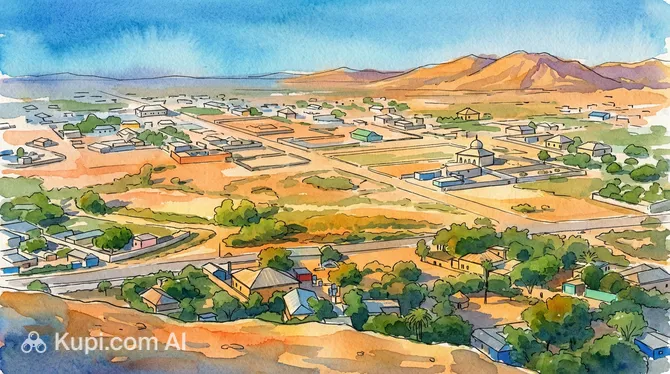
Buurhakaba is an amazing corner of Somalia that offers travelers a rare opportunity to experience the authentic rhythm of life in the Bay region. The town possesses a unique atmosphere of tranquility and authenticity, serving as an important administrative and residential center. Its name is inextricably linked to the majestic granite mountain that rises in the very heart of the settlement, creating a recognizable and impressive silhouette against the backdrop of endless plains.
Located approximately 180 kilometers from the capital and 60 kilometers from Baidoa, the town occupies a strategic position in the savanna zone. Geographically, Buurhakaba sits at an altitude of about 196 meters above sea level, which, combined with the open spaces, provides natural ventilation for the streets. The town's population is estimated to be between 126,000 and 360,000, making it one of the largest and most significant settlements in this part of the country.
Buurhakaba. Illustration.
Source: Kupi.com AI
While exploring the rich heritage of these places, it is impossible to ignore the central mountain. It serves not only as a natural landmark but also as the best observation deck, offering breathtaking panoramic views of the green plains dotted with acacias. There are no noisy tourist attractions here, but there is the sincere hospitality of the locals and a chance to see the traditional Somali way of life in its unvarnished form.
A visit to this town will be a true discovery for those seeking solitude and who appreciate the pristine beauty of landscapes. Buurhakaba invites you to enjoy the quiet of provincial life and the majestic calm of ancient granite rocks.
Weather Overview
The climate in Buurhakaba is classified as hot and semi-arid, which is typical for the inland regions of the southern part of the country. Eternal summer prevails here with high temperatures that rarely drop below +22°C at night throughout the year and often exceed +35°C during the day. The dry season is characterized by clear skies and periodic dusty winds coming from the desert territories.
Precipitation in the town is unevenly distributed. The wettest periods occur in April and November, when tropical downpours bring long-awaited coolness and cause the surrounding plains to instantly become covered in fresh greenery. January and February, by contrast, are considered the driest months, when rain is practically absent. Check the detailed city climate to choose the most suitable time for your visit.
Thanks to the presence of the central granite mountain and the open landscape, the town maintains good ventilation, which helps to better endure the daytime heat. The most comfortable hours for walking are in the morning and evening, when the heat subsides and the soft sunlight paints the granite rocks in golden hues. The air here is clean, although natural dustiness may be noticeable during the dry months.
Average monthly temperature
Average monthly precipitation
Interesting Facts
Getting to know this unique town is impossible without knowing some surprising details that make it special. Here are a few facts to help you better understand Buurhakaba:
The town owes its name to the massive granite mountain (Buur Hakaba), which is not only the geographic center but also the main symbol of the region.
Despite its provincial status, it is the second largest settlement in the Bay region, second in importance only to Baidoa.
Surrounding the town are green plains densely overgrown with acacias, which is unusual for the arid regions of Somalia and creates a unique natural microclimate.
Recently, the town opened its own airport, intended to become an important transport hub and give a new impetus to the development of the local economy.
Buurhakaba is situated at an altitude of about 196 meters above sea level, providing guests with more comfortable conditions compared to the hot coastal lowlands.
How to Get There
Transport accessibility to the town of Buurhakaba is gradually improving, opening up new opportunities for travelers. The main link to the rest of the world remains the roads connecting the town with the capital and the regional center of Baidoa. Before planning your trip, we recommend checking the latest information on how to get there most comfortably.
Currently, the key logistical solution is the use of land transport. A trip from Mogadishu, located 180 kilometers away, takes between 4 to 6 hours, while from Baidoa (60 kilometers away), it can take 3 to 5 hours. It is worth considering that road conditions can change depending on the season, especially during rainy periods when dirt sections become difficult to pass. Popular means of communication between cities are scheduled minibuses and private SUVs.
An important stage in the development of infrastructure was the opening of Buurhakaba Airport. Although regular air service is still being established and the number of flights is limited, the emergence of its own air harbor significantly reduces travel time from the capital—the flight takes only about an hour. Nevertheless, for most tourists, the main way to travel remains the proven land transport.
There is currently no rail service in this region, so all passenger and cargo transportation is carried out exclusively by road or air. It is recommended to arrange transfers with local carriers in advance to ensure safety and comfort on the way.
Station
Passenger traffic
Distance
Mogadishu railway station
1
164 km
Main Attractions
The main and most recognizable landmark defining the appearance of Buurhakaba is the granite mountain of the same name. This natural monolith in the center of town catches the eye of every visitor. A climb to the summit will reward you with stunning views of the surrounding savannas and neat urban quarters. It is an ideal spot for those who want to feel the scale and majesty of Somali nature while remaining within walking distance of residential areas.
The heart of the town's social life is the central markets located at the foot of the mountain. While there are no typical organized tours, a simple walk among the stalls becomes a fascinating immersion into the culture. All daily activity is concentrated in the markets: here you can see traditional crafts, observe lively trade, and feel the true flavor of provincial Somalia, preserved here in its original form.
For travelers who appreciate architectural simplicity and functionality, the local mosques and squares will be of interest. They serve as important focal points for the community and reflect the region's traditional building approaches. Although the town is not rich in classical museums, its streets—filled with the sounds of daily chores and the aromas of local cuisine—are a living exhibition of Somali life in themselves.
Local Cuisine
A gastronomic journey to Buurhakaba is an introduction to the hearty and aromatic cuisine of the Bay region. The local diet is based on products gifted by the fertile plains: sorghum, corn, and tender goat meat. The dishes here are simple but incredibly tasty, reflecting centuries-old traditions of Somali nomadic and agricultural life.
One of the town's main culinary symbols is canjeero flatbreads, traditionally served for breakfast. You should also definitely try the local variation of baasto—pasta that, in the Somali interpretation, takes on a special flavor thanks to the combination of spicy stewed meat and vegetables. Rice with meat is another lunchtime favorite, prepared here with unique local spices.
The food culture in the town is closely linked to street eateries and small cafes located near the central mountain. There are no elite restaurants, but an atmosphere of sincerity prevails. The town's main drink is undoubtedly tea with milk and spices (shaah), which locals drink throughout the day. Freshly squeezed tropical fruit juices are also popular. It is important to remember that in accordance with local customs, alcohol is completely absent from the town's establishments.
Travel Tips
Traveling to Buurhakaba promises to be an unforgettable experience, and to ensure your trip goes smoothly and leaves only pleasant impressions, we have prepared some useful tips for you.
Clothing and Appearance: Choose light clothing made of natural fabrics to better handle the heat, but remember modesty. Out of respect for local traditions, it is recommended to cover your shoulders and knees, especially when visiting public places. Don't forget comfortable shoes with a sturdy sole for climbing the mountain.
Safety First: Stick to the central areas of the town and the vicinity of the mountain. Avoid walking on the outskirts after sunset and always try to secure the support of a local guide or escort when planning trips outside the town.
Financial Matters: Carry a sufficient supply of cash. ATMs are a rarity in the town, and international cards are practically not accepted anywhere. It is better to exchange currency in advance in Mogadishu or Baidoa.
Health and Hygiene: Always take a supply of bottled water and hand sanitizer with you. There are pharmacies in the town, but the selection of medicines may be limited, so pack a basic first-aid kit in advance.
Connection and Communication: The main language is Somali; English is not widely spoken. Learn a few basic greeting phrases—this always endears you to the locals. It is best to purchase a SIM card immediately upon arrival in the country.
Local Etiquette: Somalis are a very hospitable people. Greet others politely and use your right hand for eating and greetings. Always ask for permission before taking photos of people.
What to Avoid: Do not engage in discussions on political or religious topics. It is also worth refraining from public displays of affection to avoid violating local norms of behavior.
Prepare for the Climate: Remember the strong sun—sunscreen and a hat are mandatory, even if you plan to spend only a short time outdoors.
Following these simple rules will help you fully enjoy the beauty and hospitality of this unique land. We wish you bright discoveries and a safe journey!
Entertainment & Nightlife
Buurhakaba is a town with a measured and quiet pace of life, where the noisy entertainment typical of megacities gives way to heartfelt meetings and peaceful contemplation. There are no nightclubs or loud bars here, as the leisure culture of the local residents is built on traditional values and family time.
The town's evening life is centered in local tea houses and cozy cafes located around the central mountain and market squares. This is the best time to join the locals for a cup of aromatic tea, discuss the news, and enjoy the coolness that replaces the daytime heat. The atmosphere in such establishments is exceptionally friendly, and the lack of tourist pretense allows you to feel like part of the local community.
For those looking for more active leisure, the main form of entertainment during daylight hours remains walking around the surroundings and climbing the central mountain. If you desire more vibrant events or visits to large shopping centers, it is worth heading to the regional center of Baidoa or the capital, as Buurhakaba remains an oasis of silence and authenticity, intended more for recharging and quiet observation of the world.
Parks & Museums
In the traditional sense, there are currently no classical museums with glass display cases in Buurhakaba. However, the town itself can be called an open-air museum, where the history and culture of the Somali people live in every building and on every market stall. The main keeper of memory and natural heritage here is the central granite mountain, which has witnessed many generations of the town's residents.
You won't find organized city parks with alleys and benches here either, but this is more than compensated for by the natural surroundings. The green plains approaching the outskirts of the town serve as a natural recreation area. The shade of rare acacias and open horizons create a space for walking that fits much more organically into the local landscape than any artificial park.
The central mountain plays the role of the main observation deck and a natural recreational site. Local residents and rare guests of the town use its slopes for small hikes, from the top of which one can watch the life of the savanna for hours. This place provides that very feeling of unity with nature that many travelers seek in remote corners of the planet.
Getting Around
The transport system of Buurhakaba is simple and functional, fully meeting the needs of the local population and the town's compact size. Within the town itself, the main means of transport are minibuses and pickups that ply between the main quarters and markets. They do not have a strict schedule and depart as they fill up, which adds an element of spontaneity to the trips.
Particularly popular are boda bodas—bicycle and motorcycle taxis. This is the fastest and most convenient way to get to any point in the town, especially if you need to navigate narrow streets or quickly reach the foot of the central mountain. Prices for such trips are very affordable, and it is best to agree on the cost in advance, before the journey begins.
It is worth noting that most roads in the town are unpaved, making walking or cycling the most common options in dry weather. However, during the rainy season, movement can slow down significantly. There are no official car rental or car-sharing services in the town, so for long trips outside Buurhakaba, travelers usually hire private drivers with SUVs through guesthouses or local acquaintances.
Accommodation
Accommodation options in Buurhakaba are primarily aimed at unpretentious travelers and business people visiting the region for administrative matters. You won't find luxury five-star hotels here, but you can experience local hospitality in small private establishments.
The main housing stock consists of modest guesthouses and apartments, which are most often located in the central part of the town, near the markets and the foot of the mountain. This location is convenient for those who want to be in the heart of local life. Living conditions here are basic: rooms are simply furnished, but they have everything necessary for an overnight stay and rest.
If your priority is a higher level of service and a wide range of additional amenities, many experienced tourists recommend considering hotels in the neighboring city of Baidoa, where the hospitality infrastructure is significantly better developed. In Buurhakaba itself, it is better to book accommodation directly upon arrival through local guides or by contacting guesthouse administrations in advance, if such an option is available online.
Nearby Cities
The location of Buurhakaba makes it a convenient starting point for exploring the inland areas of southern Somalia. The town's surroundings are rich in authentic settlements, each opening up new facets of the Bay region's culture.
Just 60 kilometers away is Baidoa—a major regional center known as the "city of flowers." It is an ideal destination for a day trip if you want to see more bustling urban life, visit large markets, and experience the region's developed infrastructure. You can get there by car or public transport along the main highway.
Another interesting place to visit is Wanlaweyn, located about 93 kilometers away. This town also plays an important role in local trade and offers travelers interesting views of the country's rural landscapes. A trip to such towns allows you to compare the atmosphere of different settlements and gain a deeper understanding of life in this part of the world.
Exploring the nearby territories will help you form a complete impression of the region. Every such trip is a chance to see the vast savannas, get acquainted with the life of local farmers, and enjoy the pristine nature that surrounds Buurhakaba.
Shopping & Souvenirs
Shopping in Buurhakaba is an exciting adventure that takes place in lively open-air bazaars. The main trading activity is concentrated in the central part of the town, at the foot of the famous mountain. There are no air-conditioned shopping malls, but there is an abundance of the vibrant spirit of a traditional Eastern market, where it is customary to bargain and chat with sellers.
The main treasures to bring home from the town are the works of local artisans. Look for woven baskets and mats, which are famous for their durability and unique patterns. The town is also an excellent place to buy high-quality fabrics and traditional Somali clothing. These items will be more than just souvenirs; they will be true symbols of your journey, holding the warmth of the local masters' hands.
For daily needs, the markets offer a wide selection of fresh produce, spices, and household items. It is worth considering that shops and stalls usually open early in the morning and close at dusk, and payment is accepted exclusively in cash in local currency. A walk through the trading rows of Buurhakaba will allow you not only to make purchases but also to see firsthand how the economy of a provincial Somali town operates.