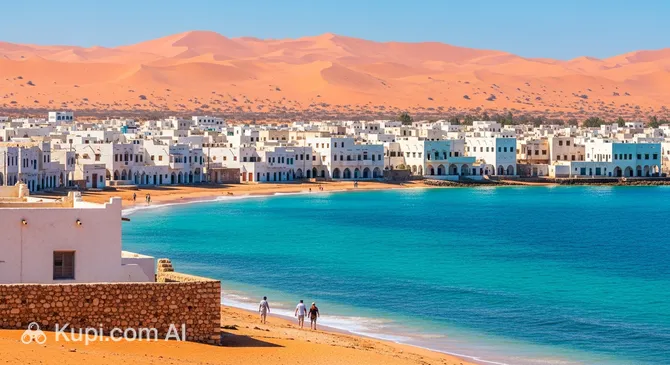
Located on the picturesque coast of the Indian Ocean, Merca (also known as Marka) welcomes travelers with its salty sea breeze and the atmosphere of an ancient port city in Somalia. Serving as the administrative center of the Lower Shabelle region, this city occupies a strategic position as an important trade and fishing hub in East Africa. With a population estimated between 200,000 and 350,000, Merca is among the five largest cities in the country.
Marka. Illustration.
Source: Kupi.com AI
The rich history of the city is inextricably linked to maritime routes: for centuries, it served as a meeting place for Arab, Indian, and African merchants. Today, Merca maintains its status as a major port where the fishing industry and trade remain the backbone of the local economy. The city's architectural appearance is a unique blend of colonial heritage and traditional Somali buildings, giving it a distinctive character.
For tourists, the city is primarily interesting for its authentic way of life, lively commercial districts, and endless ocean views. A visit to this place allows you to touch the living history of trade ports and see the real life of the coastal region, far from mass tourist routes.
Weather Overview
Merca is characterized by a typical tropical climate, where heat and humidity dictate the rhythm of life. Being on the coast, the city benefits from sea breezes that slightly moderate the high temperatures, making a stay by the ocean more comfortable. You can always check the current climate of the city before your trip to choose the best time for your visit.
The average annual temperature in Merca stays at around 28°C. In the hottest months, such as March and April, the thermometer can rise to 32-33°C, while in the cooler period (July-August), average values are a pleasant 25-26°C. Rainfall is unevenly distributed: the main rains occur in April-May and November, while January and February delight with dry and sunny weather.
Due to the high level of solar radiation and the humidity typical for an elevation of 0 meters above sea level, the weather in Merca feels more sultry than the instruments show. When planning walks around the city or port, it is better to choose morning or evening hours when the heat subsides and the soft light of the Indian Ocean creates ideal conditions for photographs.
Average monthly temperature
Average monthly precipitation
Interesting Facts
Merca is a city with a rich past and unique features that set it apart on the map of the region. Here are a few curious facts about this port center:
One of the largest in the country: Merca holds the honorable fifth place in population among all cities in Somalia.
Ancient trade ties: For many centuries, the city was a crucial point for the exchange of spices and seafood between Arab and Indian merchants.
Zero elevation: The city is located practically at sea level, which makes its climate consistently hot and humid throughout the year.
A multicultural melting pot: The population of Merca is remarkably diverse—permanent urban residents, nomads, and migrants from other regions have coexisted peacefully here for centuries.
Strategic port: Despite the lack of modern automation, the local port remains one of the key logistics hubs for the entire Lower Shabelle region.
How to Get There
A journey to Merca usually begins with arrival in the country's capital, as this city is closely connected to the region's main transport hubs. Given the current infrastructure, tourists are advised to plan their route in advance and use the services of reliable transport companies. More detailed information on logistics can be found in the section describing how to get to the coast.
The primary route to Merca is via Mogadishu International Airport. After arriving in the capital, travelers have to cover about 100 kilometers by car. The trip on local roads usually takes 2 to 3 hours, and it is important to consider the road conditions. Bus routes or private transfers that run regularly between the cities are often used.
In addition to land connections, Merca has a functioning seaport that accepts cargo and passenger vessels. Although regular cruise or passenger flights here are rare, the sea route remains an important alternative for transporting goods and communicating with other coastal cities in Somalia.
Station
Passenger traffic
Distance
Mogadishu railway station
1
73 km
Main Attractions
Although Merca is not a typical tourist center with glossy guidebooks, it charms with its authenticity and deep historical heritage. One of the city's main attractions is its historic port district. Here, you can see preserved examples of old architecture that recall the times when the city was a key link in the trade between the Arabian Peninsula, India, and Africa.
A special place in the city's life is occupied by the central market—the vibrant and noisy heart of Merca. For the traveler, this is the best spot to observe the local flavor: all trading activity is concentrated here, from the sale of freshly caught ocean treasures to bright fabrics. A stroll through the shopping quarters allows you to feel the rhythm of a port city and see traditional methods of doing business that haven't changed for decades.
Nature lovers should pay attention to the Indian Ocean coast. Although specialized beach infrastructure is minimally developed here, the clean sandy shores and views of traditional dhow fishing boats create a unique atmosphere. Merca is an ideal destination for those seeking the "unpolished" beauty of a working port city and wanting to see the real life of East Africa.
Local Cuisine
The gastronomic scene in Merca is a real feast for seafood lovers. Thanks to its coastal location, the staple of local cuisine is fresh fish, octopus, shrimp, and other marine delicacies. Traditionally, they are cooked over an open fire or stewed in aromatic sauces with coconut milk and a blend of Eastern spices, giving the dishes a unique flavor.
Be sure to try local rice dishes, which are often served with seafood or meat, as well as traditional noodles and freshly baked Somali bread. A characteristic feature of the local table is the abundance of spices, reminiscent of the city's centuries-long involvement in the spice trade. As for beverages, shaah—a strong tea with milk and spices—is extremely popular here, as are aromatic coffee and fresh juices made from tropical fruits.
The dining culture in Merca is centered around small restaurants and street stalls. The best place to experience local cuisine is in the establishments in the port area, where you can always find the freshest catch. Travelers are advised to choose the most frequented places where food is prepared right in front of you, ensuring its freshness and authentic taste.
Travel Tips
When planning a visit to the unique city of Merca, it is worth preparing in advance so that your trip is as comfortable and safe as possible. We have collected a few practical tips from experienced travelers for you:
Clothing and Essentials: Choose lightweight clothing made from natural fabrics, as it is always hot and humid in the city. Remember the local etiquette: it is recommended to cover shoulders and knees when visiting public places. Don't forget sunscreen and a hat.
Safety: Before your trip, be sure to check the current situation in the region. It is recommended to register with your embassy and use the services of reliable local guides or agencies.
Finances: The main currency is the Somali shilling, but US dollars are accepted almost everywhere. Carry a supply of cash in small denominations, as international cards rarely work.
Health: Drink only bottled water and always carry a personal first-aid kit. International medical insurance is mandatory.
Transport: To get around the city, use licensed taxis or matatus. Always agree on the price of the ride before you get into the car.
Communication: Buy a SIM card from a local operator for stable mobile internet. Wi-Fi in hotels can be unreliable.
Local Etiquette: Greetings are very important—be polite and friendly. Always ask for permission before taking photos of people.
What to Avoid: It is not recommended to walk around the city alone at night or to display expensive equipment or jewelry in crowded places.
Following these simple rules will help you focus on the beauty of Merca and ensure that you get only positive impressions from your trip!
Entertainment & Nightlife
Entertainment in Merca is of a calm and contemplative nature, ideal for those who want to take a break from the hustle and bustle and immerse themselves in local life. The main pastime for residents and guests alike is the numerous restaurants and cafes along the coast. It is customary here to watch the sunsets over the Indian Ocean while enjoying the sea air and leisurely conversations.
Nightlife in the Western sense—with loud clubs and discos—is practically non-existent in the city. After dark, the city quiets down, and social activity moves to cozy establishments where locals gather to watch sports broadcasts or television programs. If you are looking for more active evening entertainment, remember that the main entertainment venues are concentrated in the capital, which can be reached during daylight hours.
Daytime activities in Merca include sea excursions and walks around the port, where you can watch ships being unloaded and fishermen at work. This provides a unique opportunity to see the inner workings of one of the oldest ports in the region. For lovers of more traditional entertainment, a visit to the central market is recommended, as it is a living theater of daily life in itself.
Parks & Museums
The cultural landscape of Merca is closely intertwined with its geography and centuries of trade activities. There are no classical museums with indoor exhibitions in the city; however, the historic center itself can be viewed as an open-air museum. Walking through its ancient streets, you will see unique architecture reflecting different eras—from medieval trading posts to colonial-period buildings.
As for parks, the role of main recreational zones in Merca is played by its magnificent waterfronts and beaches. The Indian Ocean coast provides natural spaces for walking and outdoor relaxation. While you won't find manicured lawns or formal gardens here, the wild beauty of the shoreline and the opportunity to observe ocean life completely compensate for the lack of formal park areas.
For those seeking cultural experiences, Merca offers an introduction to living tradition. Local port facilities and shipyards, where traditional vessels are still built and repaired, are unique monuments of engineering thought and craftsmanship. Visiting such places gives tourists much more information about the culture and history of the city than any standard museum.
Getting Around
Public transport in Merca reflects the local way of life—dynamic and adapted to the needs of a coastal city. The main means of transport for residents and guests are minibuses, known as matatus, as well as three-wheeled taxis. They ply the city's main streets and connect residential neighborhoods with the port and market squares.
For more comfortable trips around the city or beyond its limits, travelers often choose private taxi services. It is customary to agree on the price of the trip in advance, as meters are practically not used in cars. In the central areas of Merca, it is convenient to get around on foot—this is the best way to see the ancient architecture and feel the atmosphere of the port quarters; however, during the hottest hours, it is better to opt for transport with air conditioning.
If you are planning trips to neighboring cities, it is recommended to use licensed transport companies that organize trips from Merca to the capital and other large settlements. The road network in the center is in satisfactory condition, but on the outskirts, the surface can be uneven, which should be taken into account when calculating travel time. Transport operating hours are usually tied to daylight hours and periods of peak port activity.
Accommodation
Accommodation options in Merca are primarily oriented toward those arriving in the city for business or trade purposes. You won't find large hotel chains here, but the city offers a decent selection of guesthouses and small mid-range hotels that provide a basic level of comfort and security.
The most convenient housing options are concentrated in the central part of the city and in the areas adjacent to the port. Proximity to major trade hubs and administrative buildings makes these areas popular among visitors. For those planning to stay in Merca for a long period, renting apartments or flats from locals often becomes a more economical and convenient option.
When booking accommodation, it is recommended to check for amenities such as autonomous power supply and internet access, as standards can vary. It is best to arrange your stay in advance using the contacts of trusted local operators to ensure availability and an appropriate level of service upon arrival.
Nearby Cities
Due to its location in the Lower Shabelle region, Merca serves as an excellent starting point for exploring other interesting corners of southern Somalia. The city's surroundings offer both historical monuments and the chance to see the country's agricultural heartlands.
The most important destination for a trip is the capital, Mogadishu. This metropolis is located about 73 kilometers away in a straight line (about 100 km by road) and offers a wide range of cultural sites, museums, and restaurants. For those interested in the region's agricultural life, it is worth visiting Qoryoley, located just 28 kilometers away. This is an important agricultural center where you can see traditional farming methods and local daily life.
Also of interest are cities such as Afgooye and Aw Dheegle, which can be reached by car within a couple of hours. Exploring these surroundings will allow you to form a more complete picture of the diversity of life in this part of Africa, beyond the port walls of Merca.
Shopping & Souvenirs
Shopping in Merca is first and foremost an immersion into the colorful atmosphere of an East African market. The city lacks modern Western-style shopping centers, but they are more than replaced by the Central Market. This is a place where you can find everything from the freshest morning catch from the Indian Ocean to exotic fruits, aromatic spices, and everyday goods.
If you are looking for unique souvenirs, look for items made from local materials. Merca is famous for its traditional fabrics with bright patterns, as well as artisanal crafts made from shells and coral, which have been crafted by local masters for centuries. Buying such items at the market is not just shopping, but an opportunity to interact with locals and practice the art of bargaining, which is highly valued here.
Shops and stalls usually operate from early morning until sunset, with a break during the hot afternoon hours. The main methods of payment are cash—Somali shillings or US dollars, which are accepted everywhere. A stroll through the shopping streets of Merca will allow you not only to purchase the items you need but also to see firsthand how the commercial life of one of the region's most important ports is organized.