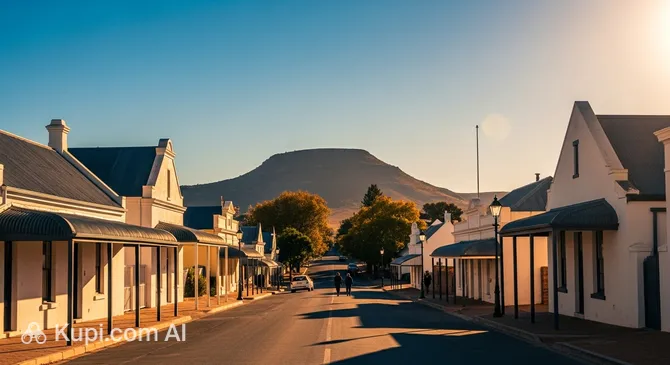
Nestled in the heart of the arid Karoo region, Colesberg welcomes travelers with the charm of old South Africa. Founded in 1830 and named after Sir Galbraith Lowry Cole, this town in South Africa long served as an important outpost on the colony's frontier. Today, it retains a unique atmosphere thanks to its architecture and its status as one of the main stopover points on the route between Cape Town and the country's interior.
Geographically, Colesberg is located in the Northern Cape province, surrounded by characteristic table mountains. With a population of about 12,423, it maintains a cozy provincial feel. The climate here is typical of a semi-desert: hot summers give way to cold, biting winters, which gives the local landscapes a particularly rugged character.
Colesberg. Illustration.
Source: Kupi.com AI
The town's greatest pride is its superbly preserved heritage. Strolling through the streets, you can see many buildings in the Cape Dutch and Victorian styles. If you are interested in the history of Colesberg, be sure to look out for the local church and the old estates that are still used for their original purposes today.
The town is ideal for those seeking a quiet getaway and wanting to experience the authentic Karoo lifestyle. We invite you to make a stop here to enjoy the silence, the starry sky, and the famous local hospitality.
Weather Overview
The climate in Colesberg is characterized by distinct seasonality, typical of the high-altitude Karoo plateau. Summer (December to February) is hot here: the average maximum temperature in January reaches 31.4°C. Short but intense thunderstorms are possible during this time, bringing long-awaited freshness, although most days remain dry and sunny.
Winter in the town (June–August) is dry and sunny but quite cold. At night, the thermometer in July can drop to 1.7°C, and frosts occasionally occur. If you are planning a trip for this period, be sure to check the weather in Colesberg in advance, as the fluctuations between daytime and nighttime temperatures can be very sharp.
The most comfortable time to visit is spring (September–October) and autumn (April–May). During these months, pleasant moderate temperatures set in, ideal for sightseeing. Colesberg receives little precipitation; the wettest month is February (about 75.8 mm), while the driest is July, when rain is extremely rare.
Average monthly temperature
Average monthly precipitation
Interesting Facts
Colesberg holds many surprising secrets that make visiting it even more exciting:
The town was founded in 1830 on the site of the Valfontein farm and was named after Sir Galbraith Lowry Cole, the then-governor of the Cape Colony.
Colesberg was long considered the "gateway to the interior," as almost all routes for travelers and hunters heading to the north of South Africa passed through it.
The region around the town is world-renowned for its horse breeding. The local pastures, rich in calcium, are ideal for raising hardy racehorses.
During the "diamond rush" in neighboring Kimberley, Colesberg became an important trade hub where prospectors replenished their food and equipment supplies before the final push to the deposits.
Colesberg-Kop hill, rising above the town, served as a natural beacon for wagon caravans crossing the vast plains of the Karoo for centuries.
How to Get There
Colesberg occupies a strategic position on the country's main transport artery — the N1 highway, which connects Cape Town and Johannesburg. Thanks to this, the town is one of the most accessible locations in the Karoo region for motorists. Most tourists arrive here by car, using convenient routes that run across the picturesque plains of the Northern Cape province.
The town does not have its own airport serving scheduled passenger flights. The nearest major air hubs are located in Kimberley or Bloemfontein. Travelers are recommended to rent a car in one of these cities for a comfortable trip to Colesberg.
Railway communication in the region is poorly developed for passenger transport, so the train is not the primary way for tourists to travel. However, historically, the railway played an important role in the town's development, and old station buildings still serve as reminders of the heyday of steam locomotives.
Station
Passenger traffic
Distance
De Aar railway station
2
104 km
Bloemfontein railway station
6
209 km
Kimberley railway station
3
223 km
Maseru Station
1
278 km
For those who prefer public transport, there are intercity bus lines (such as Intercape or Greyhound) that make a mandatory stop in Colesberg on the way from Cape Town to Pretoria or Johannesburg. The stop is usually located near major gas station complexes like the Colesberg 1 Stop Engen, which allows you to immediately catch a taxi to your hotel.
Main Attractions
Colesberg is a true open-air museum, where every building on the central streets has a story to tell. One of the town's most recognizable features is its 19th-century architectural ensemble, reflecting the era of British rule and the life of the early settlers. Walking through the historical center, tourists can appreciate the elegance of the old facades and the monumentality of the religious buildings.
Among the key places worth visiting is Inni Kraal. This spot combines the atmosphere of traditional South African hospitality with a historical context. Here, you can not only get acquainted with local traditions but also feel the rhythm of life in a modern provincial town that has preserved its roots.
For those traveling by car in need of a comfortable stop, Colesberg 1 Stop Engen is an important point. Besides practical needs, this location serves as a convenient starting point for getting your bearings in town. Despite its status as a roadside service, it fits seamlessly into the infrastructure and is popular with passing tourists due to its high level of service.
Don't forget to visit the local Kemper Museum, which houses unique exhibits telling the stories of the diamond rush era and the lives of Karoo farmers. It's also worth taking a look at the Dutch Reformed Church (NG Kerk), whose majestic bell tower dominates the city skyline, serving as a reminder of the spiritual heritage of the town's founders.
Local Cuisine
The culinary traditions of Colesberg are inextricably linked to the agriculture of the Karoo region. The main gastronomic symbol of the town is the famous Karoo Lamb. Because the sheep feed on local aromatic herbs and shrubs, their meat acquires a unique spicy flavor that requires no complex marinades. Local restaurants will definitely offer you tender chops or traditional stew.
One of the best places to get acquainted with home-style cooking is Inni Kraal. Here they serve dishes prepared according to old recipes, from hearty meat pies to the famous South African "boerewors" sausages. The atmosphere of the establishment allows you to feel the spirit of provincial South Africa, where food is not just about satisfying hunger, but an opportunity for socializing.
If you are short on time, it's worth stopping by Colesberg 1 Stop Engen. Despite the fast-food format, you can find quality meals and traditional snacks here, such as "biltong" (cured meat) or "droëwors" (dried sausages), which are convenient to take on the road. For drinks, be sure to try the local rooibos tea or craft beer from neighboring regions.
The food culture in Colesberg is characterized by simplicity and warmth. Most establishments operate until early evening, so it's best to plan dinner for 6:00 PM–7:00 PM. Along with meat, baked pumpkin, potatoes, and homemade chutneys are often served, creating the perfect balance of flavors for a traditional South African meal.
Travel Tips
Preparing for your trip to Colesberg will help you fully enjoy the peace and beauty of the Karoo region without any extra hassle. These practical tips are based on travel experiences in the South African heartland.
Clothing and Essentials: The Karoo climate is changeable. In summer, bring light cotton clothing and definitely a wide-brimmed hat; in winter, bring warm items, as nighttime temperatures can drop below freezing. Comfortable shoes for walking on dusty roads are a must.
Transport: The best way to get around is a rental car. If you are arriving by bus, ask the driver to drop you off at the Colesberg 1 Stop, from where it is easiest to reach the town by taxi.
Finances: The official currency is the South African Rand (ZAR). Cards are accepted almost everywhere, but you may need cash in small souvenir shops. Tipping in restaurants (about 10%) is standard practice.
Health and Safety: The town is generally safe, but always lock your car and don't leave valuables in plain sight. Tap water is usually drinkable, but bottled water may be more familiar for a tourist's stomach.
Communication: The main languages are Afrikaans and English. Locals are very friendly and will happily answer questions in English. It's best to buy a SIM card in advance at your arrival airport.
Local Etiquette: Greetings are very important. A simple "Hello" or "Good morning" will open many doors. Karoo residents value politeness and a leisurely pace of conversation.
What to Avoid: Don't plan important tasks or shopping for Saturday afternoon or Sunday — life in town practically comes to a standstill, and most shops are closed.
Starry Sky: Be sure to set aside an evening for stargazing. Colesberg is located in one of the best places in the world for astronomy — take advantage of it!
May your introduction to this historical corner of South Africa be filled only with pleasant discoveries and the warmth of local hospitality!
Entertainment & Nightlife
Entertainment in Colesberg is of a quiet and contemplative nature, perfectly matching the atmosphere of the arid Karoo plateau. You won't find noisy night clubs with neon signs here, but the town offers something more valuable — the opportunity to enjoy the silence and the incredibly bright starry sky, considered one of the clearest in the Southern Hemisphere.
The center of evening life traditionally consists of cozy bars and restaurants within guest houses. For instance, Inni Kraal often gathers both locals and travelers to spend an evening in leisurely conversation and tasting local drinks. The atmosphere here is as relaxed as possible, with no strict dress code, and the hospitality of the hosts makes you feel right at home.
During the day, entertainment focuses on exploring cultural heritage. You can visit local galleries or small craft workshops. For outdoor enthusiasts, a walk to Colesberg-Kop hill is worthwhile, as it serves as an excellent landmark and offers panoramic views of the surroundings. Regarding safety, Colesberg is considered a quiet and safe town; however, for nighttime travel outside the center, it is better to call a taxi through your hotel's reception.
Parks & Museums
Even though Colesberg is surrounded by arid plains, the town boasts interesting cultural sites. The main place to learn about the region's past is the Colesberg Museum (known as the Kemper Museum). It is housed in a historical building and possesses an impressive collection of photographs, everyday items, and documents that illustrate the town's development from its founding to the present day.
For those seeking natural tranquility, it is worth paying attention to the local church and its surrounding grounds, which are kept in perfect order and serve as quiet oases in the town center. The architectural style of Inni Kraal can also be viewed as an exhibit, showcasing traditional construction techniques and landscape design characteristic of Karoo farms.
If you have time for a trip outside the town limits, we recommend visiting the nearby natural areas where you can see endemic Karoo flora and fauna. Although there are no large amusement parks in the town itself, places like Colesberg 1 Stop Engen provide basic infrastructure for resting during excursions in the surrounding area. The best way to experience Colesberg's "open-air museum" is a walking tour of its central streets, where every second building is an architectural monument.
Getting Around
Colesberg is a compact town, and its historical center is best explored on foot. Major attractions, cafes, and guest houses are within walking distance of each other. There is no urban public transport system (buses or metro) here, which is typical for small provincial centers in South Africa.
For traveling longer distances or visiting remote farms, locals and tourists use private cars or taxis. If you arrive without a car, you can order a taxi through your hotel reception — this is the most reliable method. Popular international ride-hailing apps may not work here, so it is best to rely on local operators.
For those traveling across the country, Colesberg 1 Stop Engen is an important transport hub where intercity buses stop. Transport payment outside of bus lines is done in cash, although taxis ordered through hotels may sometimes accept card payments. Bicycle rentals are not very common due to the hot climate and terrain, but some guest houses may provide them to their guests for short rides.
Accommodation
Despite its small size, Colesberg offers a wide range of accommodation options, primarily geared toward transit travelers and history enthusiasts. Charming Bed and Breakfasts (B&Bs) and boutique hotels located in restored Victorian buildings predominate here, allowing guests to fully immerse themselves in the Karoo atmosphere.
For those who value comfort and authenticity, hotels in the historical town center are the best choice. Staying here allows for easy walks to the main attractions and restaurants, such as Inni Kraal. Budget travelers can find inexpensive campsites or caravan parks on the outskirts, which are popular among nature lovers.
If you plan to visit Colesberg during school holidays or long public holiday weekends in South Africa, it is strongly recommended to book accommodation in advance. The town is a popular stopover point for families traveling between provinces, and the best guest houses can be fully booked weeks before the arrival date. The price range here is mid-scale, and for quite reasonable money, you can find a room with antique furniture and a traditional breakfast.
Nearby Cities
Thanks to its location at the intersection of important roads, Colesberg serves as an excellent starting point for exploring lesser-known but extremely interesting corners of South Africa. The town's surroundings offer travelers the chance to see life in the true heartland and enjoy the rugged beauty of semi-desert landscapes.
Just an hour's drive away is the town of De Aar, which is an important railway junction and a center for renewable energy. History buffs will find Cradock interesting, known for its Victorian streets and proximity to Mountain Zebra National Park. If you are willing to drive a bit further, the "Gem of the Karoo" awaits — magnificent Graaff-Reinet, surrounded by the Valley of Desolation.
You can also visit small towns such as Edenburg or Aliwal North, each with its own unique character and history. Traveling through these places will allow you to see South Africa beyond the usual tourist routes and feel the true spirit of freedom and space.
Shopping & Souvenirs
Shopping in Colesberg is primarily about finding unique souvenirs and local delicacies. The town is not designed for mass shopping in the traditional sense with huge malls, but it charms with its small shops and antique stores. Here you can find amazing interior items, leather goods, and vintage pieces that will serve as a wonderful reminder of your trip through the Karoo.
The main shopping spots are concentrated along the central streets. Be sure to check out the souvenir sections in places like Inni Kraal, where local artisans' products are often sold — from woven baskets to handmade jewelry. Farm stalls and specialty meat shops are also popular, where you can buy the best "biltong" and other meat snacks in the country.
If you need essentials or travel snacks, the Colesberg 1 Stop Engen complex offers a wide selection of sundries and food items. The shops here operate on a convenient schedule, often 24/7. In the town itself, shops usually close early, around 5:00 PM, and on Saturdays, they work until noon. International cards are accepted in most places for payment, but it's better to have some South African Rand cash for purchases at small markets.