Support

Tenerife North Airport

Airports in the city

About the Airport

Tenerife North Airport, historically known as Los Rodeos, is not merely an air gateway to the northern part of the "island of eternal spring," but a true part of its history. Located on a picturesque plateau in the municipality of San Cristóbal de La Laguna, it welcomes travellers with cool air and is occasionally shrouded in a light mist, giving the arrival a special, mysterious atmosphere. It is the most convenient starting point for exploring the authentic capital, Santa Cruz de Tenerife, the lush landscapes of Anaga, and the charming towns of the northern coast. Despite the existence of the larger southern airport, TFN remains a key transport hub for connections between the Canary Islands and mainland Spain.
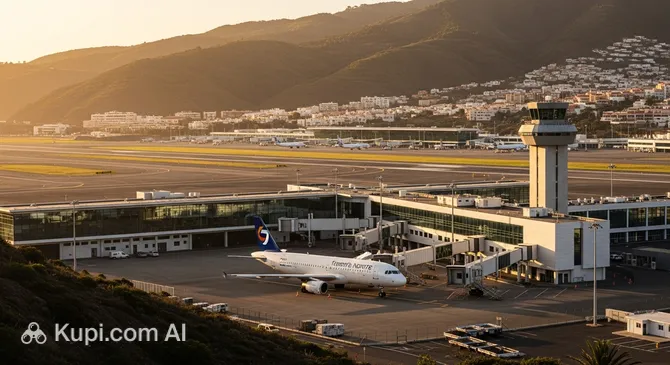
Tenerife North Airport. Source: Kupi.com Binoculars
IATA Code TFN
ICAO Code GCXO
City Santa Cruz de Tenerife
Distance to centre approx. 13 km
Status International (predominantly domestic and European flights)
Passengers per year approx. 5.8 million
Popular Airlines Binter Canarias, Iberia, Vueling
Schedule Online Board "Tenerife North Airport"

Features and Advantages

Tenerife North is the oldest airport in the Canary Islands, with a history dating back to 1929. Its modern terminal, opened in 2002, is characterised by its compactness and convenient navigation. There is none of the hustle and bustle of huge international hubs here, making it particularly comfortable for family travellers and those who value tranquillity. The airport serves as a base for local airlines such as Binter Canarias and Canaryfly, which operate dozens of flights daily, connecting Tenerife with other islands of the archipelago.

The airport's location at an altitude of over 600 metres above sea level dictates its unique weather conditions, including frequent mists, which have become its trademark. Despite this, modern navigation equipment ensures a high degree of flight safety. Passengers are provided with all necessary services: cafés, shops, car rental desks, a VIP lounge, and convenient bus connections to all major resorts and towns on the island.

Contact Information

Below you will find useful contact details for planning your journey through Tenerife North Airport.

  • Official Website: Up-to-date information on flights, services, and regulations can be found on the official website of the management company, Aena: www.aena.es.
  • Information Service Phone: For inquiries, you can call the unified Aena number: (+34) 913 211 000.
  • Airport Address: 38297 San Cristóbal de La Laguna, Santa Cruz de Tenerife, España.
  • Email: For general inquiries, Aena suggests using the contact form on their official website, as there is no public email for general questions.
  • Social Media: Official Aena accounts are available on platforms such as X (formerly Twitter), Facebook, and Instagram, where general news and updates across the airport network are published.
  • Lost Luggage Information: It is important to remember that for inquiries regarding luggage lost during a flight, you should contact your airline directly. The airport's Lost and Found service handles only items left within the terminal building.
  • Passenger Support Contacts: Information desks are located in the public zone of the terminal. Staff are ready to assist with navigation and answer your questions.

How to Get to the Airport

Reaching Tenerife North Airport (TFN), located near the city of San Cristóbal de La Laguna and approximately 11 km from the island's capital, Santa Cruz de Tenerife, can be done via several convenient methods. The choice depends on your budget, time, and comfort preferences. The airport primarily serves flights between the Canary Islands archipelago and mainland Spain.

Public Transport: TITSA Buses
The most economical way to get to the airport is to use the services of the local bus company, TITSA. Buses here are locally called guaguas. Stops are located directly outside the terminal exit.

  • Route 20: A direct express route connecting the airport with the capital, Santa Cruz de Tenerife, and the city of Puerto de la Cruz. The journey to the capital will take about 20-25 minutes.
  • Route 343: This is a key route for tourists as it directly connects Tenerife North Airport with Tenerife South Airport (TFS) without stops in towns. Travel time is approximately 50 minutes.
  • Routes 102 and 104: These routes also run between Santa Cruz and Puerto de la Cruz, making a stop at the airport.
The fare is just a few Euros. To save money, you can purchase a Ten+ transport card (formerly BonoVia), which reduces the cost of each trip.

Taxi and Private Transfer
For maximum convenience, especially if you have a lot of luggage or are travelling with family, a taxi is an excellent option. A trip from the centre of Santa Cruz de Tenerife to the airport will take approximately 15-20 minutes depending on traffic. The cost of the trip will be roughly 20-30 Euros. You can also pre-book a private transfer — the driver will meet you with a sign, and the price will be fixed, eliminating surprises.

Car Rental and Parking
If you plan to actively explore the island, renting a car is the best choice. Counters of all major international and local rental companies are located within the airport building. The road from Santa Cruz to the airport follows the modern TF-5 highway and presents no difficulties. Directly opposite the terminal is the official airport car park, where you can leave your car for both short and long periods. To get the best rate for long-term parking, it is recommended to book a spot online in advance.

Tenerife North Airport is also an important hub for travel to other Canary Islands. Regular flights operate from here to Gran Canaria, La Palma, and other picturesque islands of the archipelago, such as La Gomera, which can be reached from La Gomera Airport.

Terminals and Map

Tenerife North Airport (TFN), also known as Ciudad de La Laguna Airport, is distinguished by a simple and clear structure, making it very convenient for travellers. All passenger infrastructure is concentrated in a single modern terminal, opened in 2002. This eliminates the need for long walks or shuttle rides between different buildings.

The terminal layout is logical and intuitive. The building has several levels, but for passengers, two are key:

  • Upper Floor (P1): This is the Departures zone. Here you will find check-in counters (from 1 to 34), where you drop off luggage and receive your boarding pass. After check-in, you proceed to the central security screening area.
  • Ground Floor (P0): This is the Arrivals zone. Passengers arrive here after disembarking the aircraft. Luggage reclaim belts and exits to the city, taxi ranks, bus stops, and car rental points are located here.

Navigation through the airport poses no difficulties thanks to clear signage in Spanish and English. After passing security on the departures floor, you enter a spacious waiting hall. Here you will find boarding gates, as well as numerous shops, cafés, and restaurants where you can comfortably spend time before your flight. Departure and arrival zones are clearly separated by floors, which minimizes confusion and crowding.

Due to its compactness, completing all pre-flight formalities at Tenerife North Airport usually takes little time. However, during peak hours and the tourist season, queues are possible. It is recommended to arrive at the airport at least 1.5–2 hours before the departure of a domestic or inter-island flight to calmly pass through check-in and security without unnecessary haste.

Airport History

The history of Tenerife North Airport (TFN), originally known as Los Rodeos, began in the 1930s. Its construction was initiated following a request from the German airline Lufthansa to create an airfield for its flights. It was officially opened for civil and military use in 1946, and from that moment became the island's main air hub, facilitating the development of tourism and connections with mainland Spain.

A key and tragic moment in the airport's history occurred on 27 March 1977. On this day, under conditions of heavy fog, a collision occurred between two Boeing 747 aircraft on the runway. This catastrophe, which remains the deadliest in the history of civil aviation, served as a catalyst for a radical review of international flight safety regulations. New standards for radio communication between pilots and controllers were implemented, and cockpit resource management procedures were improved. This event also accelerated the completion and opening of the new Tenerife South Airport in 1978, to which most international charter flights were transferred.

After 1978, Los Rodeos Airport focused mainly on servicing flights between the Canary Islands and scheduled flights to mainland Spain. In 2002, a large-scale modernization was carried out: a new, spacious, and modern terminal was opened, significantly increasing passenger comfort and airport capacity. This allowed it to effectively fulfil its role as an important regional transport hub.

Among interesting facts is the airport's location at an altitude of more than 600 metres above sea level. Such geography makes it vulnerable to frequent fogs, which historically affected its operations and was a contributing factor in the 1977 tragedy. Today, Tenerife North is a modern airport that harmoniously complements its southern "sibling" and plays a key role in the transport system of the Canary Islands, linking Tenerife with other islands of the archipelago and major cities.

Services and Amenities

Tenerife North Airport, despite its relatively small size, offers passengers all necessary services for a comfortable wait for their flight. Here you will find several cafés and restaurants where you can have a snack before departure, drink coffee, or have a full meal. In the departure zone, shops are available, including Duty Free, where you can purchase souvenirs, Canarian delicacies, perfumes, and beverages.

For those who value enhanced comfort, the VIP lounge Sala VIP Nivaria operates at the airport. Here passengers can relax in a quiet atmosphere, enjoy complimentary snacks and drinks, and also attend to work. Free Wi-Fi from the Aena network is available throughout the terminal, and charging stations for electronic devices are installed in waiting areas. ATMs and currency exchange points are provided for financial matters.

The airport is well-equipped for passengers with special needs. For travellers with children, there are baby care rooms, and for passengers with reduced mobility, free assistance is provided (it is recommended to book this service in advance). A pharmacy point is also located in the terminal for first aid.

Although there are no hotels directly on the airport grounds, several accommodation options are located a few minutes' drive away in the nearby city of San Cristóbal de La Laguna. Specialised conference rooms are not provided at the airport, however, basic conditions for work, such as internet access and quiet zones, can be found in the VIP lounge.

Where to Eat

At Tenerife North Airport (TFN), travellers will find sufficient options for a snack or a full meal before departure. The selection of catering establishments is concentrated mainly in the departure zone, but a few cafés are also available in the public area of the terminal.

Before passing security control (landside), you can find several cafeterias that are perfect for having coffee with those seeing you off or simply passing the time before check-in. Pastries, sandwiches, and beverages are usually served here. The main selection of establishments awaits passengers after passport and customs control (airside).

In the departure zone, the choice is wider: from bars where you can order a refreshing beverage and light tapas snacks, to self-service restaurants with more substantial meals. This is an ideal place for a full lunch or dinner. Here you can find both international cuisine and Spanish classics. For those in a hurry, coffee shops are available, offering quick coffee, fresh juices, and bocadillo sandwiches to go.

Being in the Canary Islands, even at the airport, it is worth trying something local. Pay attention to sandwiches with local goat cheese or cured meats. Do not miss the opportunity to order traditional Spanish coffee, for example, a strong cortado. This is a simple way to get acquainted with the region's gastronomy without leaving the terminal.

Passengers with special dietary requirements should speak to the staff at the establishments. Vegetarian options usually include salads, vegetable sandwiches, and fruits. Finding certified gluten-free or halal dishes might be more challenging, but pre-packaged snacks with appropriate labelling are often sold in airport shops.

Prices in Tenerife North Airport establishments correspond to the standard level for airport terminals — slightly higher than in the city, but quite acceptable. Most cafés and restaurants open early in the morning and operate until the last evening flight, however, opening hours may change, so we recommend checking them on site.

Travel Tips

When planning a trip through Tenerife North Airport (TFN), use these tips to make your journey as comfortable as possible and avoid unpleasant surprises. This airport, mainly serving flights between the Canary Islands archipelago and mainland Spain, has its own specific features.

Arrival Time and Check-in. For domestic and Schengen flights, which make up the majority at TFN, it is recommended to arrive at the airport 1.5–2 hours before departure. In peak seasons (summer, holidays), it is better to add another 30 minutes. Always try to complete online check-in — this will save you a significant amount of time. Bag drop counters usually work quickly, but it is better not to risk it.

Security Control and Seat Selection. Security services here operate according to standard European rules: liquids up to 100 ml in a transparent bag, laptops and large electronics in a separate tray. The airport is not very large, so queues usually move quickly. When choosing a seat on the plane, note: if you are departing from Tenerife, the left side (seats A, B, C) often offers a breathtaking view of the Teide volcano. When arriving on the island, beautiful views of the coast and the Anaga mountains can be seen from the right side.

Hand Luggage. Remember that popular local souvenirs, such as mojo sauces or palm honey, are considered liquids. If their volume in a single container exceeds 100 ml, they must be packed in checked luggage. Otherwise, standard restrictions apply: no sharp objects or dangerous substances.

Tips for Transfer Passengers. Tenerife North is a compact airport, and transfers here usually do not cause difficulties. All boarding gates are located in one terminal, so you will not have to walk far or use internal transport. Information screens are clear, but if you have a short connection, proceed without delay.

Customs Control. Since most flights arrive from Schengen countries, there is no strict passport and customs control for passengers on these flights. You will simply pass through the green "nothing to declare" channel. If you are arriving from a non-EU country, be prepared for the standard document check procedure.

Saving Time and Money. To save money, use public transport — buses (called "guaguas" here) regularly run between the airport, Santa Cruz de Tenerife, Puerto de la Cruz, and other towns. This is significantly cheaper than a taxi. Bring an empty water bottle with you — after security, it can be refilled at drinking fountains.

In Case of Flight Delay. If your flight is delayed, first of all, monitor the information on the screens and in your airline's app. Remember your rights as a passenger in the EU (Regulation EC 261/2004), which provides for compensation and assistance in case of long delays. There are several cafés and shops in the airport where you can pass the time. Do not forget to charge your devices — there may not be as many power outlets as in major hubs.

Reached the end of the page?

That means the route is fully explored