Support

Galle Fort

About

Galle Fort is not just a landmark but an entire historic town located on the southwestern coast of Sri Lanka in the city of Galle. This monumental fortress, recognized as a UNESCO World Heritage site, is considered the largest remaining European fortress in Asia. It is a unique architectural complex surrounded by massive walls.
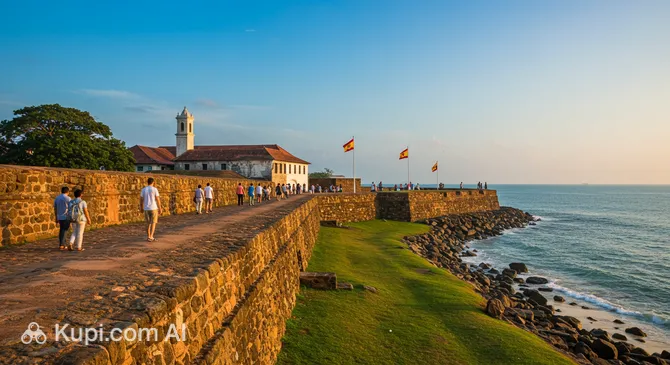
Galle Fort. Illustration.
Source: Kupi.com AI

Traveller photos:

Behind its walls lies not an open-air museum, but a living, breathing urban neighborhood. Here, narrow streets, old colonial-era mansions, cozy cafes, boutique hotels, souvenir shops, and residential houses intertwine, creating a unique atmosphere where the past meets the present.

A walk through the fort is a true immersion into history, where European architectural traditions harmoniously blend with South Asian flair. Unlike the hustle and bustle of the rest of the city, there is a calm and romantic atmosphere here, perfect for leisurely exploration, photography, and enjoying the unique spirit of the place.

Contacts

Since Galle Fort is a vast historical district rather than a single institution, it does not have a central phone number or email address. Access to the fort's territory is free and open 24/7. It is easily reachable from anywhere in the city of Galle on foot, by tuk-tuk, or by local bus, as it serves as the city's central landmark. For the latest information on events or the operating hours of specific museums and establishments within the fort, it is best to check the official tourism website (GalleFortSriLanka.com) or visit local tourist information centers.

How to contactContact
AddressGalle 80000, Sri Lanka

What to Do

The main thing to do in Galle Fort is to take leisurely walks that allow you to fully immerse yourself in its unique atmosphere. Be sure to climb the massive fortress walls to walk along them. From here, breathtaking panoramic views of the endless Indian Ocean, the picturesque harbor, and the city of Galle open up. Afterward, set off to explore the labyrinth of narrow cobblestone streets where every turn reveals old mansions with architecture blending Dutch and British colonial styles.

Inside the fort, many iconic spots await you. Visit the historic Dutch Reformed Church, the famous lighthouse—one of the symbols of the fort—and the informative National Maritime Museum, located in one of the oldest Dutch buildings. Beyond historical sites, you will find numerous art galleries, boutiques with unique souvenirs, and cozy cafes and restaurants where you can relax and enjoy local cuisine while watching the fort's slow-paced life.

Galle Fort is a true find for photography enthusiasts. Colorful building facades, atmospheric streets, old gates, and stunning ocean views create countless opportunities for vibrant and memorable shots. Additionally, the fort often serves as a venue for various cultural events and exhibitions. It is the perfect place to spend a few hours or even a whole day just walking, soaking up history, and enjoying the quiet, almost European atmosphere in the heart of Sri Lanka.

Getting There

Galle Fort is located in the city of Galle, about 120 kilometers south of Colombo, the capital of Sri Lanka. Due to its convenient location, you can reach this historical landmark in several ways, choosing the one that best fits your travel style.

One of the most popular and scenic ways to reach Galle is by train from Colombo. The railway line runs right along the coast, offering travelers stunning ocean views. Trains run regularly, and the journey takes about 2–3 hours. Additionally, buses run between the cities, and taxis are always available for a more comfortable trip.

If you are arriving at Bandaranaike International Airport (Colombo), you can book a transfer or take a taxi directly to Galle. Depending on traffic, the trip takes approximately 2.5–3 hours. Once in the city itself, reaching the fort is effortless—it is located in the center and is easily accessible on foot or by local tuk-tuk. Entry to the fort is free and open to everyone.

Nearest city: Galle

History & Facts

The history of Galle Fort dates back to the 16th century when European seafarers began exploring Asian trade routes. The Portuguese were the first to recognize the strategic importance of this harbor. In 1588, they built the first fortification here, though it was quite modest and primarily intended for port protection. This structure became the starting point for the rich and eventful centuries-long history of the future grand bastion.

The fort's true heyday began with the arrival of the Dutch. In 1640, they captured the fortress from the Portuguese and launched a massive construction project, largely completed by 1663. The Dutch significantly expanded and reinforced the fort, creating the massive bastions and walls that still impress with their scale today. For nearly 200 years, Galle Fort was the main port of Sri Lanka and a crucial transit point on sea routes between Europe and Asia.

In 1796, the fort came under British control. From that moment, its role as a key port began to decline gradually as the British administration focused on developing the harbor in Colombo. Paradoxically, this period of neglect saved the fort from significant reconstruction, allowing it to be preserved in almost its original form. Today, Galle Fort stands as an outstanding example of the fusion of European military architecture and South Asian traditions, which earned it its status as a UNESCO World Heritage site.

Time Needed

When planning a visit to Galle Fort, you should allow for 2–3 hours for a quick but meaningful tour. During this time, you can take a leisurely walk through the main streets, walk the perimeter of the massive fortress walls—which offer magnificent ocean views—and take photos at iconic spots like the old lighthouse and the Clock Tower. This is quite enough to form a general impression of this unique historical site.

If you want to truly feel the fort's atmosphere and explore it in more detail, it is recommended to set aside 3 to 5 hours or even more. This time will allow you not only to see the main sights but also to visit the National Maritime Museum or other small museums inside the fort. You can browse numerous art galleries without rushing, relax in one of the cozy cafes, and simply enjoy the slow pace of life in this amazing place, which is the heart of the city of Galle.

Working Hours

One of the main advantages of the fort in the city of Galle is its accessibility. The territory of the fort itself is open to visitors 24/7, year-round, and entry is completely free. This means you can freely stroll through its ancient streets or enjoy the views from the massive bastions at any time convenient for you, whether it's early morning or late evening. No tickets or advance booking are required to enter the fort.

It is important to remember that while the fort itself is always open, the establishments located within—museums, souvenir shops, galleries, and cafes—operate on their own schedules. Most are open to visitors during standard hours, typically from 9:00 AM to 5:00 PM. If you plan to visit a specific site, such as the National Maritime Museum, it is recommended to check its current opening hours in advance to avoid disappointment.

Open 24/7

Nearby

Exploring Galle Fort is a fascinating adventure in its own right, but its surroundings offer just as many interesting discoveries. By taking the time to visit nearby attractions, you can dive deeper into the atmosphere of this historic place and get a more complete picture of the life and culture of the city of Galle.

Most iconic sites are within walking distance, making a stroll through the area particularly pleasant. From museums and ancient buildings to cozy cafes and hotels—everything interesting is located just a few steps from the fort's main gates. Below is a list of some noteworthy places located nearby.

NameDistance
Galle Fort Clock Tower0 km
Galle Fort0 km
Sydney Hotel0.3 km
National Museum Galle0.3 km
Biker's Cafe0.4 km
National Maritime Museum0.4 km
Bastille Fort Bar0.6 km

Reached the bottom of the page?

Looks like you know this route inside out