Support

Galle

About

Galle is a true gem of the southwestern coast of Sri Lanka, nestled in a picturesque bay of the Indian Ocean. Located approximately 147 kilometers from Katunayake International Airport, this city envelops its guests in a unique atmosphere where the air is filled with the aromas of spices and the freshness of the sea breeze, and every sunset over the ocean turns into a breathtaking spectacle.
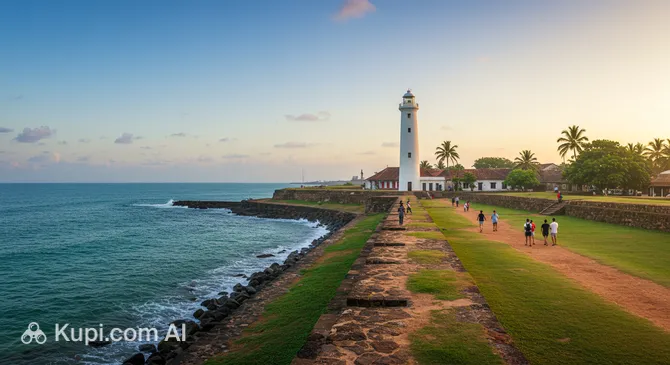
Galle. Illustration.
Source: Kupi.com AI

With a population of about 93,000 people, Galle is the fourth-largest city in the country and an important administrative center of the Southern Province. It successfully combines the functions of a major seaport, an economic hub, and a popular tourist destination, playing a significant role in the life of the island.

The uniqueness of Galle lies in the wonderful blend of its colonial past and dynamic modern life. The heart of the city is its Old Town and the famous Galle Fort, a UNESCO World Heritage site. Here, walking through the cobblestone streets, you feel as if you've been transported to another era, admiring old mansions and peeking into cozy cafes and antique shops.

In addition to its historical heritage, Galle attracts tourists with the opportunity for leisurely walks along the mighty fortress walls, which offer magnificent views, as well as colorful markets with spicy aromas and picturesque beaches stretching around the city. Street artists and colonial architecture add a special charm to the city.

Galle is a place that enchants at first sight and leaves you wanting to stay longer to fully enjoy its harmony of history, nature, and slow island rhythm. It is a city that you will surely want to return to.

More interesting facts can be found on the history of the city of Galle page.
Weather Overview

The climate in Galle is tropical, warm, and humid throughout the year. The average annual air temperature fluctuates in a comfortable range of 26-28°C, with minimums around 24-25°C and maximums reaching 28-29°C. Expect consistently warm weather with regular tropical rains. The driest months, with the least precipitation (3-4 mm), are usually January, February, and March. From April to November, the amount of precipitation and rainy days increases noticeably, with May (about 12 mm of precipitation, 30 rainy days) and October-November (about 10 mm of precipitation, 26-29 rainy days) often standing out as the wettest periods. To better plan your trip, read more detailed information about the climate of Galle.

Average monthly temperature

Average monthly precipitation

Interesting Facts

Beyond its famous bastions and colonial architecture, Galle hides many amazing stories and little-known details. This city is a true treasure trove of secrets, and here are just a few of them:

  • The city's main attraction, Galle Fort, is not just an ancient fortification, but the largest European-built fortress in all of Asia, recognized as a UNESCO World Heritage site. Its history began back in 1588 with the Portuguese, but it acquired its current appearance thanks to the Dutch in the 17th century, remaining the island's primary port for over two centuries.

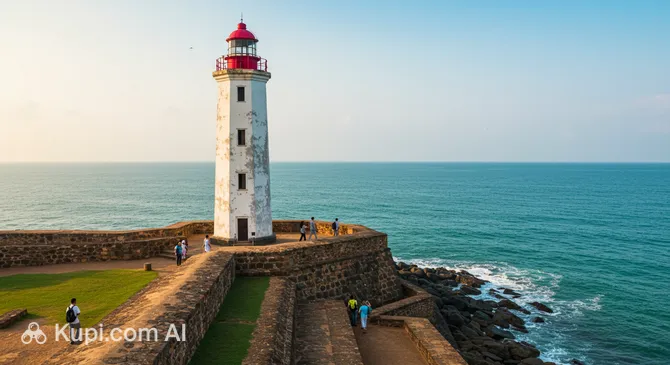
  • Within the fort walls, the historic Galle Lighthouse is still operational, continuing to guide ships approaching the coast to this day. It is one of the few active historical lighthouses in the region continuing its vital work.

  • The city is steeped in legends of ancient mariners and spice traders who made Galle a bustling crossroads of cultures for centuries. Even today, locals tell intriguing stories of shipwrecks and hidden treasures off the city's shores.

  • Galle is often called the cultural capital of southern Sri Lanka. The city has given the world many famous writers, artists, and athletes, and its ancient streets and squares regularly serve as a stage for arts festivals, literary readings, and musical evenings.

Galle Lighthouse. Illustration.
Source: Kupi.com AI

Traveler photos:

How to Get There

When planning a trip to the picturesque southern coast of Sri Lanka, it is important to think through your route in advance. Galle is a major transport hub for the region, and you can get here in various ways while enjoying the views of the tropical island. You can find out all the ways to get to the city in our detailed guide, and below we consider the main arrival options.

Galle itself does not have a large international aviation hub, so most travelers fly into Bandaranaike International Airport (CMB). Located near Colombo, about 132 km from Galle, it serves as the country's main gateway. The journey from here to the resort by taxi via the expressway usually takes about 2.5–3 hours, while by bus it takes a bit longer but allows you to immediately immerse yourself in the local atmosphere.

If you are already on the island and value speed, you can use domestic flights. The closest hub to the city is Koggala Airport (KCT), located just 12.3 km from the center of Galle. This is a small airfield that accepts air taxis and private flights. The trip from there to the walls of the famous fort will take only 20–30 minutes.

Below is a summary of airports that may be useful when planning your trip:

AirportPassenger trafficDistance
Koggala Airport5 00012 km
Castlereigh Reservoir Waterdrome4 00099 km
Kotte (Diyawanna Oya SPB)2 000102 km
Mattala Rajapaksa International Airport91 747104 km
Bandaranaike International Airport8.8 mln132 km

The railway is one of the most romantic and affordable ways to get to Galle. The train ride from Colombo is considered legendary: the tracks are laid right along the ocean shore, offering passengers stunning views of the sea waves and palm groves. The main railway station is located right in the city center, within walking distance of the major attractions.

In addition to trains and planes, Galle is easily accessible by road. The modern Southern Expressway connects the city with the capital and the airport, ensuring a fast and comfortable transfer. Regular buses also run between cities, including comfortable air-conditioned express services.

Main Attractions

Galle, a charming city on the southern coast of Sri Lanka, is famous for its rich history and colonial architecture preserved to this day. The main jewel of the city is undoubtedly its famous fort, but there are many interesting places beyond its walls as well.

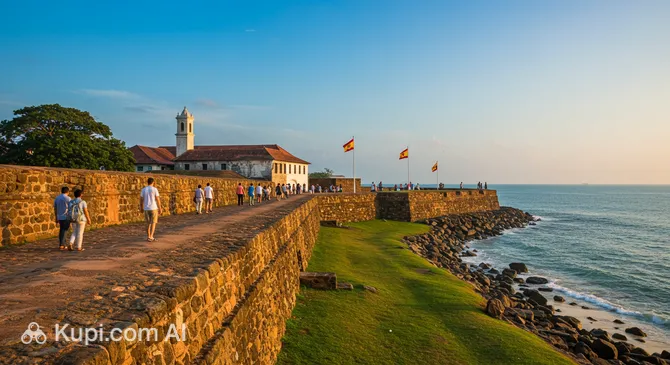
The heart of the city is Galle Fort, a UNESCO World Heritage site. Built by the Portuguese in the 16th century and significantly fortified by the Dutch in the 17th century, it is a magnificent example of European military architecture in South Asia. A walk along its massive bastions, narrow streets with colonial mansions, churches, and mosques transports visitors to another era. It is an ideal place for leisurely exploration, where something new and interesting awaits around every corner.

Galle Fort. Illustration.
Source: Kupi.com AI

Traveler photos:

One of the most recognizable symbols of the fort is the Galle Lighthouse. Located on the Utrecht Bastion, this white lighthouse, built by the British in 1939 (to replace an older one that burned down), still guides ships today. Breathtaking views of the Indian Ocean open up from its base, especially at sunset, making it a popular spot for photos and romantic walks.

Galle Lighthouse. Illustration.
Source: Kupi.com AI

Traveler photos:

For those interested in the region's maritime history, the National Maritime Museum is a must-visit. Housed in an old Dutch warehouse inside the fort, the museum showcases exhibits related to seafaring, marine biology, and underwater archaeology in Sri Lanka. Here you can see ship models, maps, artifacts from shipwrecks, and learn about the island's rich maritime heritage.

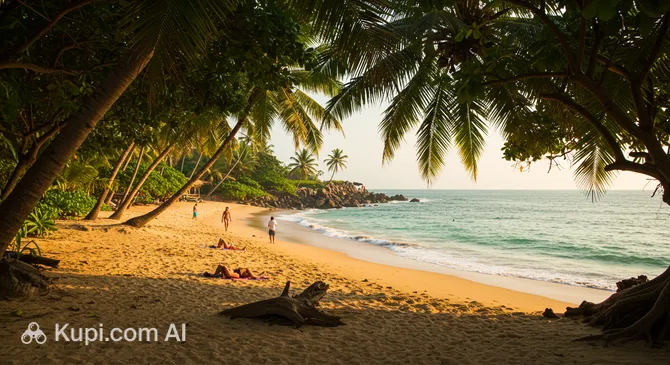
If you want to take a break from historical sites and enjoy nature, head to Jungle Beach. This small, cozy beach hidden in a bay near Galle attracts visitors with its calm atmosphere, clear water, and snorkeling opportunities. The path to it is a small adventure in itself, leading through the jungle.

Jungle Beach. Illustration.
Source: Kupi.com AI

Traveler photos:

Not far from Galle, on Rumassala Hill, stands the Japanese Peace Pagoda Rumassala. This white structure, gifted by Japanese Buddhists, is a symbol of peace and tranquility. The hill offers panoramic views of the ocean and the surroundings of Galle. Visiting the pagoda is an opportunity to touch the spiritual side of Sri Lanka and enjoy the silence and beauty of nature.

Local Cuisine

The cuisine of Galle is a true feast for foodies, an amazing blend of Sri Lankan culinary traditions with hints of European, Malay, and Tamil influences. The base of many dishes is the freshest seafood, rice, coconut milk, and, of course, aromatic spices that create a unique flavor profile. Everyone will find something to their liking here, from spicy curries to sweet tropical fruits.

Among the dishes you must try in Galle, fish curry stands out. It is prepared according to ancient recipes using fresh catch, coconut milk, and a bouquet of local spices, giving it a rich and unforgettable taste. Another iconic dish is hoppers (appam), thin crispy pancakes made from rice flour, often shaped like a bowl. They are served as a standalone dish or with an egg, curry, or spicy sambol. Don't miss the chance to enjoy the freshest shrimp, crabs, and various fish, which are often cooked right before your eyes at street markets.

Street food in Galle is a culinary attraction in its own right. Be sure to try kottu—a popular dish made from chopped roti bread stir-fried with vegetables, eggs, spices, and, optionally, chicken or seafood. Spicy samosas with vegetable or meat fillings are also popular. At local farmers' markets, an abundance of exotic fruits awaits you: juicy mangoes, aromatic pineapples, sweet papaya, and unusual jackfruit. For drinks, the traditional masala tea—black tea with milk and warming spices—is worth noting.

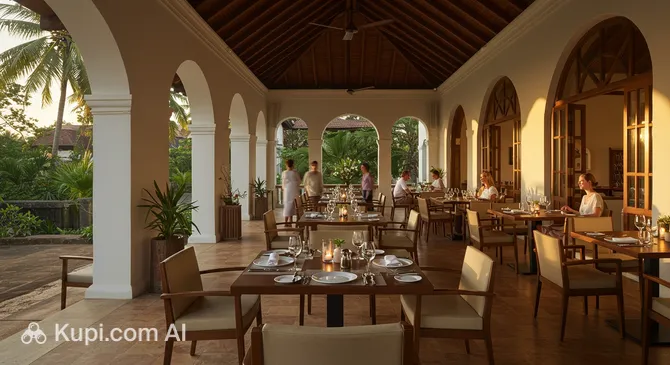
MARU. Illustration.
Source: Kupi.com AI

Traveler photos:

The dining culture in Galle is diverse. Locals and tourists alike enjoy eating at both small street cafes and restaurants. Many cozy establishments can be found within the famous Galle Fort, serving both traditional Sri Lankan and European cuisine. For example, the MARU restaurant offers interesting culinary solutions. The city is also famous for its food festivals, during which the streets turn into one big flavor fair.

Travel Tips

Planning a trip to charming Galle? These practical tips will help you better prepare for your journey and get the most out of your stay in this historic Sri Lanka city.

  1. Clothing and Essentials: Galle has a tropical climate, so choose light, breathable clothing made of natural fabrics (cotton, linen). Be sure to bring sunscreen with a high SPF, a hat, sunglasses, and insect repellent. Comfortable walking shoes are your best friend for exploring Galle Fort. When visiting temples and other religious sites, you must cover your shoulders and knees; sometimes you are required to remove your shoes before entering. Don't forget a universal power adapter, as types D, G, and M sockets are used in Sri Lanka.

  2. Transport: In Galle, especially inside the fort, it is most convenient to get around on foot. For longer trips, tuk-tuks are popular—always agree on the price in advance or ask to use the meter if there is one. Local buses are also available but can be crowded. Ride-hailing apps like PickMe may work in the city and its surroundings. Car rental is possible, but take note of the left-hand traffic and the specific nature of local roads; it is often more convenient to hire a car with a driver.

  3. Finance: The official currency is the Sri Lankan Rupee (LKR). You can exchange currency at banks, licensed exchange offices, or at the airport upon arrival. Credit and debit cards are accepted in most hotels, large restaurants, and shops. However, it's better to have cash for market purchases, tuk-tuks, and small establishments. ATMs are quite common. Tipping is appreciated for good service (usually 5-10% in restaurants, small amounts for porters and drivers).

  4. Health and Safety: Pharmacies are available in Galle, but not all are open 24/7. It is recommended to carry a basic first aid kit. Medical care for tourists is available at local hospitals and clinics; having travel insurance is mandatory. Galle Fort is considered a relatively safe area. Follow standard precautions: keep an eye on your belongings, especially in crowded places, and avoid walking in poorly lit areas after dark. Drink only bottled water.

  5. Communication: The official languages in Sri Lanka are Sinhalese and Tamil. In the tourist areas of Galle, many people speak English, especially in hotels, restaurants, and shops. Learning a few phrases in Sinhalese, such as "Ayubowan" (a greeting/wish for long life) and "Istuti" (thank you), will be appreciated by the locals. A SIM card with internet access can be purchased at the airport or at local mobile shops. Wi-Fi is available in most hotels and many cafes.

  6. Local Etiquette: The traditional greeting is "Ayubowan," accompanied by a slight bow with palms joined at chest level. It is customary to remove your shoes when visiting homes or temples. Use your right hand for eating, passing money, or objects, as the left hand is traditionally considered "unclean." Show respect for local customs and elders. Ask for permission before taking photos of people.

  7. What to Avoid: Try not to show excessive impatience or irritation—calmness is valued in Sri Lanka. Avoid public displays of affection, as this is not customary in the local culture. It is strongly recommended not to turn your back on Buddha statues (for example, for a selfie) and not to touch the heads of monks or locals, as the head is considered a sacred part of the body.

  8. Special Feature of Galle: Be sure to walk along the walls of Galle Fort at sunset—they offer stunning views of the ocean and the old city. Explore the narrow streets inside the fort, where cozy cafes, boutiques, and art galleries are hidden. This is the best place to feel the atmosphere of the city's colonial past.

We hope these tips help you plan an unforgettable trip to Galle! This city is full of history, charm, and hospitable people ready to share their culture. Enjoy every moment of your stay!

Entertainment & Nightlife

Galle, known for its historical fort and colonial architecture, transforms as the sun goes down, offering guests a cozy and relaxed atmosphere for evening relaxation. Although Galle is not a bustling capital of nightlife, there are plenty of places to enjoy an evening and soak up the local flavor.

Main evening activity is concentrated within the famous Galle Fort. Narrow streets lit by lanterns create a romantic setting. Here you will find many restaurants, cafes, and bars, many of which are located in restored colonial buildings. The atmosphere in most establishments is relaxed, and the crowd is a mix of tourists and locals. The dress code is usually smart casual, though you might want to dress up a bit more for some of the finer restaurants.

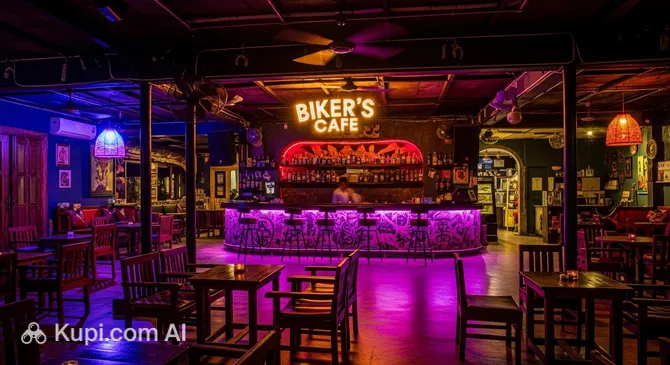
Among the popular spots for evening leisure, several establishments stand out. For example, Bastille Fort Bar attracts visitors with its location and selection of drinks. For those looking for something more lively, Biker's Cafe, which positions itself as a nightclub, offers music and dancing. Another interesting place is the Sydney Hotel, which also features a bar with a pleasant atmosphere. Many restaurants, such as Koha Surf Lounge or MARU, are open late, offering not only dinner but also a chance to enjoy drinks in a quiet setting.

Biker's Cafe. Illustration.
Source: Kupi.com AI

Traveler photos:

Practical tips:

The best time to visit bars and restaurants is after 7:00 PM or 8:00 PM. Some establishments stay open until midnight or slightly later, especially on weekends. Average prices for food and drinks in the tourist areas of Galle are moderate but can vary depending on the level of the venue. You can get around the fort territory at night on foot, while for trips to other parts of the city or to your hotel, it is better to use a tuk-tuk or order a taxi via an app or your hotel. The area of Galle Fort is considered safe for evening walks, though standard precautions should always be taken.

During the day, Galle also offers many interesting activities. Be sure to explore Galle Fort itself, visit the National Maritime Museum or the National Museum Galle to learn more about the region's history. Beach lovers can head to Jungle Beach. Other notable sights include the Galle Lighthouse and the Galle Fort Clock Tower.

Parks & Museums

Galle is a city where history and nature are harmoniously entwined, offering travelers both tranquil green corners for relaxation and fascinating museums preserving a rich cultural heritage. Here, everyone will find something for themselves, whether it's a relaxed day at the beach or a deep dive into centuries-old history.

While Galle may not have extensive urban parks in the traditional sense, its natural beauty manifests in other forms. One of the most attractive spots for nature lovers is Jungle Beach. This secluded beach with golden sand and crystal-clear water is perfect for swimming, snorkeling, and simply serene relaxation away from the city bustle. Additionally, the ramparts of the famous Galle Fort itself offer green spaces and breathtaking ocean views, turning an ordinary walk into a picturesque adventure.

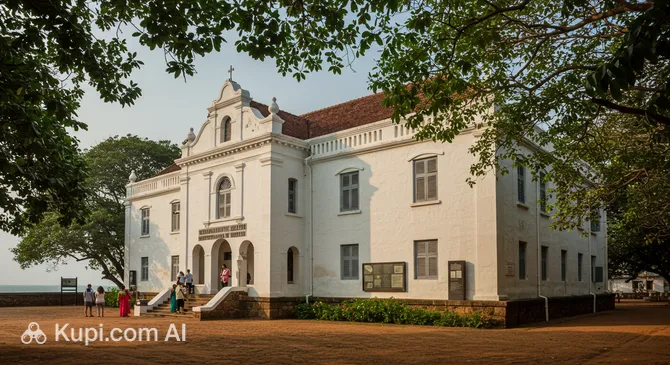
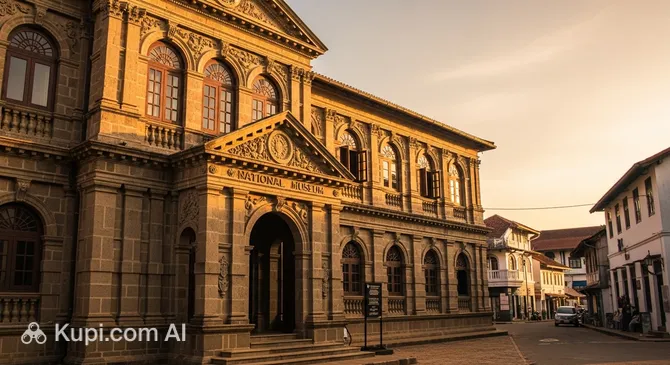
For those seeking to better understand the history and culture of Galle, the city offers several interesting museums. The National Maritime Museum, located in an old Dutch warehouse within the fort, tells the story of Sri Lanka's maritime past, showcasing artifacts related to seafaring, fishing, and marine archaeology. It's a great place to learn about the island's close connection to the ocean. Another important cultural site is the National Museum Galle. Its exhibits feature items from the colonial era, traditional masks, jewelry, and other artifacts highlighting the region's rich heritage.

National Maritime Museum. Illustration.
Source: Kupi.com AI

Traveler photos:

National Museum Galle. Illustration.
Source: Kupi.com AI

Traveler photos:

The entire Galle Fort is an outstanding historical and architectural site in its own right, included in the UNESCO World Heritage list. Walking through its streets, you will discover many iconic structures. Among them are the majestic Galle Lighthouse, which still guides ships, and the old Galle Fort Clock Tower, one of the city's symbols. A visit to Flag Rock Bastion is also a must for its magnificent panoramic views, especially at sunset.

To get a truly authentic experience of Galle, step off the beaten tourist path. Stroll through the quiet streets inside the fort early in the morning or later in the evening to discover small craft shops, cozy cafes, and galleries of local artists. Watching the sunset from one of the fort's bastions, such as Flag Rock Bastion, will grant you unforgettable moments and peace of mind.

Getting Around

Public transport in Galle consists mainly of buses and the famous three-wheeled taxis known as tuk-tuks. These modes of transport allow for fairly easy travel both within the city and to its surroundings. For exploring the historic Galle Fort, the city's main attraction, it is most convenient to go on foot, as its narrow streets and compact size are perfect for leisurely exploration.

Buses are the most budget-friendly way to travel, especially over longer distances or for trips to neighboring settlements. Both state-run (red SLTB buses) and private buses operate in Galle. Tickets are purchased directly from the conductor inside the bus, and payment is usually in cash. It is recommended to carry small bills. Be prepared for buses to be crowded, especially during peak hours, and schedules are not always strictly followed.

Tuk-tuks are the most common and maneuverable type of transport for short and medium trips around Galle and its immediate vicinity. They are easy to find almost anywhere in the city. It is extremely important to agree on the fare in advance, before getting into the tuk-tuk, as meters are not always used or drivers might "forget" to turn them on. Don't hesitate to bargain; it is a common practice.

In addition to buses and tuk-tuks, renting scooters or bicycles is popular for exploring Galle and its picturesque surroundings, especially along the coast. This provides greater freedom of movement and the ability to stop at places you like. There is also an important railway station in Galle, with trains departing to other cities in Sri Lanka, such as Colombo or Matara, making it a key transport hub for intercity travel, though not for getting around within the city itself.

Public transport in Galle usually operates from early morning until late evening. However, the frequency of buses can drop significantly in the evening. Tuk-tuks are available almost around the clock, though fares may be higher at night. For tuk-tuk rides after dark, it is safer to use drivers waiting near hotels or at official stands.

Accommodation

Galle offers a wide selection of accommodation options to suit the needs of all kinds of travelers. You can find budget guesthouses and hostels, mid-range hotels, charming boutique hotels in colonial style, as well as more luxurious resort complexes and villas available for rent. Many tourists prefer to stay directly in the famous Galle Fort or its immediate vicinity to be at the heart of historical events and have easy access to major attractions, restaurants, and shops. Accommodation options along the coast are also popular, offering picturesque views and proximity to the beaches.

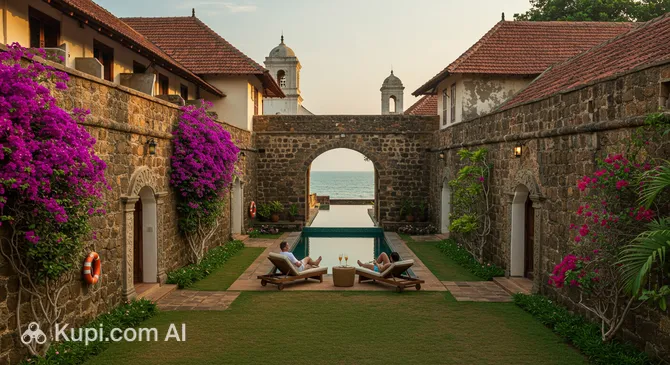
Among the well-known hotels offering a comfortable stay are, for example, The Fort Printers and Tamarind Hill, which are famous for their hospitality and unique atmosphere. These hotels often combine historical charm with modern amenities, providing guests with an unforgettable experience.

The Fort Printers. Illustration.
Source: Kupi.com AI

Traveler photos:

When planning your trip, especially during the peak tourist season (usually from December to March), it is recommended to book your accommodation in advance. This will allow you to choose the most suitable option in terms of location and price, as well as avoid situations where all the best places are already taken. The price range varies from very affordable options for backpackers to luxury class offers. Booking can be easily done through popular online platforms or directly on the hotels' websites.

Nearby Cities

For those who want to explore the surrounding area, Galle serves as an excellent starting point for day trips to several interesting nearby locations:

Exciting day trips can be made from the surroundings of Galle. For example, Ratnapura, located about 77 km away, is known as the "City of Gems" and attracts those wishing to learn about gemstone mining. Another interesting destination is Mount Lavinia (about 96 km), famous for its beach and historic hotel with colonial charm.

CityPopulationDistance
Koggala3 00014 km
Hikkaduwa101 34217 km
Weligama72 51124 km
Matara68 24438 km
Gandara12 25445 km

These nearby destinations provide an insight into the region's diverse culture and landscapes.

Shopping & Souvenirs

Galle offers tourists an interesting shopping experience that combines the charm of local stalls with modern shops. The city is famous for its handicrafts, gemstones, Ceylon tea, and spices. The main commercial life is concentrated inside the historic Galle Fort, where narrow streets host many souvenir shops, boutiques with clothes made from natural fabrics, jewelry salons, and antique shops.

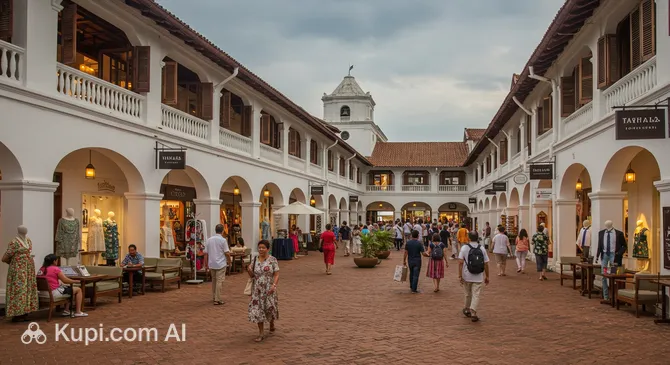
The main shopping arteries are the streets inside Galle Fort, such as Pedlar Street, Church Street, and Lighthouse Street. Here you will find the largest concentration of shops offering a wide range of goods—from traditional masks and batik to designer clothing and jewelry. Walking these streets is a pleasure in itself thanks to the colonial architecture and cozy atmosphere.

Dutch Hospital Shopping Precinct. Illustration.
Source: Kupi.com AI

Traveler photos:

For those who prefer a more modern shopping format, the Dutch Hospital Shopping Precinct is worth a visit. This is a restored historical building that now houses boutiques, restaurants, cafes, and souvenir shops. Here you can find high-quality goods, jewelry, and branded clothing, and spend time pleasantly.

While Galle does not have massive traditional markets like some other Asian cities, you can still find small local markets and street stalls outside the fort. They sell fresh fruit, vegetables, spices, and fish. Inside the fort, you can also encounter small spontaneous stalls with souvenirs and products from local artisans, especially on weekends.

From Galle, it is worth bringing back famous Ceylon tea of various grades, aromatic spices (cinnamon, cardamom, cloves, curry), wood carvings (elephant figurines, masks), batik, clothes made of natural cotton and silk, as well as precious and semi-precious stones for which Sri Lanka is famous (sapphires, rubies, moonstone). Ayurvedic cosmetics and oils are also popular.

Shops in Galle, especially in the fort's tourist zone, are usually open daily from about 10:00 AM to 6:00 PM or 7:00 PM; some souvenir shops may stay open longer. Large stores and shopping centers accept credit cards, but in small shops and markets, it is preferable to have cash—Sri Lankan Rupees (LKR). Bargaining is recommended, especially in markets and small souvenir shops.

Tourists shopping in Sri Lanka may be eligible for a VAT refund through the Tax Free system. To do this, you need to make a purchase for a certain amount in participating stores and complete the documents correctly. Inquire about the possibility of a tax refund directly at the time of purchase and keep your receipts. The refund is usually processed at the airport upon departure.

Reached the end of the page?

That means the route is fully explored