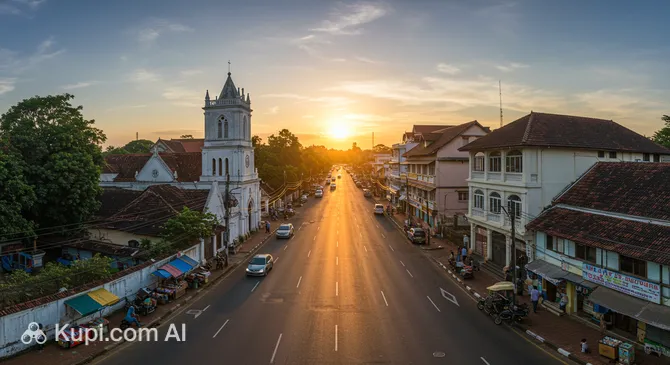
Moratuwa is a vibrant and colorful suburb of Colombo, located on the southwestern coast of Sri Lanka. As part of the Greater Colombo area, the city harmoniously combines the features of an important commercial and transport hub with cozy residential neighborhoods. It is home to about 200,000 people, making it one of the largest settlements on the island. The rhythm of life in Moratuwa is set by busy streets and proximity to the ocean, creating the atmosphere of a typical Sri Lankan coastal town.
Moratuwa. Illustration.
Source: Kupi.com AI
The city's geographical location is unique: it borders Dehiwala-Mount Lavinia to the north, and its southeastern side is washed by the calm waters of the picturesque Bolgoda Lake. The history of the city dates back to the deep past, and today it is most famous as the capital of woodworking crafts. Driving through its streets, it is impossible not to notice the numerous workshops where exquisite furniture, renowned throughout the country, is created.
For tourists, Moratuwa is primarily interesting for its authenticity. This is a place where you can see the everyday life of Sri Lankans as it is, enjoy boat trips on the lake, or use the city as a convenient base for exploring the west coast. We invite you to dive into this world of crafts and traditions, experiencing the true hospitality of the island.
Weather Overview
Moratuwa is located in a tropical climate zone, characterized by consistently high temperatures and significant humidity throughout the year. Average daily indicators usually fluctuate within 27–31°C. Thanks to its coastal location, sea breezes from the Laccadive Sea often bring long-awaited coolness; however, in densely built-up areas, the air can stagnate, creating a greenhouse effect.
Precipitation in the city is seasonal and largely depends on monsoons. The rainiest periods fall in May-June and October-November, when tropical downpours can be very intense. During the rest of the year, rains are short-lived and more frequent in the afternoon or at night. Detailed weather in Moratuwa by month will help you choose the ideal time for your visit.
For a comfortable holiday, it is best to plan a trip for the period from January to March, when the number of sunny days is at its maximum and air humidity is slightly lower than usual. Expect a truly warm Sri Lankan summer with occasional refreshing rains that only add richness to the surrounding tropical greenery.
Average monthly temperature
Average monthly precipitation
Interesting Facts
The first written mentions of Moratuwa date back to the 15th century, confirming its status as one of the oldest settlements on the west coast of the island.
The city is the birthplace of Veera Puran Appu, the legendary leader of the 1848 rebellion against British colonial rule, who is considered a national hero of Sri Lanka.
Moratuwa is often called the "furniture city" thanks to the superior skill of local carpenters, whose traditions have been passed down from generation to generation for centuries.
The southeastern border of the city runs along the shores of Bolgoda Lake, which is part of the largest mangrove basin in the region.
One of the country's leading technical universities, the University of Moratuwa, is located here, making the city an important educational and engineering center.
How to Get There
Moratuwa is located just 20 kilometers south of central Colombo, making it easily accessible for travelers. The main link to the world is Bandaranaike International Airport, located approximately 40 kilometers away. You can get to the city from there by taxi or pre-booked transfer; the trip usually takes from 1 to 1.5 hours, depending on the traffic on Galle Road. More detailed route planning can be found in the how to get to Moratuwa section.
Railway communication is one of the most convenient and authentic ways to reach the city. The coastal railway line, connecting the capital with southern resorts, passes through the local station. Trains from Colombo run regularly, and the journey takes about 40 minutes. This is a great chance to enjoy the ocean views right from the train window, although it's worth noting that trains can be very crowded during peak hours.
Station
Passenger traffic
Distance
Maradana Railway Station
7
16 km
Fort Railway Station
9
17 km
Fort Railway Station
9
17 km
Galle Railway Station
4
91 km
Nanu Oya railway station
5
96 km
Bus service is also excellently developed. Both state and private buses run along Galle Road, connecting Moratuwa with Colombo, Galle, and other coastal cities. For short trips within the district or from neighboring Mount Lavinia, tuk-tuks are best — this nimble transport will take you to any point in the city in a matter of minutes.
Main Attractions
Although Moratuwa is not a classic tourist resort, it offers travelers several unique locations for a relaxing holiday. One of the city's main natural gems is Bolgoda Lake. It is the largest freshwater body in Sri Lanka, and its shores are perfect for leisurely walks, bird watching, or organizing water trips by canoe or motorboat. The atmosphere here is strikingly different from the noisy city blocks, immersing you in a world of silence and natural harmony.
Located near the coast is Kirela Island, a popular spot for picnics and eco-tourism. It is a true green oasis where you can get acquainted with local flora and fauna in their natural habitat. For those who prefer seascapes, the coastal zone of the Laccadive Sea offers excellent sunset views, which are especially beautiful during evening strolls along the shore.
In cultural terms, the city is interesting for its craft traditions. The main "attractions" here are the furniture workshops themselves, stretching along the roads. Watching the work of master cabinetmakers allows for a better understanding of the soul of this hardworking city. Moratuwa often serves as an intermediate point for those looking for more secluded vacation spots while remaining in close proximity to the capital's infrastructure.
Local Cuisine
The gastronomic face of Moratuwa is a bright palette of traditional Sri Lankan flavors with an emphasis on the freshest seafood. Since the city is located on the coast, fish, shrimp, and crabs go directly from fishermen's nets to restaurant tables. The main dish that you must try remains the classic rice and curry, served here with many aromatic side dishes and spicy coconut sambol.
Street food in Moratuwa deserves special attention. Small roadside eateries prepare crispy hoppers (bowl-shaped thin rice flour pancakes) and appetizing roti with a variety of fillings. For those who are seriously hungry, the ideal choice is kottu — chopped flatbread with vegetables, egg, or meat, the preparation of which is accompanied by the rhythmic clatter of metal blades heard from afar.
The city's establishments offer a mix of local traditions and popular international trends. At Steamboat restaurant, you can enjoy Asian and Chinese cuisine, while Urban Elephants will delight lovers of Thai and Asian flavors in a modern interpretation. Among drinks, be sure to try fresh king coconut juice (thambili) or the famous Ceylon tea. For those who want to get acquainted with stronger local traditions, arrack is available — a traditional alcoholic drink produced from the sap of the coconut palm.
Travel Tips
A trip to Moratuwa will give you many impressions if you prepare in advance for the peculiarities of local life. These tips will help you feel confident and enjoy every moment of your journey.
Clothing and Accessories: Choose light clothing made of cotton or linen — high humidity makes synthetics uncomfortable. When visiting temples, be sure to cover your shoulders and knees. Don't forget comfortable walking shoes and a power adapter (type G or D).
Transport Details: Use the PickMe or Uber apps to order tuk-tuks — this guarantees a fair price. Avoid traveling by train and bus during peak hours (7:00–9:00 and 16:30–19:00), when transport is overcrowded to the limit.
Finances: Always carry Sri Lankan rupees in cash. Large supermarkets and some restaurants accept cards, but in markets and tuk-tuks, you will need only cash. There are ATMs in the city, but it is better to withdraw money during the day.
Health and Safety: Use only bottled water, even for brushing your teeth. The sun is very active, so sunscreen with high SPF is mandatory. Use mosquito repellents in the evening.
Connectivity: Buy a local SIM card (Dialog or Mobitel) directly at the airport or at one of the mobile shops in the city — mobile internet here is high quality and inexpensive. Wi-Fi in guesthouses can be unstable.
Local Etiquette: Always remove your shoes when entering a house or temple. Greet people with the traditional gesture "Ayubowan" (palms together at the chest) — this will earn you the locals' sympathy. Remember that the right hand is considered the primary one for eating and passing items.
What to Avoid: Do not take selfies with your back turned to a Buddha statue — this is considered a serious sign of disrespect. Also, avoid discussing politics and try not to show excessive emotions in public places.
Tip for Foodies: Be sure to try street food in small cafes away from the main road — that's where you'll find the most authentic kottu and the freshest seafood at local prices.
Moratuwa is a city with an open heart that will reward the curious traveler with bright colors and true hospitality. Enjoy your trip!
Entertainment & Nightlife
Nightlife in Moratuwa is calm and measured, which is typical for a residential suburb. You won't find noisy nightclubs or large-scale concert venues here; however, the city offers excellent opportunities for a cozy evening rest. Most activity after dark is concentrated in restaurants and coastal cafes where locals gather for leisurely conversations to the sound of the ocean. If you are looking for drive and dancing until dawn, it is worth heading to neighboring Colombo, which can be reached by taxi in just 20–30 minutes.
Daytime entertainment in the city is more oriented toward active recreation in nature. Trips on Bolgoda Lake are popular, where you can rent a boat or book a tour from local operators. For fans of more specific leisure, there are professional tattoo studios in the city, such as CB Tattoos, known far beyond the district. Families with children often spend time in the coastal areas, enjoying the fresh sea breeze and local treats.
Safety in the evening is generally at a good level, but tourists are recommended to stick to well-lit main streets and use official taxi services or tuk-tuks for transportation. This is a city for those who appreciate peace, local flavor, and the opportunity to take a break from the bustle of the metropolis while maintaining access to all its benefits.
Parks & Museums
In the context of Moratuwa's dense urban development, natural landscapes fulfill the role of main parks and recreation areas. The absolute leader here is the Bolgoda Lake area. Although it is not a park in the conventional sense, its shores represent an extensive recreational zone where residents and guests of the city can relax from the hustle and bustle. Conditions have been created here for water sports, fishing, and simply contemplative relaxation in the lap of nature.
Another significant place is Kirela Island, which serves as a natural park. It is one of the few places within the urban agglomeration where untouched patches of tropical vegetation have been preserved. The island is popular among picnic lovers and those seeking solitude. Unfortunately, there are currently no full-fledged museums in Moratuwa itself, but this gap is easily filled by the proximity to Colombo and Dehiwala-Mount Lavinia.
For cultural enrichment, tourists usually head to the National Museum in Colombo or visit the Dehiwala Zoological Garden, which is considered one of the best in South Asia. Nevertheless, Moratuwa itself, with its coastal strips and mangroves by the lake, remains an important place for those who value ecological tourism and the opportunity to see the island's life in its original form.
Getting Around
The transport system in Moratuwa is typical of a large Sri Lankan suburb and offers several ways to get around. The backbone of public transport consists of buses and trains. A very important railway line, the Coastal Line, passes through the city. Moratuwa station is a key hub: from here you can quickly and cheaply reach both central Colombo and the southern resort towns. Train tickets are bought directly at the station ticket offices, and the fare remains one of the lowest in the world.
Buses in Moratuwa are divided into state (red) and private. They run along Galle Road almost around the clock. Payment is made to the conductor inside the cabin. It is worth remembering that during peak hours (toward the capital in the morning and back in the evening), transport can be very crowded, so trips at this time may not be the most comfortable for tourists. Routes cover all main districts, allowing you to reach even remote corners of the suburb.
The most popular means for short trips remain tuk-tuks. This is an ideal option for moving through narrow streets where a bus might not always pass. It is recommended to use taxi apps (such as PickMe or Uber) to see a fixed price and avoid unnecessary haggling. Bicycles are rare in the city due to heavy traffic on main roads, so it is better to rely on motorized transport for moving between districts.
Accommodation
The housing market in Moratuwa is primarily oriented toward budget travelers, expats, and those looking for an authentic immersion into local life. You won't find massive five-star chain hotels here, but the city offers a wide selection of cozy guesthouses, private apartments, and small middle-class hotels. Many accommodation options are located near the coastline or Bolgoda Lake, allowing guests to enjoy the peace and picturesque views.
For those who prefer staying by the water, it is worth paying attention to Hotel Bolgoda Park and similar complexes in the lake zone. This is an excellent choice for those who want to combine accommodation with water activities. If your goal is proximity to transport hubs for trips to Colombo, it is better to choose accommodation along the main Galle Road or within walking distance of the railway station.
When planning a trip, especially during the peak tourist season (from December to March), it is recommended to book accommodation in advance through popular international services. Prices in Moratuwa are significantly lower than in the capital, making the city an attractive place for long-term stays. Most guesthouse owners offer not only a place to sleep but also home-cooked breakfasts and assistance in organizing island excursions.
Nearby Cities
Thanks to its location, Moratuwa serves as an excellent starting point for exploring the island's west coast. Just a few kilometers north is the famous Mount Lavinia, known for its golden beaches and a historic hotel that was once a governor's residence. This is an ideal place for a day trip to enjoy swimming in the ocean and dining at one of the coastal restaurants.
For those interested in culture and history, Sri Jayawardenepura Kotte — the country's official capital — is a must-visit. Here you can see the parliament building located on an island in the middle of a lake and walk through well-maintained parks. Also of interest is neighboring Kesbewa, where the rhythm of life is even more leisurely, and the surrounding landscapes delight with an abundance of greenery.
The region around Moratuwa offers many opportunities for short trips. You can go shopping in bustling Colombo or choose quieter destinations such as Maharagama or Athurugiriya. Each of these places has its own unique character and allows for a deeper understanding of Sri Lanka's multifaceted culture.
Shopping & Souvenirs
Shopping in Moratuwa is primarily about getting acquainted with local crafts and traditional goods. The city is not famous for huge shopping malls with glass storefronts, but it offers something more valuable: authentic wood products. Walking along the main Galle Road, you will encounter dozens of shops selling handmade souvenirs, decor items, and exquisite furniture made by local master cabinetmakers.
Local markets are the heart of city trade. Food markets near the coast offer an abundance of exotic fruits, spices, and the freshest seafood. It is an ideal place to buy famous Ceylon tea or aromatic cinnamon at "local" prices. Payments in such places are most often made in cash in rupees, so it's worth taking care of changing money in advance.
For those interested in a more familiar shopping format, there are supermarkets and small shopping centers that cover basic needs. If you are planning a major wardrobe update or looking for international brands, it's worth dedicating a day to a trip to Colombo's shopping centers. However, when leaving Moratuwa, be sure to take a small wooden item or a piece of traditional Sri Lankan fabric with you — such souvenirs will long remind you of the unique atmosphere of this craft region.