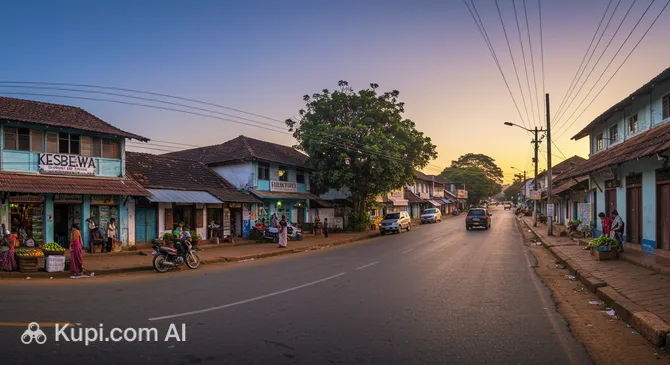
Kesbewa is a dynamically developing suburban town located in the Western Province of Sri Lanka. Situated approximately 20 kilometers south of the country's capital, Colombo, this city serves as an important residential and commercial hub. The atmosphere here combines the rhythm of a modern urbanized area with the traditional tranquility of Sri Lankan suburbs, making it a convenient base for those who want to explore island life beyond the main tourist trails.
Kesbewa. Illustration.
Source: Kupi.com AI
With a population of about 243,842 people, Kesbewa is one of the most densely populated suburbs in the region. Despite the dense construction, the city retains its authenticity. The city's heritage and development are closely intertwined with the expansion of the metropolitan area: over recent decades, it has transformed from a quiet rural area into a bustling center with developing infrastructure, office spaces, and shopping zones.
For travelers, Kesbewa is primarily interesting as a transit point and a place to experience the daily life of Sri Lanka's middle class. The city is surrounded by districts such as Moratuwa and Maharagama and offers excellent access to the country's main transport arteries. A visit to this city is an invitation to see the real island life, unembellished for tourists, and to enjoy local hospitality and a convenient location near the capital's key facilities.
Weather Overview
Kesbewa is dominated by a typical tropical monsoon climate, characteristic of Sri Lanka's coastal zone. It is warm here all year round, with average air temperatures ranging from 26–32°C. High humidity is a constant companion of the city, making the heat more palpable, especially on windless days. Rainfall is frequent but usually takes the form of short, intense showers.
There are two main rainy seasons: from May to September and from October to January. May, October, and November are traditionally considered the wettest months, when rainfall can exceed 350 mm per month. During this period, local road flooding is possible due to dense construction. January and February are the driest and most comfortable months to visit, when the average temperature is about 27°C and there are significantly more sunny days.
When planning your trip, be sure to consider the weather in Kesbewa so that showers do not catch you by surprise. Due to the lack of significant terrain, the area is ventilated by sea breezes; however, in densely built-up blocks, the air can stagnate. During peak hours, air quality may slightly decrease due to heavy traffic, so it is better to choose morning or pre-sunset hours for walks when the heat subsides a bit.
Average monthly temperature
Average monthly precipitation
Interesting Facts
Kesbewa is surrounded by five major suburban areas — Moratuwa, Maharagama, Pannipitiya, Bandaragama, and Kahathuduwa, making it an important transport hub in the southern part of the capital region.
Despite its impressive population of over 240,000 people, the city maintains its status as a residential suburb and has almost no major tourist sites, offering guests an authentic local flavor.
The city is an actively developing commercial center: in recent years, many modern office spaces and shopping platforms oriented toward the business sector have appeared here.
The history of Kesbewa's transformation from a quiet rural area into a densely populated urban mass occurred in record time due to Colombo's rapid expansion to the south.
The city's coordinates (6°47′43″N 79°56′19″E) indicate its strategic position near the coast, providing easy access to the ocean beaches of neighboring Moratuwa.
How to Get There
Kesbewa enjoys good transport links with the rest of the island, serving as an important link in the road network south of the capital. Most travelers arrive here from Colombo or from the country's main international airport. Due to its proximity to major highways, the city is easily accessible by both private transport and scheduled buses running along Galle Road.
For international tourists, the primary point of arrival is Bandaranaike International Airport (CMB). It is located approximately 40–50 kilometers north of the city. A taxi ride from the airport to Kesbewa typically takes 1 to 1.5 hours, depending on traffic. An alternative option is to use internal transfers or rent a car directly at the arrival terminal.
Kesbewa itself does not have its own railway station; however, you can reach it by train via neighboring hubs. The nearest stations are located in Moratuwa and Piliyandala. From there, you can quickly reach the city center by tuk-tuk or local bus. Detailed information on routes and schedules can be found in the section describing ways to reach the city.
Station
Passenger traffic
Distance
Maradana Railway Station
7
19 km
Fort Railway Station
9
20 km
Fort Railway Station
9
20 km
Galle Railway Station
4
87 km
Nanu Oya railway station
5
90 km
For comfortable travel within the region, it is recommended to use fixed-rate taxis or mobile apps. If you plan a long stay and want to explore the surroundings independently, renting a car will be the most practical solution, given the city's transit status and convenient access to expressways.
Main Attractions
Since Kesbewa is predominantly a residential and commercial suburb, it is difficult to find world-class historical monuments here. Nevertheless, the city attracts visitors with its atmosphere of genuine Sri Lankan everyday life. Main activities are concentrated in shopping areas and along the main streets, where you can observe the rhythm of local residents' lives, visit local shops, and small family businesses.
In the city itself and its immediate surroundings, it is worth paying attention to modern infrastructure facilities, such as the Grand 7 hotel, which has become a kind of landmark for meetings and relaxation. For those seeking cultural or historical experiences, Kesbewa serves as a convenient starting point for trips to neighboring districts. The famous Khan Clock Tower and other iconic sites of the capital are just a few dozen kilometers away.
Fans of active recreation and family trips should consider outings to nearby recreational zones, such as the Leisure World water park, located within easy reach of the city. Walking through the busy streets of Kesbewa allows tourists to see Sri Lanka as it truly is — energetic, hardworking, and always welcoming to guests.
Local Cuisine
The culinary scene in Kesbewa is a true paradise for lovers of authentic Sri Lankan cuisine. The basis of the local diet is traditional rice and curry. Here you can try dozens of varieties of this dish: from fiery-hot meat options to delicate vegetable curries based on coconut milk. You should definitely try kottu roti — a popular street food made of shredded flatbread, vegetables, and spices, prepared right in front of you.
Due to its proximity to coastal areas, local establishments always have an abundance of fresh seafood. Restaurants, such as the one at the Grand 7 hotel, offer both local delicacies and international cuisine. If you are looking for a truly folk experience, stop by small cafes in the Piliyandala area, where locals have lunch during the day. The subtle aroma of spices — cinnamon, cloves, and cardamom — fills the air, creating the island's unique atmosphere.
Among drinks, the absolute leader is the famous Ceylon tea, which is drunk here at any time of day. It is also worth trying the refreshing water of the king coconut (thambili) or the traditional alcoholic drink arrack, produced from the sap of the coconut palm. The food culture in Kesbewa is simple and hospitable: most establishments offer generous portions at very affordable prices, emphasizing fresh ingredients and loyalty to tradition.
Travel Tips
A trip to Kesbewa will allow you to see the real Sri Lanka, and to make your journey as comfortable as possible, we have prepared a few practical tips.
Clothing and gear: Choose clothes made of natural fabrics (cotton, linen), as the city is humid and hot. For visiting temples in the vicinity, be sure to bring items that cover shoulders and knees. Don't forget an umbrella — tropical showers can start suddenly.
Transport: Avoid traveling by bus during peak hours (07:00–09:00 and 17:00–19:00). The best way to get around is by tuk-tuks hailed through mobile apps, which guarantees a fair fare.
Finance: The main currency is the Sri Lankan Rupee (LKR). Cards are accepted in hotels and large stores, but always keep small cash for markets and tuk-tuks. Exchanging money is more profitable in Colombo or at the airport.
Health: Drink only bottled water. Use mosquito repellents, especially in the evening, to protect yourself from insect bites.
Communication: Locals speak Sinhalese, but in commercial areas and hotels, many understand basic English. Learn a few phrases, for example, "Ayubowan" (a traditional greeting).
Local Etiquette: Always remove your shoes when entering a home or temple. Greet people with a slight bow and folded palms — this is a sign of respect.
What to avoid: Do not engage in aggressive arguments over prices at markets; a smile and polite bargaining work much more effectively. Avoid drinks with ice from questionable street stalls.
Connectivity: Buy a local SIM card (Dialog or Mobitel) right at the airport — mobile internet on the island is inexpensive and works stably, which will help you use navigation.
May your introduction to this bustling suburb be filled only with pleasant discoveries and kind encounters!
Entertainment & Nightlife
The entertainment scene in Kesbewa is primarily oriented toward local residents and quiet family relaxation. There are no noisy nightclubs or large-scale concert venues typical of major metropolises. Most evening activity is concentrated around restaurants and bars at large hotels. For example, the bar and restaurant at the Grand 7 hotel offer a cozy atmosphere for dinner and evening cocktails, attracting both guests and city residents.
Daytime entertainment in the city is related to shopping and strolling through local commercial quarters. Life here is in full swing during daylight hours, while in the evening, the city settles into the quietness of a residential area. For those seeking vibrant nightlife, discos, and casinos, it is recommended to head to Colombo, which is just 20 kilometers away. A taxi ride to the center of the capital takes between 30 and 60 minutes, depending on traffic conditions.
For family leisure and daytime walks, Kesbewa residents often choose trips to neighboring areas where theme parks or more spacious public zones are located. Safety in the city is high, allowing for evening walks along well-lit main roads; however, for traveling late at night, it is best to use official taxi services or popular ride-hailing mobile apps.
Parks & Museums
Kesbewa is an area with dense urban construction, so there are few classic large parks or state museums directly within the city limits. Greenery here is represented by small squares and green zones along the roads. Local residents most often use these spaces for short rests or while waiting for transport. For those seeking true natural oases, it is recommended to pay attention to the shores of nearby Bolgoda Lake, which is located on the border with neighboring districts.
Culturally, the city is more oriented toward modern life and commerce, so art galleries or historical exhibitions are rare here. The lack of large museums is compensated by the proximity to Colombo, where the country's main cultural institutions are concentrated. Nevertheless, a walk through the residential quarters of Kesbewa can be a kind of "open-air museum," allowing you to see modern architecture and the daily life of Sri Lankans.
For a complete holiday in nature or to learn about the island's historical heritage, guests of the city usually choose trips to neighboring suburbs. This emphasizes Kesbewa's status as a convenient residential area, where recreational zones are replaced by the practicality of urban infrastructure. Nonetheless, quiet streets away from the main highways can delight with unexpected views of tropical vegetation, carefully preserved by residents in their inner courtyards.
Getting Around
The public transport system in Kesbewa is mainly represented by an extensive network of bus routes. The city is crossed by important lines connecting Colombo with southern regions, including Galle. Buses run frequently, but it should be noted that they can be very crowded during peak hours (morning and evening). A trip to the center of the capital can take from 20 minutes to an hour, depending on traffic on the main highways.
The most popular and fastest way to travel short distances within the city is three-wheeled taxis — tuk-tuks. They are available everywhere and easy to catch right on the street. Tourists are recommended to agree on the price in advance or use apps (such as PickMe or Uber) so that the trip is calculated by a meter. This eliminates the need for bargaining and ensures a fair price.
There are no metro or trams in Kesbewa, and railway communication is available via nearby stations in neighboring districts. For those who value independence and comfort, an excellent option would be renting a car with a driver or driving yourself if you have an international driving permit. Remember that traffic in Sri Lankan suburbs is quite chaotic, and heavy traffic on Galle Road is a chronic feature of the region.
Accommodation
Accommodation options in Kesbewa are mainly oriented toward transit travelers, business people, and those looking for affordable housing near the capital. Middle-class hotels and cozy guesthouses predominate here. One of the best-known options is the Grand 7 Hotel Kesbewa, offering comfortable 3-star rooms, Wi-Fi access, and restaurant services. This is an excellent choice for those who need quality service at a reasonable price.
For longer stays in the city, renting apartments in residential quarters is popular. This allows for significant savings and a chance to feel like a local. Unlike coastal resorts, housing here is rarely overcrowded with tourists; however, during national holidays or major business events in neighboring Colombo, vacancies can fill up quickly.
When choosing an area to stay, it is better to focus on proximity to main roads and shopping zones, such as Piliyandala, to have quick access to transport and infrastructure. Housing prices in Kesbewa are noticeably lower than in central Colombo, making the city attractive for budget tourists and expats. It is recommended to book accommodation in advance through popular online services to guarantee the best terms.
Nearby Cities
Kesbewa serves as an excellent starting point for exploring the surroundings and southern suburbs of the capital, offering travelers convenient access to various locations. Just 6 kilometers away is Moratuwa — a city famous for its craftsmanship in furniture production and its proximity to the picturesque Bolgoda Lake, where you can go boating or engage in water sports.
If you want to combine shopping with an introduction to the local way of life, it is worth heading to the city of Maharagama, which is a major commercial hub for the region. For those who miss beach relaxation and a colonial atmosphere, Mount Lavinia is ideal. This place is famous for its magnificent beach and legendary hotel that preserves the spirit of the British era. Also nearby is the official capital of the country — Sri Jayawardenepura Kotte, where you can see the parliament building.
Exploring nearby areas allows tourists to see different facets of life in Sri Lanka: from busy commercial streets to serene lakeside landscapes. Thanks to a developed network of bus routes and the availability of taxis, each of these destinations is perfect for a day trip, allowing you to return to the quiet atmosphere of your hotel in the evening.
Shopping & Souvenirs
Shopping in Kesbewa is practical and everyday in nature, reflecting the needs of the local population. You won't find huge luxury malls here, but the city is full of small specialized stores, shopping pavilions, and office-commercial spaces. Main shopping activity is concentrated along the main roads, where you can buy everything from locally made clothing to electronics and household goods.
For tourists, local markets may be the most interesting, especially those located toward Piliyandala. These are ideal places to buy fresh tropical fruits, vegetables, and authentic spices. If you are looking for typical souvenirs, such as Ceylon tea in gift packaging or wooden crafts, it is worth checking specialized shops, although for a wide selection of designer items, it is better to head to the central shopping centers of Colombo.
Shops in the city usually operate from early morning until 7:00 PM–8:00 PM. Major outlets and hotels accept bank cards; however, at markets and in small shops, you will definitely need cash (Sri Lankan Rupees). Kesbewa is an excellent place to buy high-quality everyday goods at "local" prices, avoiding the tourist markups of the capital.