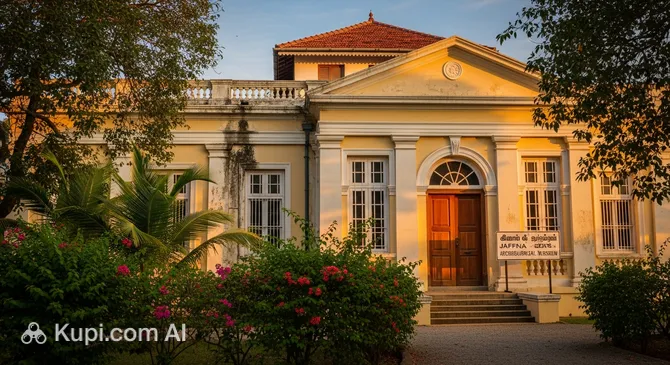
The Jaffna Archaeological Museum invites visitors to dive into the centuries-old history of the northern region. This small yet highly significant cultural site is located in the suburb of Nallur, within the city of Jaffna. Established in 1978, the museum houses a unique collection of artifacts found on the peninsula, telling the story of life in Sri Lanka from ancient times to the colonial era.
Jaffna Archaeological Museum. Illustration.
Source: Kupi.com AI
Traveler photos:
The museum's halls display items made from a wide range of materials: from clay and wood to bronze and precious metals. Here, you can see not only the results of professional archaeological excavations but also items donated by local residents. This makes the exhibition feel particularly vibrant and connected to the history of the people who have inhabited this land for centuries.
Ancient religious symbols of Hinduism and Buddhism, collections of old coins, and everyday household items are of particular value. Despite its modest size, the museum is rightfully considered one of the most important centers for studying the heritage of the northern part of the island, attracting those seeking authentic knowledge beyond the popular tourist routes.
Contacts
To confirm up-to-date information before your visit, you can use the museum's contact details. The Jaffna Archaeological Museum is available for inquiries during working hours.
Inside the museum, visitors will encounter rare religious relics: finely crafted statues and ritual objects made of wood, stone, and metal. The numismatic collection allows you to trace the changing eras through coins that circulated on the island from the time of ancient kings to the period of European rule.
Special attention should be paid to the display of old weapons and tools, which provide a clear idea of the technologies of the past. Architecture enthusiasts will appreciate the preserved decorative elements of ancient buildings. In the museum's courtyard, visitors are greeted by unusual exhibits — massive Dutch cannons moved from the Jaffna Fort and a huge whale skeleton, which has become one of the museum's most recognizable landmarks.
While detailed descriptions of the exhibits are not always available, the lack of excessive text allows you to focus on the visual perception of genuine antiquities. This place is ideal for thoughtful contemplation and an attempt to personally unravel the mysteries of the artifacts found on the peninsula.
Getting There
The museum is conveniently located in the Nallur district, a suburb easily accessible from Jaffna city center. The distance is only about 2–3 km, so a tuk-tuk or local taxi ride will take no more than 10 minutes. If you prefer public transport, city buses run regularly in this direction.
For those arriving from Jaffna Airport, the journey is approximately 10–15 km. A taxi ride takes about 20–30 minutes, depending on traffic. The main landmark for drivers or when searching on your own is the Navalar Cultural Center — the museum building is located directly behind it on Navalar Road.
Travelers using navigation apps can search by coordinates or the street name. There is usually enough parking space near the entrance, and the proximity to other key city sites allows you to include the museum in a walking tour of the historical part of Nallur.
Nearest city: Jaffna
History & Facts
The founding of the museum in 1978 was a vital step in preserving the heritage of the northern region. It was initiated by a foundation of a well-known Sri Lankan writer who sought to systematize finds confirming the peninsula's rich history. The collection was formed not only through professional excavations but also through generous donations from local residents who entrusted family relics to scholars.
Research in this part of Sri Lanka proves that the region has been inhabited since the Iron Age. Jaffna has served as an important cultural and trade hub since at least the 3rd century BCE. The museum halls hold evidence from the time when northern cities, such as Kantarodai, flourished as religious centers.
The exhibition covers a vast timespan: from ancient megalithic structures to the colonial period, when the island was ruled by the Portuguese, Dutch, and British. Every object here is a building block in understanding how the peninsula's unique culture developed, weaving together Hindu and Buddhist traditions.
Time Needed
Most tourists need 1 to 2 hours to leisurely explore all the halls and the outdoor exhibits. The museum is quite compact, but the abundance of small details and artifacts may extend your visit if you are passionate about archaeology or numismatics.
Since the explanatory labels often contain only brief information, you won't need to budget extra time for reading long texts. However, it is worth setting aside 15–20 minutes to see the objects in the courtyard, including the ancient cannons and the whale skeleton, which often serve as backdrops for memorable photos.
Working Hours
The museum welcomes visitors daily from 09:00 to 16:00, and is open on Saturdays and Sundays. This convenient schedule makes it easy to include a visit in a morning or afternoon itinerary through Nallur.
As the operating hours of government institutions can sometimes change, it is recommended to check the official website of the Department of Archaeology or confirm the information with local guides before your trip.
09:00–16:00
Nearby
A visit to the museum is a great reason to explore the historic Nallur district and its surroundings. Many ruins and monuments have been preserved nearby, complementing the picture of this region's past and showcasing the remnants of the northern kingdom's former glory.