Support

Dutch Fort - Jaffna

About

On the northern coast of Sri Lanka rises a majestic structure that has become an unofficial symbol of the region's history. Jaffna Dutch Fort is more than just a defensive fortification; it is an outstanding example of 17th-century military engineering that preserves the atmosphere of the colonial era to this day.
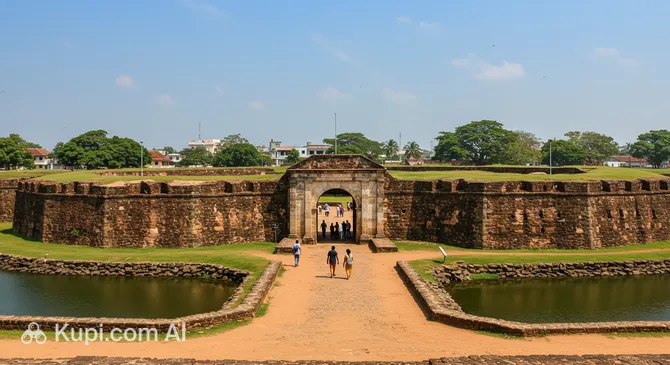
Jaffna Dutch Fort
Jaffna Dutch Fort. Иллюстрация. Источник: Kupi.com AI

Located in the heart of Jaffna, this powerful fortress features a unique star shape. Its walls, built of coral stone and limestone, were once nearly impregnable, protected by a deep moat. Today, it is recognized as one of the most significant Dutch fortifications in Asia.

Inside the fort, travelers will find atmospheric ruins of administrative buildings, old warehouses, and a Protestant church. Following a major restoration, the fort has become a key tourist site, offering guests a journey into the past along with magnificent panoramic views of the city and the calm lagoon waters.

Contacts

To plan your visit to the fortress, it's helpful to know its exact location. The fort is within walking distance of the city center and main transport hubs.

How to contactContact
AddressM265+R97, Jaffna, Sri Lanka

What to Do

A walk along the fort's massive walls and bastions is the first thing to do upon arrival. From the height of the fortifications, stunning views of the surrounding lagoon open up. It is an ideal spot for panoramic photography, especially if you visit at sunrise or sunset when the coral stone walls are bathed in warm golden hues.

Exploring the interior allows you to touch the past. Among the ruins, you can find the remains of a Dutch church and old residences, imagining how life bustled here centuries ago. The fort's star architecture allows you to view the defensive structures from different angles, finding unique details in each bastion and massive gate featuring historical coats of arms.

Near the fortress, you can visit the royal gardens, created by the Dutch, to relax amidst the greenery. After touring the fort, many tourists head to the city center to experience the local culture and try traditional Tamil cuisine in nearby cafes. Entrance to the fortress grounds is free, allowing you to enjoy the historical atmosphere at your own pace.

Getting There

Reaching the historic city center is easy, as the fortress is located at M265+R97, Jaffna. If you are arriving at Jaffna Airport, a taxi or a colorful tuk-tuk ride will take about 15–20 minutes (a distance of approximately 10 km). You can also take a public bus to the Jaffna central bus station, from which the fort entrance is just a 10–15 minute walk.

For those traveling from Colombo or Kandy, the most comfortable and scenic option is the train to Jaffna station. The journey across the island takes between 7 and 10 hours, and from the station, you can reach the fortress by taxi or local transport in just 5–10 minutes. Many tourists also prefer to rent a bicycle or scooter for independent travel around the city, allowing them to park right by the fort walls.

Ближайший город: Jaffna

History & Facts

The history of this site began back in 1618 when the Portuguese built the first fortification here to protect their trade interests in the Indian Ocean. Due to its location in the north of the island, the fortress held strategic importance, providing control over sea routes between Sri Lanka and India.

In 1658, the situation changed: the Dutch captured the fortification and almost completely rebuilt it. It was under their rule that the fort acquired its famous five-pointed star shape, which was a benchmark of European fortification architecture at the time. The Dutch East India Company used the fortress as its main administrative and trade headquarters in the region for over a hundred years.

The end of the 18th century brought new masters—in 1795, control of the fort passed to the British. They continued to use its walls for administrative purposes until the mid-20th century. Having weathered centuries of shifting empires, the fort is now fully restored and stands as a major cultural heritage site, vividly demonstrating the fusion of Portuguese, Dutch, and British influences.

Time Needed

To leisurely walk the entire perimeter of the fortress and explore the ruins of the inner buildings, most tourists need 1 to 2 hours. This is plenty of time to see the key bastions and take memorable photos against the backdrop of the lagoon.

If you plan to study the information boards in detail, relax in the nearby royal gardens, and wait for the perfect evening light for professional photography, you should budget about 3 hours for your visit. The fort is quite compact, but its geometric details deserve close attention.

Working Hours

The fortress welcomes visitors daily, which is very convenient for planning your travel itinerary. The doors of the historical complex are open from 7:00 AM to 6:00 PM, without lunch breaks or days off.

The schedule is the same for the entire week, including Saturday and Sunday. It is recommended to arrive at opening time or closer to closing to avoid the midday heat and enjoy the soft lighting for the best photos.

7:00 – 18:00

Nearby

Exploring the fort's surroundings will allow you to get a complete impression of the unique culture and history of the country's north. Close to the massive fortress walls are monuments from different eras, from British colonial towers to statues of ancient kings.

In the immediate vicinity of the site, you will find the following points of interest:

NameDistance
Jaffna Market0.6 km
Cargills Square0.7 km
Sri Nagavihara International Buddhist Centre1.3 km
North Gate Hotel1.4 km
Jaffna Archaeological Museum1.9 km
Old Park2.2 km
Rio Ice Cream2.4 km

Reached the end of the page?

That means the route is fully explored