Support

Nyon

About

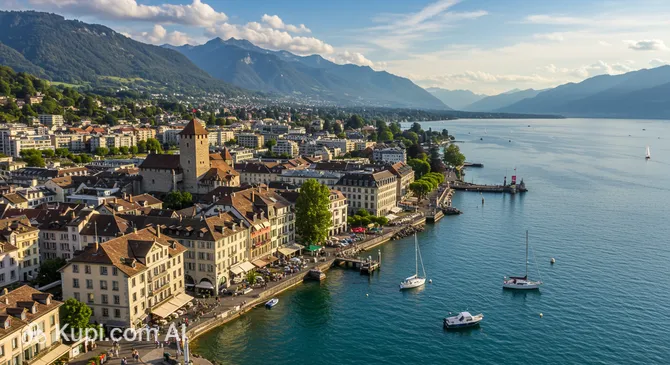
Nyon is an exquisite gem on the shores of Lake Geneva, where the majestic Alps are reflected in the azure water, and the famous La Côte vineyards stretch right up to the city quarters. This picturesque corner of Switzerland is perfect for those seeking a harmony of nature and sophisticated urban culture.

Geographically, the city occupies a favorable position exactly halfway between two major centers—Geneva and Lausanne, making it an excellent starting point for traveling around the region. Despite its status as an important administrative center, Nyon maintains a cozy and intimate feel, with a population of just over 20,000. The primary language of communication is French, which gives the local atmosphere a special charm and notes of European elegance.

Nyon. Illustration.
Source: Kupi.com AI

The city's uniqueness lies in the wonderful intertwining of eras. Walking along the cobbled streets, you will notice how the rich history of Nyon coexists with modernity. Tourists are invariably attracted to the majestic medieval castle towering over the city and the preserved ancient Roman ruins, reminding us of a distant past. At the same time, life here is in full swing: modern galleries, cozy wine bars, and vibrant music festivals all thrive.

Nyon is worth visiting for its unique mood, which combines cultural richness with a relaxed pace of life. It is a place where you want to linger: breathe the fresh lake air, admire the sunset, and enjoy local gastronomy in one of the cafes overlooking the lake.

Weather Overview

The climate in this region can be described as temperate, making trips pleasant in almost any season. Expect warm but not sweltering summers with periodic rain and cool winters, when temperatures hover around freezing. Thanks to the proximity of Lake Geneva, there are no sharp temperature fluctuations here.

Summer months, especially July and August, please visitors with comfortable warmth: average daytime highs reach 23°C. This is an ideal time for walks along the promenade and outdoor recreation. Winter here is mild; in January, the thermometer rarely drops below -1.7°C, while daytime temperatures stay around +1...+4°C, although high humidity can make the air feel nippier.

A characteristic feature of the local climate is the regularity of precipitation throughout the year. The number of rainy days varies from 12 to 19 per month, with May often being the cloudiest. To pack your suitcase correctly, we recommend checking what the weather in Nyon is expected to be for your travel dates and making sure to bring an umbrella or raincoat.

Average monthly temperature

Average monthly precipitation

Interesting Facts

Beyond the main attractions, Nyon holds many fascinating secrets revealed only to the most curious travelers. This city can surprise you with an unexpected combination of ancient history, sporting prestige, and local legends.

  • Roman Heritage: Nyon is one of the oldest cities in Switzerland, founded in ancient times under the name Noviodunum. Walking through the streets, you can stumble upon traces of the great empire: ruins of an amphitheater and forum have been preserved, and archaeological finds from the region are considered among the most valuable in the country.

  • Capital of European Football: The city plays a key role in world sports, as it is home to the UEFA headquarters. Nyon regularly becomes a hub for famous footballers and officials, as well as a venue for important draws and conferences.

  • Musical Phenomenon: Every year, the city transforms for the Paléo Festival—one of Europe's largest open-air music festivals. This event is famous for its eclectic program and special "Swiss vibe," gathering tens of thousands of music lovers on its green meadows.

  • Mystery of the Lake: Among locals, there is a legend that a mysterious creature lives in the waters off the shores of Nyon. This "lake mermaid" is jokingly called the Swiss answer to the Loch Ness monster, and stories about her add a touch of mystery to walks along the promenade.

  • Snow-White Symbol: The main architectural landmark is the 13th-century castle towering over the city. It is distinguished by its snow-white walls, which are unusual for medieval fortresses, and its ramparts offer a breathtaking panorama of Lake Geneva and the Alps.

How to Get There

Reaching this picturesque spot on the shores of Lake Geneva is quite simple thanks to the region's well-developed transport system. The city is conveniently located between Geneva and Lausanne, opening up many routes for travelers. You can find out more details about how to get to Nyon by exploring all available options, but most often tourists choose a flight to the nearest international airports followed by a short overland journey.

There is no airport in Nyon itself, so the main air gateway for travelers is Geneva Airport (IATA: GVA), located in the city of Geneva. This is a major international hub receiving flights from all over the world. It is located just 18.9 km from Nyon. The journey by taxi or transfer will take approximately 50 minutes, making this option the most convenient and fastest.

An alternative option is Lyon-Saint Exupéry International Airport (IATA: LYS), located in France near the city of Lyon. The distance to Nyon is about 114.7 km. The journey from here will take longer—expect to spend about 3 hours and 15 minutes traveling by car.

For convenience, here is summary information on the main airports:

AirportPassenger trafficDistance
Geneva Airport17.8 mln19 km
Sion35 92986 km
Chambéry Airport169 00087 km
Dole-Jura Airport125 14196 km
Bern Airport57 000113 km

Rail connections are another popular way to reach the region. If you plan to travel by long-distance train, keep in mind that the nearest major international hub to Nyon is in the neighboring city. You can arrive at Genève-Cornavin station (IATA: ZHT) in Geneva, which is located approximately 20.5 km from the center of Nyon. From Geneva station, you can reach your destination by taxi or bus in about 50 minutes, or use local regional trains.

Below is information about the nearest major railway stations:

StationPassenger trafficDistance
Geneva Railway Station42.1 mln20 km
Sion Railway Station4.5 mln88 km
Bern Railway Station69 mln111 km
Oerlikon Railway Station34.4 mln114 km
Lyon Part-Dieu Station40.1 mln127 km

Main Attractions

Despite its compact size, Nyon is rich in historical and cultural monuments. A walk through the city is like a journey through time: from ancient columns to luxurious residences of the Enlightenment. Here, every stone breathes history, and museums offer engaging interactive exhibitions that are interesting for both adults and children.

The absolute centerpiece of the historical center is Nyon Castle (Château de Nyon). This snow-white 12th-century fortress, perched on a hill, is visible from almost any point in the city and from the lake. Today, its walls house the Historical Museum and a unique Porcelain Museum, recalling that exquisite ceramics were once produced here. The castle terrace offers perhaps the city's best panoramic view of Lake Geneva and Mont Blanc, making it a mandatory stop on any excursion program.

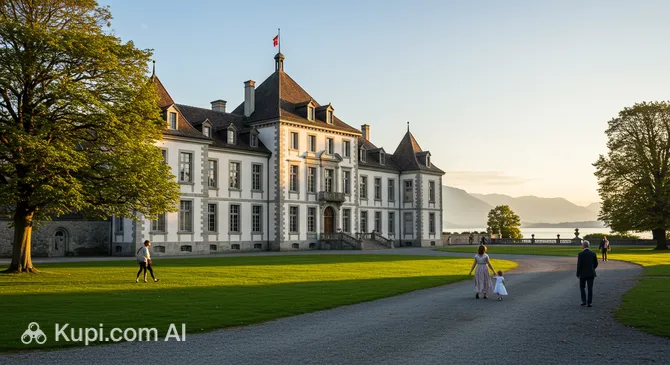
Prangins Castle. Illustration.
Source: Kupi.com AI

Traveler photos:

Just a few minutes' drive from the center lies another regional gem—the magnificent Prangins Castle. It is not just a beautiful building, but a branch of the Swiss National Museum. Built in the 18th century, the castle is surrounded by an extensive park and the country's largest historical vegetable garden, where forgotten varieties of fruits and vegetables are grown. Inside, visitors will find interiors that recreate the daily life of the Enlightenment aristocracy in detail, allowing for a total immersion in the atmosphere of the past.

Ancient history enthusiasts should visit the Roman Museum and the famous Roman columns at the Esplanade des Marronniers. Nyon was founded by Julius Caesar, and its ancient heritage is carefully preserved. Three Corinthian columns, remains of the ancient forum, have become the city's unofficial symbol. The museum itself, located in the foundations of a 1st-century AD basilica, houses a rich collection of amphorae, coins, and mosaics found during excavations in the surrounding area.

Local Cuisine

Nyon's culinary scene is a true celebration of taste, where Swiss traditions harmoniously intertwine with French influences. The region's main delicacy is undoubtedly fresh fish from Lake Geneva. While here, be sure to order the tender perch fillets (filets de perche), often served with lemon sauce and fries. No less popular are dishes made from local trout and pike-perch, and for those who like cold appetizers, exquisite lake fish tartare is often found on restaurant menus.

For those wanting to warm up after a walk along the promenade, local establishments offer Alpine classics: fondue and raclette. These hearty dishes are made from flavorful cheeses produced in neighboring villages and are perfect for a leisurely dinner with friends or family.

Café Ex Machina. Illustration.
Source: Kupi.com AI

Traveler photos:

Nyon is the center of the La Côte wine region, so it is customary to accompany a meal here with a glass of local wine. The surrounding slopes are covered with vineyards producing excellent white and red varieties. You can get to know the region's wine list in the city's numerous bars or by going for a tasting directly at the winemakers'. In addition, gastronomic festivals and harvest celebrations take place throughout the year, attracting gourmets from all over the area.

The food culture in the city is diverse: from lively street markets to cozy restaurants. On weekends, you can try farm cheeses, homemade pies, sausages, and seasonal fruits at local fairs. If you are looking for a place for a full lunch, check out Ex Machina Cafe, known for its pleasant atmosphere. Guests of the city are also warmly welcomed at Terrenal Restaurant, where you can appreciate the skill of local chefs.

Travel Tips

A trip to Nyon promises to be comfortable and memorable if you consider a few local features of this cozy Swiss town in advance. To help you feel confident and enjoy your vacation without being distracted by everyday details, we have prepared a list of practical recommendations.

  1. Clothing and Footwear: The historical center of the city is paved with old cobblestones, so be sure to bring comfortable flat shoes—heels will be out of place here. The weather by the lake is changeable: even in summer, evenings can be cool due to the breeze, so bring a windbreaker or a light sweater. It’s worth having an umbrella or raincoat with you in any season.
  2. Transport: Nyon is compact, and its historical part is best explored on foot. For trips to the surrounding areas or neighboring cities, the SBB train system is ideal—they run exactly on schedule. If you are staying at a hotel, be sure to ask about the Nyon Region Transport Card (or Explore card)—it is often given to guests for free and entitles you to free travel on the region's public transport.
  3. Finances: The country's currency is the Swiss franc (CHF). Although Visa and Mastercard are accepted almost everywhere, from restaurants to ticket machines, it is recommended to have a small amount of cash (coins) for parking or street market purchases. Tips are usually already included in the bill, but rounding up the amount is considered good etiquette.
  4. Health and Safety: Nyon is a very safe city where you can walk peacefully even at night. The tap water here is of excellent quality, and water from street fountains (unless there is a sign "Eau non potable") is drinkable. This will help you save money: just carry a reusable bottle with you. Pharmacies operate on a standard schedule; emergency pharmacies can be found by the sign with a green cross.
  5. Communication and Language: The main language is French. Locals appreciate it when tourists start a conversation with a polite "Bonjour" (Good day), even if you then switch to English, which is well understood here. Note the power outlets: Switzerland uses Type J (three pins), so you may need a special adapter, as standard European plugs (Type C) fit, but thick "Europlugs" (Type F) do not.
  6. Local Etiquette: Swiss people value politeness and restraint. When entering a small shop or an elevator, it is customary to greet those present. On public transport, especially on trains, try not to talk loudly on the phone or make noise, so as not to disturb your fellow travelers.
  7. What to Avoid: Do not attempt to ride without a ticket on public transport—fines here are very high, and inspections can be sudden. Also, avoid loud noise on Sundays and after 22:00 on weekdays—observing quiet hours is an important part of Swiss community culture.
  8. Useful Hack: If you want to see the surroundings from the water, use the historical paddle steamers of the CGN company. This is not just transport, but a real attraction. From Nyon, you can take a short and scenic 20-minute boat trip to the opposite shore of the lake, to the French village of Yvoire.

We hope these tips help you plan the perfect trip to Nyon. Enjoy the Alpine views, fresh lake air, and the unique atmosphere of the Swiss Riviera!

Entertainment & Nightlife

Entertainment: Nyon's nightlife differs from that of noisy metropolises: you won't find massive nightclubs with laser shows open until dawn here. Instead, the city offers an elegant culture of "après-ski" and "apéro"—evening relaxation with a glass of wine or a cocktail in a cozy atmosphere. The evening life focuses on socializing, gastronomy, and live music, attracting local intellectuals and expats alike.

In the evening, the focus of attraction centers on two main areas: the Quartier de Rive promenade and the historical center in the upper part of the city. In summer, the promenade turns into one large open-air bar: terraces fill with people enjoying the sunset over Lake Geneva. A relaxed atmosphere reigns here, filled with laughter and the clinking of glasses. In the colder months, life moves into the warm pubs and wine cellars of the old town, which often host jazz and rock music concerts.

An ideal evening in Nyon usually begins with a leisurely dinner. Gastronomy is a vital part of the entertainment. We recommend booking a table at Terrenal Restaurant. This establishment is famous for its cuisine and pleasant environment, perfect for long conversations before heading out to the bars. For a more informal meeting or an early evening, Ex Machina Cafe is a popular choice among locals for its stylish interior and quality coffee that transitions into evening drinks.

Music lovers and those looking for more active recreation should check out the Usine à Gaz cultural center. Located in a former gas plant in the Rive district, it is the heart of the city's alternative culture, hosting concerts, theater productions, and themed parties. Irish and English-style pubs are also popular in the city, where you can watch sports broadcasts and enjoy a pint of beer in good company.

Practical tips for night owls:

  • Opening hours: Bars are usually open until 00:00 or 01:00 on weekdays and until 02:00 on Fridays and Saturdays. It’s best to arrive around 20:00–21:00 to get good seats.
  • Prices: Be prepared for Swiss prices. A cocktail will cost on average 15–22 CHF, a glass of wine 7–12 CHF, and a beer 8–10 CHF.
  • Dress code: Smart casual is appropriate everywhere. In Nyon, elegant nonchalance is appreciated, avoiding excessive flashiness.
  • Safety and transport: Nyon is exceptionally safe at night. You can walk along the promenade or return to your hotel on foot without worry. If you stay out very late, it’s better to call an Uber or a local taxi, as buses stop running around midnight. On weekends, night trains run toward Geneva and Lausanne.

Daytime entertainment in Nyon is equally diverse. Besides walking through parks and museums, the city offers excellent shopping opportunities. In the very center is the La Combe shopping mall, where you can find both famous brands and local boutiques. If you're looking for larger-scale shopping, head to the Signy Shopping Center on the outskirts of the city—it offers a huge selection of shops for every taste.

Parks & Museums

Nyon harmoniously combines natural beauty with a rich cultural life, offering guests well-maintained green spaces and exhibitions of national significance. The city carefully preserves its heritage, allowing travelers to literally step from one historical era into another while enjoying fresh air and picturesque landscapes.

Among the green zones, a special place is held by the Esplanade des Marronniers. This spacious terrace, planted with century-old horse chestnut trees, is situated on an elevation and offers breathtaking views of Lake Geneva and the Alps. Many city festivals are held here, and on ordinary days, it is the perfect place for a quiet break with a book or a picnic against the backdrop of the famous Roman columns.

For lovers of landscape art, Prangins Castle is a must-visit. The surrounding park is not just a green area, but a true open-air museum. It features a reconstructed historical vegetable garden from the 18th century, where old varieties of vegetables, fruits, and medicinal herbs used by Enlightenment aristocrats are grown. A walk along these alleys teaches as much about botanical traditions of the past as a tour of the castle halls.

The city's cultural map would be incomplete without the Musée du Léman (Lake Geneva Museum). This unique institution is entirely dedicated to the lake: from its geology and ecology to the history of shipping and fishing. Large aquariums showcase local fauna, and the halls display models of historical vessels and even bathyscaphes of the famous explorer Auguste Piccard. The museum is especially interesting for families with children and those wanting to understand the soul of this region.

Another important point of attraction is the Roman Museum (Musée Romain). It is uniquely located right inside the foundations of an ancient 1st-century AD basilica. Descending into the museum is like entering the underground world of ancient Noviodunum. The exhibition masterfully tells the story of daily life for Romans through household items, jewelry, and tools found by archaeologists in the city's surroundings.

The historical appearance of Nyon is shaped not only by museums but by architecture itself. The majestic five-towered castle remains the dominant feature, but the preserved sections of the fortress walls and the recently discovered ruins of the Roman amphitheater are no less impressive. These monuments serve as a reminder of the city's strategic importance over millennia.

For those looking for unconventional routes, we recommend a walk along the Toblerone Path (Sentier des Toblerones). This walking trail follows the line of defensive fortifications from World War II, whose concrete blocks resemble the famous chocolate. The trail stretches through shady forests and fields along the river, connecting history with the beauty of wild nature.

Getting Around

The transport system in Nyon is organized with the precision and comfort typical of the region. The city is compact enough that the historical center and promenade are best explored on foot. However, if you need to reach outlying areas, vineyards, or neighboring villages, the local public transport network will be your reliable assistant. It is integrated into the general Vaud canton system, making travel seamless and understandable.

The backbone of urban transport consists of TPN buses (Transports publics de Nyon). The route network covers not only the city itself but also connects it to the suburbs of the La Côte region. Buses run strictly according to the schedule, which can be found at every stop or in a mobile app. During peak hours, the interval is 10–15 minutes, while in the evenings and on Sundays, services may be less frequent, so plan your trips in advance.

Rail connections deserve special mention. Nyon's central station is a major hub from which SBB trains depart toward Geneva and Lausanne. But for tourists, the local narrow-gauge NStCM railway is much more interesting. The bright red trains, departing from a separate platform at the station, take passengers up into the Jura Mountains to the resort of Saint-Cergue. This is not just transport, but a true panoramic attraction: in 40 minutes of travel, you will see stunning views of the lake and Alpine peaks.

As the city sits on the water, CGN ships are an important part of the transport infrastructure. The famous white vessels, including historical paddle steamers, cruise Lake Geneva. For locals, this is a standard way to reach, for example, the French village of Yvoire on the opposite shore (only a 20-minute trip), and for tourists, it's an opportunity to combine a commute with a beautiful boat trip.

The fare payment system here is unified and part of the Mobilis tariff zone. This means one ticket is valid for the train, bus, and even tram (if you go to neighboring cities) within the selected zones. Tickets must be purchased before boarding. Bus drivers do not sell tickets. You can buy them at machines at the stops (which accept cards and coins) or through mobile apps like SBB Mobile or FAIRTIQ, which is much more convenient.

The main hack for tourists staying in hotels, hostels, or campsites in Nyon is the free Nyon Region Transport Card (often called the Carte Explore). It is issued upon check-in and entitles you to unlimited travel within a vast mobility zone, including buses and trains to certain stations. Be sure to check for the availability of this card at reception, as it allows for significant budget savings.

If you prefer individual transport, the PubliBike bike-sharing system is popular in the city. Stations with regular and electric bikes are scattered throughout the city, including at the station and on the promenade. This is a great way to ride along the lake with the wind in your face. On the other hand, taxis in Nyon are an expensive pleasure. It's better to order a car through apps (like Uber) or by phone, as hailing a taxi on the street is not common practice here.

Accommodation

In Nyon, despite its compact size, travelers will find a decent choice of accommodation that meets high Swiss standards. There are no massive "all-inclusive" resort complexes here; instead, cozy boutique hotels, modern business hotels, and comfortable apartments predominate. Accommodation options range from functional mid-range rooms to more exquisite offerings with historical charm. Budget travelers should be prepared for the fact that there are almost no hostels here, so small guest houses (B&Bs) or staying in the nearby suburbs can be an alternative.

The most attractive area for tourists is the historical center and the picturesque Rive district right at the water's edge. Staying here puts you within walking distance of the medieval castle, restaurants, and the pier where lake boats depart. This is an ideal choice for romantic trips and a leisurely pace. If your goal is convenient logistics and frequent trips to Geneva or Lausanne, it is more practical to choose a hotel near the railway station. This will save you from having to climb a steep hill with luggage and save time on commutes.

Accommodation prices in Nyon correspond to the general level of the Lake Geneva region—they can be described as "medium" and "high." It is difficult to find truly cheap lodging here. Important booking tip: plan your trip in advance. This is critical if your visit coincides with major events, such as the Paléo music festival in July or important meetings at the UEFA headquarters. During these times, the demand for housing is colossal, and rooms are booked months in advance. For booking, it is most convenient to use major international online platforms that offer the widest range of options with current prices.

Nearby Cities

For those who want to explore the surrounding area, Nyon serves as an excellent starting point for day trips to several interesting nearby places:

Geneva—a cosmopolitan center located just a 15-minute train ride away. This city is world-famous as the capital of diplomacy and watchmaking. Travelers can enjoy walks along the lakeshore with views of the famous Jet d'Eau fountain, the narrow streets of the Old Town, and numerous parks. It is an ideal place for those who want to combine shopping with a rich cultural program.

Lausanne—a picturesque city built on three hills and holding the title of the Olympic Capital of the World. The Olympic Museum and IOC headquarters are located here. The city attracts visitors with its majestic Gothic cathedral, the lively atmosphere of its student center, and the beautiful Ouchy promenade, where you can enjoy views of the Alps and relaxed recreation.

Carouge—this unique town bordering Geneva is often called the "Swiss Greenwich Village." Built by the King of Sardinia, it has preserved Mediterranean architecture unusual for the region. It’s worth visiting for its special bohemian atmosphere, artisan workshops, cozy bistros, and magnificent farmers' markets.

CityPopulationDistance
Gland13 1065 km
Divonne-les-Bains9 9518 km
Versoix13 42212 km
Gex13 12115 km
Ferney-Voltaire10 02617 km

These nearby destinations provide insight into the diverse culture and landscapes of the region.

Shopping & Souvenirs

General Overview: Shopping in Nyon is more of a pleasant addition to sightseeing than an exhausting marathon. The city does not claim to be a fashion capital, yielding that title to neighboring Geneva, but it offers a special atmosphere of comfort and quality. The range of shops varies from international chain brands to charming family-owned boutiques where owners personally know their regular customers. It is an ideal place to buy local products, high-quality clothing, and unique interior items in a peaceful setting.

Main Shopping Streets: The main shopping artery runs through the pedestrian zone in the historical center. Take a stroll along Rue de la Gare and the adjacent Rue Perdtemps. Clothing stores, opticians, bookstores, and perfume boutiques are concentrated here. The narrow cobbled streets descending to the lake hide small art galleries and antique shops that will appeal to connoisseurs of rare items.

Shopping Centers: For those who prefer to do all their shopping in one place, the La Combe shopping mall is located in the very heart of the city. It is a convenient medium-sized complex where you can find a supermarket, fashion boutiques, electronics, and a pharmacy. Thanks to its glass roof, the interior is always bright and cozy, making it an excellent refuge on a rainy day.

If you are interested in larger-scale shopping, it is worth driving a bit outside the center toward the highway exit where the Signy Shopping Center is located. This is a large mall with a massive hypermarket, sports goods stores, toys, and home goods. It is easy to reach by car or via the local NStCM railway, with a stop right next to the entrance.

Markets: Market culture is an important part of city life. Every Wednesday and Saturday morning, Nyon's center comes alive with a food market. Here, farmers from the surrounding area sell fresh cheeses, vegetables, flowers, and homemade baked goods. Special mention goes to the famous flea market (Les Puces de Nyon), which takes place on the lakeshore promenade on the last Sunday of every month (except in winter). This picturesque event attracts collectors from all over Switzerland, and you can find real treasures against the backdrop of magnificent Alpine landscapes.

Souvenirs: From your trip, it’s worth bringing back things for which the region is famous. First and foremost are the white wines made from Chasselas grapes grown on the local La Côte slopes. Those with a sweet tooth will enjoy chocolate sets from local chocolatiers (for example, chocolate "fish" from the lake). Nyon is also historically known for its porcelain, so high-quality ceramics or replicas of antique items from the local museum make exquisite gifts.

Opening Hours and Payment: Most shops are open Monday through Friday from 09:00 to 18:30 or 19:00. On Saturday, the working day usually ends earlier, around 17:00 or 18:00. Sunday is a closing day for all shops except small stalls at the station and bakeries. Swiss francs and bank cards are widely accepted, but it is better to have cash for street markets.

Tax Free: Tourists residing permanently outside Switzerland can reclaim VAT (about 7.7%) on purchases over 300 francs in a single store. Be sure to ask for a Tax Free check at the checkout and present it along with your passport and purchases at customs when leaving the country.
Reached the end of the page?

That means the route is fully explored