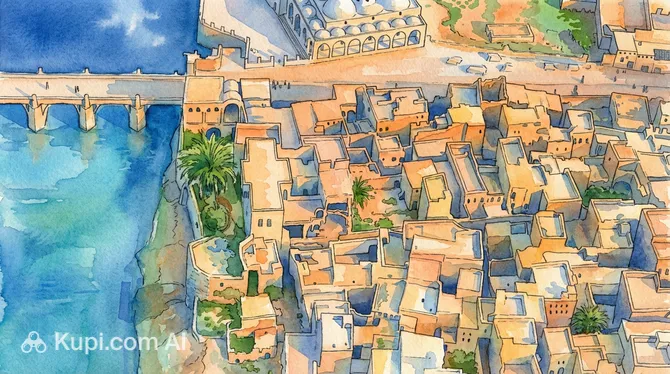
Deir ez-Zor is the largest city in eastern Syria and an important administrative center, stretching along the picturesque banks of the legendary Euphrates River. It is often called the "pearl of the desert" for its unique location in an oasis amidst the vast sands of Mesopotamia. Officially founded in 1867, the city served for a century and a half as a key transport hub connecting the western regions of the country with the river valley.
Deir ez-Zor. Illustration.
Source: Kupi.com AI
Geographically, Deir ez-Zor is located approximately 450 kilometers northeast of Damascus. Life here is inextricably linked to the Euphrates, which not only provides the city with water but also tempers the harsh desert climate. In the city's history, industrial significance related to salt and oil extraction has always harmoniously coexisted with the traditional way of life of a river port, attracting engineers and researchers from all over the world.
For the traveler, this city is primarily interesting as a gateway to the great archaeological treasures of antiquity located in its vicinity. Despite its industrial character, Deir ez-Zor maintains a special atmosphere with its riverside restaurants and the slow pace of life by the water. A visit to this region offers a rare opportunity to see Syria from a different side—dynamic, river-oriented, and inextricably linked to the ancient paths of Mesopotamia.
Weather Overview
The climate of Deir ez-Zor is characterized as semi-arid, typical of the Mesopotamian plains. Summers in the city are very hot and dry: in July and August, the thermometer often rises above +40°C. However, thanks to the proximity of the Euphrates, a special microclimate is created in the riverside zones, making evening walks by the water quite pleasant.
Winters in the region are mild and short. The coldest month is January, with an average temperature of about +9°C, while night frosts are extremely rare. Most precipitation falls between November and March, but the total amount is small, so most days of the year remains sunny.
If you are planning a visit, the best time to travel is spring (March–April) or autumn (October–November), when the weather is comfortably warm. More detailed information about the current weather in Deir ez-Zor and forecasts for different seasons can be found in our special section.
Average monthly temperature
Average monthly precipitation
Interesting Facts
The name Deir ez-Zor translates as "Monastery of the Grove," referring to early Christian communities that settled in these fertile river valleys.
The local archaeological museum once housed unique artifacts from the ancient city of Mari, including cuneiform tablets over 4,000 years old.
For a long time, the city's symbol was the majestic suspension bridge over the Euphrates, built by French engineers in 1930 for pedestrian traffic between the banks.
Deir ez-Zor is considered the "oil capital" of the region, as the main fields supporting the economy of the eastern part of the country are concentrated here.
In the vicinity of the city lies Jabal Bishri—a mountain range mentioned in ancient sources as the homeland of the Amorite tribes.
How to Get There
Transport connections to the country's eastern capital are primarily carried out via land routes and aviation. Deir ez-Zor is an important logistical hub connecting the Euphrates valley with the central and northern regions of Syria. Detailed information on routes and schedules can be found in the section How to get to Deir ez-Zor.
The main air gateway to the city is Deir ez-Zor Airport (IATA: DEZ). It serves regular domestic flights, including from Damascus, which take about an hour. This is the fastest and most comfortable way to reach the region, given the significant distances across desert territories.
The main flow of passengers arrives in the city by bus and service taxis. The popular M4 highway connects the city with Damascus (about 450 km) and Aleppo. A trip by comfortable bus from the capital takes between 5 and 7 hours. For traveling to the surrounding archaeological sites, renting a 4x4 vehicle or hiring private drivers is recommended.
Station
Passenger traffic
Distance
Gökçe Train Station
1
214 km
Nusaybin railway station
3
217 km
Aleppo railway station
5
286 km
Diyarbakır railway station
5
287 km
Batman railway station
1
296 km
Main Attractions
The main treasures of the Deir ez-Zor region lie outside the city blocks, along the fertile Euphrates valley. One of the most impressive attractions is the ruins of Dura-Europos—an ancient city often referred to as the "Pompeii of the Desert." Here, researchers find a unique blend of Greek, Roman, and Parthian cultures preserved within ancient walls, temples, and frescoes.
Equally interesting are the archaeological complexes of Halabiye and Zalabiye, located on opposite banks of the river. These ancient fortifications, built during the Byzantine era, are striking in the scale of their walls and towers, which still rise above the desert landscape. A walk along the Euphrates in these areas allows you to feel the spirit of history and appreciate the strategic importance of these outposts on the Great Silk Road.
The Euphrates River itself is the central point of attraction within the city. The promenade areas along the waterfront are ideal for experiencing the local flavor. Although the famous French-built suspension bridge from the early 20th century now remains only in memories and old photographs as a symbol of the city, the panoramic views of the river and its islands remain the primary aesthetic value of Deir ez-Zor.
Local Cuisine
The gastronomic scene in Deir ez-Zor is a true feast for lovers of Middle Eastern cuisine, complemented by unique local accents. The main feature is the wide use of fresh fish caught in the waters of the Euphrates, which is often grilled over charcoal here. Riverside fish restaurants are a must-visit for any gourmet.
Besides the gifts of the river, local cuisine is famous for its juicy lamb dishes. You should definitely try mansaf—a festive dish of rice and meat with aromatic spices—as well as classic Arabic kebabs. Great emphasis is placed here on fresh vegetables and herbs supplied from farms in the river valley. Traditional meze appetizers and freshly baked flatbreads complement any meal.
In the beverage culture of Deir ez-Zor, strong Arabic coffee with cardamom and sweet black tea served in small glass cups dominate. Freshly squeezed juices from seasonal fruits can also be found at local markets. Dining usually takes place in cozy family-run establishments or in hotel restaurants where age-old traditions of Eastern hospitality are observed.
Travel Tips
Visiting Deir ez-Zor is a unique experience of immersion into the authentic atmosphere of the East. To make your trip as comfortable as possible, we have prepared some practical tips.
Clothing and Protection: Consider the hot desert climate. Bring light clothing made of natural fabrics, but remember the modest dress code: shoulders and knees should be covered. Sunglasses, a hat, and sunscreen are essential.
Transport: Use taxis for moving around the city—it is convenient and affordable. For trips to remote archaeological sites, it is better to rent a car with a local driver who knows the roads.
Finances: The main currency is the Syrian pound. Cards are rarely accepted, so always have an adequate supply of cash. It is best to exchange money at official points or banks.
Health: Drink only bottled water. Due to the heat and dust storms, always carry hand sanitizer and a basic first aid kit. In summer months, avoid long walks at noon.
Communication: The official language is Arabic. English is spoken by staff at major hotels, but it will be useful to learn a few basic phrases. You can buy a local SIM card at operator offices in the center.
Etiquette: Be prepared for traditional hospitality. Refusing an offered tea might be seen as a slight awkwardness, but a polite "no" will always be understood.
What to Avoid: Do not photograph government institutions, official facilities, or bridges—this may cause questions from security services.
Special Tip: Try to be on the waterfront at sunset—it is the most beautiful time, when the city comes alive and the Euphrates is painted in golden tones.
May your journey to this ancient land be filled with discoveries and warm encounters with the local people!
Entertainment & Nightlife
Leisure in Deir ez-Zor is traditionally centered around the natural wealth of the Euphrates River. Unlike major metropolises, there is no typical nightclub industry here; however, evening life thrives in numerous cafes and restaurants on the waterfront. Locals and guests alike prefer to spend time by the water, enjoying the evening breeze and traditional tea sessions under the open sky.
An important part of the city's social life is sporting events. The Deir ez-Zor Municipal Stadium is the main gathering place for football fans, where matches turn into genuine city-wide celebrations. For those who prefer cultural leisure, the city periodically hosts public events and festivals reflecting the traditions of eastern Syria.
Daytime entertainment includes strolling along the central shopping streets and visiting park areas by the river. While the entertainment infrastructure is primarily oriented toward the local population, tourists will find a welcoming atmosphere and an opportunity to immerse themselves in the authentic rhythm of life in a Syrian city far from mass tourist trails.
Parks & Museums
The primary cultural center of the region for many years was the Deir ez-Zor Museum. This is one of the largest repositories of antiquities in Syria, with an exhibition covering a vast span of time—from prehistoric times and the Neolithic era to the Islamic period. Of particular value are the finds from Mari and other Mesopotamian settlements, which tell the story of the birth of writing and the first states in human history.
As for park areas, the Euphrates waterfront serves as the city's main "lungs." Here you will find walking paths and small squares where locals relax in the shade of trees. River islands within the city limits also represent natural spots with lush vegetation that contrasts with the surrounding desert landscapes.
Despite the fact that Deir ez-Zor is located in an arid zone, the valleys near the city are surprisingly fertile. A walk to the riverside farmlands can be a sort of excursion into a "green paradise" where dates, grains, and vegetables are grown. This combination of historical heritage in museums and the natural beauty of the great river makes exploring the city multifaceted and interesting.
Getting Around
The transport system of Deir ez-Zor is simple and effective for moving within the compact center and traveling to adjacent areas. The basis of urban transport consists of buses and numerous service taxis, locally known as "servees." They connect residential neighborhoods with the central market, the waterfront, and the airport district.
For tourists, the most convenient way to get around is by taxi. Cars are easy to find on the streets, and a trip across the city is inexpensive. It is worth noting that during peak hours—in the morning and at the end of the workday—small traffic jams can occur on the bridges over the Euphrates. It is better to agree on the price of the trip with taxi drivers in advance, as meters are not always used.
Since the city is stretched along the river, many interesting locations are within walking distance of each other. Strolling through the central streets allows you to better feel the rhythm of life in Deir ez-Zor. If you are planning a trip to distant ruins like Dura-Europos, the best solution would be to rent a car with a driver for the whole day.
Accommodation
The hotel infrastructure in Deir ez-Zor is geared toward both business travelers connected to the energy sector and tourists exploring the ruins of Mesopotamia. Most high-quality accommodation is concentrated along the banks of the Euphrates, which guarantees guests not only pleasant views but also fresh river air on hot days.
Among the most prominent accommodation options are large hotels such as Furat al-Sham and Badiyat al-Sham. These hotels offer a level of service close to international standards, including traditional cuisine restaurants, conference rooms, and landscaped grounds. For those who prefer more budget-friendly options, small hotels and apartments offering a basic set of amenities operate in the city center.
When planning a trip, it is recommended to book accommodation in advance, especially if your visit coincides with major regional events or the archaeological expedition season. Overall, the price range in Deir ez-Zor remains moderate, and the hospitality of the staff makes a stay in this desert oasis comfortable and safe.
Nearby Cities
Deir ez-Zor is an ideal starting point for those who want to explore the undiscovered corners of eastern Syria. Its favorable location on the river allows for fascinating day trips to cities and archaeological sites hidden in the Euphrates valley.
Just 47 kilometers away is the city of Al-Mayadin, famous for its Rahba Castle towering over the desert. It is also worth visiting Al-Asharah, located further downstream. These trips allow you to see the real life of the Syrian provinces and visit important historical sites in just one day.
City
Population
Distance
Al-Mayadin
48 922
47 km
Dhiban
9 000
51 km
Al-Asharah
17 537
60 km
Hajin
37 935
97 km
Shaddadi
15 806
97 km
Exploring the surroundings of Deir ez-Zor is a journey through the centuries, from ancient fortresses to modern agricultural oases. Traveling these roads offers unforgettable views of the Euphrates and the chance to touch the heritage of civilizations that flourished here thousands of years ago.
Shopping & Souvenirs
Shopping in Deir ez-Zor is primarily an immersion into the atmosphere of traditional Eastern bazaars. The city does not have large modern shopping centers, but it more than compensates for this with the flavor of its markets. Main trade is concentrated in the central blocks and near the waterfront, where the region's trade routes have converged for centuries.
The main treasures of the local markets are spices, herbs, and agricultural products from the Euphrates valley. Here you can purchase unique varieties of dates, local honey, and aromatic oils. Special attention should be paid to textiles: the works of local artisans, including traditional scarves and embroidery, make excellent souvenirs reflecting the culture of eastern Syria.
For those looking for mementos related to the history of the region, there are shops selling archaeological-themed souvenirs and copperware. Shops are usually open from early morning until late evening with a break during the hot midday hours. Cash in the local currency is the accepted payment method in most outlets, and the process of buying at the market is often accompanied by friendly bargaining.