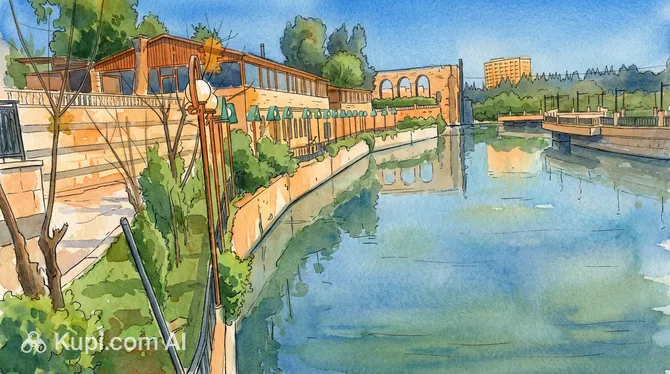
Stretching across the banks of the ancient Orontes River, Hama is one of the most distinctive cities in Syria. With a population of about 697,000, this city harmoniously combines its status as an important agricultural center with the atmosphere of a cozy provincial oasis. Unlike bustling metropolises, serenity reigns here, and the air is filled with the freshness of river spray and the scent of blooming gardens.
The main symbol and unique feature of the city are the majestic norias—huge wooden water-lifting wheels with diameters reaching up to 20 meters. For millennia, these ancient engineering masterpieces provided water to the city's gardens and homes; today, they serve as aesthetic ornaments for the embankments, creating a unique soundscape with their rhythmic creaking.
Hama. Illustration.
Source: Kupi.com AI
Exploring the history of Hama reveals layers of many civilizations to the traveler. Walking through the narrow streets of the old city, one can see elegant mosques, traditional markets, and the majestic Azem Palace. Hama invites those who appreciate an authentic Oriental atmosphere, peaceful walks by the water, and the hospitality of locals ready to share the secrets of their ancient land.
Weather Overview
The climate in Hama is Mediterranean with distinct seasons. Summer here is hot and dry: in July and August, the mercury often rises to +36°C and above, and precipitation is practically absent during this period. However, the proximity of the Orontes River and the abundance of gardens create a milder microclimate in the central areas, bringing long-awaited coolness in the evenings.
Winters in the city are mild and rainy. In January, the coldest month, the average temperature is about +9.4°C, while during the day the air can warm up to +14°C and drop to +5°C at night. Most of the annual precipitation falls specifically in the winter period, which is important to consider when planning walks. Detailed information about the current city climate and forecast can be checked on specialized resources.
Spring and autumn are considered the most favorable seasons for visiting. At this time, Hama enjoys comfortable temperatures ranging from +18°C to +25°C, and nature flourishes, filling the gardens with bright colors. This is the perfect time to see the norias surrounded by greenery and enjoy walks along the embankment without the exhausting heat.
Average monthly temperature
Average monthly precipitation
Interesting Facts
Hama is a city with an amazing destiny, whose roots go back to deep antiquity, hiding many curious details.
Ancient Heritage: Hama is mentioned in the Bible as the capital of the prosperous Kingdom of Hamath, making it one of the oldest continuously inhabited cities in the world.
Wheels of Time: The first norias appeared here as early as 1100 BC. During its heyday, there were about 120 of them, and 22 unique wheels have survived in working condition to this day.
Musical Mosaic: The local art museum houses a rare 4th-century Roman mosaic depicting a female musical ensemble using ancient instruments such as the hydraulis (water organ).
Dynastic Footprint: The famous Azem Palace in Hama was built by order of a local governor who later became the ruler of Damascus and built a similar, even more luxurious palace there.
Garden City: Thanks to the system of norias, the city was surrounded by dense gardens for millennia, which created a unique cool microclimate even in the strongest heat.
How to Get There
Hama can be reached via the country's main transport hubs, as the city is conveniently located on the main highway connecting the north and south. There is no direct air service to the city itself, so travelers usually use the airports of the nearest major centers. Information on how to get to Hama in the most convenient way will help you plan your route and find travel details.
The main air gateways are the international airports of Damascus (about 209 km from Hama) and Aleppo (approximately 120 km). From these cities, you can reach Hama by comfortable intercity buses or taxis. The journey from the capital takes about 3-4 hours, while from Aleppo it can be reached in 2-3 hours, enjoying views of the Syrian landscapes along the highway.
Railway service in the region is periodically updated, and Hama station is an important point on the train route between Homs and the northern provinces. Traveling by train allows you to see the country from a different perspective, although buses remain a faster and more flexible option. From neighboring Homs, which is only 47 km away, the journey by bus or shared taxi will take no more than an hour.
Station
Passenger traffic
Distance
Aleppo railway station
5
124 km
Beirut Railway Station
5
178 km
Beirut Railway Station
5
178 km
Qadam railway station
2
189 km
Gaziantep railway station
5
222 km
Main Attractions
The main treasures of Hama are its famous norias, the water wheels on the Orontes River. Each of these giant structures has its own name and unique history. A walk along the embankment allows you not only to see them in action but also to enjoy the picturesque views that make the city's appearance so recognizable. Cozy park areas are located near the river, where you can relax in the shade of trees.
The city's architectural heritage is represented by magnificent religious buildings. Be sure to visit the Great Mosque (Al-Jami al-Kabir), which during its long history has served as a Roman temple and a Byzantine church. Also noteworthy are the Abu al-Fida and Al-Nuri mosques, the latter built in the 12th century, striking in its austere beauty and elegant minaret.
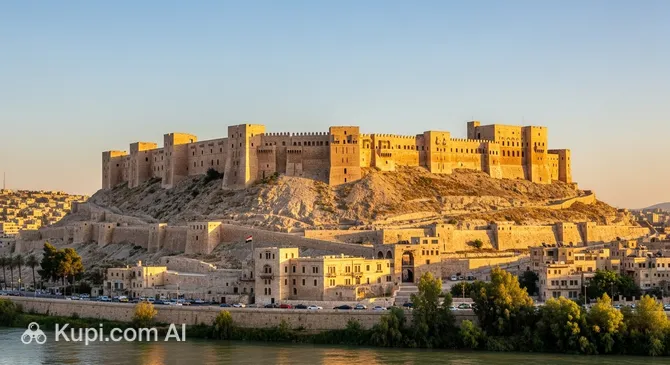
Hama Citadel. Illustration.
Source: Kupi.com AI
Traveler photos:
Another important site is Hama Castle, or the citadel, overlooking the city. Although time has not spared many of the fortifications, the castle grounds remain a significant historical site. Don't forget to look into the Azem Palace—a magnificent example of 18th-century Ottoman architecture, whose halls now house a museum demonstrating the life and culture of the region.
Local Cuisine
The cuisine of Hama is the quintessence of Syrian culinary traditions, where fresh products from local gardens and the Orontes River valley play the main role. The menu is based on succulent lamb dishes, an abundance of vegetables, legumes, and aromatic spices. The city's gastronomic scene is simple and authentic, focused on preserving classic recipes.
Be sure to try the local kebab, which is prepared here with great care, as well as traditional appetizers: creamy hummus, spicy eggplant mutabal, and crispy falafel. Fans of pastries will enjoy sambouseks—small pies with meat or cheese filling. Finish your meal with the famous Oriental sweets for which the region is renowned.
As for drinks, strong Arabic coffee with cardamom and sweet tea with a sprig of fresh mint are drunk everywhere in Hama. On hot days, freshly squeezed fruit juices are a lifesaver. Most establishments are concentrated around the Souk market and the embankment, where you can enjoy lunch in the shade of trees while admiring the view of the river and Hama Castle rising nearby.
Travel Tips
Planning a trip to Hama is a step towards authentic Oriental hospitality and ancient history. These practical tips will help you make your journey comfortable and fulfilling.
Clothing and Dress Code: Choose modest and covered clothing, especially when visiting mosques and old quarters. Comfortable shoes are a must, as the streets of the old city often have uneven surfaces. In summer, don't forget a hat and sunscreen.
Getting Around Town: It's best to move on foot in the center. For longer trips, use yellow taxis—they are accessible and inexpensive. Ride-hailing apps may not work, so hail a car right on the street.
Finances: The main currency is the Syrian pound. Bring enough cash with you, as international bank cards are practically not accepted in the city. It is better to exchange currency at official points in major banks.
Safety and Health: Hama is considered a peaceful city, but always stick to crowded places and avoid walking in industrial outskirts. Drink only bottled water and always have a basic first-aid kit with you.
Language and Communication: The main language is Arabic. English is limited, so learn a few basic phrases ("Shukran" for thank you, "Salam" for hello). Locals are very friendly and always try to help.
Local Etiquette: Be sure to remove your shoes when entering a mosque. In communication, show politeness and do not rush—measured pace is valued in the East. Don't hesitate to haggle at the market; it's part of the culture.
What to Avoid: You should not photograph government institutions, military facilities, and bridges without explicit permission. Also, avoid political discussions to prevent awkward situations.
Best Time to Visit: The ideal time is spring (April-May) or autumn (September-October), when the temperature is comfortable for long walks by the river and viewing the norias.
Following these simple rules will allow you to fully enjoy the charm of this ancient city and take only pleasant memories home with you.
Entertainment & Nightlife
Entertainment in Hama is of a quiet and family-oriented nature, which perfectly matches the city's overall atmosphere. The main center of social life is the Orontes River embankment and the adjacent Norias Park. Here, locals and the few tourists spend their evenings strolling to the rhythmic sound of the water wheels or relaxing in the many cafes overlooking the river.
There is practically no vibrant nightlife with clubs and bars in the classic sense. Evenings here are typically spent over a long meal in restaurants serving traditional dishes, or in coffee houses where men play backgammon and discuss the news over a cup of strong coffee. For those looking for more active nighttime entertainment, the only options would be trips to larger centers like Damascus or Homs, but the charm of Hama lies precisely in its silence and tradition.
During the day, an interesting leisure option is visiting the local Souk (market). This is not just a place for shopping, but a live theatrical performance where you can watch craftsmen at work and immerse yourself in the hustle and bustle of Oriental trade. It is also worth spending time visiting Hama Castle, which offers beautiful panoramas of the city, especially impressive during the sunset hours.
Parks & Museums
The green heart of Hama is rightfully considered to be Norias Park, located in the very center of the city. This is a place where history literally comes to life to the sound of falling water. The park is laid out around the largest water wheels, and its shaded alleys and the Orontes River embankment are favorite places for relaxation. Here you can not only enjoy the coolness on a hot day but also take magnificent photos of the city's main symbols.
History buffs should visit the Hama Art Museum. It is housed in a historical building and, despite its modest size, possesses an impressive collection. The jewel of the exhibition is the ancient mosaics found in the vicinity of the city, as well as artifacts telling of the region's life during the Roman and Byzantine periods. The museum gives a wonderful idea of what an important cultural hub this city has been over the centuries.
Another important point on the city map is the territory occupied by Hama Castle. Although today it is more of a park area on a hill, it retains its status as an archaeological site. A walk on the citadel hill allows you to combine viewing historical ruins with outdoor relaxation, and the panoramic views of the city and gardens make this place a must-visit.
Hama Citadel. Illustration.
Source: Kupi.com AI
Traveler photos:
Getting Around
Getting around Hama is not difficult for tourists due to the compactness of the city center. Most of the iconic sites, including the norias and main mosques, are within walking distance of each other. A walk along the embankment and the old city is the best way to feel the rhythm of local life.
For trips to more distant areas or the industrial outskirts, it is convenient to use microbuses (servis). This is the most popular type of public transport: they run on specific routes and are very inexpensive. Payment is made in cash to the driver upon entry. There are also many taxis in the city that can easily be hailed on the street. It's better to agree on the fare in advance or ensure the meter is turned on, although prices for short trips around the city remain very democratic.
During peak hours, small traffic jams can occur on the bridges across the Orontes River and in the central market area, but overall, traffic in Hama is much calmer than in Damascus. For out-of-town excursions to historical sites such as Apamea, it is best to use a private taxi for the whole day or join an organized group, as direct scheduled services to remote attractions can be irregular.
Accommodation
Accommodation options in Hama are mainly represented by mid-range hotels and small guesthouses that offer home comfort and traditional Syrian hospitality. The most popular hotels are located in the central part of the city, in close proximity to the Orontes River embankment and the famous norias.
Budget travelers should look into pensions in the old city area, where modest but clean rooms can be found at very affordable prices. For those who prefer more comfort, there are hotels offering air-conditioned rooms and breakfast. In peak tourist seasons, despite the lack of mass crowds, it is recommended to book accommodation in advance, especially if you want a room with a river view.
If you plan to stay in the city for a longer period, you can consider renting an apartment in residential areas. This will allow you to better feel the local rhythm of life. Accommodation prices in Hama remain some of the most attractive in the region, and proximity to sites like Hama Castle makes staying here convenient for daily walks.
Hama Citadel. Illustration.
Source: Kupi.com AI
Traveler photos:
Nearby Cities
Thanks to its central location, Hama serves as an excellent starting point for exploring the surroundings and taking exciting day trips through the central part of the country.
Just 10 kilometers away is the cozy town of Kafr Buhum, known for its traditions and hospitality. Another interesting destination is Tayyibat al-Imam, located 14 kilometers to the north, where you can experience the life of local communities and see ancient monuments. It is also worth paying attention to the city of Souran, which is 16 kilometers away and offers a typical Syrian provincial atmosphere.
City
Population
Distance
Kafr Buhum
12 194
10 km
Tayyibat al-Imam
24 105
14 km
Suran
29 100
16 km
Muhardah
17 578
20 km
Ar Rastan
61 176
24 km
For those ready for longer trips, the region offers visits to the majestic ruins of Apamea or the legendary Krak des Chevaliers castle. A journey through the surroundings of Hama will allow you to see the diversity of Syrian landscapes—from fertile valleys to rugged hills that hold the memory of ancient warriors and builders.
Shopping & Souvenirs
Shopping in Hama is, first and foremost, an immersion in the atmosphere of a traditional Oriental bazaar. You won't find huge modern shopping centers of glass and concrete here, but you will find plenty of authentic shops and workshops. The main place for shopping is the ancient Souk, where life bustles from early morning until late evening.
The market is divided into sections: in one, the aromas of spices and dried herbs float; in another, there are mountains of colorful textiles and famous Syrian fabrics. Hama is famous for its cotton and silk products, as well as high-quality leather goods. If you are looking for something special, look into the craft rows, where craftsmen create interior items or copperware right before your eyes.
Miniature wooden copies of the famous norias, local sweets based on nuts and honey, and natural olive soap are often brought back as souvenirs from the city. Shops usually operate from morning until noon, then close for a break and open their doors again in the evening. Payment is mainly made in cash in the local currency, and the ability to politely haggle at the Souk market will turn the buying process into an interesting adventure. Not far from the shopping rows, you can see Hama Castle, allowing you to combine a shopping trip with sightseeing.