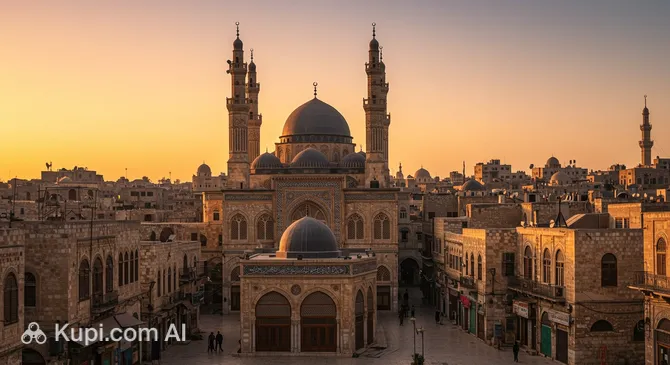
Homs is a dynamic and strategically important hub located in the heart of western Syria. As the country's third-largest city, it stretches along the banks of the picturesque Orontes (Al-Asi) River, which divides it into two parts: the traditional eastern side and the more modern western side. It is a city with a strong character, where industrial power harmoniously blends with centuries-old trading traditions.
Homs. Illustration.
Source: Kupi.com AI
Homs' geographical location at an altitude of 501 meters above sea level provides it with a pleasant climate, and the fertile lands of the Orontes Valley have fed the region for centuries. With a population of over 775,000, the city pulses with life, serving as the main link between the country's interior and the Mediterranean coast.
Homs has always held a special place in the city's rich history. Founded thousands of years ago, it evolved from an ancient cult center into a key agricultural market. Today, tourists can feel this continuity in the bustling bazaars and central squares, where trade in textiles, spices, and produce from local orchards thrives.
Visiting Homs is an opportunity to see the real, industrious Syria, experience the hospitality of the locals, and enjoy the authentic atmosphere of a city that has remained the economic and logistical heart of the region for centuries.
Weather Overview
The climate in Homs is typical of the central Mediterranean regions: you can expect hot, dry summers and mild, wet winters. The Orontes River tempers the air, creating favorable conditions for agriculture in the surrounding area. The hottest months are July and August, when daytime temperatures often reach +34°C...+35°C, while nights bring a pleasant coolness.
The winter period in the city is quite short. In January and February, the average temperature is around +10°C, and rain is most frequent during this time, filling the canals and the river. For those who want to know more about the weather in Homs at a specific time of year, remember that spring and autumn are the ideal seasons for walking, when the warmth hasn't yet turned into exhausting heat.
Average monthly temperature
Average monthly precipitation
Interesting Facts
The first settlements in the area of modern Homs appeared as early as 2300 BC, placing it among the oldest cities in the world.
In Roman times, the city was called Emesa and was famous throughout the empire for its temple of the Sun God, Elagabalus.
Homs is the birthplace of the Roman Emperor Heliogabalus, who served as the high priest of the local cult before ascending the throne.
The city is located at a unique geographical point—almost equidistant from Damascus (162 km) and Aleppo (192 km), linking the south and north of the country.
Thanks to the fertile Orontes River valley, Homs has consistently maintained its status as Syria's largest agricultural market for over 2,000 years.
How to Get There
Homs occupies a central position in the country's transport system, acting as a vital hub where major highways and railways intersect. Getting here is quite simple from any major center: the journey from Damascus by car or bus takes about 2–3 hours, and you can reach the city from Tartus in just an hour and a half via a modern national highway.
The city does not have its own civilian airport. Travelers planning their journey to Homs by air should fly into the international airports of Damascus or Latakia and then transfer to a shuttle or intercity bus.
Many choose the railway for domestic travel. Homs is connected by regular services to major cities, allowing for comfortable travel between regions. The main railway station is conveniently located, providing easy access to the central districts of the city.
Station
Passenger traffic
Distance
Beirut Railway Station
5
143 km
Beirut Railway Station
5
143 km
Qadam railway station
2
145 km
Aleppo railway station
5
169 km
Karmiel railway station
7
240 km
Main Attractions
Although Homs is primarily known as an industrial and commercial giant, it has its own iconic landmarks that serve as focal points for residents and visitors alike. One of the city's most recognizable symbols is the Homs Clock Tower. This tall tower in the central square is more than just a functional object; it is the heart of the city, where life is always buzzing and important meetings are scheduled.
Strolling along the Al-Asi (Orontes) River, you can feel the natural rhythm of the city. The river is a natural landmark and a favorite spot for leisurely walks. Traditional markets are spread across its eastern bank, which are attractions in their own right: here you can see trade being conducted according to customs that have remained unchanged for decades.
History enthusiasts should note that the modern city stands on the foundations of ancient Emesa. While modern buildings dominate the center, an observant traveler will find traces of Byzantine and Islamic heritage in the architecture of the old quarters and mosques, highlighting Homs' status as one of the oldest settlements in the region.
Local Cuisine
The gastronomy of Homs is a true feast for lovers of Middle Eastern cuisine. Thanks to the abundance of fresh produce from the Orontes River valley, local chefs create masterpieces from simple ingredients. Be sure to try the kebabs and succulent lamb with vegetables, which are prepared here with special skill. Traditional appetizers such as hummus, falafel, and mutabal in Homs feature a rich flavor due to the use of premium olive oil from local groves.
The city's markets, located near the famous Homs Clock Tower, offer an incredible selection of sweets and spices. Here you can try authentic Syrian desserts or buy the freshest fruits. The street food culture in Homs is very vibrant: small stalls with shawarma and hot flatbreads are found at every turn and are well-loved by both locals and visitors.
As for drinks, strong Arabic coffee with cardamom and sweet mint tea remain the favorites. On a hot day, nothing is more refreshing than freshly squeezed seasonal fruit juice bought right on the street. The atmosphere of family restaurants in Homs encourages long meals, where the hospitality of the hosts makes every dish taste even better.
Travel Tips
A trip to Homs will provide you with a unique experience of discovering the industrial and commercial heart of Syria. These practical tips will help make your journey as comfortable as possible.
Clothing and Style: Choose lightweight clothing made of natural fabrics for the hot summer, but don't forget to pack warm clothes if you plan a trip in winter. Remember the modest dress code when visiting religious sites and traditional areas.
Transport: For moving around the city, it is best to use taxis or walk in the central part. If you decide to use the bus, be prepared for them to be very crowded during peak hours.
Money: Always carry cash in the local currency. Cards are rarely accepted, and ATMs may not work with international systems. Tipping in restaurants is welcomed, usually around 10% of the bill.
Safety: Stick to the central, well-lit streets and popular markets. In the evening, it is better to avoid remote industrial zones in the east of the city.
Connectivity: You can buy a SIM card from a local operator at official sales points in the center. Wi-Fi is available in many cafes, but the speed may be unstable.
Etiquette: Greet locals with a friendly "Salam." Syrians are very hospitable, so don't be surprised by an invitation for a cup of tea—it is part of the culture.
What to Avoid: Avoid taking photos of government buildings, sensitive infrastructure, or bridges over the Orontes without explicit permission to avoid unnecessary questions.
Useful Tip: Given the city's altitude (501 m), the sun can be quite active even on days that are not the hottest—use sunscreen.
Homs will welcome you with openness and authenticity, leaving you with pleasant memories of genuine Syrian hospitality.
Entertainment & Nightlife
Entertainment in Homs is predominantly quiet and family-oriented. You won't find the loud nightclubs or large-scale concert venues typical of major metropolises. Life after sunset centers around cozy cafes and restaurants in the central part of the city, especially in the area around the Homs Clock Tower. It is the perfect place to enjoy a cup of strong Arabic coffee and observe the city's evening rhythm.
Daytime leisure for locals often involves walking along the banks of the Orontes River or visiting the markets. For those seeking cultural enrichment, local exhibitions and events reflecting the spirit of the province are held periodically. If you are looking for more active nightlife or theater visits, it is worth planning a weekend trip to Damascus or the coastal city of Tartus.
Safety in the evening is ensured on the central, well-lit streets. For getting around the city late at night, it is recommended to use taxis, which are easily found in the center. Overall, the atmosphere of Homs is conducive to a quiet rest and immersion into local daily life without unnecessary hustle and bustle.
Parks & Museums
Green spaces in Homs are mainly concentrated along the banks of the Al-Asi (Orontes) River. Although the city is highly urbanized, small squares and riverside park areas serve as Homs' main "lungs." Here, locals escape the city bustle, enjoying the cool breeze the river brings on hot days.
The city's cultural life is represented by local landmarks, most notably the Homs Clock Tower, which has become a kind of open-air museum and the starting point for all routes. In the city center, you can find small galleries and exhibitions dedicated to the crafts and history of the region, providing insight into the rich heritage of ancient Emesa.
Tourists also enjoy walking through the old quarters, which themselves resemble an architectural museum of different eras. Although there are few large park complexes in the city, the cozy atmosphere of the waterfront areas and the squares in the western part of the city create pleasant conditions for relaxation after a busy day of trading.
Getting Around
The transport system in Homs reflects its status as the region's most important logistical hub. The main means of getting around the city are buses and minibuses (servees), which permeate Homs with a dense network of routes. They connect residential areas, shopping districts, and the railway station. This is the most affordable and popular way to travel among locals.
For tourists, taxis remain the most convenient option. Cars are easily found in the central squares, especially near important landmarks. It is best to agree on the fare in advance or ensure the meter is used, if available. Taxis allow you to quickly travel from the modern western part of the city to the historical markets on the eastern bank of the river.
The railway plays a key role for those planning trips to Damascus or Aleppo. Trains run on schedule and offer a reliable way to travel between major cities. Within Homs itself, traffic congestion can occur during peak hours due to high density, so it is worth allowing extra travel time for important appointments.
Accommodation
The choice of accommodation in Homs is focused primarily on practicality and functionality. The city is not a typical tourist resort, so mid-range hotels and cozy guesthouses prevail, often chosen by business travelers and those transiting through the city. Most accommodation options are concentrated in the center, near the key landmark—the Homs Clock Tower.
For those planning to stay in the city longer, renting apartments is a popular option. This allows you to better experience the local flavor and save on your budget. When choosing a place to stay, preference should be given to properties in the western part of the city or in the immediate vicinity of the Orontes banks, where the infrastructure is most developed.
Prices for accommodation in Homs remain quite affordable. It is recommended to book your stay in advance, especially if your trip coincides with major regional fairs or holidays. Traditional booking methods through international or local services will help you find the best value-for-money option.
Nearby Cities
Due to its central location, Homs serves as an ideal starting point for exploring the surrounding areas. Just a few dozen kilometers from the city are small settlements and historical locations that offer a deeper understanding of life in central Syria.
For a short trip, Talbiseh, located just 12 kilometers to the north, or Al-Rastan, known for its picturesque views, are excellent choices. It is also worth visiting the city of Al-Qusayr, which is located near the Lebanese border and is famous for its agricultural traditions.
City
Population
Distance
Talbisah
45 853
12 km
Ar Rastan
61 176
22 km
Al Qusayr
46 772
28 km
Kafr Buhum
12 194
36 km
Talkalakh
35 445
42 km
Exploring these places will give you the opportunity to see the authentic life of the region, hidden from the eyes of the average tourist, and enjoy the tranquility of the rural landscapes surrounding industrial Homs.
Shopping & Souvenirs
Shopping in Homs is primarily an immersion into the atmosphere of traditional Middle Eastern markets. The main commercial activity is concentrated in the bazaars along the Orontes River. You won't find the usual giant malls here, but there is an abundance of shops with authentic goods. Homs is famous for its textiles and high-quality fabrics, which are produced in local factories and sold at very attractive prices.
Strolling through the area where the Homs Clock Tower stands, you will find many shops selling clothes, shoes, and household items. However, for real treasures, you should head to the agricultural markets. Be sure to bring home local olive oil, aromatic spices, and dried fruits from Homs—products from the Orontes valley are considered some of the best in the country.
Shops are generally open from morning until late evening, with a lunch break during the hottest part of the day. In small shops and markets, it is customary to pay in cash in the local currency, so it is worth carrying small bills. The buying process here often turns into a pleasant conversation with the seller, making shopping in Homs truly memorable.