Support

Nantian Temple Eighteen Levels of Hell

About

The "Eighteen Levels of Hell at Nantian Temple" is one of the most unusual and memorable attractions in the city of Changhua, Taiwan. This is not just a temple in the traditional sense, but rather a unique religious site consisting of a series of vivid and sometimes frightening sculptural compositions and dioramas. They clearly illustrate Buddhist concepts of the afterlife and the various levels of hell.
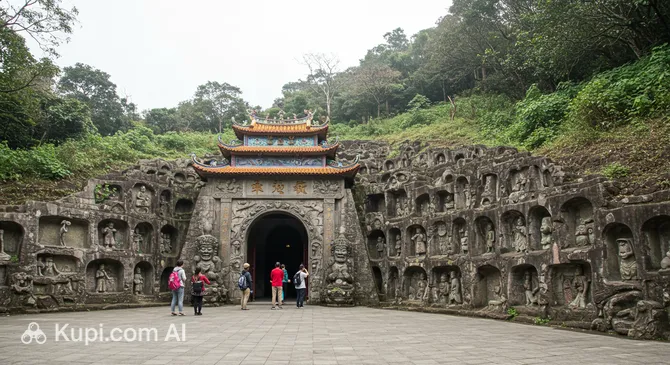
Nantian Temple Eighteen Levels of Hell. Illustration.
Source: Kupi.com AI

Traveller photos:

Visitors to this "park" or "museum" of sorts walk through installations representing each of the eighteen levels of hell as described in Buddhist cosmology. Each scene depicts in detail specific types of punishment intended for sinners depending on the misdeeds they committed in life. The exhibit was created to visually demonstrate the consequences of an unrighteous life and serves as a powerful reminder of the importance of moral principles.

Although the theme may seem grim, the "Eighteen Levels of Hell" performs an important educational and moralizing function within Buddhist culture. This place prompts reflection on eternal questions of good and evil, justice and retribution, offering visitors not just a cultural experience but also food for thought. For many tourists, it becomes one of the most profound impressions of their trip to Changhua.

Contacts

To find current contact information for the Eighteen Levels of Hell at Nantian Temple, such as a phone number or email address, it is recommended to visit the official website of the attraction, if available. You can also find useful information on the Changhua travel portals or by contacting local tourist information centers.

How to contactContact
AddressNo. 12號, Lane 187, Section 1, Gongyuan Rd, Changhua City, Changhua County, Taiwan 500
Phone+886 4 722 2587

What to Do

Visiting the "Eighteen Levels of Hell" at Nantian Temple offers visitors a unique experience — a journey of sorts through all eighteen levels of the underworld as envisioned in the Buddhist tradition. Guests can examine intricately crafted dioramas depicting various punishments for sins and read the explanations for each scene. This is not just an attraction, but an opportunity to gain a deeper understanding of the concepts of karma and retribution, which hold an important place in Buddhist teaching.

In addition to the "Eighteen Levels of Hell" exhibit itself, the Nantian Temple complex offers other activities. Visitors can immerse themselves in the atmosphere of traditional Buddhist rituals, observe them, or even participate if permitted. You can also purchase various amulets and talismans as souvenirs or for protection. Don't overlook the architecture of the Nantian Temple itself, which is an attraction in its own right.

Many guests prefer to visit the main hall of Nantian Temple before starting their "hellish journey" or after completing it. There, they light incense and offer prayers, which is an integral part of visiting a Buddhist sanctuary. This helps to set the right mood or reflect on what they've seen within the context of spiritual practices.

Getting There

Getting to the "Eighteen Levels of Hell at Nantian Temple," located in the city of Changhua in Taiwan, is quite simple, especially if you are already in the city itself. Nantian Temple is well-known and can be reached by public transport from central Changhua.

One of the most convenient ways is to travel from the Changhua Railway Station. From here, you can either take a local bus, with routes passing near the temple, or use a taxi. A taxi ride is faster and more comfortable but slightly more expensive. Be sure to clarify the name of the temple — "Nantian Gong" (Nantian Temple) — to the bus or taxi driver to avoid any misunderstanding.

For travelers arriving in Changhua from other cities in Taiwan, such as Taipei or Kaohsiung, the best option is to take a train to Changhua first. The city has excellent rail connections as it is located on the island's main western railway line. Upon arrival at Changhua Railway Station, you can easily transfer to local transport, as described above, to reach the temple directly.

Nearest city: Changhua

History & Facts

The Eighteen Levels of Hell at Nantian Temple in Changhua is a unique and impressive exhibit deeply rooted in Chinese mythology and religious beliefs. The concept of the "eighteen levels of hell" originates from Chinese Buddhism and Taoism. According to traditional views, the underworld, known as Diyu, is divided into many levels or courts. At each level, sinners undergo various punishments corresponding to the severity of their misdeeds committed during their lifetime.

Nantian Temple and its famous exhibit were created for educational purposes — to clearly demonstrate Buddhist moral principles and the harsh consequences of breaking them. It serves as a visual warning and instruction for believers and visitors. The idea is to use vivid and sometimes frightening images to convey the importance of a righteous life and spiritual self-improvement.

While similar installations illustrating the levels of hell exist in other temples across Taiwan and mainland China, the version at Nantian Temple in Changhua is considered one of the most detailed, large-scale, and impressive. It attracts many visitors who wish not only to learn about this aspect of Chinese culture and beliefs but also to reflect on eternal questions of morality and the consequences of human actions. The exhibit serves as a powerful reminder of the law of karma and the importance of virtue.

Time Needed

To fully explore the "Eighteen Levels of Hell at Nantian Temple" and give proper attention to the temple itself, visitors are usually recommended to set aside 1 to 2 hours. This amount of time will allow you to immerse yourself in the atmosphere of this unusual place in Changhua without rushing.

During this period, you will be able to carefully examine each of the dioramas depicting scenes of the underworld, read the explanatory plaques, and appreciate the unique concept of this complex. Additionally, you will have time to explore the main Nantian Temple grounds, which are interesting in their own right and part of the overall experience.

Of course, the total length of your visit may vary. If you wish to study every detail more deeply, read all available materials, or simply meditate in this unusual setting, you might need a little more time. However, for a general overview, the specified hour and a half to two hours will be quite sufficient.

Working Hours

Unfortunately, exact information regarding the operating hours of the "Eighteen Levels of Hell at Nantian Temple" in Changhua is currently unavailable. Since opening hours can vary depending on the season or day of the week, and may require advance booking or ticket purchases, it is strongly recommended to verify this information directly before your visit.

To get the most up-to-date information on the schedule, entrance fees, and possible restrictions, please refer to the official Nantian Temple website (if available) or local tourist information centers in Changhua. This will help you plan your visit effectively and avoid any potential inconvenience.

8:00 – 18:30

Nearby

A visit to the Eighteen Levels of Hell at Nantian Temple is undoubtedly a vivid and memorable event. However, to make your trip to Changhua even more rewarding and complete, it is worth paying attention to other interesting sites nearby. Exploring the surroundings will allow you to dive deeper into the city's atmosphere, get to know its culture and history, and discover unexpected gems.

A walk through the neighboring streets or a short trip to nearby attractions can provide new impressions and make your experience more multi-faceted. Often, it is these spontaneous discoveries that make up the warmest memories of a trip.

NameDistance
Baguashan0.2 km
Bagua Mountain Skywalk0.2 km
Changhua County Art Museum0.3 km
1895 Baguashan Anti-Japanese Martyrs' Museum0.4 km
Yuanqing Taoist Temple0.7 km
Twelve Sections Hot Pot Hall (Changhua)0.7 km
Kaihua Temple0.9 km

Reached the bottom of the page?

Looks like you know this route inside out