Support

Kaohsiung Guandi Temple

About

The Kaohsiung Guandi Temple is one of the most famous and revered Taoist temples located in the city of Kaohsiung, Taiwan. This magnificent temple is dedicated to Guan Yu, the god of war and justice, also known as Guandi. Situated in the Yancheng District near the scenic waterfront, the temple serves not only as an important center of religious life for locals but also as a popular tourist attraction, drawing travelers from all over the world with its charm and rich history.
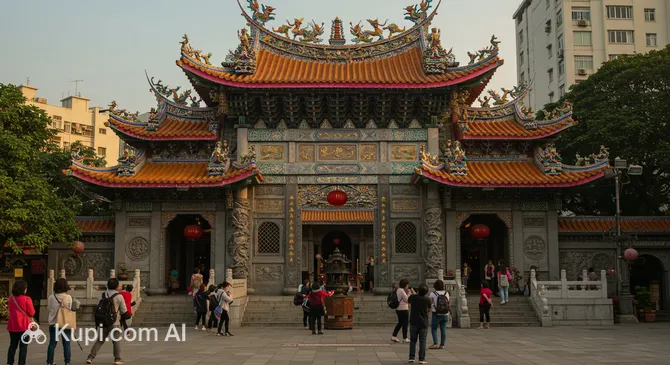
Kaohsiung Guandi Temple. Illustration.
Source: Kupi.com AI

Traveler photos:

The temple's architecture is a striking example of traditional Chinese style. The first thing that catches the eye is its magnificently decorated multi-tiered roofs with characteristic curves, adorned with figures of dragons and phoenixes. The facades and interiors abound with intricate wood and stone carvings, vibrant paintings, and numerous sculptures of mythological creatures, each carrying its own sacred meaning.

A special atmosphere of peace and reverence reigns inside the temple. The central place is occupied by the altar and majestic statues dedicated to Guandi. Visitors can also see images of other deities revered in the Taoist tradition. Visiting the Guandi Temple is a wonderful opportunity to touch the spiritual culture of Taiwan, admire the craftsmanship of ancient architects, and feel the tranquility of this holy place.

Contacts

Planning a visit to the Kaohsiung Guandi Temple? It is located at No. 52, Wufu 4th Road, Yancheng District, Kaohsiung, Taiwan. To confirm opening hours or for more information, you can contact the temple representatives.

How to contactContact
AddressNo. 52, Wumiao Rd, Lingya District, Kaohsiung City, Taiwan 802
Phone number+886 7 721 8782
Websitewww.kdm.org.tw

What to Do

Visitors to the Kaohsiung Guandi Temple can enjoy a stroll through its extensive grounds, carefully observing the exquisite architecture and numerous details. Be sure to take photos of the traditional pailou gates and other decorative elements that vividly reflect the rich cultural heritage of Taiwan. The main halls with altars deserve special attention, where you can observe religious rites and ceremonies, feeling the spiritual atmosphere of the place.

Guandi Temple is not just an architectural monument but a living center of cultural life. If your visit coincides with one of the traditional festivals, especially those dedicated to Guandi, you will witness an unforgettable sight. Colorful processions and ritual dances to the sounds of traditional musical instruments await you. This is a unique opportunity to dive deeper into local customs and traditions.

In addition to observing religious practices and architectural masterpieces, guests can purchase souvenirs with the temple's symbols. After exploring the attraction, it's worth taking a walk around the neighborhood, where you can try a variety of local street food dishes, complementing your impressions with gastronomic discoveries.

Getting There

Getting to the Kaohsiung Guandi Temple is quite easy, as it is conveniently located in the central part of Kaohsiung. This makes it accessible for tourists regardless of their chosen mode of transport and allows you to easily include a visit in your city itinerary.

One of the most convenient ways to reach the temple is by public transport. The nearest metro station is Yanchengpu, located on the Red Line of the Kaohsiung MRT. From the metro exit, the temple is just a 5–10 minute walk away. Additionally, there are bus stops nearby serving various city routes, which is also a great option.

For those who prefer the comfort of a taxi or are traveling in a rental car, the Kaohsiung Guandi Temple is also easily accessible. It is close to main city roads and popular tourist spots like the scenic Love River waterfront and the Pier-2 Art Center. Parking is usually available on the adjacent streets, or you can use paid city parking lots located nearby.

Nearest city: Kaohsiung

History & Facts

The history of the Kaohsiung Guandi Temple dates back to the late 19th century. This was when immigrants from mainland China began arriving in Kaohsiung in large numbers. Along with them, they brought not only their customs but also a deep reverence for Guan Yu – a prominent general from the Three Kingdoms era. Over time, Guan Yu was deified and became for many the embodiment of loyalty, unwavering courage, and justice, which served as the foundation for the temple's creation.

Since its founding, the temple has not remained unchanged. Over the decades, it has been rebuilt, expanded, and decorated multiple times, gradually turning into an increasingly significant religious and cultural center for the residents of Kaohsiung. Each reconstruction added new elements, reflecting both a commitment to tradition and the development of the local community. This transformed the modest shrine into the majestic structure we see today.

Today, the Kaohsiung Guandi Temple is more than just a place for prayer and worship. It is an important cultural heritage site in Taiwan, vividly demonstrating the unique blend of ancient Chinese traditions and distinctive Taiwanese culture. A visit to the temple allows you to touch living history and see how the beliefs and rituals of the past continue to play an important role in the modern life of the city.

Time Needed

When planning a visit to the Kaohsiung Guandi Temple, you can expect the tour to take approximately from 40 minutes to an hour and a half. This time is usually enough to leisurely walk through the temple grounds, examine its architectural features, look into the main halls, and soak in the atmosphere of this significant site.

Of course, the duration of your visit may vary. If you are deeply interested in Taoist culture, history, or traditional Chinese architecture, you might need a bit more time to carefully study all the details, paintings, and sculptures. Photography enthusiasts may also stay longer, seeking to capture the beauty of the temple from different angles.

On average, an hour to an hour and a half will be quite sufficient for a full acquaintance with the Kaohsiung Guandi Temple and to gain wonderful impressions of this amazing corner of Kaohsiung.

Working Hours

The Kaohsiung Guandi Temple usually opens its doors hospitably to visitors daily. Typically, you can visit this amazing temple from 6:00 AM to 9:00 PM. This provides enough time for both morning and evening visits, allowing you to plan your visit at a convenient time.

It is important to remember that these working hours are standard. During major religious holidays or special ceremonies, the schedule may change. Therefore, to avoid misunderstandings, especially if your visit coincides with such dates, it is recommended to check for up-to-date information on the temple's official website or at local tourist information centers in Kaohsiung. Overall, the temple is open for visits year-round. Advance ticket booking for a regular visit is generally not required, but for participation in special events or tours, it is better to check the conditions in advance.

7:00 – 22:00

Nearby

A visit to the Kaohsiung Guandi Temple is undoubtedly a highlight, but exploring its surroundings can make your journey even more enriching and multi-faceted. The city of Kaohsiung offers many other interesting spots nearby that will allow you to dive deeper into the culture and daily life of Taiwan.

Exploring nearby attractions will not only broaden your horizons but also provide new experiences, complementing the spiritual experience of the temple visit with the vibrant colors of modern entertainment, cultural discoveries, or gastronomic adventures. After all, it is in such combinations that the charm of a true journey lies. Here are a few interesting places near the Kaohsiung Guandi Temple:

NameDistance
National Science and Technology Museum1.5 km
Fengshan Aquarium1.6 km
Superstar Self-Service KTV Wufu1.9 km
Hotel dùa Bar2.8 km
Tian Ji Yakiniku Kaohsiung Zhongshan3.2 km
Ocean Fantasy Museum3.5 km
YES KTV Kaohsiung Flagship3.6 km

Have you reached the end of the page?

So the route has been studied inside and out