Support

Matsu Nangan Airport

About the Airport

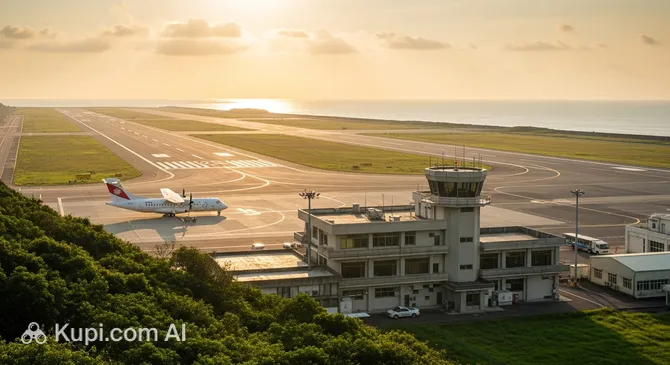
Matsu Nangan Airport. Source: Kupi.com Binoculars
Matsu Nangan Airport is not merely a transit point, but the first atmospheric gateway to the world of this enigmatic archipelago. Landing here offers unforgettable emotions: the aircraft descends over picturesque cliffs and the sea, allowing you to view the rugged island landscapes from a bird's-eye view. This cosy and compact airport is devoid of the stress and bustle of giant hubs, offering travellers an immediate immersion into the calm rhythm of local life right after disembarking.
IATA Code LZN
ICAO Code RCFG
City Nangan
Distance to centre 1.5 km
Status Domestic
Annual Passengers approx. 350,000

Airport Features and Advantages

The main advantage of Nangan Airport is its compactness and speed of service. Thanks to the small size of the terminal, the journey from the aircraft steps to the city exit takes just a few minutes. It is impossible to get lost here, and all necessary services are within direct line of sight. This is particularly valuable for tourists who wish to start exploring the island's attractions as quickly as possible.

The airport is conveniently located relative to key transport hubs. It is just a few minutes' drive from Fu'ao Harbor, from where ferries depart to the neighbouring islands of the archipelago. This makes the airport an ideal strategic hub for those planning a comprehensive journey around the Matsu region, combining air travel with sea excursions.

Despite its modest size, the airport performs an important function as a tourism centre. In the arrival zone, travellers can find a counter with free maps and brochures describing the famous "Blue Tears" (bioluminescence), military tunnels, and local temples. Staff often assist with calling taxis, making arrival maximally comfortable even for those visiting these places for the first time.

Contact Information

If you need to contact the administration of Matsu Nangan Airport (LZN) or obtain additional information, please use the following contact details:

  • Official Website: www.lzn.gov.tw. Current information on flights, services, and airport regulations is available on the site (predominantly in Chinese).
  • Information Desk Phone: +886-836-26505. This is the main number for general inquiries, flight schedules, and consultations.
  • Airport Address: No. 1, Airport, Fuxing Village, Nangan Township, Lienchiang County, Taiwan, 209.
  • Email: lzn@tsa.gov.tw. Suitable for written requests and inquiries.
  • Social Media: Small regional airports typically do not have separate social media pages. It is recommended to check all official information on the website.
  • Lost Luggage Information: For issues related to lost or damaged luggage, please contact your airline's representative at the airport first. You can also call the general airport information desk for further instructions.
  • Passenger Support Contacts: To resolve any issues related to your stay and service at the airport, please use the main information desk phone number or email address.

How to Get to the Airport

Getting to Matsu Nangan Airport (LZN) is quite simple, as it is located on the small island of Nangan, part of the Matsu archipelago. The island's transport system is adapted for the needs of both locals and tourists, offering several convenient options for travelling to the airport from any point on this island belonging to Taiwan.

Public Transport. The most budget-friendly way to reach the airport is by local bus. There are two main bus routes on the island (mountain and coastal) that connect key villages, including the capital Jieshou, with the airport. Buses run according to a schedule which should be checked in advance, as intervals between services can be significant. The trip from Jieshou to the airport takes only about 10-15 minutes. This is an excellent choice for those travelling light.

Taxi and Transfer. For maximum convenience, especially if you have a lot of luggage or are travelling in a group, it is best to use a taxi service. The number of cars on the island is limited, so it is highly recommended to book a taxi in advance, especially during the high tourist season. A taxi ride will cost more than the bus but ensures a quick and comfortable transfer directly to the terminal. Travel time from most hotels on the island rarely exceeds 20 minutes.

Car or Scooter Rental. Many tourists prefer to rent a car or, more popularly on the islands, a scooter to move around Nangan. This gives complete freedom in planning your route and allows you to easily reach the airport at the required time. Most rental agencies are located near the main Fu'ao Harbor or can deliver the vehicle to your hotel. You can simply return the rented car or scooter at the airport parking lot by prior arrangement with the rental company.

Airport Parking. For those travelling with their own or rented transport, Matsu Nangan Airport has a small parking area. Leaving a car or scooter here for the duration of your trip is not difficult. Given the compact size of the island, this option is mainly used by local residents or tourists concluding their island journey here.

Terminals and Map

Matsu Nangan Airport (LZN) is a small and compact regional airport, so its structure is extremely simple and understandable for any traveller. There is only one terminal here, which serves both departing and arriving flights. Thanks to this, you do not have to worry about long walks or complex navigation.

The terminal layout is intuitive. Upon entering the building, you will immediately see the airline check-in counters. After checking in and dropping off your luggage, you proceed to the single security screening area. Directly behind it is the waiting hall with boarding gates. The arrival area is located in the same part of the building and consists of a small baggage claim zone, which is within walking distance of the airport exit.

Since the airport serves only domestic flights, all procedures are very quick. Usually, check-in, baggage drop, and security control take no more than 20-30 minutes. Nevertheless, it is recommended to arrive at the airport approximately one hour before departure to complete all formalities without rushing, especially during peak seasons.

To navigate the terminal, simply follow the signs, which are clearly visible and easy to understand. Given the modest size of the building, getting lost here is practically impossible. Airport staff are always ready to help and suggest directions. The entire journey from the terminal entrance to the boarding gate will take you just a few minutes, making travel through Nangan Airport maximally comfortable and fast.

Airport History

The history of Matsu Nangan Airport (LZN) is inextricably linked to the strategic position of the Matsu archipelago. The airport began serving civil flights in January 2003, becoming the long-awaited "air gateway" for island residents and guests. Initially, the facility had a military purpose, and its transformation into a civilian airport became a key event in the region's development, significantly simplifying connections with the island of Taiwan and boosting tourism.

The construction and modernization of the airport have always been a challenging task due to the complex terrain and changeable weather conditions. One of the main problems since opening has been, and remains, dense fog, especially in the spring period, which often leads to flight cancellations and delays. In this regard, throughout its history, the airport has repeatedly undergone modernization. The main focus has been on improving navigation equipment and landing systems to enhance flight safety and regularity in difficult meteorological conditions.

An interesting fact: due to its location on a hilly island, the airport's runway is not very long, which imposes restrictions on the types of aircraft it can accept. Today, Matsu Nangan Airport is not just a transport hub, but a true vital lifeline for the islands. Its main achievement lies in ensuring stable connections with the outside world, which is critically important for both local residents and the growing number of travellers wishing to discover the unique nature and culture of the archipelago.

Services and Amenities

Matsu Nangan Airport (LZN), being an important transport hub for the Matsu islands in Taiwan, offers passengers all necessary services for a comfortable wait for their flight. Despite its compact size, the terminal is well-equipped and thoughtfully designed for traveller convenience, ensuring a pleasant start or end to the journey.

Within the airport premises, there is a small cafe where you can order beverages and light snacks, as well as a shop offering local souvenirs and essential goods. For those who need to stay connected or work, free Wi-Fi is available throughout the terminal. The waiting areas are provided with power outlets and USB ports for charging mobile devices.

Although there are no specialised VIP lounges in the airport, the general waiting areas are sufficiently comfortable. An ATM is installed for financial transactions. Families with small children can use the specially equipped nursing room. The airport also has a first aid station.

The terminal is fully adapted for the needs of passengers with reduced mobility: there are ramps, accessible toilets, and staff are ready to assist with movement around the airport and during boarding. Specialised business centres or conference rooms are absent. If you require accommodation, various hotel and guesthouse options can be found in the city of Nangan, located in close proximity to the airport.

Where to Eat

Matsu Nangan Airport (LZN) is a small regional airport, so the choice of dining establishments here is quite limited and corresponds to its size. Passengers should note that there is no wide variety of restaurants here as found in major international hubs, but grabbing a snack or a coffee before departure is certainly possible.

All dining options are concentrated in the single terminal, in the public zone accessible to both departing and arriving passengers (before security control). Typically, there is one main cafe or snack bar operating here, offering a basic set of services. The opening hours of this establishment are usually tied to the flight schedule: it opens shortly before the first departure and closes after the last aircraft leaves.

The menu features standard airport options: coffee, tea, soft drinks, sandwiches, pastries, and light snacks. Sometimes the assortment includes more substantial dishes, for example, noodle soup or a simple rice dish. Although special offers of Matsu cuisine may not be available, it is worth looking for local snacks or pastries if they are on offer — this is a great way to experience the region's gastronomy at the last moment.

Regarding special dietary requirements, finding certified Halal, vegan, or gluten-free dishes here will be extremely difficult. Vegetarians might have luck with simple vegetable snacks, but the choice will be small. If you have strict dietary restrictions, it is highly recommended to bring food with you or eat in Nangan city before travelling to the airport.

For a quick snack, a coffee and a bun are ideal. If you are counting on a more substantial lunch, it is better to check in advance if the local cafe offers hot meals. Prices at the airport are generally moderate, but slightly higher than in city establishments.

Traveller Tips

Travelling through Matsu Nangan Airport in the city of Nangan can be a pleasant start or conclusion to your island adventure. To ensure everything goes smoothly, use our tips to save time, stress, and money.

Arrival Time and Check-in. Nangan Airport is small and serves mainly domestic flights within Taiwan. In most cases, it is sufficient to arrive 60-90 minutes before departure. This time is enough to pass check-in and security control without rushing. Nevertheless, it is always useful to check your airline's recommendations. Procedures here are quite fast, but to save even more time, check in for your flight online if possible.

Seat Selection and Carry-on. The Matsu islands are incredibly picturesque. To enjoy breathtaking views of the coast and sea during takeoff or landing, try to book a window seat. Regarding carry-on luggage, standard international rules apply: liquids in containers up to 100 ml (packed in a transparent bag), and no sharp objects. Power banks and lithium batteries are permitted only in carry-on luggage.

Connecting Passengers and Customs. Since this is predominantly a domestic airport, long layovers are rare here. If you have a connecting flight, clarify whether you need to collect and re-check your luggage. Customs control in the usual sense is absent for flights from the main part of Taiwan. However, random checks may be conducted regarding the export or import of certain agricultural products as part of quarantine measures.

Savings and Useful Hacks. To save money, book flight tickets in advance, especially during the peak tourist season. The airport has a limited selection of cafes and shops, so it is better to have a snack or buy souvenirs in the city. Bring an empty reusable water bottle with you — after security screening, it can be filled at drinking fountains.

What to Do in Case of Flight Delay. The weather on the Matsu islands, especially in spring, can be unpredictable due to dense fog, which often leads to flight delays or cancellations. Be sure to check your flight status before leaving for the airport. Keep your airline's contacts at hand to quickly find out about rebooking options. Alternatively, there is always ferry service to Taiwan, which can serve as your backup plan.

Reached the end of the page?

That means the route is fully explored