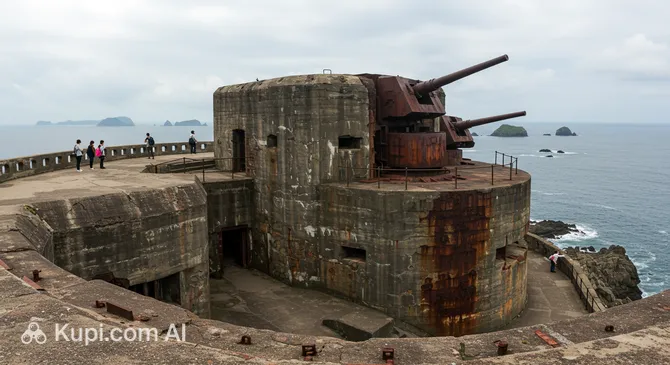
In the heart of the rugged coastline of Nangan Island lies the Iron Fort—an impressive example of the military-historical heritage that Taiwan is proud of. This site is a powerful defensive structure harmoniously integrated into the rocky landscape of the Matsu archipelago.
Iron Fort. Illustration.
Source: Kupi.com AI
Traveler photos:
The fortress was built to protect against sea winds and uninvited guests, and its architecture reflects the characteristic features of the Mindong style: massive stone walls and small windows protecting inhabitants from typhoons. Today, it is not just a military site but a popular attraction, drawing travelers with its panoramic views of the endless sea and the authentic atmosphere of an ancient fishing region.
Visitors appreciate the Iron Fort for the chance to touch history and see how the rugged functionality of the fortifications combines with the natural beauty of the harbors. The site's high rating confirms that it is one of the most significant points on the island's tourist map.
Contacts
To plan your visit to this historical location, it is useful to have the coordinates and a direct map link handy. No official website or phone number for the fortress is listed in open sources, as the site operates as part of an open military-historical park.
How to contact
Contact
What to Do
A visit to the Iron Fort offers guests a unique experience of exploring preserved defensive structures. You can climb the massive walls to take spectacular photos against the backdrop of the crashing ocean or walk through the inner corridors, imagining how the island's defenders served in times past.
For outdoor enthusiasts, scenic walking trails are laid out across the fort's territory and along the coastline. Walking along them, you can watch the waves crash against the rocks and study information boards telling the local history and culture of the Fuzhou region. In good weather, the fortress's surroundings become an ideal spot for sunset photo shoots.
Don't forget to look into nearby corners, where you can often find small altars dedicated to the patron saint of sailors—the goddess Mazu. The calm atmosphere of the fort, devoid of big-city noise, invites thoughtful contemplation of nature and immersion into the archipelago's historical past.
Getting There
The journey to the Iron Fort begins with arrival on Nangan Island. The fastest way is to take a domestic flight from Taipei, which lands at the local airport. There are also ferries running between Taiwan and the Matsu archipelago, departing from ports such as Taichung or Kinmen.
Once on the island, you can reach the attraction by taxi or local bus—the ride from the airport takes about 10–15 minutes. For those who prefer freedom of movement, scooter or bicycle rentals are available at the port and near the airport, which is the most popular way to explore the rugged coastline.
When planning your trip, be sure to consider weather conditions. During typhoon season, ferry and flight schedules can change, so it is recommended to check for current information the day before departure.
Nearest city: Nangan
History & Facts
The history of this place is inextricably linked with the development of the archipelago as a stronghold for fishing communities since the Song Dynasty. Thanks to its strategic position at the mouth of the Min River, Nangan served for centuries as an important transit point and a reliable shelter for sailors during storms.
A special atmosphere is given to the fortress by the legend of the goddess Mazu. According to tradition, it was to the shores of this island that the sea washed her body, making the archipelago an important spiritual center. Later, when the need to protect the borders arose, fortifications began to be built here, using the unique Mindong architecture.
One of the main features of the "Iron Fort" is its massive stone walls and tiny windows located high under the roof. This design was dictated not only by defense needs but also by the harsh climate: the buildings had to withstand the powerful gusts of wind and the elements characteristic of this region.
Time Needed
To explore the Iron Fort at a leisurely pace, a typical tourist will need about 1 to 2 hours. This is enough time to walk along the defensive walls, explore the internal passages, and take impressive photos against the backdrop of the ocean.
About 30–45 minutes will be spent on a detailed inspection of the architecture itself, and the remaining time can be devoted to walking the adjacent trails leading to picturesque bays. If you plan to stay for the sunset, it is worth allowing a bit more time in your schedule, as the views at this time of day are especially mesmerizing.
Working Hours
Iron Fort welcomes visitors daily, making it a convenient stop on any travel itinerary. The fortress is open for viewing from 8:00 AM to 5:00 PM, without lunch breaks, including Saturdays and Sundays.
It is recommended to visit in the morning or closer to closing time to catch the softest lighting for photos; however, keep in mind that access to the site is limited by the working hours of the staff or park security.
8:00 – 17:00
Nearby
Nangan Island is rich in interesting locations, and a visit to the Iron Fort can be easily combined with seeing other cultural and natural sites. A walk around the area will allow you to dive deeper into the unique daily life of the locals and enjoy the rugged beauty of the coastal cliffs.
Near the fort, there are both ancient monuments and modern museums dedicated to the ecology and traditions of the Matsu archipelago.