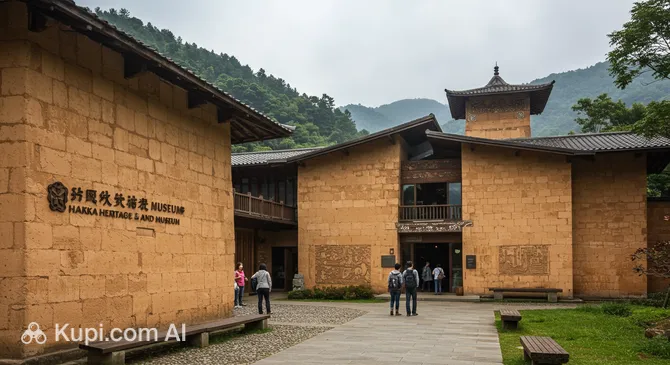
The Hakka Art and Heritage Museum invites you to immerse yourself in the fascinating world of one of the island's most distinctive ethnic groups. Located in the picturesque Ji’an Township of Hualien, this cultural center has become a true treasure trove of Hakka traditions, crafts, and history.
Hakka Heritage Art and Museum. Illustration.
Source: Kupi.com AI
Traveler photos:
This venue harmoniously combines the functions of an art gallery and an ethnographic space. Within the museum walls, visitors can see authentic costumes, ancient tools, and installations that tell the story of the daily life and philosophy of these resilient people. The significance of the site is highlighted by its high rating among travelers who appreciate the depth of the collection presented.
Interestingly, the museum is part of the Jian Hakka Art Village and occupies a site where a Japanese Shinto shrine once stood. Thanks to this architectural layering, a visit to the museum in Taiwan turns into a multi-dimensional journey through different eras, making it a must-see for history and ethnography enthusiasts.
Contacts
To check the current exhibition schedule or coordinate a group visit, you can contact the museum administration directly. The center's staff are usually ready to help with any organizational questions regarding your arrival and the events program.
At the museum, visitors can explore captivating permanent and temporary exhibitions. Here, you can witness Hakka craftsmanship in textiles and ceramics firsthand, and see how traditional motifs are reflected in modern painting and sculpture. Many guests enjoy photographing the unique installations and detailed recreations of traditional interiors.
Special attention should be paid to the interactive zones. Depending on the schedule, you might have the chance to participate in calligraphy workshops or learn the basics of traditional weaving. As part of the Art Village, cultural festivals are regularly held, featuring folk groups and lectures on Hakka customs.
Don't forget to stroll through the grounds, where the atmosphere of a traditional village has been recreated, and explore the gardens filled with plants characteristic of the region. You can conclude your visit at the souvenir shop, which sells handmade items that serve as wonderful reminders of the region's rich cultural heritage.
Getting There
Getting to the cultural center located in Ji’an Township, Hualien County, is quite simple. From the city center, specifically Hualien Station, buses No. 113 and No. 114 run regularly; the trip to the Ji’an Township stop takes about 20–30 minutes.
For those who prefer comfort, a taxi is an excellent option. The ride from the central station lasts no more than 20 minutes and costs approximately 300–500 New Taiwan Dollars. You can also use the TRA railway: the nearest station, Ji’an, is just a 5-minute walk from the museum entrance.
If you are traveling by car, follow Provincial Highway 9 toward Ji’an. The museum building is clearly visible from the main road, and parking spaces are provided nearby. Travelers arriving at the airport can book a transfer or take a bus, which takes about 40 minutes.
Nearest city: Hualien
History & Facts
The history of the site where the Hakka Art and Heritage Museum stands today is quite unusual. Originally, during the Japanese colonial period, it was home to the first Shinto shrine in Hualien, serving as a religious and community center. It was only decades later that this space was transformed into a cultural hub dedicated to preserving Hakka traditions.
The Hakka people are a unique ethnic group of migrants from northern China who began actively settling in Taiwan in the 19th century. They are known for their resilience, ability to survive in harsh conditions, and their construction of fortified villages. The museum carefully documents their journey, their contribution to the island's development, and the adaptation of their rich traditions to the local environment.
The exhibition covers a vast span of time: from artifacts of the Qing Dynasty to contemporary works of art. The transformation of a former shrine into an ethnographic museum highlights modern society's commitment to preserving cultural diversity and respecting the roots of the various ethnic groups inhabiting the region.
Time Needed
For a thoughtful exploration of the museum's main collection, most visitors need between 1.5 and 2.5 hours. This is enough time to view the costume, tool, and art collections, and read the explanatory materials.
If you plan to walk through the entire Jian Hakka Art Village, browse the souvenir shops, and perhaps participate in a workshop, you should budget about 3 hours for your visit. During festival days, your stay might be longer due to the extensive entertainment program.
Working Hours
The museum welcomes guests on a consistent schedule; however, it is important to remember that Monday is a closing day. On other days of the week, the center's doors are open to everyone wishing to experience history.
Working hours from Tuesday to Sunday are 9:00 AM to 4:00 PM. Please note that during public holidays, operating hours may change, so it is recommended to check for current information on the museum's official Facebook page before your trip.
Day
Opening hours
Monday
Closed
Tuesday
9:00 – 16:00
Wednesday
9:00 – 16:00
Thursday
9:00 – 16:00
Friday
9:00 – 16:00
Saturday
9:00 – 16:00
Sunday
9:00 – 16:00
Nearby
Exploring the surroundings of the museum can significantly enrich your trip. The Ji’an area and its immediate vicinity offer many interesting locations, from cozy creative markets to large-scale coastal theme parks.
After immersing yourself in Hakka history, it's worth checking out the natural areas and entertainment centers located just a few minutes' drive away. This allows for a full day's itinerary, combining cultural education with outdoor recreation.