Support

Kilimanjaro International Airport

About the Airport

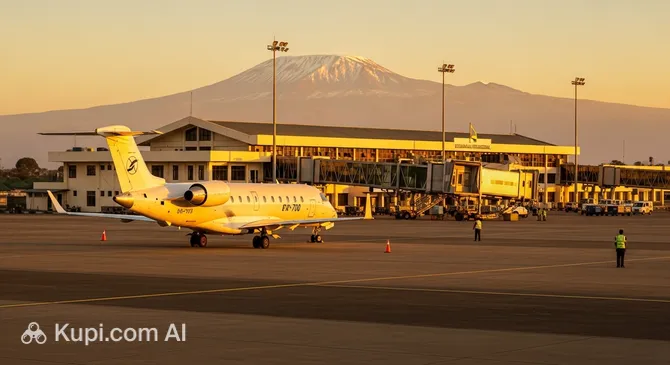
Kilimanjaro International Airport. Source: Kupi.com Binoculars

Kilimanjaro International Airport (JRO) is not merely an air hub, but a true gateway to a world of amazing adventures in northern Tanzania. Located at the foot of the legendary mountain, it welcomes travellers ready to climb the "Roof of Africa" or embark on an unforgettable safari. The airport was opened in 1971 and has since played a key role in the region's tourism industry, proudly calling itself the "Gateway to Africa's Wildlife Heritage". Its strategic location between the cities of Arusha and Moshi makes it the ideal starting point for exploring the Serengeti, Ngorongoro, and Tarangire national parks.

IATA Code JRO
ICAO Code HTKJ
City Kilimanjaro (serves the cities of Arusha and Moshi)
Distance to Centre About 40 km to Moshi and 50 km to Arusha
Status International
Passengers per Year ~ 825,000 (2022)
Popular Airlines KLM, Turkish Airlines, Qatar Airways
Schedule online board "Kilimanjaro International Airport"

The airport's main advantage is its convenient location, allowing quick access to the main tourist centres of northern Tanzania. Despite its relatively small size, its runway is capable of accommodating even large long-haul aircraft, such as the Boeing 747, ensuring direct connections with Europe and the Middle East. In recent years, the airport has undergone modernization, which has increased its capacity and improved the quality of passenger service. For the convenience of travellers, currency exchange services, ATMs, and free Wi-Fi are available in the terminal.

Contact Information

  • Official Website: www.kilimanjaroairport.co.tz
  • Inquiry Desk Phone: +255 27 255 4252
  • Address: Kilimanjaro Airport Road, Arusha, Tanzania
  • Email: info@jro.kairport.co.tz
  • Social Media: Follow airport news on official pages on Facebook, X (formerly Twitter) and Instagram.
  • Lost Luggage Information: For issues regarding lost or damaged luggage, please contact your airline representative directly at the airport. Contact details for the Lost & Found service are usually provided at the carrier's counter.
  • Customer Support Contacts: For general questions and assistance, you can contact the inquiry desk via the phone number listed above or by email.

How to Get to the Airport

Kilimanjaro International Airport (JRO) serves as the main aerial gateway for travellers heading on safari to the national parks of northern Tanzania or to the foot of the famous mountain. The airport is conveniently located between two key tourist hubs of the region, Arusha and Moshi. There are several ways to get from the airport to these cities and back.

Taxi and Transfer — the most popular, safe, and convenient option. The trip to Arusha or Moshi will take approximately 45-60 minutes. You can find official taxis at the exit of the arrival terminal. It is extremely important to agree on the fare with the driver before the trip begins. An even more reliable method is to book a transfer in advance through your hotel or travel company. Shared shuttle buses also run between the airport and the cities, serving as a more budget-friendly alternative to taxis, though they make several stops along the way.

Public Transport in the form of local minibuses (dala-dala) is the cheapest way to travel. However, it is suitable mainly for experienced travellers without bulky luggage. Dala-dalas do not enter the airport grounds; their stop is located on the main road a few hundred metres from the terminal. The journey can take a long time due to frequent stops, and the minibuses themselves are often overcrowded.

Car Rental is an excellent choice for those who value independence and plan to explore the region on their own. Kilimanjaro Airport has counters for several international and local rental agencies. It is recommended to book a car in advance, especially during the high season. To rent, you will likely need an international driving permit. Please remember that Tanzania follows left-hand traffic.

For travellers arriving by private or rented transport, parking is provided at the airport. Zones for both short-term and long-term parking are available, which is convenient if you are seeing off or meeting guests, or leaving your car for the duration of your trip.

Terminals and Map

Kilimanjaro International Airport (JRO) is distinguished by its compactness and clear organization, making it convenient for travellers. The airport consists of one main passenger terminal, which serves both international and domestic flights. Thanks to this, there is no need for complicated transfers between different buildings, which significantly simplifies navigation.

The layout of the terminal is logical and intuitive. The building has two main levels:

  • Ground Floor is dedicated to the arrivals area and check-in counters. Here, passengers departing from JRO register for their flights and check in luggage. Arriving travellers pass through passport control, collect their luggage in the baggage claim hall, and go through customs inspection.
  • First Floor is the departure zone. After checking in on the ground floor, passengers proceed upstairs to go through security screening and, for international flights, passport control. The boarding gates, waiting lounges, Duty Free shops, cafes, and business lounges are also located here.

The process of completing all formalities at Kilimanjaro Airport generally does not take much time due to its small size. Nevertheless, it is recommended to arrive at the airport well in advance: 2-3 hours before an international flight and 1.5 hours before a domestic one. During peak tourist seasons, queues at check-in and security are possible, so allowing extra time will help avoid unnecessary stress.

To navigate the terminal, simply follow the signs, which are in English and Swahili. The airport staff are friendly and always ready to help if you have any questions. Since all key zones — check-in, security, boarding gates — are located in one building, orienting yourself here is very simple even for first-time visitors.

Airport History

The history of Kilimanjaro International Airport (JRO) began in 1971 when it was officially opened. Its creation was a strategic step for the development of tourism in the northern part of Tanzania. Unlike other airports in the country, JRO was initially designed as an international "safari gateway", intended to provide direct access for travellers from all over the world to the region's main natural treasures: the legendary Mount Kilimanjaro, the Ngorongoro Crater, and the endless plains of the Serengeti.

Since its opening, the airport has played a key role not only in tourism but also in the regional economy. It became an important hub for the export of fresh flowers, vegetables, and other agricultural produce grown on the fertile slopes of the surrounding mountains. The airport's history also includes humanitarian missions: in the 1990s, it served as a vital base for delivering aid to neighbouring countries. This underscores its strategic importance for the entire East African region.

One of the most significant stages in the airport's development was a large-scale reconstruction and modernization project, completed in 2017. The project included a complete renovation of the passenger terminal, expansion of the aircraft apron, and improvements to the runway and navigation systems. These enhancements significantly increased the airport's capacity, improved safety standards, and raised the level of passenger comfort, preparing it to welcome the growing flow of tourists.

Among interesting facts from the airport's history, it is worth noting that its 3,600-metre runway is capable of handling even the largest long-haul aircraft. The airport was ceremoniously opened by Tanzania's first president, Julius Nyerere, highlighting the national importance of the project. Today, Kilimanjaro International Airport is a modern and dynamically developing hub that continues to fulfill its main mission: to be the starting point for unforgettable adventures in the heart of Africa.

Services and Amenities

Kilimanjaro International Airport Kilimanjaro (JRO) offers passengers all necessary services for a comfortable wait for their flight, whether before starting a safari in Tanzania or on the way home. Here you will find both basic amenities and additional services to ensure your journey begins and ends pleasantly.

Restaurants, Shops, and Duty Free

The airport terminal features several cafes and restaurants where you can have a snack or drink coffee. The selection includes both local dishes and familiar international cuisine. In Duty Free shops, you can purchase souvenirs, local products, tobacco, and perfumes at competitive prices. There are also small stalls selling books, snacks, and travel essentials.

Lounges and VIP Service

For passengers preferring enhanced comfort, VIP halls and business lounges operate at the airport. Guests are provided access to comfortable seating, free Wi-Fi, snacks and beverages, as well as fresh newspapers. This is an excellent place to take a break from the bustle of the main waiting hall and work in peace.

Connectivity and Device Charging

Free Wi-Fi is available throughout the terminal, allowing you to stay in touch with loved ones or attend to work matters. For passenger convenience, special zones with power outlets and USB ports are equipped for charging mobile phones, laptops, and other gadgets.

Financial Services

Bank branches, ATMs, and currency exchange bureaus are located within the airport building. Here you can withdraw cash or exchange money for Tanzanian shillings upon arrival, as well as exchange remaining currency before departure. It is recommended to carry a small amount of local currency for minor expenses.

Additional Services

  • Medical Assistance: A medical centre operates around the clock at the airport to provide first aid if necessary.
  • For Passengers with Children: Mother and child rooms are available where you can take care of your baby in a quiet environment.
  • For Passengers with Reduced Mobility: The airport is equipped with ramps and accessible toilets. Passengers can request assistance and wheelchair provision in advance.
  • Hotels and Business Centres: There are no hotels directly on the airport grounds, but several hotels are located in the immediate vicinity, offering transfers for their guests. There are no specialized conference halls in the terminal, but basic working conditions can be found in the business lounges.

Dining

At Kilimanjaro International Airport (JRO), travellers can find several decent options for a snack or a full meal. Although the selection here is not as vast as in major global hubs, the main establishments are conveniently located in the departure zone after security control (airside), allowing you to spend time comfortably while waiting for your flight.

For those wishing to have a substantial lunch or dinner, the main establishment is Kibo Restaurant & Bar. It is located in the main departure hall after passport control and offers a menu combining popular international dishes and hits of local cuisine. This is a wonderful opportunity to enjoy the authentic flavours of Tanzania before departure.

If time is limited or you simply want a coffee, consider the Twiga Restaurant cafe. It specializes in faster service and is excellent for a light snack. Here you can order fresh pastries, sandwiches, salads, as well as hot and cold beverages. This is the ideal option to quickly refresh yourself right before boarding your flight.

Be sure to take the chance to try Tanzanian cuisine. Local restaurant menus often feature items such as nyama choma (flavourful grilled meat), pilau (spiced rice), or various curries. Regarding special dietary needs, basic vegetarian dishes are generally available. However, choices for vegans or travellers with gluten intolerance may be limited, so it is recommended to clarify ingredients directly with the staff.

Prices in Kilimanjaro Airport establishments correspond to standard airport levels — they are higher than in the city. The opening hours of the main cafes and restaurants are adapted to the international flight schedule, so you will be able to have a meal even before an early morning or late-night departure.

Travel Tips

Planning a trip through Kilimanjaro International Airport (JRO) becomes easier with our tips. It is the main aerial gateway for travellers heading on safari in northern Tanzania or to climb the famous mountain.

Arrival Time and Check-in: We recommend arriving at the airport at least 3 hours before an international flight and 2 hours before a domestic one. This will give you enough time to complete all formalities without rushing, especially during the peak tourist season. Whenever possible, use online check-in to save time at the counters.

Seat Selection: When flying into or out of Kilimanjaro Airport, try to secure a window seat. Depending on the route and time of day, you may be treated to an unforgettable view of the majestic peak of Mount Kilimanjaro. This is a sight that is truly worth planning your seat selection for in advance.

Hand Luggage and Customs: Remember the standard restrictions on carrying liquids (up to 100 ml in one container). An important feature of Tanzania is the strict ban on plastic bags. Ensure there are none in your checked luggage or hand luggage to avoid fines. Upon departure, customs may check your luggage for prohibited souvenirs, such as items made from ivory or rare animals.

Transfer Passengers: Kilimanjaro Airport is a hub for flights to Zanzibar and national parks. If you have a connecting flight, check with your airline whether you need to collect your luggage and check it in again. Allow sufficient time between flights to calmly go through all procedures.

Saving Time and Money: To avoid overspending, book a transfer from the airport in advance — taxis on-site can be significantly more expensive. Prices for food and drinks at the airport are quite high, so it is better to eat before arriving. Exchanging currency is also more favourable in the cities of Arusha or Moshi than at the airport.

In Case of Flight Delay: If your flight is delayed, first contact your airline representative. There is not much entertainment at the airport, so for long waits, it is useful to have a book, a charged power bank, and a bottle of water. Check if your travel insurance covers expenses related to flight delays.

Reached the end of the page?

That means the route is fully explored