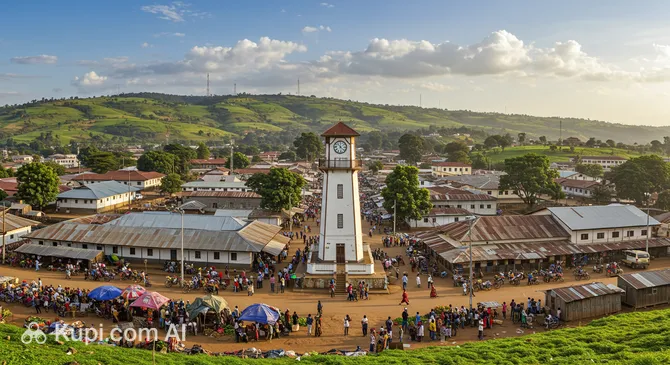
Songea does not possess a formal mass transit network such as a metro, tram, or large municipal bus system. Instead, the city relies on a decentralized and informal network of privately operated vehicles that keep the population moving. For visitors, this means navigating a system that is flexible and readily available, though it lacks the rigid schedules and designated stops found in larger global capitals.
The most common form of public transport is the dala-dala. These are minibuses that ply specific routes connecting the city center with outlying neighborhoods and nearby villages. They are the most affordable way to travel, though they can be crowded and often wait to fill up completely before departing. Stops are not always clearly marked with signs; locals generally know the gathering points, or you can simply wave one down along its route.
For more direct and flexible travel within the town, Bajajis (auto-rickshaws) are the preferred choice for many. These three-wheeled vehicles offer a balance between cost and comfort, providing protection from the sun and rain while being able to navigate smaller streets than a car. They are generally considered safer than motorcycles and are ideal for short to medium distances, such as getting from your hotel to a restaurant or the market.
Boda-bodas (motorcycle taxis) are ubiquitous and serve as the fastest way to get around, especially during busy times or on unpaved roads where cars might struggle. They are found at almost every street corner. While convenient, they require a degree of caution regarding safety; it is advisable to ask for a helmet and ensure the driver does not speed. This option is best suited for solo travelers carrying little to no luggage.
Standard taxis (private cars) are available but are less visible than in major tourist hubs. They do not typically cruise the streets looking for passengers. Instead, they park at specific stands, usually near the main market, the bus terminal, or major hotels. If you require a taxi for a day trip or an airport transfer, it is often best to have your hotel reception arrange a trusted driver for you.
Payment across all these modes of transport is exclusively in cash. There are no electronic travel cards, apps, or passes. For dala-dalas, the fare is fixed and very low; you pay the conductor during the journey. For Bajajis, boda-bodas, and taxis, fares are not metered. It is standard practice—and essential—to negotiate and agree on the price with the driver before the journey begins. Carrying small bills is highly recommended, as drivers often struggle to make change for large denominations.
Walking is also a viable and pleasant alternative for exploring the compact city center. Many of the key administrative buildings, shops, and the main market are within walking distance of each other. However, due to the lack of extensive sidewalks in some areas, pedestrians should remain alert to traffic. Car rentals are generally not available within the city itself, so self-driving is rare unless you have arrived with a vehicle rented from a larger regional hub.