Support

Ayutthaya

About

Ayutthaya is the true heart of ancient Thailand, a city where history comes to life at every step. Located approximately 70 kilometers north of Bangkok, Ayutthaya occupies a unique position on a picturesque island surrounded by three rivers: the Chao Phraya, Lopburi, and Pasak. This geographical location made the city an impregnable fortress in the past, and today it creates incredibly beautiful landscapes where the waters reflect the majesty of ancient temples.
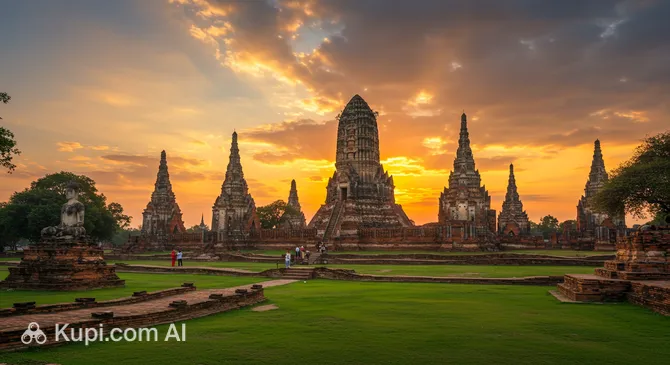
Ayutthaya. Illustration.
Source: Kupi.com AI

Today, Ayutthaya is home to about 53,000 people and serves as the administrative center of the province of the same name. Despite its relatively small size, Ayutthaya is of global significance. It is here that the majestic ruins of the once-powerful capital of Siam, which flourished for over four centuries from 1351 to 1767, have been preserved. These ancient stones hold the memory of former glory and significant historical events.

The atmosphere of Ayutthaya is surprisingly harmonious, where the past seamlessly meets the present. The majestic ruins of ancient temples and palaces sit alongside cozy modern cafes, lively local markets, and green parks. This is a place where every stone seems to tell its own legend, and the air is filled with the scents of incense and exotic fruits. The main attractions drawing travelers from all over the world include the Ayutthaya Historical Park, a UNESCO World Heritage site, the famous Buddha head entwined in tree roots at Wat Mahathat, and the impressive Wat Chaiwatthanaram temple complex on the riverbank.

Ayutthaya is an ideal destination for those seeking inspiration, those fascinated by ancient history, and those wishing to discover Thailand from a completely unexpected side. By visiting this city, you can feel like a true explorer, uncovering the secrets of bygone eras while enjoying authentic local cuisine and the hospitality of its residents.

You can find more interesting facts on the history of Ayutthaya page.
Weather Overview

The weather in Ayutthaya is characterized by a tropical climate, with high temperatures throughout the year. The city has two main seasons: the wet and hot season, which lasts roughly from May to October, and the drier and warm season from November to April. Average monthly temperatures range from 26.6°C in December (the coolest month) to 31.4°C in April (the hottest month), with daytime highs in April reaching as much as 36.3°C.

The highest rainfall occurs in September, with an average of 9 mm and about 26 rainy days. The driest months are December and January, when rainfall is virtually non-existent. For more detailed monthly weather information, you can check the full forecast: Ayutthaya climate.

Average monthly temperature

Average monthly precipitation

Interesting Facts

Beyond the majestic ruins that hold the memory of former power, Ayutthaya is full of fascinating stories and little-known details that make it even more attractive to travelers. Ready to learn a few of them?

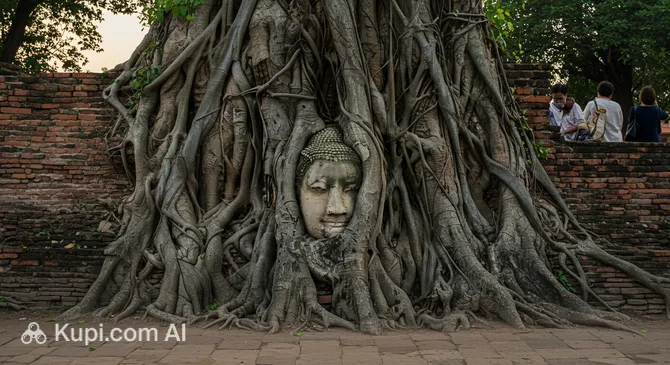
Wat Mahathat. Illustration.
Source: Kupi.com AI

Traveler photos:

  • During its peak in the 17th century, Ayutthaya was one of the largest cities in the world. Its population numbered around one million people—more than London or Paris at the time! The city was a major trading hub, attracting merchants from across Asia and Europe.

  • There is a legend that the site for founding the future capital was not chosen by chance. It is said that King U-Thong (Ramathibodi I), the city's founder, found an extraordinarily beautiful shell here, which was taken as a favorable omen for building the city.

  • The most famous image of Ayutthaya is the Buddha head entwined in tree roots at Wat Mahathat. It is believed that during the city's historical transitions, many statues were damaged, and one of the heads fell at the foot of a tree, which over time "embraced" it with its roots, creating this amazing and revered symbol.

  • Although the Ayutthaya Historical Park consists primarily of impressive ruins, some of the ancient temples, such as Wat Yai Chai Mongkhon, are still active today and serve as places of pilgrimage and worship for locals and tourists alike.

How to Get There

The most convenient way to reach the ancient capital of Thailand, Ayutthaya, is through Bangkok, as Ayutthaya does not have its own airport. The country's main international air gateways are in the capital, from where you can easily reach Ayutthaya by ground transport.

The most popular option is flying into Suvarnabhumi (IATA: BKK), Bangkok's primary international airport. This is a large, modern hub receiving flights from all over the world. It is located about 77 km southeast of Ayutthaya. A taxi ride from Suvarnabhumi to Ayutthaya takes about 2–2.5 hours, depending on traffic. You can also travel from the airport into Bangkok and then transfer to a train or bus to Ayutthaya.

Bangkok's other major airport is Don Mueang International Airport (IATA: DMK). It is slightly closer to Ayutthaya, approximately 51 km north of the city center. Don Mueang primarily serves low-cost carriers and domestic flights. A taxi ride from here to Ayutthaya takes about 1.5 hours. As with Suvarnabhumi, you can first go to a railway station or bus terminal in Bangkok and then continue your journey to Ayutthaya.

In addition to taxis, trains and buses run regularly from Bangkok to Ayutthaya. Trains depart from Bangkok's main railway station, Hua Lamphong, and from the Bang Sue Grand Station. Buses leave from the Northern Bus Terminal (Mo Chit) and other stations in the capital. The train or bus journey typically takes between 1.5 and 2.5 hours and is a more budget-friendly option.

For convenience, here is a summary of the main airports used to reach Ayutthaya:

AirportPassenger trafficDistance
Don Mueang International Airport30.5 mln51 km
Suvarnabhumi Airport62.2 mln77 km
Utapao Airport370 210192 km
Hua Hin Airport74 242204 km
Dawe Airport85 000259 km

Main Attractions

Ayutthaya, the ancient capital of Siam, offers travelers a unique opportunity to touch the history of Thailand. The city is famous for its majestic temple ruins, which serve as a reminder of the kingdom's former power. Here are several key attractions that should not be missed in Ayutthaya.

One of the most photographed and symbolic sites is Wat Mahathat. This ancient temple, founded in the 14th century, is best known for the Buddha head miraculously entwined in the roots of a sacred banyan tree. In addition to this famous image, which attracts pilgrims and photographers from around the world, you can explore the ruins of numerous prangs (towers) and chedis (stupas) across the vast temple complex, testifying to its former splendor and important status.

Wat Mahathat. Illustration.
Source: Kupi.com AI

Traveler photos:

No less impressive is Wat Yai Chai Mongkhon, which remains an active monastery today. It is easily recognized by its enormous, majestic stupa surrounded by rows of Buddha statues clad in traditional saffron robes. The temple was built by King U-Thong in the 14th century to commemorate a victory. Tourists come here to climb the high stupa for a breathtaking panoramic view of the surroundings and to see the large Reclining Buddha statue located within the monastery grounds.

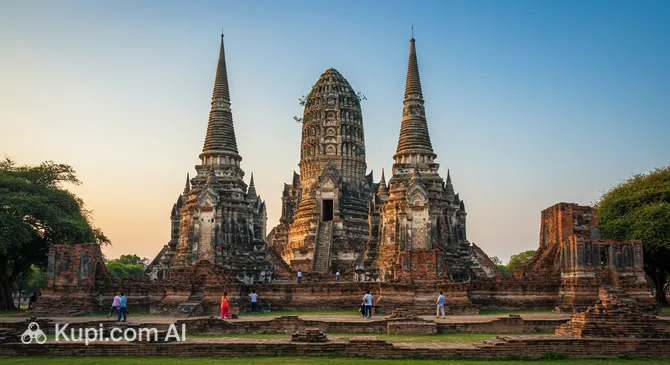
Wat Phra Si Sanphet was once the largest and perhaps the most beautiful temple in ancient Ayutthaya, serving as the royal chapel and the site for the most important ceremonies. It is famous for its three large chedis standing in a row, which once housed the ashes of three Siamese kings. These elegant stupas are the hallmark of the Ayutthaya Historical Park and are frequently featured on postcards and in guidebooks. The temple was located within the Grand Palace grounds, which unfortunately have not survived to this day.

Wat Phra Si Sanphet. Illustration.
Source: Kupi.com AI

Traveler photos:

For those wishing to dive deeper into the rich history and culture of the ancient capital, a visit to the Chao Sam Phraya National Museum is highly recommended. Its halls house an impressive collection of artifacts found during archaeological excavations in Ayutthaya and its surroundings. Among the exhibits, you can see exquisite gold jewelry, ancient bronze Buddha statues from various eras, royal household items, and weaponry. The museum's exhibition helps to better understand the art, religion, and daily life of the Ayutthaya period.

Local Cuisine

The gastronomic scene in Ayutthaya is inextricably linked to its rich history and location at the confluence of rivers, making fresh river delicacies the highlight of local cuisine. The city's culinary hallmark, which you must try, is "Goong Phao"—giant river prawns grilled to perfection. They are served with a spicy, zesty dipping sauce and fresh herbs, and enjoying this delicacy is particularly pleasant in one of the many restaurants right on the riverbank.

Another iconic dish of Ayutthaya is the aromatic "Kuay Tiao Ruea", also known as "boat noodles." Legend has it that the recipe originated here in the floating markets to quickly and nutritiously feed the merchants. These noodles in a rich broth with pieces of meat, spices, and fresh herbs are a true taste of history. For dessert, be sure to try "Roti Sai Mai"—a sweet treat resembling fine sugar threads wrapped in a soft crepe. It is sold everywhere, especially near temples and at markets.

Street food in Ayutthaya is an adventure for foodies. At every turn, you can find stalls with fried bananas, corn candies, fresh tropical fruits, and refreshing drinks made with coconut milk. To fully experience the local flavor and try authentic dishes, head to the local markets. One such lively spot where you can immerse yourself in the city's culinary atmosphere is the Chao Phrom Market. Here you will find not only produce but also ready-made treats.

Chao Phrom Market. Illustration.
Source: Kupi.com AI

Traveler photos:

Regarding beverages, besides the aforementioned fruit shakes and coconut water, fresh-pressed juices and iced tea are popular in Ayutthaya, as in all of Thailand. For those who prefer something stronger, local establishments offer Thai beer. Overall, Ayutthaya's food scene attracts tourists with its variety, the freshness of its products—especially river seafood—and the opportunity to sample dishes with a rich history right on the streets of the ancient capital.

Travel Tips

Welcome to Ayutthaya, the ancient capital of Siam! To make your journey through this amazing city, full of historical treasures, as comfortable and memorable as possible, we have prepared some practical tips.

  1. Clothing and Essentials:

    The climate in Thailand is tropical, so for Ayutthaya, choose light, breathable clothing made from natural fabrics. Don't forget a hat, sunscreen, and sunglasses. For exploring the numerous temples and ruins, you will need comfortable shoes. It's important to remember the dress code when visiting religious sites: shoulders and knees must be covered. A light scarf or sarong can be very useful. Also, bring a universal power adapter and mosquito repellent, especially if you plan to walk in the evening.

  2. City Transport:

    The best way to explore the Ayutthaya Historical Park is by renting a bicycle. It's inexpensive and allows you to move at your own pace. Another popular option is to hire a tuk-tuk for a few hours or the whole day; be sure to agree on the price in advance. For shorter trips, you can use motorbike taxis. Renting your own scooter is possible but requires driving experience and the appropriate license. Ride-hailing apps like Grab may also be available.

  3. Finances:

    The local currency is the Thai Baht (THB). You can exchange money at banks or exchange offices; rates in the city are usually better than at the airport. Credit and debit cards (Visa, Mastercard) are accepted in most hotels, restaurants, and large stores, but for markets and small shops, it's better to have cash. ATMs are widely available, but be aware of potential fees. A rough daily budget might be 1,000–2,000 Baht, excluding accommodation. Tipping is not mandatory but appreciated for good service (a small amount in cafes, about 10% in restaurants if service is not included in the bill).

  4. Health and Safety:

    Ayutthaya is considered a relatively safe city for tourists. However, as with anywhere, you should follow basic precautions: keep an eye on your belongings, especially in crowded places, and don't leave valuables unattended. Drink only bottled water. There are pharmacies in the city, but not all are open 24/7; it's recommended to carry a basic first-aid kit. Be sure to take out travel medical insurance before your trip.

  5. Communication:

    The official language is Thai. In Ayutthaya's tourist areas, staff at hotels, restaurants, and shops often speak basic English. Learn a few simple Thai phrases, such as "Sawatdee khrap/kha" (Hello/Goodbye) and "Khop khun khrap/kha" (Thank you)—this is always appreciated by locals. You can purchase a local SIM card with internet access at the airport or at 7-Eleven stores. Wi-Fi is available in most hotels and many cafes.

  6. Local Etiquette:

    Thais are very polite and hospitable people. Show respect for local traditions. The head is considered a sacred part of the body—do not touch a Thai person's head. Conversely, feet are considered the "lowest" part of the body—do not point them at people or sacred images. When visiting temples, behave with restraint, follow the dress code, and remove your shoes before entering. Special reverence is shown to the Royal Family in Thailand.

  7. What to Avoid:

    Strictly avoid any display of disrespect toward Buddha images and members of the Royal Family—this can lead to serious consequences. Do not climb on ancient statues and ruins for the sake of a photo. Also, try not to raise your voice or engage in loud arguments in public, as Thai culture values the ability to "save face."

  8. Additional Tip for Ayutthaya:

    Try to visit the ancient temple ruins at sunrise or sunset. At these times, it's not as hot, there are fewer tourists, and the soft light creates a truly magical atmosphere for photos and leisurely walks. Also, consider taking a boat trip around Ayutthaya island—this will allow you to see many attractions from a different perspective.

We hope these tips help you better plan your trip and get the most out of visiting majestic Ayutthaya. We wish you unforgettable experiences in this historical heart of Thailand!

Entertainment & Nightlife

Ayutthaya, the ancient capital of Siam, impresses by day with the grandeur of its temple complexes, and as evening falls, it offers a more tranquil but equally interesting experience. You won't find bustling club districts like in Bangkok or Pattaya here, but there is a special evening entertainment atmosphere centered around night markets, cozy restaurants, and bars.

The main hub of evening activity in Ayutthaya is often the night markets and their adjacent streets. One such lively spot is the Chao Phrom Market. As the sun sets, vendors begin selling local delicacies, fresh fruit, souvenirs, and clothing. It is an excellent place not only for shopping but also for a delicious and inexpensive dinner while observing the city's daily life. The atmosphere at these markets is very vibrant and authentic, attracting both locals and tourists. They usually operate until late evening, around 10:00 PM to 11:00 PM.

For a quieter dinner and a pleasant evening, look to the riverside restaurants, many of which offer Thai cuisine and magnificent views of the illuminated ancient ruins. You can also find several bars in the city where you can relax with a cocktail or a glass of local beer. These are generally small establishments with a casual atmosphere where a strict dress code is not required. The crowd here is diverse—ranging from backpackers to families enjoying a peaceful evening.

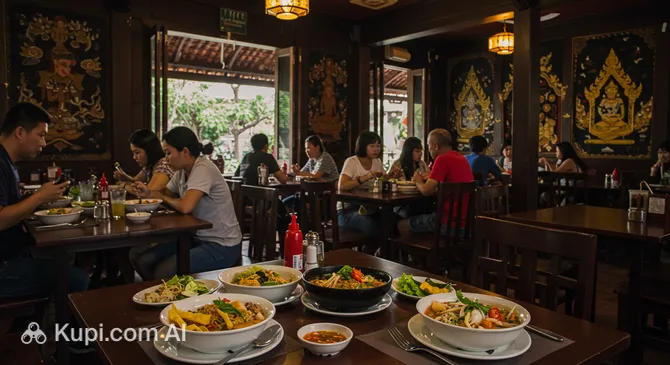
Among the places where you can spend a pleasant evening over dinner are Mother-in-Law's Khanom Mo Kaeng, famous for its traditional local desserts, or Khanom Chin Ton Kampu Ayutthaya, which serves authentic Thai noodles. While these are not nightclubs in the traditional sense, they offer a cozy atmosphere to end the day.

Mother-in-law's Khanom Mo Kaeng. Illustration.
Source: Kupi.com AI

Traveler photos:

Practical Tips and Safety:

When planning your evening leisure in Ayutthaya, keep in mind that night market activity usually starts after dark, around 6:00 PM to 7:00 PM. Most restaurants and bars stay open until midnight or slightly later. Prices in the city are quite reasonable: dinner at a night market can cost just a few dollars, while a restaurant will be more expensive but generally affordable. The main mode of transport in the evening is the tuk-tuk; always agree on the fare in advance. You might also consider using ride-hailing apps if they are active in the region. Ayutthaya is considered a relatively safe city. Nevertheless, it is recommended to follow standard precautions: keep an eye on your belongings and avoid poorly lit or deserted areas late at night. For calling a taxi, it is more reliable to use official services or verified apps.

While Ayutthaya's nightlife is more laid-back, the city offers a rich cultural program during the day. The main reason tourists visit is to see the numerous ancient temples and ruins, such as the famous Wat Mahathat with the Buddha head in the tree roots or the majestic Wat Phra Si Sanphet. To delve deeper into the region's history, it's worth visiting the Chao Sam Phraya National Museum or checking out the original Million Toy Museum. Families with children might enjoy a trip to the Ayutthaya Elephant Palace & Royal Kraal. There are no classic amusement parks in the city, as Ayutthaya is primarily focused on historical and cultural tourism.

Parks & Museums

Ayutthaya, the ancient capital of Siam, offers travelers a unique combination of majestic ruins, which are essentially open-air museums, and specialized cultural institutions. The city literally breathes history, and exploring its parks and museums is key to understanding its rich past.

The main "green zone" and also a vast historical space in Ayutthaya is the Ayutthaya Historical Park, recognized as a UNESCO World Heritage site. It is not a park in the traditional sense, but an enormous territory where the ruins of ancient temples and palaces are scattered amidst picturesque landscapes. It can be explored on foot, by bicycle, or even on an elephant. Iconic sites within the park include Wat Phra Si Sanphet, once the most important temple of the royal palace, striking for its three majestic chedis. Equally famous is Wat Mahathat, known for the Buddha head peacefully grown into tree roots—a symbol of resilience and the passage of time.

Wat Mahathat. Illustration.
Source: Kupi.com AI

Traveler photos:

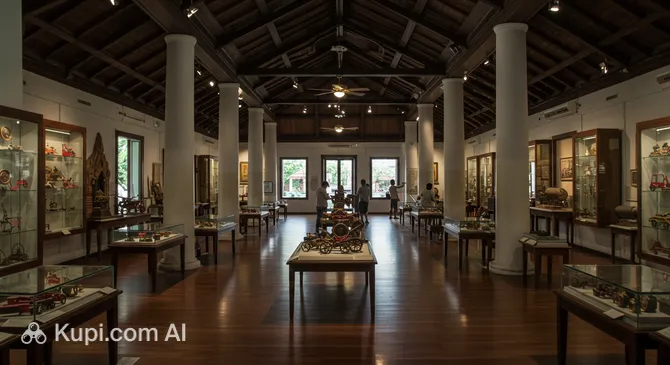
For a deeper immersion into the city's history and culture, a visit to the Chao Sam Phraya National Museum is a must. Its halls house priceless artifacts discovered during excavations in the ancient capital, including golden treasures from royal tombs, items of Buddhist art, and ancient ceramics. The museum's exhibition helps one imagine the full splendor and power of Ayutthaya during its golden age. A completely different experience is offered by the Million Toy Museum. This wonderful place will be interesting for both children and adults, as its collection includes toys from different eras and countries, each telling its own little story.

Million Toy Museum. Illustration.
Source: Kupi.com AI

Traveler photos:

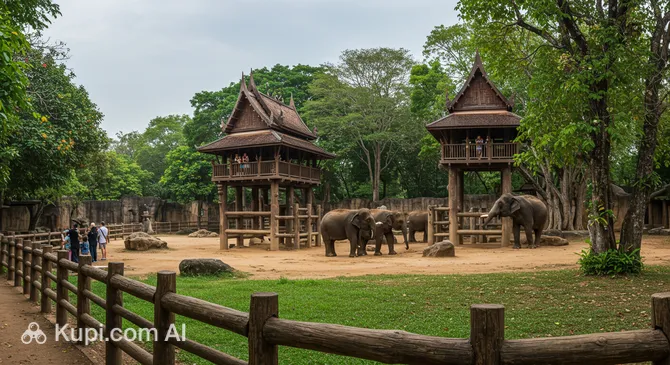
Beyond temples and museums, there are other interesting spots in Ayutthaya. For example, the Ayutthaya Elephant Palace & Royal Kraal offers a unique opportunity to get closer to these majestic animals, which played a significant role in Thailand's history. Here, you can not only see the elephants but also learn about their importance in the country's culture.

Elephant Royal Kraal Village. Illustration.
Source: Kupi.com AI

Traveler photos:

To get a truly authentic experience of Ayutthaya, don't be afraid to step off the beaten tourist path and explore the less-known but equally picturesque temple ruins scattered throughout the city. Also, stop by one of the local markets, such as the Chao Phrom Market, to feel the atmosphere of daily life and sample local delicacies.

Getting Around

Getting around Ayutthaya is quite simple, although it lacks the subways or trams common in megacities. The focus is on transport that allows you to conveniently view the city's numerous historical monuments. Tourists most often use tuk-tuks, rent bicycles or motorbikes, or travel by boat.

Tuk-tuks are one of the most popular ways to get around Ayutthaya, especially for visiting temples located some distance apart. These are three-wheeled motor rickshaws whose drivers often offer both short trips and hourly rentals for tours of the main attractions. The fare is usually negotiable, so it is recommended to discuss the price with the driver before starting your journey. Payment is made in cash.

For a leisurely exploration of the ancient capital's ruins, bicycle rental is ideal. Numerous rental points can be found near the historical park and guesthouses. This is not only an economical but also a pleasant way to get to know the city. Motorbike rental is also available for those who prefer more mobility and speed. Typically, a deposit or passport is required for rental.

Songthaews (pick-up trucks converted for passenger transport) also ply the city and its surroundings. They may follow specific routes or operate like a shared taxi. This is a more budget-friendly option than a tuk-tuk but less flexible. Payment is made in cash to the driver. Local buses mainly connect Ayutthaya with other towns and are less frequently used by tourists for getting around within the city.

Given that Ayutthaya is surrounded by rivers, boats play an important role not just as a means of transport for crossing, but as a way to take a fascinating excursion around the island where the historical center is located. You can hire a private boat for an individual tour or join a group excursion.

The payment system for public transport in Ayutthaya is primarily cash-based. There are generally no special transit cards for tourists. Tickets for boat excursions can be purchased at the piers. Most tourist-oriented transport operates during daylight hours. For short distances, especially within temple complexes, it is quite comfortable to move around on foot. Classic metered taxis are less common than in larger cities; ride-hailing apps may have limited coverage.

Accommodation

When planning a trip to Ayutthaya, you'll find that the city offers a variety of accommodation options for every taste and budget. You can find everything from cozy guesthouses and inexpensive hotels, perfect for backpackers, to more comfortable mid-range hotels, charming boutique hotels, and even apartment rentals for longer stays.

Many tourists prefer to stay in areas located in close proximity to the Ayutthaya Historical Park, which provides easy access to the main temples and ruins. Riverside accommodation options are also popular, offering picturesque views. Choosing lodging in these zones will allow you to fully immerse yourself in the atmosphere of the ancient capital of Thailand.

The price range for accommodation in Ayutthaya varies from very budget-friendly to mid-range and moderately high, depending on the level of comfort and location. You can book accommodation through popular online platforms, directly on hotel websites, or, in the case of small guesthouses, sometimes on the spot, although advance booking is preferred.

To ensure the best selection and prices, especially if your trip coincides with the peak tourist season or weekends, it is recommended to book your accommodation in advance. This will help avoid disappointment and ensure you find an option that suits you perfectly.

Nearby Cities

For those looking to explore the surroundings, Ayutthaya serves as an excellent starting point for day trips to several interesting nearby locations:

CityPopulationDistance
Ban Krot9 4716 km
Bang Ban11 09214 km
Bang Sai12 13621 km
Pa Mok8 75821 km
Phak Hai9 90525 km

Among these cities, a few are particularly worth considering for short excursions from Ayutthaya.

Pak Kret, located about 51 km away, attracts tourists with its famous island of Koh Kret. This place is known for the unique culture of the Mon people, traditional pottery workshops, and a peaceful atmosphere ideal for leisurely walks and discovering local crafts on the banks of the Chao Phraya River.

Saraburi, situated just 39 km from Ayutthaya, is an important religious center. Its main attraction is Wat Phra Phutthabat, where, according to tradition, a footprint of the Buddha is preserved. Additionally, the Saraburi area will delight nature lovers with its picturesque national parks and waterfalls.

These nearby destinations provide an insight into the diverse culture and landscapes of the region.

Shopping & Souvenirs

Shopping in Ayutthaya is, first and foremost, an immersion into local color rather than a pursuit of global brands. The city is famous for its handmade goods, souvenirs reflecting its rich history, and traditional Thai products. You won't find massive malls like in Bangkok here, but you can purchase unique items to remember the ancient capital of Siam.

The main shopping areas in Ayutthaya are concentrated around historical sites and at local markets. Small shops and souvenir stalls can often be found near the major temple complexes. There are few specialized shopping streets in the European sense; shopping here tends to be spontaneous while touring the city.

Large modern shopping centers, familiar to residents of megacities, are practically non-existent in Ayutthaya. Most trade is centered in small shops, markets, and souvenir boutiques. If you need a wider selection of everyday goods, you can look for local department stores or supermarkets, but these primarily cater to the local population.

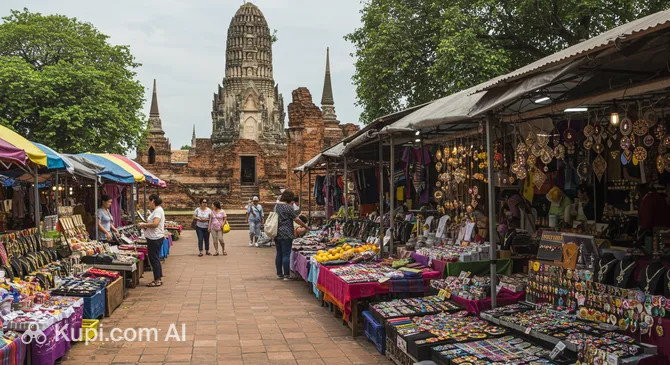
Markets are where the commercial life of Ayutthaya truly thrives. One of the most famous and colorful is the Chao Phrom Market. Here you can find fresh produce, ready-to-eat food, clothing, household goods, and, of course, souvenirs. It's a great place to observe the daily lives of citizens and buy something authentic. There may also be night markets operating in the city, offering street food and various goods in the evening.

Chao Phrom Market. Illustration.
Source: Kupi.com AI

Traveler photos:

From Ayutthaya, it's worth bringing home souvenirs that recall its former glory. Popular items include miniature replicas of temples, Buddha figurines (special export permits may be required for antique or particularly valuable Buddha images), and items featuring elephants, which are a symbol of Thailand. Also, look out for traditional Thai fabrics, batik, woodwork, and ceramics. Local sweets, such as Roti Sai Mai (cotton candy in a thin pancake), can make a delicious and unusual souvenir.

Most shops in Ayutthaya are open from the morning (around 9:00–10:00 AM) and work until evening (6:00–8:00 PM). Markets, especially food markets, start operating early in the morning. Night markets, accordingly, open after dark. In small shops and markets, cash (Thai Baht) is the preferred method of payment. Credit cards may be accepted in some hotels and larger souvenir shops, but it's always best to have enough cash on hand.

Tourists in Thailand may be eligible for a VAT Refund when purchasing goods in stores participating in the program (look for the "VAT Refund for Tourists" sign). To qualify, you must make a purchase of a certain minimum amount in a single receipt, fill out the special PP10 form at the store, and present it along with the goods and receipts at the airport when departing the country. Check the specific conditions directly in the stores.

Reached the end of the page?

That means the route is fully explored