Support

Kanchanaburi

About

Kanchanaburi is a true oasis of adventure and tranquility located in western Thailand, just a few hours' drive from bustling Bangkok. The city is picturesquely situated on the banks of two rivers — the Kwai Yai and Kwai Noi — at the foot of the mountains, surrounded by lush tropical forests and national parks. This location creates a unique atmosphere of harmony with nature and offers fresh air that attracts travelers seeking a break from the urban hustle and bustle.
Kanchanaburi. Illustration.
Source: Kupi.com AI

With a population of just over 25,000 people, Kanchanaburi retains the charm of an intimate and welcoming place where every visitor feels like a guest. As the administrative center of the province of the same name, the city offers a wonderful blend of provincial life and the necessary tourist infrastructure, making it an excellent starting point for exploring the surrounding areas.

Kanchanaburi is primarily famous for its breathtaking waterfalls, mysterious caves, and turquoise lakes hidden within its national parks. Popular activities include elephant encounters, river rafting, fishing, and leisurely trips on bamboo rafts. History buffs will find many museums and monuments telling the story of the region's past, while nature lovers will be delighted by the unique landscapes and exotic flora.

The atmosphere of Kanchanaburi is a rare combination of adventure and serenity. Everyone will find something to their liking here: whether it's romantic sunsets over the river, exciting jungle excursions, or cozy evenings in local restaurants. Kanchanaburi is a city that leaves vivid impressions and makes you want to return again and again.

You can find more interesting facts on the history of Kanchanaburi page.
Weather Overview

Kanchanaburi is characterized by a tropical climate with high temperatures throughout the year. The hottest months are April and May, when the average temperature rises above 30°C (in April the average is 30.9°C, in May 30.6°C), and maximum values can reach 36.3°C in April. It is relatively coolest in December and January, with average temperatures around 25-26°C (25.3°C in December, 25.9°C in January). The rainy season usually lasts from May to October, with September being the month with the highest rainfall (averaging 7 mm) and the highest number of rainy days (around 25). The driest period falls between December and March, when rainfall is minimal (0-1 mm per month).

Thus, in Kanchanaburi, you can expect hot weather year-round, with a wet season bringing rain primarily from May to October, and a drier but still very warm period from November to April. To learn more about weather conditions and choose the best time for your trip, visit the Climate in Kanchanaburi page.

Average monthly temperature

Average monthly precipitation

Interesting Facts

Kanchanaburi is more than just a famous bridge and picturesque nature. This city in Thailand holds many surprising stories and lesser-known details that make it a truly unique place to explore. Here are just a few of them:

Bridge on the River Kwai. Illustration.
Source: Kupi.com AI

Traveler photos:

  • In the city's vicinity lies the Three Pagodas Pass — an ancient route that for centuries connected Siam (modern-day Thailand) and Burma. This pass was not only a vital trade artery but also a route for armies and pilgrims. The three small pagodas at the pass symbolize peace and serve as a reminder of the region's rich and sometimes dramatic history.

  • Although Kanchanaburi was founded by King Rama I as a strategic defensive outpost, the city took its modern shape much later, in 1833, during the reign of King Rama III. Interestingly, it is believed that descendants of ancient peoples who inhabited this territory as far back as the Neolithic era still live in these lands, adding a special depth to Kanchanaburi's cultural heritage.

  • Kanchanaburi is known for its colorful festivals, but one of the most unusual and distinctive is the bamboo raft parade. During this celebration, locals turn the river into a real stage for a carnival, decorating rafts with flowers and lanterns and hosting vibrant performances on them, showcasing their culture and traditions.

  • Kanchanaburi gained worldwide fame through the legendary Bridge over the River Kwai and the tragic history of the "Death Railway" associated with it. However, to understand this period more deeply, it is worth visiting the Death Railway Museum and Research Centre. It houses unique exhibits, photographs, and testimonies recounting the construction of the railway and the fates of the prisoners of war.

How to Get There

You can reach the city of Kanchanaburi in several ways; however, there are no direct flights to the city itself, as it does not have its own airport. Most tourists arrive via Bangkok's international airports and then continue their journey by land transport.

The main international aviation hub in Thailand used by many travelers to reach Kanchanaburi is Suvarnabhumi Airport (BKK). Located in Bangkok, it is one of the largest and busiest airports in Southeast Asia, handling flights from all over the world. It is situated about 137 km from Kanchanaburi. A taxi ride or a trip in a rented car from here to Kanchanaburi will take approximately 3.5 to 4 hours, depending on traffic conditions.

Another major airport in the capital is Don Mueang International Airport (DMK), also located in Bangkok. It specializes in low-cost carriers and domestic flights, but also handles international ones. The distance from Don Mueang to Kanchanaburi is about 117 km, making it the closest major airport to the city. Travel time by car from here to Kanchanaburi is roughly 3 to 3.5 hours.

A less common but possible option is flying into Hua Hin Airport (HHQ), which serves the namesake resort. This small airport is about 160 km from Kanchanaburi, and a car journey from here will take around 4 to 4.5 hours.

From any of the mentioned airports, you can reach Kanchanaburi by taxi, by booking a private transfer, or by renting a car. There is also the option of using public transport, such as buses from Bangkok to Kanchanaburi, although this requires first traveling to a bus terminal in Bangkok.

For clarity, here is a summary of the airports through which you can reach Kanchanaburi:

AirportPassenger trafficDistance
Don Mueang International Airport30.5 mln117 km
Suvarnabhumi Airport62.2 mln137 km
Dawe Airport85 000144 km
Hua Hin Airport74 242160 km
Myeik Airport201 km

In addition to flying to the nearest airports and subsequent transfer, traveling by land directly from Bangkok is very popular. Regular buses and minivans depart from several bus terminals in the Thai capital, such as the Southern Bus Terminal (Sai Tai Mai) or the Northern Bus Terminal (Mo Chit). A bus trip usually takes 2 to 3 hours and is the most budget-friendly and common way to get to Kanchanaburi.

Main Attractions

Kanchanaburi, a city with a rich and sometimes poignant history, offers tourists many interesting places to visit. Here, everyone will find something for themselves: from iconic historical monuments to modern observation decks offering breathtaking views.

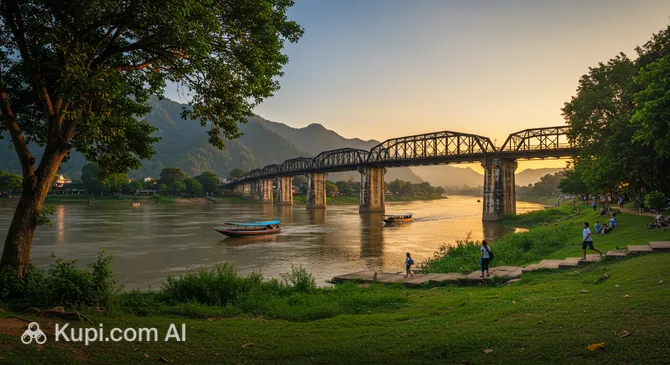
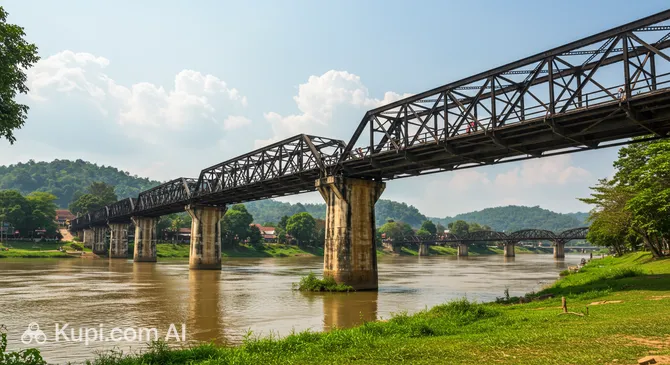
One of the most famous landmarks is the Bridge over the River Kwai. This bridge is part of the infamous "Death Railway," built during World War II. Today, the site attracts tourists with its historical significance and the opportunity to walk across the bridge itself while enjoying views of the River Kwai and its surroundings. It stands as a symbol of resilience and a reminder of the difficult events of the past.

Bridge on the River Kwai. Illustration.
Source: Kupi.com AI

Traveler photos:

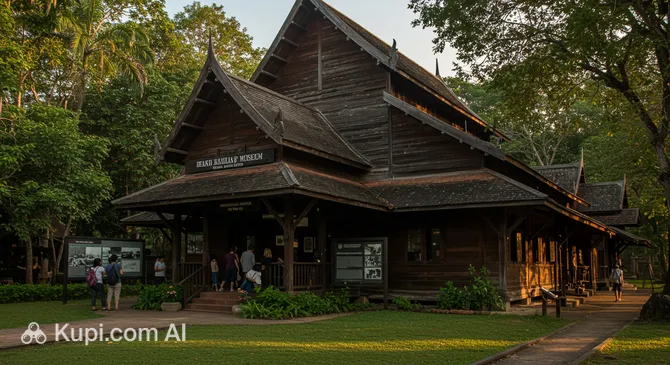
To delve deeper into the history of the construction of the "Death Railway," it is worth visiting the Death Railway Museum and Research Centre. It houses exhibits, photographs, and personal stories that recount the harsh working conditions and the sacrifices made during the railway's construction. The museum plays an important role in preserving the memory of these historical events.

Death Railway Museum and Research Centre. Illustration.
Source: Kupi.com AI

Traveler photos:

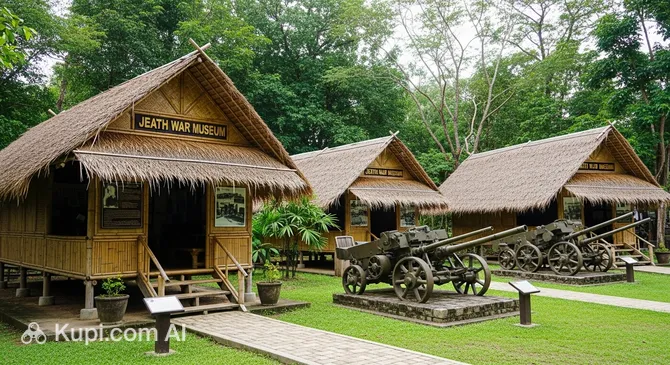
Another important site dedicated to this theme is the JEATH War Museum. The museum's name is an acronym for the countries whose soldiers were involved in the construction (Japan, England, Australia/America, Thailand, Holland). The museum's exhibition includes reconstructions of the bamboo huts where prisoners lived, as well as personal items and photographs that help visitors better understand the scale of the tragedy.

JEATH War Museum. Illustration.
Source: Kupi.com AI

Traveler photos:

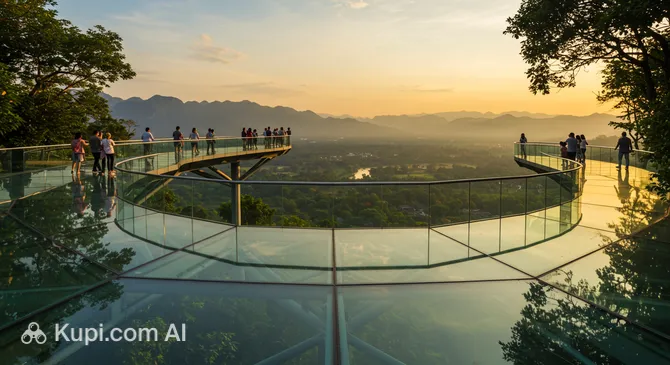
For those seeking more modern experiences and spectacular views, the Kanchanaburi Skywalk is an excellent choice. This glass-floored observation deck offers a panoramic view of the city, the River Kwai, and the surrounding landscapes. It is a wonderful place to take striking photos and see Kanchanaburi from a new, unexpected perspective.

Kanchanaburi Skywalk. Illustration.
Source: Kupi.com AI

Traveler photos:

In addition to these key sites, there are other interesting objects in and around Kanchanaburi, including temples such as Wat Deva Sangharam, and natural wonders that make this region attractive to travelers.

Local Cuisine

The gastronomy of Kanchanaburi is an exciting journey for your taste buds, where traditional Thai recipes harmonize with local culinary characteristics. Thanks to its proximity to the Kwai Yai and Kwai Noi rivers, fresh river fish is often the main ingredient in many dishes. The local cuisine will delight both fans of the classics and those seeking new culinary experiences.

Be sure to try the famous Tom Yum soup, which in Kanchanaburi is often prepared with local river fish such as catfish or eel, as well as shrimp. This fragrant and spicy soup is a signature dish of Thai cuisine. Another culinary symbol of the city is Khao Lam — sticky rice mixed with coconut milk and sugar, baked inside a bamboo tube. This sweet and filling treat can be found at street markets and from local vendors.

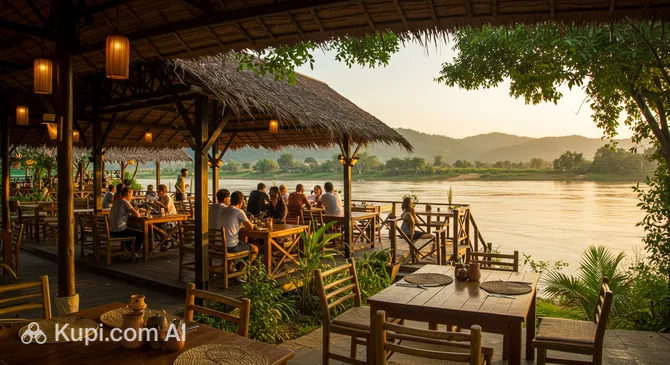
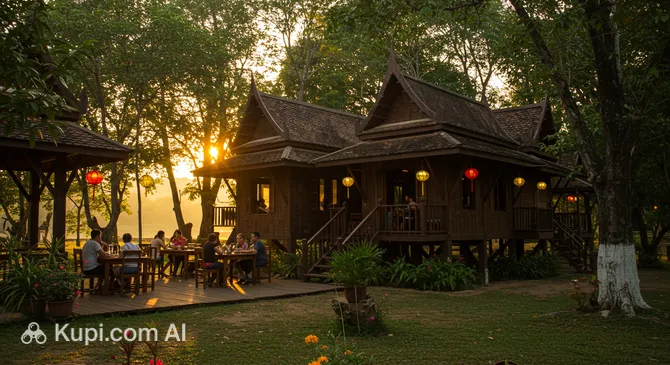
Keereetara Riverside. Illustration.
Source: Kupi.com AI

Traveler photos:

Lovers of more exotic flavors should look out for wild boar or venison curry, seasoned with aromatic herbs and spices. Street food in Kanchanaburi is an attraction in itself. Visit the night market, where a kaleidoscope of flavors awaits: from fragrant chicken and pork skewers (Moo Ping and Gai Yang) and sweet banana roti pancakes to fried insects for the boldest gourmets.

Among drinks, refreshing freshly squeezed juices and shakes made from tropical fruits like mango, pineapple, passion fruit, and guava are particularly popular, as is coconut water served directly from the nut. Of course, standard Thai alcoholic beverages, such as local beer, are always available. Locals and tourists often prefer to dine in small authentic cafes, at lively markets, or in restaurants with river views, such as Keeree Tara Riverside, where you can enjoy not only the food but also the atmosphere.

Travel Tips

Planning a trip to Kanchanaburi? Wonderful! This city in Thailand, known for its poignant history and picturesque nature, will undoubtedly give you many lasting impressions. To ensure your journey goes as smoothly as possible and leaves only warm memories, we have prepared a few practical tips.

  1. Clothing and Essentials: Kanchanaburi has a tropical climate, so choose light, breathable clothing made from natural fabrics. Don't forget a hat, sunscreen, and sunglasses. For walking around the city and visiting natural attractions like waterfalls, you will need comfortable shoes. When visiting temples (such as the famous Tiger Cave Temple Wat Tham Suea) and memorial complexes, choose clothing that covers your shoulders and knees. A universal power adapter will also be useful.
  2. Transportation around the City and Surroundings: The main form of public transport in Kanchanaburi is songthaews (pickups converted for passenger transport) and motorbike taxis (tuk-tuks), the price for which is best agreed upon in advance. For greater freedom of movement, especially if you plan to explore the surroundings like national parks, you can rent a scooter. Remember to drive on the left and ensure you have an international driving permit of the appropriate category.
  3. Finances: The national currency is the Thai Baht (THB). You can exchange money at banks or exchange offices. Credit cards are accepted in most hotels, large restaurants, and shops, but for markets and small stalls, it's always better to have cash with you. ATMs are quite common. Tipping in Thailand is not mandatory but is welcomed for good service (usually 10-20 Baht or rounding up the bill).
  4. Health and Safety: There are pharmacies in the city where you can buy basic medications. For serious cases, there are hospitals and clinics. Be sure to take out travel insurance before your trip. Kanchanaburi is considered a relatively safe city, but standard precautions are still wise: keep an eye on your belongings, especially in crowded places, and use mosquito repellent, particularly near water and in the evenings. Drink only bottled water.
  5. Communication: The official language is Thai. In the tourism sector, many people speak English, but knowing a few basic phrases in Thai (e.g., "Sawatdee" – hello/goodbye, "Khop khun" – thank you) will be greatly appreciated by the locals. You can purchase a local SIM card for mobile internet at the airport or in 7-Eleven stores. Wi-Fi is available in most hotels and many cafes.
  6. Local Etiquette: Thai people highly value politeness and respect. The traditional greeting is the "Wai" (palms pressed together in a prayer-like gesture). Smile — it's a universal language. It is important to show deep respect to the King of Thailand and Buddhist shrines. Remove your shoes before entering temples and private homes. Do not touch the heads of locals (considered a sacred part of the body) and do not point at anyone or anything with your feet.
  7. What to Avoid: It is strictly not recommended to speak disrespectfully of the Thai royal family or Buddhist symbols. Do not climb on Buddha statues for photos. When visiting historical sites related to the "Death Railway," behave in a restrained and respectful manner, remembering the tragic events of the past.
  8. Mindful Visiting of Historical Sites: Kanchanaburi is a place with a deep and sometimes tragic history associated with the construction of the "Death Railway." When visiting the Bridge over the River Kwai, war cemeteries, and museums such as the Hellfire Pass Memorial Museum, treat them with respect and reflection. These are not just tourist attractions, but important historical monuments that require a delicate approach.

We hope these tips help you better prepare for your trip and enjoy every moment in amazing Kanchanaburi. Have a wonderful journey and exciting discoveries in this unique corner of Thailand!

Entertainment & Nightlife

Evening in Kanchanaburi offers a calm and relaxing atmosphere, quite different from the noisy metropolises of Thailand. There are no massive night clubs or red-light districts here, but there are plenty of cozy spots where you can enjoy your time after sunset. Most evening venues are concentrated along Maenamkwai Road and near the River Kwai, where numerous bars and restaurants cater to both tourists and locals.

The atmosphere in most establishments is laid-back. You will find everything from quiet bars with live music to riverside restaurants serving Thai and international cuisine. Many of them stay open until midnight or slightly later. As a rule, there is no dress code — comfortable casual clothing is perfectly appropriate. Prices in Kanchanaburi's bars and restaurants are generally moderate, making evening relaxation very accessible.

Among the popular spots for dinner and evening relaxation is the Keeree Tara Riverside restaurant, known for its picturesque waterfront terrace and delicious food. Another pleasant venue is Plakan Log Home, which offers a cozy setting. Although Kanchanaburi isn't famous for wild discos, some bars offer music and dancing opportunities, especially during the peak tourist season. Night markets are also part of the evening life, offering street food and souvenirs.

Plakan Log Home. Illustration.
Source: Kupi.com AI

Traveler photos:

For getting around the city at night, you can use tuk-tuks or motorbike taxis. It is recommended to agree on the fare in advance. Overall, Kanchanaburi is considered a safe city; however, as with anywhere else, basic precautions should be taken, especially after dark, and you should stick to well-lit streets. You can often call a taxi or arrange transport directly from a restaurant or bar.

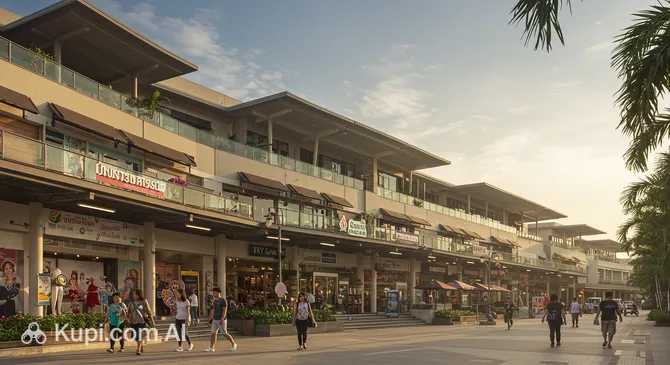
During the day, Kanchanaburi also has plenty to offer. The city and its surroundings are rich in historical and natural attractions. A visit to the famous Bridge over the River Kwai is a must, as are museums like the Death Railway Museum and Research Centre or the JEATH War Museum to better understand the region's history. For shopping enthusiasts, there are shopping centers such as Robinson Lifestyle Kanchanaburi.

Lifestyle Kanchanaburi. Illustration.
Source: Kupi.com AI

Traveler photos:

Parks & Museums

Kanchanaburi is a city where poignant history intertwines with the peaceful beauty of nature. In addition to the famous Bridge over the River Kwai, the city and its surroundings offer visitors both green oases for relaxation and informative museums that preserve the memory of the past.

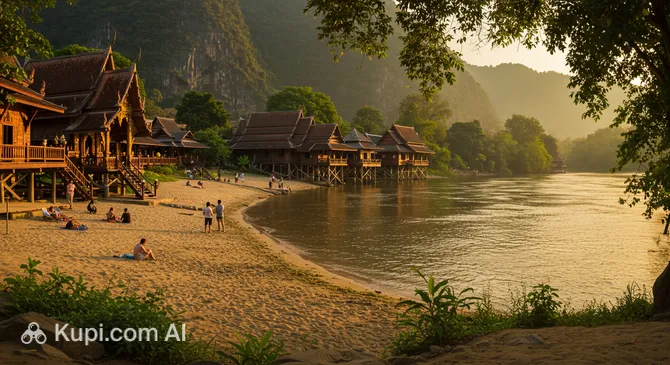
While Kanchanaburi is not famous for large urban parks in the traditional sense, its main natural attraction is the River Kwai itself and its picturesque banks. Here you can find secluded spots for walking and contemplating nature. For beach lovers, there are several interesting locations. For example, Tha Lo Beach (Wat Ban Thong) offers the opportunity to relax by the water and enjoy a calm atmosphere, often combined with a visit to the nearby temple. Another similar spot is Chuk Don Beach, where you can spend time by the river enjoying the local scenery. The outskirts of the city are also rich in national parks, such as Erawan and Sai Yok, though these require a separate trip.

Tha Lo Beach (Wat Ban Thong). Illustration.
Source: Kupi.com AI

Traveler photos:

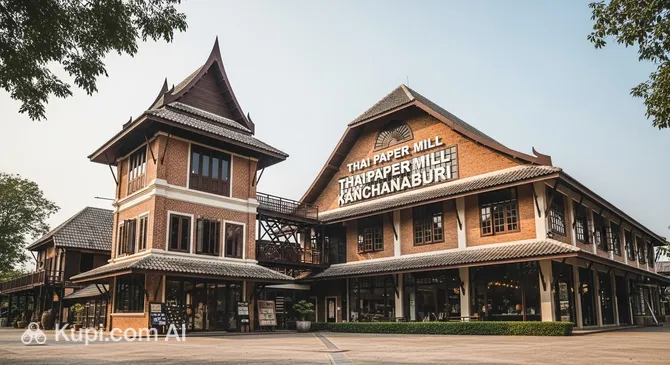
The cultural heritage of Kanchanaburi is deeply connected to the events of World War II, and this is reflected in its museums. One of the most significant is the Death Railway Museum and Research Centre. It provides a detailed account of the history of the railway's construction and will be of interest to anyone wanting to better understand this period. Another important site is the JEATH War Museum, whose name is an acronym for the countries involved in the construction (Japan, England, Australia/America, Thailand, Holland). The museum recreates the living conditions of prisoners of war and contains artifacts from that time. For a glimpse into the more peaceful side of local culture, you can visit the Thai Paper Mill Kanchanaburi, which demonstrates the traditional paper-making process.

Thai Paper Mill Kanchanaburi. Illustration.
Source: Kupi.com AI

Traveler photos:

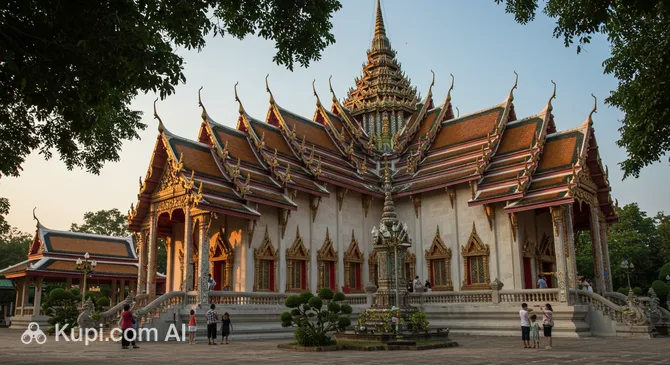
The central historical site is, of course, the famous Bridge over the River Kwai. While not a museum itself, visiting it is an essential part of getting to know the city's history. In addition to war memorials, there are several interesting temples in and around Kanchanaburi. For instance, Wat Deva Sangharam is a beautiful temple complex offering a look at Thai religious architecture. Also noteworthy is Wat Tham Mangkon Thong, known for its cave and dragon statues.

Wat Thewa Sangkharam. Illustration.
Source: Kupi.com AI

Traveler photos:

To fully immerse yourself in the atmosphere of Kanchanaburi, take a stroll along the embankment in the evening when the heat subsides and observe local life. It is also worth checking out one of the local markets, such as the market near the railway station, to try street food and buy handmade souvenirs.

Getting Around

Getting around Kanchanaburi is quite simple, although there are no metro or tram systems like in major cities. Public transport is based on more local and authentic modes of travel, which can become part of your adventure in themselves.

The main form of public transport in Kanchanaburi is the songthaew — covered pickup trucks with two rows of benches in the back. They ply the city's main streets and immediate surroundings on specific routes. There are also local buses, but they are more often used for trips to neighboring towns than for moving within the city itself. Songthaews are a great way to reach many points affordably, including the bus station or the Bridge over the River Kwai.

For shorter trips or if you want to reach a place not covered by songthaews, you can use the services of motorbike taxis (drivers in bright vests are easy to spot) or tuk-tuks. Tuk-tuks are more spacious and comfortable for small groups but cost more. Motorbike taxis are a quick way to zip through potential congestion but are only suitable for one passenger.

The payment system is primarily cash-based. In songthaews, payment is made directly to the driver, usually upon exiting; the fare for travel within the city is typically fixed and low. For motorbike taxis and tuk-tuks, it is important to agree on the price of the trip in advance, before boarding, to avoid misunderstandings. Special travel cards for tourists are generally not available in Kanchanaburi.

An alternative to public transport is renting bicycles or scooters. This is a very popular option among tourists as it provides complete freedom of movement to explore the city and its picturesque surroundings at your own pace. Rental points can be found at many guesthouses and on tourist streets. Taxi services are also available in the city, which can be ordered through your hotel or found at special stands, as well as ride-hailing apps like Grab.

Practical tips for tourists: to catch a songthaew, simply wave your hand on the street. Confirm with the driver if they are heading in your desired direction. Public transport usually operates from early morning until evening, but frequency may decrease in the late hours. If you plan a trip to remote areas, it's best to think about your return journey in advance.

Accommodation

Kanchanaburi offers a wide range of accommodation options to suit the needs of tourists with various budgets and preferences. Here you can find everything from inexpensive guesthouses and hostels to comfortable mid-range hotels, as well as more luxurious resorts and villas, which are especially popular along the river.

Many travelers prefer to stay in the area near the Khwae Yai River (often referred to as the River Kwai), where a large number of hotels and bungalows with picturesque views are concentrated. This also provides convenient access to iconic sites such as the Bridge over the River Kwai. Other popular areas for staying include the city center along the main street, where shops and restaurants are located.

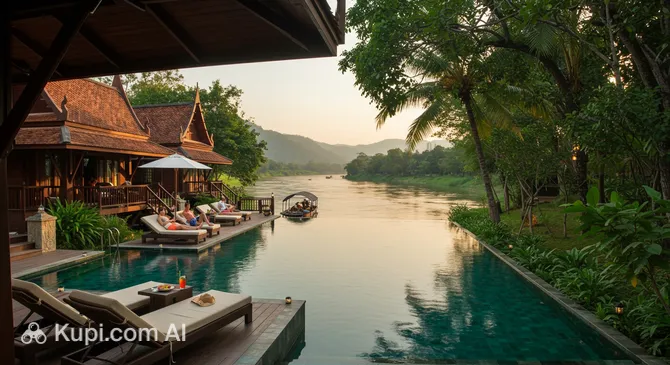
Tara Villa Riverkwai Resort. Illustration.
Source: Kupi.com AI

Traveler photos:

Among the available options, you can find cozy family-run hotels as well as larger complexes. For example, well-known establishments include resort hotels like the Tara Villa River Kwai Resort and Plakan Resort, which offer comfortable accommodation and a variety of services.

Regarding prices, Kanchanaburi has accommodation for any wallet — from budget options to mid-range and premium-class offers. You can book your stay through popular international online booking platforms, travel agencies, or directly on the hotels' websites. To guarantee availability and the best prices, especially during the high tourist season or on holidays, it is recommended to book your accommodation in advance.

Nearby Cities

For those who wish to explore the surrounding area, Kanchanaburi serves as an excellent starting point for day trips to several interesting nearby locations.

For instance, you can head to Nakhon Pathom to see the impressive Phra Pathom Chedi, one of the tallest stupas in the world, and experience the spiritual atmosphere of this ancient city. Another interesting destination is Ratchaburi, famous for its colorful floating markets where you can get a glimpse of local life, and the picturesque caves in Khao Ngu Park. It is also worth considering a trip to Samut Songkhram, where you can see the unique Maeklong Railway Market and the charming Amphawa Floating Market.

Below is a table with some nearby cities that may be of interest for a visit:

CityPopulationDistance
Tha Muang10 21919 km
Ban Kao16 14737 km
Ban Pong17 29844 km
Kamphaeng Saen49 km
Ban Chorakhe Samphan13 15749 km

These nearby destinations allow for a deeper immersion into the diverse culture, history, and natural beauty of the region, complementing the experience of staying in Kanchanaburi.

Shopping & Souvenirs

Kanchanaburi offers tourists a fairly diverse range of shopping opportunities, even though it is not a major commercial center like Bangkok. Here you can find both modern shopping complexes and colorful local markets selling fresh food, clothing, souvenirs, and handmade crafts. The city is not famous for exclusive goods, but you can purchase typical Thai souvenirs and some local products.

Main shopping activity is concentrated along the city's major streets, especially in the area around the bus station and near popular tourist spots. Here you will find many small shops, stalls, and pharmacies. While there are no specialized shopping streets like in large metropolises, you are bound to stumble upon interesting places for shopping while walking through the center of Kanchanaburi.

For those who prefer a more organized shopping experience, there are several shopping centers in Kanchanaburi. These include Robinson Lifestyle Kanchanaburi, which features a good selection of clothing and electronics stores, as well as a food court and a cinema. Another popular complex is TMK Park Kanchanaburi, offering various goods and services for locals and tourists alike.

TMK Park Kanchanaburi. Illustration.
Source: Kupi.com AI

Traveler photos:

Markets are an integral part of Thai culture, and Kanchanaburi is no exception. Be sure to visit the Kanchanaburi Night Market, usually located near the railway station. Here you can sample street food and buy inexpensive clothing, accessories, and souvenirs. The city also has morning markets selling fresh fruit, vegetables, seafood, and local delicacies. It's a great place to soak up the local atmosphere and take colorful photos.

As souvenirs from Kanchanaburi, you can bring back standard Thai items: silk and cotton products, carved wood figurines, aromatic oils and candles, spices, as well as souvenirs related to the region's history, such as the Bridge over the River Kwai. Look out for items made by local artisans, which can sometimes be found in markets or small souvenir shops.

Most shops in Kanchanaburi are open from 10:00–11:00 AM until 8:00–9:00 PM. Large shopping centers may have longer hours. Markets, especially night markets, begin operating in the afternoon and continue until late evening. Cash (Thai Baht) and credit cards are accepted in most shops and shopping centers. In markets and small stalls, cash is preferred. Bargaining is expected at markets, but it is not usually practiced in shops with fixed prices.

For tourists shopping in Thailand, there is a VAT Refund for Tourists system. If you spend a certain amount (usually at least 2,000 Baht in one store in one day) at participating stores, you can apply for a tax refund upon leaving the country. Check for the "VAT Refund" sign and ask for details in the shops.

Reached the end of the page?

That means the route is fully explored