Support

Lopburi

About

Lopburi is a fascinating ancient city located in the heart of Thailand, approximately 150 kilometers north of Bangkok. Situated on the banks of the Lopburi River at the northern edge of the Central Plain, this city attracts visitors with its unique atmosphere, where history comes alive at every turn, and hundreds of curious monkeys have become the main "masters" of some streets and temples.
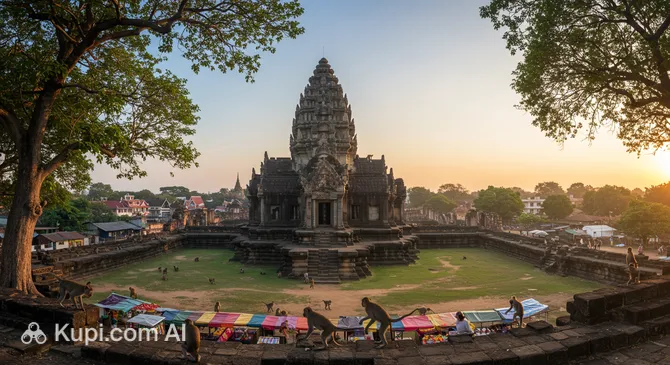
Lopburi. Illustration.
Source: Kupi.com AI

As the capital of the eponymous province with a population of about 24,000 people, Lopburi is a true open-air museum and one of the oldest cities in the country, founded before the 7th century. In different eras, it served as an important center of the Khmer Empire and even became the second capital of the powerful Kingdom of Ayutthaya. Numerous ancient temples and impressive ruins scattered throughout the city serve as reminders of this glorious past today.

Beyond its rich historical heritage, Lopburi's hallmark is its famous crab-eating macaques, which roam freely around the city, particularly concentrating around the Prang Sam Yot temple and the ruins of ancient shrines. Observing their daily lives is a captivating sight and an unforgettable experience in its own right. The city also charms visitors with its cozy streets and colorful local markets, where you can immerse yourself in the authentic atmosphere of the Thai provinces.

Lopburi is perfect for a day trip or a short stop while exploring the central part of the country. It is a wonderful opportunity to touch the spirit of ancient Siam, enjoy the tranquility, and discover the real Thailand, unspoiled by mass tourism. Visit Lopburi to see history with your own eyes and meet its most unusual and charming inhabitants!

You can find more interesting facts on the Lopburi city history page.

Weather Overview

In Lopburi, you can expect hot weather throughout the year. The highest temperatures, often exceeding 35°C, occur from March to May. The coolest, yet still warm days, are in December and January, when the average temperature stays around 25-26°C. The city has a distinct rainy season, which typically lasts from May to October, with the highest rainfall and most rainy days in September. The dry season prevails from November to April, when precipitation is minimal. Expect a hot summer with frequent rains and a drier but still warm "winter."

For more detailed information about weather conditions, including monthly data, you can visit the Lopburi climate page.

Average monthly temperature

Average monthly precipitation

Interesting Facts

Beyond its famous monkeys and ancient temples, Lopburi holds many surprising stories and facts that make it a truly unique destination in Thailand. Here are just a few of them:

  • Ancient Center of Influence: Lopburi is one of the oldest cities in Thailand, with a history dating back further than the 7th century. By the 10th century, it was a significant center of the Khmer Empire in these lands, leaving a notable mark on its unique architecture, especially in its ancient temples, which differ from traditional Thai structures.

  • Royal Residence and Second Capital: In the 17th century, Lopburi gained special importance when King Narai the Great chose it as his primary residence. The magnificent Phra Narai Ratchaniwet Palace was built here, and the city effectively became the second capital of Siam, where the monarch would move his court.

  • Monkeys as a Symbol of Luck: Lopburi's famous monkeys are more than just a tourist attraction. According to local beliefs, the numerous macaques living freely in the city bring good luck and protect it from misfortune. This is why they are treated with great respect, and the annual "Monkey Banquet," where tables of treats are laid out for them, is a tribute to this ancient tradition.

How to Get There

To reach the city of Lopburi, located in central Thailand, you can choose from several methods, the most popular being a flight to the nearest international airports followed by a ground transfer, as well as traveling by train or bus from Bangkok and other regions of the country.

While Lopburi does not have its own airport, the closest and most convenient air gateways are Bangkok's two major international airports. The main one is Suvarnabhumi Airport (BKK), located about 151 km southeast of Lopburi. It is one of the largest aviation hubs in Southeast Asia. Another significant option is Don Mueang International Airport (DMK), which is slightly closer, about 130 km south of Lopburi, and serves many budget airlines and domestic flights. From both airports, Lopburi can be reached by taxi, taking approximately 3 to 4 hours depending on the airport and traffic conditions. Alternatively, you can use a combination of public transport: travel to Bangkok and then transfer to a train or bus to Lopburi.

For convenience, here is a summary of the main airports used to reach Lopburi:

AirportPassenger trafficDistance
Don Mueang International Airport30.5 mln130 km
Suvarnabhumi Airport62.2 mln151 km
Phitsanulok Airport689 392202 km
Buri Ram Airport251 459255 km
Khon Kaen Airport2 mln256 km

Rail travel is one of the most convenient and authentic ways to get to Lopburi. The city has its own railway station located on the Northern Line of the Thai railways, which connects Bangkok with Chiang Mai. Trains from Bangkok (for example, from Hua Lamphong Station or the new Krung Thep Aphiwat Central Terminal) depart for Lopburi regularly throughout the day. The journey takes between 2 and 3 hours, depending on the type of train, and offers a chance to enjoy the views of the Thai countryside.

Additionally, Lopburi is easily accessible by bus. Regular bus services connect Lopburi with Bangkok (buses depart, for instance, from the Mo Chit Northern Bus Terminal), as well as with other cities in central and northern Thailand. This is typically the most budget-friendly travel option, offering both air-conditioned expresses and simpler local buses.

Main Attractions

Lopburi, one of the oldest cities in Thailand, offers travelers a unique blend of history, culture, and, of course, its famous monkeys roaming freely through its streets and ancient ruins. The city is rich in attractions that reflect its long and storied history.

Perhaps the most famous landmark in Lopburi is Phra Prang Sam Yot (The Temple of Three Prangs). This impressive Khmer-style temple, with its three interconnected prangs (towers) symbolizing the Hindu trinity, is the city's signature site. Beyond its architectural value, the temple is renowned for its large population of crab-eating macaques that call it home. Tourists come here to admire the ancient architecture and watch the playful monkeys, but it is wise to be careful with your belongings!

Not far from Phra Prang Sam Yot is another important site associated with the monkeys — San Phra Kan (The Monkey Shrine or Kala Temple). This revered shrine, originally Brahman, has also become a sanctuary for hundreds of monkeys. It is believed that feeding the monkeys here brings good luck. The sanctuary is a small temple where you can see a statue of the god Kala (an aspect of Shiva) and many monkeys waiting for treats from visitors.

To dive deeper into the region's history, a visit to King Narai’s Palace (Phra Narai Ratchaniwet) is a must. Built in the 17th century by King Narai the Great, this vast palace complex was once his summer residence. Today, the palace grounds house the Somdet Phra Narai National Museum, which displays artifacts from various eras, including Lopburi and Ayutthaya art, as well as the king's personal belongings. A stroll through the palace ruins and its well-kept gardens allows you to feel the grandeur of the past.

Another significant historical site is Wat Phra Si Rattana Mahathat. This is one of the oldest and largest temple complexes in Lopburi, with construction beginning as early as the 12th century during the period of Khmer influence. The central prang of the temple is a striking example of Khmer architecture, while the surrounding chedis and viharas were added later during the Sukhothai and Ayutthaya periods. This site allows you to trace the development of architectural styles and religious traditions in the region over several centuries.

Local Cuisine

The gastronomic world of Lopburi is a fascinating immersion into authentic Thai cuisine with a strong local flavor. Here, you can enjoy dishes characteristic of central Thailand, where every meal tells its own story through aromas and tastes.

Be sure to try the classics of Thai cuisine: the famous spicy Tom Yum soup, rich curries, fragrant fried rice, and, of course, Pad Thai noodles. Local specialties include dishes made from fresh fish and seafood caught in nearby rivers and reservoirs. Don't miss the chance to taste the local version of the spicy papaya salad, Som Tam, or Khao Mok Gai – an appetizing chicken biryani with fragrant spices.

The heart of Lopburi's culinary scene beats on its busy streets and markets. Street food here is not just a snack, but an entire culture. In numerous stalls and small cafes, you will find the freshest fruits, juicy fried chicken, various salads, and, of course, local desserts. Special attention should be paid to the farmers' markets, where early in the morning you can buy fresh vegetables, fruits, spices, and local delicacies while enjoying the scents of fresh pastries.

For those with a sweet tooth, Lopburi offers delicious coconut cakes, tender bananas in coconut milk, and original rice balls with sesame filling. Popular drinks here include freshly squeezed juices from exotic fruits, refreshing Thai iced tea, and local beers that perfectly complement your meal.

Dining culture in Lopburi is very democratic. Locals and tourists alike enjoy eating in small family restaurants and right on the street, choosing dishes from steaming stalls. This format allows you to most fully experience the authentic atmosphere and try the maximum number of the city's culinary delights, especially during local festivals like Loi Krathong or Songkran, when the streets transform into a true gastronomic festival.

Travel Tips

Welcome to Lopburi, one of the oldest cities in Thailand, famous for its ancient ruins and, of course, its many monkeys! To make your trip as comfortable and safe as possible, we have prepared some practical tips.

  1. Clothing and Essentials: Lopburi has a tropical climate, so choose light, breathable clothing made from natural fabrics (cotton, linen). From May to October, rain is possible – a light raincoat or umbrella will come in handy; from November to April is the dry season, so don't forget a hat, sunglasses, and sunscreen. Be sure to bring comfortable shoes for walking around historical sites. When visiting temples, such as the famous Prang Sam Yot, shoulders and knees must be covered – a light scarf or sarong will be very useful. Electrical outlets in Thailand can be of various types (A, B, C, O), so a universal adapter wouldn't hurt.

  2. Transport in the City: The center of Lopburi is quite compact, and many attractions are within walking distance. For longer trips, songthaews (route pickups) are popular – agree on the price in advance. Tuk-tuks are also available, where bargaining is also appropriate. For short distances, you can use a motorbike taxi. Renting a bicycle can be an excellent way to explore the city at a leisurely pace. Car rental is unlikely to be needed for moving around the city itself but might be useful if you plan to explore the provincial surroundings.

  3. Finances: The local currency is the Thai Baht (THB). You can exchange money at banks or exchange offices; banks usually offer better rates. Major hotels, restaurants, and some shops accept bank cards (Visa, Mastercard), but for markets, small shops, and paying for songthaews, always carry cash. ATMs are widely available. An approximate daily budget (excluding accommodation) could be 1,000-2,000 THB. Tipping is not mandatory but appreciated for good service – you can round up the bill in a restaurant or leave a small amount for hotel staff.

  4. Health and Safety: There are pharmacies in Lopburi where you can buy basic medications. If medical assistance is needed, contact local hospitals or clinics; be sure to take out travel insurance before your trip. The main safety rule in Lopburi concerns the monkeys: do not feed them (especially from your hands), hold your belongings tightly (bags, glasses, food, shiny objects), avoid direct eye contact, and do not smile at them showing your teeth (this can be perceived as aggression). If a monkey approaches, stay calm and back away slowly. Otherwise, the city is quite safe, but standard precautions against petty theft in crowded places are always a good idea.

  5. Communication: The official language is Thai. In tourist areas, hotels, and among the youth, English is common but not universal. Learn a few phrases in Thai: “Sawatdee” (สวัสดี) – hello/goodbye, “Khop khun” (ขอบคุณ) – thank you, “Tao rai?” (เท่าไหร่) – how much does it cost? A local SIM card (operators AIS, TrueMove, DTAC) is easy to buy at the airport or shops like 7-Eleven. Wi-Fi is available in most hotels, cafes, and some public places. Useful apps include Grab for calling taxis and ordering food.

  6. Local Etiquette: The traditional greeting is the “wai” (palms pressed together at chest or face level with a slight bow). Show respect for the monarchy and religion. It is customary to remove shoes before entering temples and private homes. It is considered impolite to point at people or sacred images with your feet, or to touch another person's head, as the head is considered the most sacred part of the body.

  7. What to Avoid: Categorically do not tease or provoke the monkeys – this can lead to bites or scratches. Also, avoid any disrespectful behavior towards Buddha images and monks (do not climb on statues, do not turn your back to them for photos without proper respect).

  8. Special Tip – Monkey Banquet: If your trip to Lopburi falls at the end of November, try to attend the famous Monkey Buffet Festival. It is a unique spectacle where a grand feast of fruits and vegetables is arranged for the macaques. Be sure to check the exact dates in advance and be especially vigilant with your belongings during the festival.

We hope these tips help you better prepare for your trip and get the most enjoyment out of discovering amazing Lopburi, its rich history, and its unusual long-tailed residents!

Entertainment & Nightlife

Evening Lopburi offers tourists a more relaxed and authentic experience compared to Thailand's bustling metropolises. Here, nightlife is centered not so much on loud clubs as on cozy local establishments and evening markets where you can immerse yourself in the local atmosphere.

The main hubs of evening activity in Lopburi are the restaurants and bars scattered throughout the city, especially near main roads and tourist zones. Don't expect to find large Bangkok-style or Pattaya-style nightclubs here; instead, you'll find smaller venues with live music (often Thai pop) or simply pleasant background music. Night markets, such as the one in the city center or near the train station, are also popular spots for evening strolls, offering street food and local goods. The atmosphere is usually laid-back and friendly, with a mix of locals and a small number of tourists. The dress code is generally casual.

Most establishments come to life after sunset and stay open until late evening, though not always deep into the night. The best time to visit is between 7:00 PM and 11:00 PM. Prices in Lopburi are significantly lower than in Thailand's major tourist centers, making evening entertainment very affordable. You can get around at night via tuk-tuks or motorbike taxis; always agree on the price in advance. In some cases, the Grab app may be available, though it is less widespread than in the capital.

In terms of safety, Lopburi is considered a relatively peaceful city. Nevertheless, as with anywhere, it's worth sticking to well-lit streets and keeping an eye on your belongings. If you are returning late, it's better to use a taxi or a tuk-tuk ordered through your hotel or from a well-known spot. While specific details on popular bars or clubs with online booking were not provided for this overview, you will easily find pleasant places for dinner or drinks by walking along the central streets or asking locals for advice. Look for signs saying "Restaurant & Bar" or places where crowds gather — that's usually a good sign.

During the day, Lopburi offers completely different kinds of entertainment. The city is famous for its ancient temples, such as the iconic Prang Sam Yot, which is literally occupied by monkeys, and the ruins of King Narai's Palace. Visiting these historical sites, as well as the city museum, will be an excellent addition to your discovery of this unique corner of Thailand.

Parks & Museums

Lopburi, a city with a rich history in Thailand, offers its guests not only an immersion into antiquity through its numerous ruins but also unique opportunities to get acquainted with local culture and the city's distinctive urban fauna. Here, historical monuments harmonize with areas favored by monkeys, while museums carefully preserve artifacts from bygone eras.

While Lopburi may not have vast modern parks in the traditional sense, historical complexes often serve as green zones and places for strolling. One of the most iconic attractions, where history intertwines with nature, is Phra Prang Sam Yot. This ancient Khmer temple with its three characteristic prangs is world-renowned thanks to the hundreds of crab-eating macaques that call it home. Observing their active life against the backdrop of thousand-year-old stones is a truly unique experience. Nearby is the Monkey Temple (San Phra Kan), another cult site where you can see these animals up close. A walk through the grounds of the ancient Wat Phra Si Rattana Mahathat temple will also provide an opportunity to enjoy the silence among majestic ruins surrounded by greenery and imagine how the city looked centuries ago.

The city's main cultural institution is undoubtedly the Somdet Phra Narai National Museum. It is located on the grounds of the former Phra Narai Ratchaniwet royal palace, which makes a visit there special in itself. The museum's exhibition is extensive and covers various periods of Lopburi's history, from prehistoric times to the Ayutthaya and Rattanakosin eras. Visitors can see impressive collections of Khmer sculpture, Buddhist art, ceramics, weapons, and household items that tell the story of Lopburi's role as an important political and cultural center. The palace complex itself, with its elegant architecture and well-tended gardens, is also worth attention.

In addition to the National Museum, one can find small galleries or temporary exhibitions in Lopburi dedicated to local art and crafts. Workshops preserving traditional techniques, such as bronze casting, for which the region was historically famous, may also be of interest.

For a more authentic Lopburi experience, we suggest waking up early and visiting one of the local morning markets – it's a great chance to observe the daily life of the residents and try fresh local products. And to see Lopburi's famous monkeys in a calmer setting, take a stroll through the quiet streets adjacent to the main temples – you can often find entire families resting in the shade of the trees there.

Getting Around

Getting around Lopburi is quite simple, although there are no subways or trams as found in large metropolises. The foundation of public transport consists of more traditional modes for this region.

The most popular and widespread way to get around Lopburi is the songthaew – these are covered pickup trucks with two benches along the sides. They run along specific routes, connecting different parts of the city and its surroundings. Payment is made in cash directly to the driver, usually upon exiting. The fare is low, but it's best to confirm it with the driver or locals, as fixed rates posted at stops may not exist. Songthaews stop on demand – just wave your hand to get on, and press the bell (if there is one) or tap on the roof to get off.

For shorter or individual trips, tuk-tuks and motorbike taxis are widely used. Tuk-tuks are three-wheeled motorized rickshaws, convenient for small groups or trips with luggage. The cost of a tuk-tuk ride should always be agreed upon in advance, before boarding, as they do not have meters, and the price depends on the distance and your bargaining skills. Motorbike taxis are a fast way to get to your destination, especially if you are traveling alone. Motorbike taxi drivers usually wear vests of a specific color. It's also better to agree on the price before the ride.

In Lopburi, you may also encounter local buses, but their routes and schedules might not always be clear to tourists without knowledge of the local language. The payment system in them is usually cash to the conductor or driver.

Practical tips for tourists: Always carry small cash for fares, as drivers may not have change for large bills. Public transport hours are usually limited to daytime and evening; at night, the number of available options decreases significantly. Don't hesitate to ask locals or drivers about routes and costs – they are usually very willing to help.

Alternative ways to get around: In Lopburi, you can rent a bicycle for a leisurely exploration of the city center and its attractions. It's also worth checking for ride-hailing apps (such as Grab), which are becoming increasingly popular in Thailand and may operate in Lopburi, offering more predictable prices compared to street tuk-tuks. Regular metered taxis are less common than in major tourist centers.

Accommodation

In Lopburi, tourists have access to a diverse range of accommodation options capable of satisfying various preferences and budgets. You can find everything from inexpensive guesthouses and hostels, perfect for backpackers, to more comfortable mid-range hotels. While there are few luxury resorts here, the main focus is on cozy and authentic stays.

For convenience when visiting the main attractions, such as the ancient temples and the famous Monkey Temple (Prang Sam Yot), it is recommended to choose accommodation in the central part of the city or in the immediate vicinity of the historical center. Accommodation options near the railway station are also popular, which is particularly convenient for travelers planning further journeys through Thailand.

The city features various hotels and guesthouses offering a decent level of service. To guarantee availability and the best prices, especially if your trip coincides with the peak tourist season, it is recommended to book your accommodation in advance. This can be easily done through popular international online booking platforms or, in some cases, by contacting the hotel directly.

The price range for accommodation in Lopburi can generally be described as budget and mid-range. This makes the city attractive for travelers seeking to explore the rich history and culture of the region without significant spending on lodging.

Nearby Cities

For those looking to explore the surrounding area, Lopburi serves as an excellent starting point for day trips to several interesting nearby locations:

Once the majestic capital of Siam, Ayutthaya today attracts travelers with its impressive ruins of ancient temples and palaces, which are listed as a UNESCO World Heritage site. A day trip here allows you to touch the rich history of Thailand.

The city of Phra Phutthabat is famous for its main shrine — Wat Phra Phutthabat temple, where, according to legend, a footprint of the Buddha is located. It is an important pilgrimage site and an interesting cultural object to visit, perfect for a short excursion.

For nature lovers, Pak Chong serves as the gateway to Khao Yai National Park, known for its picturesque landscapes, waterfalls, and diverse wildlife. It is a great place for hiking and ecotourism as part of a day trip from Lopburi.

CityPopulationDistance
Tha Luang9 00328 km
Ban Tha Luang Lang13 78532 km
Phra Phutthabat34 32237 km
Ban Thap Kwang19 42552 km
Kaeng Khoi12 75252 km

These nearby destinations provide an insight into the region's diverse culture and landscapes. A trip to any of these cities will enrich your journey through Thailand with new impressions and discoveries.

Shopping & Souvenirs

Shopping in Lopburi is more about immersion in local color than chasing international brands. The city is not famous for huge shopping malls like Bangkok, but here you can find authentic goods, fresh produce at markets, and, of course, souvenirs related to the city's famous inhabitants – the monkeys. The main focus should be on local markets and small shops where you can feel the true atmosphere of Thailand.

The main retail outlets in Lopburi are concentrated along the main streets and in the city center. Here you will find small family-run shops, stalls with clothing, household goods, and food. Do not expect luxury boutiques here, but for daily needs and finding something local, these areas are perfect.

There are few large modern shopping centers in the conventional sense in Lopburi; the city is more oriented toward traditional trade. However, you may encounter local department stores or small shopping complexes, such as Big C or Lotus's, which offer a wide range of goods – from food and clothing to household appliances. They are usually located on the outskirts of the city or on major transport arteries.

Markets are the heart of trade in Lopburi. Be sure to visit the morning market where locals buy fresh fruits, vegetables, meat, fish, and ready-made food. It's a great place to try authentic Thai cuisine and observe the daily life of the townspeople. Evening markets are also popular, offering street food, inexpensive clothing, and various small items. The atmosphere at such markets is always lively and colorful.

What should you bring back from Lopburi as a keepsake? Naturally, souvenirs featuring monkeys – the symbol of the city. These can be figurines, magnets, t-shirts, or bags. Lopburi province is also known for its sunflower fields, so you can find sunflower-related products in season. Also, look for items made by local artisans, Thai silk, natural cosmetics, and spices, which are popular souvenirs from Thailand in general.

Shops in Lopburi are usually open from 10:00-11:00 AM to 8:00-9:00 PM. Markets start working early in the morning (food markets) or closer to the evening (night markets). Cash is preferred in small shops and at markets. In larger stores and department stores, bank cards may be accepted. QR payments through local banking apps are also very common in Thailand.

Tourists in Thailand can take advantage of the VAT Refund for Tourists system. To do this, you must make a purchase of at least 2,000 baht in a single shop participating in the program (look for the "VAT Refund" sign). Ask the seller for the special P.P.10 form and present it along with your receipts and goods at the airport when departing the country. Check the details and terms of the program on-site as they may change.

Reached the end of the page?

That means the route is fully explored