Support

Nong Khai

About

Nong Khai is a true diamond of the Northeast, nestled comfortably on the banks of the majestic Mekong River. The city serves as the administrative center of the province of the same name and occupies an important strategic position right on the border where Thailand meets Laos. A special, homey atmosphere prevails here, where the eastern traditions of different cultures harmoniously intertwine with modernity, creating a unique character.

Geographically, the city is located just 25 kilometers from Vientiane, the capital of Laos, making it an important transit and cultural hub. With a population of about 48,000 people, Nong Khai is far from the hustle and bustle of megacities; life here flows at a measured and calm pace. A curious feature is its climate: the province is considered one of the "coolest" in the country, with an average annual temperature of about +26 °C, attracting travelers tired of the exhausting tropical heat.
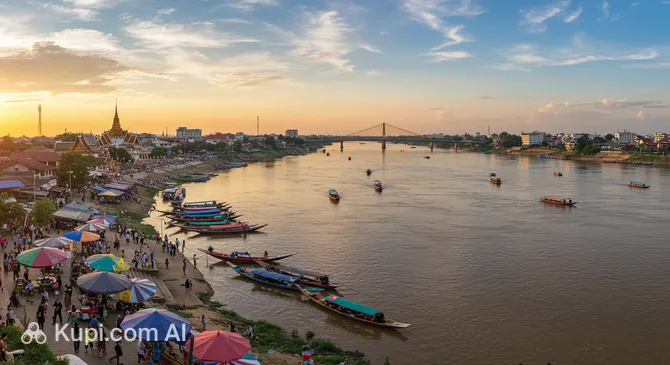
Nong Khai. Illustration.
Source: Kupi.com AI

The city's uniqueness lies in its role as a link between nations. Thanks to the famous "Friendship Bridge" connecting the two banks of the Mekong, Nong Khai's history is inextricably linked with the destinies of neighboring states. In the streets, you can hear not only Thai but also Lao and even Vietnamese speech, while local markets offer a surprising mix of goods and gastronomic traditions, allowing you to feel the breath of several Asian countries at once.

Travelers come here for amazing discoveries and a relaxed holiday. The hallmark of the place is the mystical Sala Keoku sculpture park with its giant statues, as well as the picturesque promenade, ideal for evening strolls. Nong Khai is an excellent destination for those who value authenticity, sincere hospitality, and want to see the real life of the region away from noisy tourist crowds.

Weather Overview

The climate in Nong Khai is tropical, with a clear division into seasons, which is important to consider when planning a trip. The best time to visit is considered to be the period from November to February. During these months, the weather is dry and comfortable: in December and January, the average temperature is about +23 °C, and at night the air can cool down to a fresh +17 °C. There is practically no rainfall during this time, which is ideal for excursions.

The hot season starts in March and reaches its peak in April. The thermometer during this period often rises above +35 °C, and the average temperature stays around +30 °C. If you are planning a trip in the spring, we recommend checking the weather in Nong Khai in advance to prepare for the heat.

The rainy season arrives in May and lasts until October. Although the temperature remains high (averaging +27...+29 °C), the amount of rainfall increases sharply. The wettest months are July, August, and September, when the number of rainy days can reach 25–27 per month. Overall, expect a hot spring, a humid summer with frequent tropical downpours, and a pleasant, dry winter.

Average monthly temperature

Average monthly precipitation

Interesting Facts

Beyond its main attractions, Nong Khai holds many fascinating secrets and legends that make this border city a truly unique spot on the map of Thailand. Here are a few surprising facts to help you see it from a new perspective:

  • The Mystery of the Fireballs. The city is world-famous for an unexplained phenomenon — the "Naga Fireballs." Every October, thousands of people gather by the river to watch hundreds of glowing reddish spheres silently rise from the dark waters of the Mekong and soar into the sky up to 150 meters. Scientists debate the nature of the gases, while locals believe the mythical Naga serpents are welcoming the Buddha.

  • The First Bridge over the Mekong. It was here in 1994 that the famous "Friendship Bridge" was opened, becoming the first permanent bridge over the lower Mekong. This structure changed the region's life forever, turning a quiet provincial town into the main land gateway between Thailand and Laos and a vital trade hub for Indochina.

  • A Surreal Heritage. One of the strangest and most impressive locations is the Sala Keoku Park. It was created not by the state, but by an eccentric mystic named Luang Pu Bunleua Sulilat. The statues here are striking not only for their size but also for their imaginative boldness: the concrete giants combine features of Buddhist and Hindu deities, creating a completely unique, almost extraterrestrial atmosphere.

  • A Cultural Melting Pot. In Nong Khai, the border between countries feels nominal: Lao traditions are remarkably strong here. Many native residents have relatives on the other side of the river, and local markets sell goods and delicacies characteristic of Laos. Additionally, the city is home to significant Chinese and Vietnamese communities, making the local culture and cuisine incredibly diverse.

How to Get There

Nong Khai is a key transport hub on the northeastern border, so it can be reached in various ways. If you are planning a grand trip to Thailand, including this city in your itinerary is an excellent idea. You can study all ways to get to the city in detail in our special guide, and below we will look at the main and most convenient options.

Nong Khai does not have its own civil airport, but this is compensated for by excellent connections with neighboring regions. The most popular choice among tourists remains Udon Thani International Airport (IATA: UTH). It is located in the neighboring city, about 43 km from the center of Nong Khai. Many flights from Bangkok arrive here daily. Right from the terminal, you can use minibus services (limousine service) that will take you to the border or the city center in 50–60 minutes.

An interesting alternative is Wattay International Airport (IATA: VTE). Geographically, it is the closest — at a distance of about 32 km — but it is located in Laos, in Vientiane. This option is ideal for those who want to visit two countries in one trip. However, keep in mind that you will have to cross the state border via the Friendship Bridge, which will take extra time.

You can also check for flights to Khon Kaen Airport (IATA: KKC). It is located 144 km from the city. The journey by bus or taxi from here takes about 2–2.5 hours, but sometimes flying here is cheaper.

For ease of comparison, we have collected data on the nearest airports in a table:

AirportPassenger trafficDistance
Wattay International Airport2.3 mln32 km
Udon Thani International Airport1.9 mln43 km
Loei Airport195 189116 km
Khon Kaen Airport2 mln144 km
Sakon Nakhon Airport409 691158 km

Traveling by train is a classic Thai experience. Nong Khai is the terminal station of the State Railway's northeastern line. Trains depart from Bangkok (from the new Krung Thep Aphiwat Central Terminal). The overnight sleeper expresses are particularly loved by travelers: the journey takes 10–12 hours, allowing you to sleep in comfort and save on a hotel. The railway station is located near the border, which is convenient for transit to Laos.

Intercity buses remain a budget-friendly and reliable option. Comfortable coaches depart from Bangkok's Northern Bus Terminal (Mo Chit 2). Travel time is about 9–10 hours, and the variety of service classes (from standard to VIP) allows you to choose the best option based on price and comfort level.

Main Attractions

Nong Khai is often perceived only as a transit point on the way to Laos, but this city hides amazing cultural and historical treasures that make it worth staying for. The main attractions here are related to spirituality, the legends of the Mekong River, and the unique artistic vision of local masters. A journey through northeastern Thailand would be incomplete without visiting these iconic sites.

The absolute symbol of the city and a place that leaves a lasting impression is the Sala Keoku Sculpture Park. This surreal garden, created by the mystic Luang Pu Bunleua Sulilat, is filled with giant concrete statues reaching heights of up to 25 meters. Here, Buddhist and Hindu motifs intertwine in whimsical scenes: seven-headed Naga serpents, Buddha meditating under the protection of a serpent, the Wheel of Samsara, and many other mythical creatures. Tourists are attracted here not only by the scale of the structures but also by a special, almost otherworldly atmosphere that is perfect for reflection and unusual photographs.

The spiritual heart of the province is the royal temple Wat Pho Chai. This is where one of the country's most revered Buddha statues, Luang Pho Phra Sai, is kept. This statue has an amazing history: according to legend, it was one of three cast for the daughters of the King of Lan Xang and miraculously survived a storm on the Mekong River when its "sister" sank. The temple's interior is decorated with magnificent wall paintings telling the story of the statue and religious themes. This place is a must-visit for those who want to touch real Thai traditions and see how locals express their respect for sacred objects.

One of the most mysterious attractions is the Sunken Stupa Phra That Klang Nam. Originally built on the riverbank, this ancient chedi (stupa) collapsed into the waters of the Mekong in 1847 due to soil erosion. Today, during the dry season when the water level drops, you can see its top protruding from the river. Locals believe that Buddha relics are stored beneath it and that mythical Naga serpents reside there. On the shore, directly opposite the sinking site, an exact replica of the stupa has been built where pilgrims can make offerings. This place is steeped in mysticism and history.

If you have time to venture outside the city center, visit Phra That Bang Phuan. This ancient temple complex is one of the most sacred in the Isan region. The main chedi, according to tradition, contains Buddha's relics and is revered alongside the great shrines of Nakhon Phanom. The complex contains the ruins of ancient Khmer-period structures and a museum telling the history of the site. Silence and peace reign here, making the temple an ideal place to escape the city's bustle.

Local Cuisine

Nong Khai's gastronomic map is a true kaleidoscope of flavors, dominated by the fiery and spicy notes of northeastern Isan cuisine, harmoniously complemented by Lao, Vietnamese, and Chinese culinary traditions. The star of the local table is undoubtedly the famous Som Tam — a spicy green papaya salad with peanuts, lime, garlic, and fish sauce. Here it is prepared in dozens of variations, from the classic version to ones with salted crabs or fermented fish, so each time the dish reveals itself in a new way.

The proximity to the great river determines the abundance of fish dishes on the menu. Gourmets should try Khao Pun — a delicate and aromatic rice noodle soup with fish, often seasoned with fresh herbs and sprouts. Seafood lovers will appreciate the freshest fish and giant river prawns caught directly from the Mekong and grilled or steamed. For a quick snack, the famous Lao-style Sai Krok sausages with their characteristic tanginess and spicy chicken or pork skewers grilled over charcoal right on the streets are perfect.

The dining culture in the city is inextricably linked with street food and evening walks. Local markets, such as the popular Tha Sadet, become a real kingdom of flavors. You can find everything here: from fried bananas in sweet caramel to exotic snacks like fried insects, which only the bravest tourists dare to try. In the evening, the promenade turns into one large open-air restaurant, where dinner is accompanied by live music, the smiles of vendors, and a cool river breeze.

Don't forget the drinks: Nong Khai is famous for its cozy coffee shops and old tea houses. Here you can leisurely enjoy a cup of strong local coffee or aromatic herbal tea. Some establishments host gastronomic evenings combining the best of Thai and Lao cuisine, turning every meal into a small cultural adventure that will be remembered for a long time.

Travel Tips

A trip to Nong Khai promises to be peaceful and full of authentic discoveries, but like anywhere in Asia, there are nuances. To make your holiday on the banks of the Mekong as comfortable as possible and without surprises, we have prepared a list of practical recommendations specifically for this region.

  1. Clothing and Dress Code. Given the hot climate, opt for loose clothing made from natural fabrics (cotton, linen). However, remember that Nong Khai is a traditional city. When visiting temples like Wat Pho Chai, clothing that covers the shoulders and knees is mandatory. Also, bring comfortable shoes that are easy to remove: it is customary to enter temples and some shops barefoot.
  2. Transport Nuances. There are no standard metered taxis here. The main way to get around is by specially designed tuk-tuks called "Skylab". Important: always agree on the price of the trip in advance, before getting into the vehicle. For walks along the promenade, renting a bicycle is ideal — it's cheap and allows you to enjoy the views at your own pace.
  3. Financial Matters. The official currency is the Thai Baht (THB). Unlike in Bangkok, cards are not accepted everywhere in Nong Khai: they will be useful in hotels and supermarkets (e.g., Tesco Lotus), but at the night market and in street cafes, you'll need cash. ATMs are located near 7-Eleven stores and banks, but it's best to always have a supply of small bills.
  4. Health and Protection. Since the city is on the river, there can be many mosquitoes in the evening. Be sure to buy repellent at any minimart (look for pink or orange bottles). There are pharmacies in the center, but few are open 24 hours, so it's better to bring a basic first-aid kit. Drink only bottled water.
  5. Communication. English is understood in hotels and tourist cafes, but tuk-tuk drivers and market vendors often speak only Thai or the Isan dialect. Install an offline translator on your phone (e.g., Google Translate). An internet SIM card can be bought upon arrival at any convenience store (7-Eleven); you will need a passport for registration.
  6. Local Etiquette. Greet locals with the traditional "Wai" gesture (palms pressed together at the chest) — this will earn respect. Behave discreetly in public places. Never point at people or objects with your foot, and do not sit so that your feet are pointed at an image of Buddha or a monk — this is considered a grave insult.
  7. What to Avoid. It is categorically forbidden to touch the heads of Thai people (even children) — the head is considered the most sacred part of the body. Also, avoid raising your voice or showing anger in public; in Thailand's culture, "losing face" is a serious issue, and shouting will achieve nothing but being ignored.
  8. Useful Life Hack. Keep in mind that Nong Khai is a city of "early birds." The famous Tha Sadet market starts closing quite early, around 6:00 PM – 6:30 PM. If you plan to shop, go there in the morning. The evening is better spent dining on the promenade, where life stays active longer.

Nong Khai is a place where time flows a little slower than in the rest of the world. By following these simple tips and showing respect for local traditions, you can truly relax and experience the sincere hospitality of the residents of this amazing border city.

Entertainment & Nightlife

Entertainment in Nong Khai has its own unique charm, distinct from the noisy parties of Bangkok or Pattaya. Here, leisure is inextricably linked with the Mekong River, local traditions, and unique cultural phenomena. The city offers travelers the chance to immerse themselves in the atmosphere of "sanuk" (the Thai pleasure of life) in the calm and authentic rhythm of the Isan region.

The most famous and mysterious event, attracting thousands of tourists from around the world, is the Naga Fireball Festival. It takes place annually in October, on the day marking the end of Buddhist Lent (Ok Phansa). At sunset, glowing reddish spheres rise silently from the waters of the river and shoot into the sky. Locals believe that these mythical Naga serpents are welcoming the Buddha. This spectacle is accompanied by large-scale festivities, fairs, and long-boat races on the Mekong, creating an incredible festive atmosphere.

Another bright event in the province's calendar is the Rocket Festival (Bun Bang Fai), usually held in May or June before the start of the rainy season. This is an ancient fertility ritual designed to appease the rain gods. Teams of locals compete in launching huge homemade rockets decorated with bright patterns. The festival is accompanied by colorful parades, dances to traditional music, and general merriment, allowing guests to see the true soul of northeastern Thailand.

The city's evening life is centered along Rim Khong Road. At dusk, this street comes alive: numerous open-air restaurants and bars open with views of the river and the lights of Laos on the opposite bank. You won't find loud nightclubs here, but you can enjoy live music — ranging from popular Thai hits to traditional "Mor Lam" style songs — enjoy a delicious dinner, and spend time in a relaxed setting.

For lovers of active recreation, Nong Khai offers excellent opportunities for cycling. A picturesque bicycle path stretches for many kilometers along the banks of the Mekong. By renting a bike, you can take a fascinating journey, enjoying river landscapes, visiting riverside temples, and observing the measured life of local fishermen. Sunset river cruises are also popular, allowing you to view the city from the water.

Parks & Museums

Nong Khai's cultural landscape and green zones offer travelers more than just riverside walks. While the city does not abound with huge museum complexes of a capital city scale, there are cozy parks for relaxation and unique exhibitions that allow for a deeper understanding of the region's history and the ecology of the great Mekong.

Among the city's green zones, Nong Thin Public Park takes center stage. This is the largest park within the city limits, spread around a large freshwater lake. Locals come here for morning jogs, aerobics classes, and picnics in the shade of trees. The park is especially beautiful during the Loi Krathong festival, when the lake is lit up by thousands of floating lanterns. It is the perfect place to take a break from the heat and observe the non-tourist life of the city.

One cannot fail to mention the Mekong Promenade itself, which is effectively a long linear park. Well-maintained paths, greenery, and views of Laos make it the main walking artery. It's pleasant not only to walk here but also just to sit on the benches, enjoying the fresh river breeze and watching the slow flow of the water.

In the category of museums and educational centers, the Nong Khai Aquarium, located on the Khon Kaen University campus, is a real gem. It is the main center for studying Mekong fauna. In giant tanks, you can see rare freshwater inhabitants, including the famous giant Mekong catfish, which can reach incredible sizes. The aquarium serves not only as entertainment but also as an important educational center talking about the river's ecosystem.

History buffs should pay attention to the Museum at Wat Pho Chai. Although the temple itself is an active religious site, there is a small exhibition on its grounds housing ancient Buddhist relics, historical documents, and art objects found in the region. This place allows you to touch the spiritual heritage of the province.

From an architectural and historical standpoint, the Old Governor's Mansion is of particular interest. This is an elegant colonial-style building constructed during the time of French influence in Indochina. It has now been restored and functions as a cultural center and museum. Its yellow walls, tall windows, and manicured garden make it one of the city's most photogenic locations, reminiscent of the borderland's complex history.

Insider Tip: If you want to see the city from an unusual angle, head to the Prap Ho Monument. It is dedicated to the victory over the Haw uprising in the 19th century. The square around the monument often becomes a venue for city fairs, but on ordinary days, it is a quiet corner where you can see interesting bas-reliefs telling the stories of forgotten military conflicts of the past.

Getting Around

Nong Khai's transport system is simple and intuitive, typical of small provincial towns. You won't find a metro, trams, or a confusing network of city buses here. The city is quite compact, and many distances in the central part can easily be covered on foot; however, for trips to distant attractions, the station, or the border, you will need local transport.

The most popular and recognizable means of transportation are "Skylabs" (Skylab). This is a local variety of tuk-tuk that looks like a hybrid of a powerful motorcycle and a cart, resembling a spacecraft in shape. Unlike Bangkok tuk-tuks, they are more spacious and open. This is a versatile transport that works like a taxi. Important to remember: they do not have meters, so the cost of the trip must be negotiated with the driver strictly before boarding. Bargaining is appropriate and even encouraged.

For budget-friendly travel between key points such as the bus station, railway station, and the border bridge, songthaews are used. These are pickup trucks with a covered bed and two benches for passengers. They often run on fixed routes. To stop a vehicle, just wave your hand, and to get off, press the bell button on the ceiling. The fare here is fixed and very affordable.

A special character is given to the city by samlors — traditional three-wheeled bicycle rickshaws. This is a vanishing species of transport, perfect for leisurely strolls through the center or a trip to the market. The speed is low, but it's a great way to support locals and enjoy the atmosphere of the old city without engine noise.

Given the magnificent promenade along the Mekong, bicycle rentals are extremely popular among tourists. This is perhaps the most pleasant and eco-friendly way to explore the city. Rental points can be found at many guesthouses and hotels. For trips out of town, for example to the Sala Keoku sculpture park, it is more convenient to rent a scooter (motorbike). To rent one, you will need a passport (sometimes they ask to leave it as a deposit or they make a copy) and an international category A driving license.

The payment system in Nong Khai's public transport is exclusively cash. Transport cards or contactless payments do not work in tuk-tuks and songthaews. Tourists are strongly advised to always have small bills (20, 50, 100 baht) and coins, as drivers often do not have change for large banknotes. Ride-hailing apps like Grab work in the city, but there are significantly fewer cars than in the capital, so the wait may be long.

Accommodation

The choice of accommodation in Nong Khai will pleasantly surprise travelers with its diversity and democratic prices. You won't find the pretentious five-star skyscrapers typical of Bangkok here, but the city abounds with cozy boutique hotels, atmospheric colonial-style guesthouses, and modern apartments. The main focus of the local hospitality industry is on home comfort, authenticity, and closeness to nature, which perfectly matches the relaxed pace of life in this border region.

The most popular and picturesque area to stay is undoubtedly the zone along the waterfront — Rim Khong Road and its adjacent quiet alleys. Staying here means securing a stunning view of the great Mekong River and the lights of neighboring Laos right from your room's balcony. This is the epicenter of tourist life: the Tha Sadet night market, the best restaurants, cafes, and the promenade are all within walking distance. For those seeking peace and privacy, small resorts on the outskirts of the city or accommodation options closer to the Friendship Bridge are excellent choices.

For budget travelers, the city offers a wide selection of hostels and inexpensive guesthouses, many of which are located in restored wooden buildings that preserve the spirit of old Siam. Mid-range hotels often delight guests with swimming pools — a real salvation in the hot season — as well as well-kept tropical gardens. In the "luxury" segment by local standards, there are small but elegant hotels with designer interiors and first-class service.

Booking Tip: Usually, Nong Khai does not experience an acute shortage of rooms, and accommodation can often be found even upon arrival. However, there is one critically important exception — the famous Naga Fireball Festival in October. During these days, the city hosts hundreds of thousands of guests, prices soar several times over, and it is necessary to book a hotel at least 3–5 months before the trip. You should also take care of booking in advance if you plan a visit during New Year or the Songkran festival (mid-April).

The price range in the city remains one of the most attractive in Thailand. Budget accommodation (hostels, basic rooms) usually costs from 300 to 600 baht per night. A comfortable mid-range hotel room with air conditioning and breakfast will cost about 800–1500 baht. The best accommodation options start from 2000 baht. Most properties are available on major international booking platforms, making the trip planning process easy and convenient.

Nearby Cities

For those who want to explore the surroundings, Nong Khai serves as an excellent starting point for day trips to several interesting nearby locations. The province's convenient location makes it easy to reach neighboring cultural centers and natural attractions to diversify your holiday.

One of the most attractive options is Udon Thani — a major commercial and transport hub in the region. People go there for great shopping, visiting the famous Ban Chiang Historical Park (a UNESCO site), or to see the natural wonder — the "Red Lotus Sea." If you are looking for peace and authenticity, pay attention to Thabo. This small town, located just a few dozen kilometers upstream of the Mekong, is famous for its farmland, ancient temples, and measured pace of life.

Below is information about the nearest cities that can be quickly reached from Nong Khai:

CityPopulationDistance
Tha Bo18 32021 km
Vientiane948 48726 km
Udon Thani130 27445 km
Ban Dung15 91349 km
Kut Chap10 25950 km

These nearby destinations provide insight into the diverse culture and landscapes of the region. A short trip outside the city will reveal new facets of northeastern Thailand, from bustling urban centers to quiet corners with a rich history.

Shopping & Souvenirs

Shopping in Nong Khai is fundamentally different from what Bangkok or Pattaya offer. You won't find shining skyscrapers with luxury boutiques here; instead, you will immerse yourself in the atmosphere of lively border trade. The city serves as a gateway to Indochina, so local stalls present a surprising mix of goods: from Thai handicrafts to products from Laos, Vietnam, and China. It is an ideal place for those seeking authentic souvenirs, inexpensive electronics, and unique textiles at very attractive prices.

The main shopping artery of the city can safely be called the Mekong riverfront area, especially Rim Khong Road and its adjacent alleys. This is where tourist life is concentrated: souvenir shops, clothing stores, and small boutiques with handmade items. A stroll through this area allows you to combine shopping with viewing the river, making the buying process particularly pleasant.

For those accustomed to the comfort of modern malls, the Asawann Shopping Complex operates in the city. This is the largest shopping center in the province, where you can find familiar brand stores, a Tesco Lotus supermarket, a food court, and a cinema. You can buy everything you need here: from cosmetics and clothing to electronics, and also take a break from the heat in air-conditioned halls. This place is popular with both locals and tourists from neighboring Laos who come here for weekend shopping.

However, the real heart of Nong Khai's trade beats in the markets. The most famous is Tha Sadet Market, also known as the Indochina Market. It is a huge covered bazaar stretching along the riverbank. Absolutely everything is sold here: French baguettes, Vietnamese coffee, Chinese tea, clothing, kitchenware, and electronics. On Saturdays, a Walking Street opens on the promenade, turning into an open-air fair with street food, live music, and artisan stalls.

As souvenirs from Nong Khai, it is worth bringing back the famous Isan textiles. Local fabrics, especially silk and cotton with "Mut Mee" patterns, are renowned for their quality and beauty. The gastronomic symbol of the city is Moo Yor — a white pork sausage wrapped in banana leaves; it is sold almost everywhere and survives transportation well. Silverware and woven bamboo baskets, often brought from the Lao side, are also popular.

Most shops and market stalls open around 09:00–10:00 AM. Tha Sadet Market begins to close quite early, by 6:00 PM, while shopping centers stay open until 9:00 PM. Cash (Thai Baht) remains the primary method of payment, especially in markets and small shops. Credit cards are accepted in shopping centers, hotels, and large restaurants, but for street shopping, it's better to change money into small bills in advance.

The VAT Refund for Tourists (Tax Free) system is available in large stores, such as the supermarkets in the Asawann Shopping Complex, provided you make a purchase of 2,000 baht or more. Look for yellow signs that say "VAT Refund." This system does not apply in markets and private shops, but reasonable bargaining is always appropriate there and can help you get a better price.

Reached the end of the page?

That means the route is fully explored