Support

Residence of the Governor of Ranong

About

In the heart of the historic part of Ranong lies a fascinating place that transports visitors back to the era of the tin rush — the Ranong Governor's Residence. This site, also known as Baan Roi Pi Thian Sue (Thian Sue's 100-Year-Old House), is an old mansion with over a century of history that has been converted into a private museum.

Built in the 1890s, the building is a prime example of Sino-Thai architecture. Its design harmoniously blends the solid brick walls of the first floor with the elegant wooden structures of the second, which is characteristic of the "Baba-Nyonya" style common in the southern region of Thailand. This house is not just an architectural monument but a living chronicle of the first Chinese settlers who contributed immensely to the province's development.
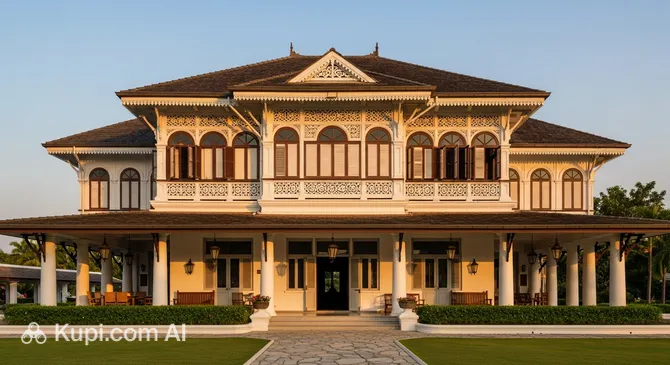
Ranong Governor
Ranong Governor's Residence. Иллюстрация. Источник: Kupi.com AI

Today, the residence is open to anyone wishing to touch the past. The interior halls are filled with authentic artifacts: here you can see antique furniture, everyday household items, and rare archival photographs that tell the story of an influential family's life and the economic prosperity of Ranong. The museum operates on a charitable basis, maintaining a warm, homey atmosphere supported by the descendants of the original owners.

Contacts

For more information about visiting or organizing group tours, you can use the following contact details:

How to contactContact
Address24 Soi Dupkadee, Tambon Khao Niwet, Amphoe Mueang Ranong, Chang Wat Ranong 85000, Таиланд
Phone+66 65 393 6839

What to Do

A visit to the residence offers guests a rare opportunity to peek behind the facade of an old mansion and see how wealthy merchant families of the past lived. The main exhibition is set up on the ground floor, where unique artifacts are displayed among massive columns and cool halls: from porcelain dishes and antique chests to tools related to tin mining. Special attention should be paid to the collection of black and white photographs, which illustrate in detail the history of the owner's family and the development of the city itself.

One of the most valuable aspects of the visit is interacting with the current keepers of the house. Descendants of the Thian Sue family are often present at the museum and are happy to share oral traditions that cannot be found in official guidebooks. They can tell stories about how the building functioned as a treasury and how high-ranking guests were received here during the province's heyday.

Architecture and photography enthusiasts will find many interesting angles here. The half-stone, half-wood facade, carved decorative elements, and authentic courtyard provide a beautiful backdrop for atmospheric shots. This place encourages slow contemplation and a thoughtful study of cultural heritage, allowing you to temporarily escape the hustle and bustle of modern tourist routes.

Getting There

The residence is located in the heart of Ranong on a quiet street called Soi Dupkadee. If you are staying in the center, a walk to the museum can be a pleasant addition to your exploration of the city's architecture. You can also always use the services of motorbike taxis or traditional tuk-tuks, which will quickly whisk you to the estate's gates.

For those arriving from Ranong Airport or the intercity bus station, the best option is to rent a car or take a taxi. The trip from the airport, located about 20 kilometers away, takes approximately 25–30 minutes. For self-navigation, it is most convenient to use the GPS coordinates: 9.9738864, 98.6348224.

If you prefer local public transport, songthaews (open passenger pickups) run through the central districts. Ask the driver to drop you off near Soi Dupkadee. For travelers with their own vehicles, parking spaces are available near the residence.

Ближайший город: Ranong

History & Facts

This majestic house was built around 1890, during the reign of King Rama V, when the region was experiencing a true economic boom. Its first owner was Tan Thian Sue, the grandson of the famous Kho Su Chiang — the first governor of the province and a prominent entrepreneur who laid the foundation for the region's tin industry.

The building served not only as a family home (it was built as a wedding residence for Thian Sue and his wife Chai Luan) but also performed important state functions. For a long time, it housed the main treasury, where taxes were collected and tin ore was stored before being sent to the capital. Thus, the walls of the house are literally steeped in the history of the province's financial system.

Considered the oldest surviving residential building in the city, the residence is a unique monument of Baba-Nyonya architecture. It embodies the cultural synthesis that emerged from the blending of local traditions and Chinese immigrants from Fujian province, who brought with them unique building techniques and aesthetics.

Over its more than 130 years of existence, the house has seen eras change and the tin rush decline, yet it has preserved its original appearance. Today, it serves as a living testimony to the time when Ranong transformed from a small settlement into a wealthy trading hub, attracting researchers and history enthusiasts from all over the world.

Time Needed

A detailed tour of the governor's residence and its exhibitions usually takes 30 to 60 minutes. This is ample time to leisurely explore the antique furniture, look at the old photographs, and soak up the spirit of 19th-century Sino-Thai life.

If you are lucky enough to meet the descendants of the house's founder, who often conduct tours themselves, your visit might last longer. Fascinating first-hand stories about family secrets and city history can keep guests engaged for a much longer period. In any case, this place is perfect for a short but meaningful stop during a walk through Ranong.

Working Hours

The residence's schedule may vary depending on the season and the owners' personal circumstances, as it is a private museum maintained by the family. For the most up-to-date information and to avoid arriving when it's closed, it is recommended to check the museum's official social media pages or visit the province's official tourism website.

As a rule, the house is open to visitors during daytime hours. Since admission to the museum is based on a voluntary donation, don't forget to leave a small contribution in the special box — this helps the family maintain the building and its collection for future generations.

Nearby

A stroll around the area surrounding the residence will allow you to deeper experience the atmosphere of the old city and get to know its modern pace of life. Exploring the neighboring streets and iconic landmarks will harmoniously complement your historical excursion and provide a chance to relax after visiting the museum.

NameDistance
Thein Suek 100-Year-Old House0.4 km
FarmHouse Hotel Ranong0.8 km
Farmhouse0.8 km
Rattana Rangsarn Palace1 km
Numsai Khaosuay Resort1.5 km
Raksawarin Hot Springs2.5 km
Pinthira Resort3.8 km

Reached the end of the page?

That means the route is fully explored