Support

Sidi Bouzid

About

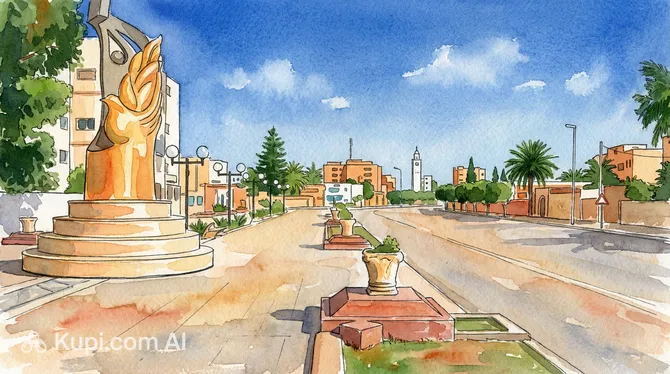
Sidi Bouzid is a colorful city in the heart of Tunisia and the capital of the governorate of the same name. It offers travelers a rare opportunity to glimpse the authentic everyday life of the country, away from the busy coastal resorts, and to feel the dynamic development of the central regions.

Sidi Bouzid. Illustration.
Source: Kupi.com AI

Geographically, Sidi Bouzid is located in the central part of Tunisia, characterized by a continental climate with hot, dry summers and mild, but occasionally cool winters. The city's population is approximately 430,000 people, highlighting its importance as a major regional center.

What makes Sidi Bouzid attractive to the discerning tourist? Above all, it is a chance to immerse yourself in the unvarnished atmosphere of the Tunisian hinterland and get to know the lifestyle of the local residents. The city is also the center of an extensive agricultural region, providing insight into the country's agrarian way of life. Furthermore, a visit to Sidi Bouzid allows for a better understanding of Tunisia's regional development and a chance to see life as it is outside the main tourist zones.

If you are looking for something more than a standard beach holiday and strive for a deeper acquaintance with the culture and realities of Tunisia, then a trip to Sidi Bouzid can be a truly memorable and educational experience.

You can find more interesting facts on the page dedicated to the history of Sidi Bouzid

Weather Overview

When planning a trip to Sidi Bouzid, it is worth considering its climatic features. The city greets guests with a hot and predominantly dry summer: for example, in July, the average temperature stays around 30.1°C, while maximum figures can reach an impressive 38.1°C. Winters here are noticeably milder, with an average January temperature of about 10.7°C, however, nights can be cool, dropping to 5.1°C. Rainfall in the region is a rare occurrence; most months are characterized by a minimum number of rainy days. For more detailed planning of your journey, we recommend familiarizing yourself with information about the climate of Sidi Bouzid.

Average monthly temperature

Average monthly precipitation

Interesting Facts

As an important regional center of Tunisia, Sidi Bouzid holds several less obvious but curious facts that help to better understand its character:

  • Archaeological Heritage of the Region: Although Sidi Bouzid itself is a relatively young city, its surroundings hold evidence of deep antiquity. Artifacts and ruins dating back to the Punic and Roman periods have been discovered in the region, indicating long-standing settlement and the strategic importance of these lands long before the modern city was founded.

  • A City under a Saint's Protection: Sidi Bouzid owes its name to a revered 16th-century Sufi saint, Sidi Bouzid Ben Ali Ben Salem. His mausoleum (zawiya) remains a place of pilgrimage and an important spiritual center for local residents.

  • Olive Country: While all of Tunisia is famous for its olive oil, the Sidi Bouzid region is one of the key centers of its production. The endless olive groves stretching for many kilometers are an integral part of the local landscape and the foundation of the economy.

  • A Modern Agrarian Center: Unlike many historic cities of Tunisia with ancient medinas, Sidi Bouzid in its modern form is primarily an important administrative and agricultural center that saw its active development in the 20th century. This gives it a unique character reflecting the modern dynamics of the Tunisian interior.

How to Get There

There are several ways to reach Sidi Bouzid, located in the heart of Tunisia. The most common option for international travelers is to fly into one of the country's major airports followed by a land transfer, as there is no airport directly in Sidi Bouzid.

One of the closest options is Sfax El Maou Airport (SFA), located in the city of Sfax, about 116 km east of Sidi Bouzid. This is a regional airport from which you can reach Sidi Bouzid by taxi or rental car in approximately 2.5–3 hours. If you are looking for direct flights from Europe, it is worth considering larger hubs.

A larger airport frequently used by tourists is Enfidha-Hammamet International Airport (NBE). it is located in the city of Sousse, at a distance of about 144 km northeast of Sidi Bouzid. This modern airport serves many international flights. The trip from here to Sidi Bouzid will take approximately 3.5–4 hours by car.

Another popular international airport is Habib Bourguiba International Airport (MIR), located in Monastir, about 141 km from Sidi Bouzid. From here, you can also arrange a taxi transfer or rent a car; the journey will take about 3–3.5 hours.

For clarity, here is a summary of the main airports through which you can reach Sidi Bouzid:

AirportPassenger trafficDistance
Sfax El Maou Airport174 000116 km
Cheikh Larbi Tebessi Airport12 607132 km
Habib Bourguiba International Airport1.8 mln141 km
Enfidha - Hammamet International Airport1.3 mln144 km
Tozeur Airport32 108175 km

After arriving at one of the airports, you can reach Sidi Bouzid by taxi, rental car, or perhaps by using intercity buses (louages), which are a popular mode of transport in Tunisia. It is recommended to check public transport schedules and routes in advance or arrange a transfer.

Main Attractions

Sidi Bouzid, being primarily an important administrative and agricultural center of Tunisia, offers travelers an opportunity to immerse themselves in the authentic atmosphere of the Tunisian province rather than a standard set of tourist sights. Nevertheless, there are places here that deserve the attention of a curious guest.

One of the main spiritual and historical centers of the city is the Zawiya of Sidi Bouzid. This is the mausoleum of the saint Sidi Bouzid Ben Ali Ben Salem, who lived in the 16th century and after whom the city is named. For local residents, this place is of great significance as an object of pilgrimage and prayer. Tourists can appreciate the architecture of the zawiya, often executed in a traditional style, and feel the special, peaceful atmosphere of this site, reflecting the deep religious traditions of the region.

The Sidi Bouzid Central Market (souk) is definitely worth a visit. It is the heart of city life, where you can see the full variety of local products: from fresh vegetables and fruits grown in the fertile surroundings to spices, traditional handicrafts, and clothing. The market is not just a place for shopping; it is a vibrant and noisy space where you can observe the daily life of the citizens, haggle, and experience the true flavor of Tunisia.

The surroundings of Sidi Bouzid are an attraction in their own right. The region is famous for its vast olive groves and other agricultural lands. A trip through the countryside will allow you to see how the land is cultivated and appreciate the scale of the agrarian sector, which plays a key role in the economy of the city and all of Tunisia. This is an opportunity to see the "other" Tunisia, far from the beach resorts, and understand the life of the Tunisian interior.

Local Cuisine

The gastronomy of Sidi Bouzid offers travelers an authentic taste of Tunisia, based on fresh local products and traditional recipes. As the heart of an agricultural region, the city takes pride in the quality of its ingredients, which is directly reflected in the flavor of the dishes. Here you won't find an abundance of fine-dining restaurants like on the coast, but you can enjoy home-style cooking and authentic tastes in small local cafes and eateries.

Be sure to try traditional couscous—the staple dish of Tunisian cuisine. In Sidi Bouzid, it is often prepared with lamb or chicken, along with seasonal vegetables grown in the surrounding fields. Another iconic dish is tagine, which here can be a fragrant casserole with meat, vegetables, and eggs, or a hearty thick soup. Don't miss the chance to taste brik—a crispy, thin pastry "envelope" filled with egg, tuna, or minced meat and deep-fried. It is also worth trying the local bread, such as khobz tabouna, baked in traditional clay ovens.

As for drinks, sweet and aromatic mint tea is ubiquitous and serves as a symbol of hospitality. On a hot day, fresh-squeezed juices from local fruits are refreshing. Regarding alcohol, it is less available in Sidi Bouzid than in tourist zones, but local beer or wine can be found in some hotels or licensed shops.

The food culture in Sidi Bouzid centers on family meals and simple but hearty dishes. Locals prefer to eat at home or in small, time-tested eateries that serve freshly prepared food. Tourists can follow their lead and also visit local markets, where you can not only buy the freshest produce but also try street food such as fried flatbreads or seasonal fruits. This is an excellent opportunity to immerse yourself in the daily life of the city and discover the true taste of the region.

Travel Tips

Planning a trip to Sidi Bouzid? Wonderful! To ensure your journey through this authentic corner of Tunisia goes smoothly and leaves only pleasant impressions, we have prepared some practical tips. They will help you better navigate and enjoy the hospitality of this non-touristy but interesting city.

  1. Clothing and Essentials: The climate in Sidi Bouzid is continental: summers are hot and dry, winters are mild, but evenings can be cool.

    • In summer (June-September), choose light, breathable clothing made from natural fabrics (cotton, linen). Don't forget sunglasses, a hat, and sunscreen with high SPF.
    • For spring, autumn, and winter, a sweater, light jacket, or windbreaker will come in handy.
    • Comfortable shoes are essential, as you will likely want to walk around the city and the market.
    • When visiting religious sites, such as the Zawiya of Sidi Bouzid, choose modest clothing that covers shoulders and knees.
    • Don't forget a power adapter (in Tunisia, types C and E are used).

  2. Transport in and around the City:

    • The main type of public transport for moving between cities and in the suburbs are louages (shared taxis). This is an affordable and popular way to get around.
    • In Sidi Bouzid itself, you can use taxi services. It is recommended to agree on the fare in advance or ensure the driver has turned on the meter.
    • Renting a car can be convenient if you plan to explore the surroundings. Remember the local driving style and the need to have an international driving permit.

  3. Financial Matters:

    • The local currency is the Tunisian dinar (TND). Exporting dinars from the country is prohibited.
    • You can exchange currency at banks or official exchange offices. Keep your exchange receipts, as they may be needed for reconversion when leaving.
    • Credit cards are accepted in some hotels and large shops, but cash is preferred for markets, small cafes, and taxis. Check with your bank regarding terms for using cards abroad.
    • There are ATMs in Sidi Bouzid, but it's better to have some cash on hand.
    • Tipping in Tunisia is welcomed but not strictly mandatory. In restaurants, it's customary to leave 5-10% of the bill if you liked the service. Small amounts can be given to porters and housekeepers.

  4. Health and Safety:

    • Before your trip, take out medical insurance covering expenses for treatment abroad.
    • Bring a first-aid kit with necessary medications. There are pharmacies in the city, but the required medicine may not be available or may be under a different name.
    • Drink only bottled water. Thoroughly wash fruits and vegetables.
    • Sidi Bouzid is considered a relatively safe city, but general precautions won't hurt: watch your belongings, don't leave valuables unattended, and avoid walking in poorly lit or deserted areas after dark.

  5. Language and Communication:

    • The official language is Arabic (Tunisian dialect). French is widely spoken, especially among the older generation and in official institutions.
    • English is less common than in resorts, so knowing a few phrases in French or Arabic will be very helpful. Simple phrases: "As-salamu alaykum" (Hello), "Shukran" (Thank you), "Afwan" (Please/You're welcome), "Naam" (Yes), "La" (No).
    • A local SIM card with internet access can be purchased at the offices of mobile operators (e.g., Ooredoo, Tunisie Telecom, Orange).
    • Wi-Fi is available in most hotels and some cafes, but the speed may be low.

  6. Local Etiquette and Traditions:

    • Tunisians are hospitable people. When communicating, be polite and respectful of local customs.
    • It is customary to remove your shoes when entering a home.
    • If you are invited for tea or lunch, it's a sign of respect—try not to decline.
    • Use your right hand for eating, handshakes, and passing items.
    • When photographing people, always ask for their permission, especially women and the elderly.
    • Dress modestly, especially women, when visiting public places outside tourist zones.

  7. What to Avoid:

    • Public displays of affection between a man and a woman—this is not customary.
    • Criticism of Islam or local traditions.
    • Photographing military objects, police, and government buildings without special permission.
    • Excessive alcohol consumption in public places. Sidi Bouzid is not a resort town, and the attitude toward alcohol is more conservative here.

  8. Additional Tip for Sidi Bouzid:

    • Be sure to visit the local market (souk). It is not just a place for shopping, but the heart of city life, where you can feel the authentic atmosphere, observe the locals, taste fresh produce, and, of course, haggle. Be prepared for the fact that the infrastructure in Sidi Bouzid may be simpler than in large tourist centers, but this is exactly where its special charm lies and the opportunity to see the real Tunisia.

We hope these tips help you plan an unforgettable trip to Sidi Bouzid. We wish you bright impressions and pleasant discoveries in this unique Tunisian city!

Entertainment & Nightlife

Sidi Bouzid, as an important regional center of Tunisia, offers its own special rhythm of life that extends into the evening hours. While you won't find noisy tourist quarters with neon signs here like on the coast, the city provides opportunities for a pleasant pastime after sunset, immersing you in the authentic local atmosphere.

Nightlife in Sidi Bouzid is largely concentrated around cafes and restaurants, which often stay open until late evening. These are popular meeting places for locals, where you can enjoy a cup of aromatic mint tea, coffee, or a leisurely dinner. The atmosphere in such establishments is usually calm and conducive to conversation. Some restaurants may offer traditional Tunisian music performed live, especially on weekends, creating a cozy environment. Specialized nightclubs and large bars with dance floors are rarer here; evening entertainment tends to be more relaxed.

The main places to spend an evening are generally concentrated along the city's main streets and in its central part. Here you can find establishments with a variety of cuisines, from traditional Tunisian to more universal offerings. As for the crowd, it is predominantly locals, families, and groups of friends. The dress code is usually casual, but respect for local clothing traditions is always welcomed.

Practical tips for evening leisure:

  • The best time for evening walks and visiting cafes is after the daytime heat has subsided.
  • Regarding prices: the cost of dinner or drinks in Sidi Bouzid is generally lower than in the major tourist zones of Tunisia.
  • For getting around at night, you can use taxi services. It is recommended to agree on the fare in advance or ensure the driver uses the meter.
  • While Sidi Bouzid is considered a relatively safe city, it is always wise to take standard precautions: avoid poorly lit and deserted streets late at night and keep an eye on your personal belongings.

Unfortunately, without an up-to-date list of establishments (CSV data), we cannot recommend specific bars or clubs with links. The best way to find a suitable place is to take a stroll through the city center in the evening or ask for advice from your hotel staff or locals—they can always point out popular and reliable spots.

Regarding daytime entertainment, in addition to the landmarks already mentioned in other sections, such as the Zawiya of Sidi Bouzid and the bustling Central Market, the city offers opportunities for leisurely strolls through its streets to observe daily life. You can find small parks or public spaces for relaxation. Specialized large amusement parks or a high number of museums should not be expected here, as the city's focus is on its administrative and agricultural roles.

Overall, evening in Sidi Bouzid offers not so much boisterous entertainment as an opportunity to relax peacefully, enjoy the local cuisine and hospitality, and feel like a part of the real, non-tourist life of Tunisia.

Parks & Museums

Sidi Bouzid, as the heart of an agricultural region of Tunisia, offers guests not so much classical park ensembles or large museum complexes, but a unique opportunity to touch living culture and enjoy the natural beauty of the surrounding area. Here, parks and museums take on a different, more authentic meaning.

As for green zones, instead of formal city parks, Sidi Bouzid is surrounded by extensive agricultural lands. Endless olive groves and fertile fields where local crops are grown create a peaceful landscape and serve as a kind of "natural parks" for the region. A walk or drive through the outskirts will allow you to see real rural life and appreciate natural wealth that is no less valuable than well-kept city gardens. Within the city itself, you can find small public squares and plazas where locals gather to rest in the shade of trees, offering corners of tranquility amidst the city bustle.

Speaking of museums and cultural heritage, the main historical and spiritual center is the Zawiya of Sidi Bouzid. This is the mausoleum of a revered 16th-century saint, after whom the city is named. Visiting this site allows you to not only appreciate the traditional architecture but also to touch the deep religious traditions of the region. Although there may not be many traditional museums with exhibits in Sidi Bouzid, the city itself, especially its Central Market (souk), can be considered a living open-air museum. Here you will immerse yourself in the atmosphere of daily life, see craftsmen at work, taste local products, and feel the true flavor of Tunisia. Some old buildings in the city center also bear the marks of history and can tell stories of the past.

For truly authentic impressions, try to visit Sidi Bouzid on one of the busy market days—this will allow you to see the city in all its beauty and dynamics. Also, if the opportunity arises, don't miss the chance to peek into one of the local craft workshops to watch the masters at work and perhaps purchase a unique souvenir holding the warmth of Tunisian craftsmen's hands.

Getting Around

Getting around Sidi Bouzid and its surroundings is possible in several ways typical of regional centers in Tunisia. The public transport system here may seem less formalized than in large metropolises, but it is fully functional and allows you to reach the necessary points.

The main and most popular type of public transport, especially for medium and long-distance travel and for connecting with suburbs, are louages. These are shared taxis, usually white with a red stripe (for regional routes) or a blue stripe (for local ones), which depart as they fill up. They have specific "stations" or gathering points, often located near the central market or the bus station. Payment is made in cash to the driver, and fares for popular destinations are generally fixed and quite affordable.

City buses may also operate in Sidi Bouzid. They serve the main routes within the city. Schedules and stops may not always be obvious to a tourist, so don't hesitate to ask locals or at your hotel. Bus fares are also usually paid in cash to the conductor or driver upon entry. The fare is typically low.

For more comfortable and individual travel around the city, taxis are always available. They can be hailed on the street or ordered through a hotel. It is important to either agree on the trip cost in advance or ensure the driver has turned on the meter (if one is present and used). Taxis are convenient for short trips or if you are traveling with luggage.

The payment system in Sidi Bouzid's public transport is predominantly cash-based. It is recommended to have small bills and Tunisian dinar coins with you. Specialized transport cards or mobile payment apps are likely not common here.

Practical tips for tourists:

  • For louage trips, clarify their departure point (gare de louage) and be prepared for a bit of a wait while the vehicle fills up.
  • When using buses, observe the locals to understand where the stops are and how boarding takes place.
  • Public transport hours may be limited, especially in the evening and on weekends. Plan your movements in advance.
  • Knowing a few phrases in French or Arabic can be helpful when communicating with drivers.

As an alternative to public transport, the central part of Sidi Bouzid can easily be explored on foot. For trips around the outskirts, you might consider renting a car, but for travel within the city, it may be less convenient due to local traffic and parking specifics. Bike rentals or car-sharing are unlikely to be common options in a city of this type.

Accommodation

In Sidi Bouzid, as an important regional center of Tunisia, travelers can find several accommodation options that primarily reflect the city's business and administrative character rather than a tourist focus. The range of available housing here generally includes local hotels of various categories, from simpler ones to quite comfortable options, as well as potential guest houses or apartments for rent. Luxury resorts or a wide selection of hostels are unlikely to be found here, but you can count on an authentic experience and an introduction to local hospitality.

When choosing a place to stay in Sidi Bouzid, it is worth looking at areas located in the central part of the city. Such a location will provide convenient access to major administrative institutions, shops, cafes, and the Central Market. Options located near main transport arteries may also be convenient if you plan to travel around the region.

While the provided data does not include a specific list of hotels for Sidi Bouzid with direct booking links, travelers can find suitable accommodation through popular online booking platforms or by contacting hotels directly upon arrival, if available. Expect local hotels to offer functional and clean rooms rather than luxury amenities, which perfectly fits the spirit of a city focused on daily life rather than mass tourism.

The general price range for accommodation in Sidi Bouzid will likely vary from budget to mid-range. It is recommended to research offers on online platforms in advance, especially if your trip coincides with any local events or holidays, although there may not be a pronounced peak tourist season here. Booking via the internet or directly at the hotel (if contact details are known) are the most common ways to secure your stay.

Nearby Cities

For those who want to explore the surroundings, Sidi Bouzid serves as an excellent starting point for day trips to several interesting nearby locations:

Notable destinations include: Kasserine, located just 61 km away, which attracts history buffs with its ancient Roman ruins and picturesque mountain landscapes. Very close by, at a distance of about 64 km, is Bir Ali Ben Khalifa, where you can get acquainted with the more relaxed pace of life in the Tunisian province and see the region's typical agricultural landscapes. A bit further, about 90 km away, lies the famous Kairouan—a historical gem of Tunisia and one of the holy cities of Islam, impressive with its Great Mosque and ancient medina, which is a UNESCO World Heritage site.

Below is a table with information on some of these and other nearby cities that could be an excellent choice for a day trip from Sidi Bouzid:

CityPopulationDistance
Er Regueb11 43034 km
Sbeitla20 25339 km
Hajeb El Ayoun10 63140 km
El Maknassi23 78946 km
Kasserine108 79461 km

These nearby destinations provide an insight into the diverse culture and landscapes of the region.

Shopping & Souvenirs

Shopping in Sidi Bouzid is primarily an immersion into the authentic atmosphere of the Tunisian province rather than a chase for global brands. The city is not famous for large shopping centers like the coastal resorts of Tunisia, but it offers a unique opportunity to purchase traditional items, the freshest local products, and feel the true flavor of a local market. The main focus here is on everyday goods for local residents, as well as on handicrafts and agricultural products for which the region is famous.

The main shopping areas in Sidi Bouzid are concentrated in the central part of the city. Strolling through the main streets, you will discover many small shops, stalls, and workshops offering a variety of goods—from clothing and footwear to household supplies and electronics. This is where the commercial life of the city pulses, and you can find everything you need.

Large modern shopping centers in the European sense are not a characteristic feature of Sidi Bouzid. Instead, you may encounter small shopping complexes or department stores oriented toward the needs of the local population. Shopping in the city is more of an experience of exploring numerous small shops and, of course, visiting the traditional market.

The heart of trade in Sidi Bouzid is undoubtedly the Central Market (souk). This is a bright and noisy place where you can find practically everything: from the freshest vegetables, fruits, olives, and spices the region is so famous for, to traditional clothing, shoes, ceramics, carpets, and leather goods. The market is not just a place for shopping but also a unique opportunity to observe the daily life of the citizens, haggle, and experience the authentic spirit of Tunisia. You can spend several hours here simply soaking up the atmosphere and browsing the goods.

From Sidi Bouzid, it is worth bringing back souvenirs that reflect its agricultural and artisanal character. Look for high-quality olive oil of local production—it is the region's calling card. Dates and spices, especially harissa, are also popular. Among handicrafts, valued items include ceramics with traditional patterns, leather goods (bags, belts, shoes), small handmade carpets or kilims, and traditional clothing like djellabas or scarves. Don't forget the fragrant Tunisian soap based on olive oil.

Shops in Sidi Bouzid usually open in the morning, around 9:00-10:00, and stay open until evening, around 19:00-20:00. Many may close for a long lunch break (siesta), especially during the hot season, from approximately 13:00 to 16:00. On Friday, the day of prayer, some shops may have shorter working hours or be closed during lunchtime. During Ramadan, shop schedules change significantly. As for payment, cash in Tunisian dinars (TND) is the preferred method, especially at the market and in small shops. Credit cards may be accepted in some larger retail outlets or hotels, but do not rely on this everywhere.

The possibility of a tax refund (Tax Free or détaxe) for tourists in Tunisia exists for certain goods when purchasing an amount exceeding the established limit in participating stores. However, given that Sidi Bouzid is not a major tourist center, the number of shops offering Tax Free services may be limited. If you are making a large purchase, it is worth checking with the seller about the possibility of arranging the necessary documents for a tax refund at the airport when leaving the country.
Nearby cities

Reached the end of the page?

That means the route is fully explored