Support

Kairouan

About

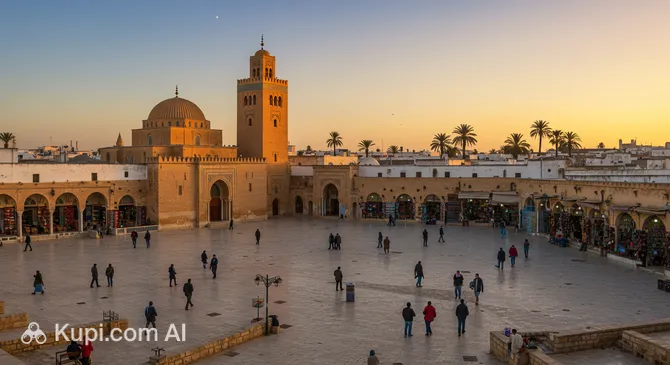
Kairouan is a city of immense spiritual significance and timeless beauty, often regarded as the cultural capital of Islamic heritage in the Maghreb. As one of the most important holy cities in the Islamic world, it exudes a serene and contemplative atmosphere that captivates visitors from the moment they arrive. Located in the heart of Tunisia, this UNESCO World Heritage site is a fascinating blend of architectural mastery and traditional charm.
Kairouan. Source: Kupi.Binoculars

Geographically, the city is situated inland within the Kairouan Governorate, serving as a vital crossroads between the mountains and the coast. With a population of approximately 186,000 inhabitants, it is a bustling regional center that maintains a distinct identity separate from the coastal resorts. The region typically experiences a semi-arid climate with hot summers and mild winters, which perfectly complements the golden hues of its ancient stone walls.

The city was founded around 670 AD, and the deep history of Kairouan is evident in every winding alleyway of its Medina. It was established as a strategic outpost and quickly grew into a renowned center of scholarship and religion. Today, travelers flock here to admire the majestic Great Mosque of Kairouan, a masterpiece of Islamic architecture, and to explore the vibrant souks known for their exquisite handmade carpets and delicious local pastries like makroudh.

Whether you are a history buff, an architecture enthusiast, or simply seeking a deeper understanding of North African culture, Kairouan offers an unforgettable journey. Its spiritual aura and welcoming locals make it a must-visit destination for anyone exploring the region.
Weather Overview

Travelers planning a trip to this historic city should prepare for a semi-arid climate that brings distinct seasonal variations. The weather in Kairouan is generally characterized by intense heat during the summer months and mild, comfortable conditions during the winter.

Summer is the hottest time of the year, particularly in July and August, when average daytime temperatures frequently climb between 37°C and 38°C. Rainfall is virtually non-existent during this period, ensuring bright, sunny skies perfect for photography, though midday heat can be strong. Conversely, winters are quite mild; in January, you can expect cooler nights with lows around 6.5°C and pleasant daytime highs reaching approximately 18°C.

Expect scorching, dry summers and mild winters with minimal precipitation, although spring and autumn may bring a few occasional wet days. Overall, the climate is dry, with very low rainfall accumulation throughout the year, making it a reliable destination for outdoor sightseeing.

Interesting Facts

Beyond the main attractions, Kairouan holds many fascinating secrets that reveal the depth of its history and culture. These unique details offer a glimpse into the city's past as a center of innovation and spirituality, providing visitors with stories that go far beyond the guidebooks.

  • The majestic Great Mosque of Kairouan serves as a veritable museum of antiquity, as its prayer hall is supported by hundreds of columns salvaged from older Roman and Byzantine sites like Carthage. This reuse of ancient materials means that almost every pillar has a unique design, differing slightly in height and marble type from its neighbor.

  • A widely held local belief suggests that seven pilgrimages to this sacred city are spiritually equivalent to one Hajj to Mecca. This tradition has reinforced Kairouan's status for centuries, cementing its reputation as the fourth holiest city in the Islamic world.

  • The city is home to the Aghlabid Basins, a marvel of 9th-century engineering that remains one of the most impressive hydraulic systems of the Middle Ages. These massive open-air reservoirs were designed to capture and store rainwater, ensuring the city's survival in an arid climate.

  • The Barbier Mausoleum is not the resting place of a barber in the traditional sense, but rather of Abu Zamaa el-Balaoui, a companion of the Prophet Muhammad. He earned his nickname because he always carried three hairs from the Prophet's beard with him as a blessing, which are said to be buried with him at the site.

Great Mosque of Kairouan. Source: Kupi.Binoculars

How to Get There

While the holy city of Kairouan does not have its own airport, it is well-connected to the rest of the country by road, making it easily accessible from several major transport hubs in neighboring regions. Most visitors choose to fly into one of the coastal cities and complete their journey by taxi, bus, or shared taxi ("louage"). You can find more about how to get to Kairouan and the various transport options available on our detailed page.

One of the most convenient entry points is the Enfidha - Hammamet International Airport (IATA: NBE), located in the city of Sousse. It is approximately 54 km from Kairouan, and the transfer by road typically takes about 1 hour. Another close option is the Habib Bourguiba International Airport (IATA: MIR) in Monastir, situated roughly 60 km away, with a travel time of just over 1 hour. For those arriving on major international carriers, Tunis-Carthage International Airport (IATA: TUN) in the capital, Tunis, is the primary hub. Although it is located about 131 km from Kairouan, requiring a drive of approximately 2 to 2.5 hours, it handles a large volume of traffic and offers the widest range of flight connections.

For clarity, here is a summary of the main airports:

Airport Name City Passenger Traffic Km from City
Tunis-Carthage International Airport Tunis Very High 131.4
Melita Airport Midoun High 208.8
Habib Bourguiba International Airport Monastir High 60.0
Enfidha - Hammamet International Airport Sousse Medium 54.3
Sfax El Maou Airport Sfax Small 118.6

Main Attractions

Kairouan is a city where history is etched into every stone, offering visitors a profound glimpse into the early Islamic era of North Africa. The city’s attractions are not just monuments; they are active centers of culture and spirituality that have stood the test of time. Exploring these sites allows travelers to walk in the footsteps of scholars, pilgrims, and rulers who shaped the region's destiny.

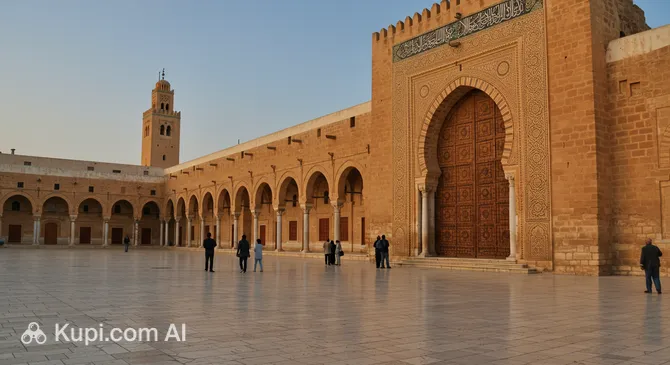
Undoubtedly the most famous site is the Great Mosque of Kairouan, also known as the Mosque of Uqba. Founded in the 7th century, it is one of the oldest and most significant places of worship in the Islamic world. Tourists are drawn to its imposing fortress-like exterior and the expansive marble courtyard surrounded by arched colonnades. The minaret, standing as the oldest surviving one in the world, is a masterpiece of architectural resilience and elegance that defines the city's skyline.

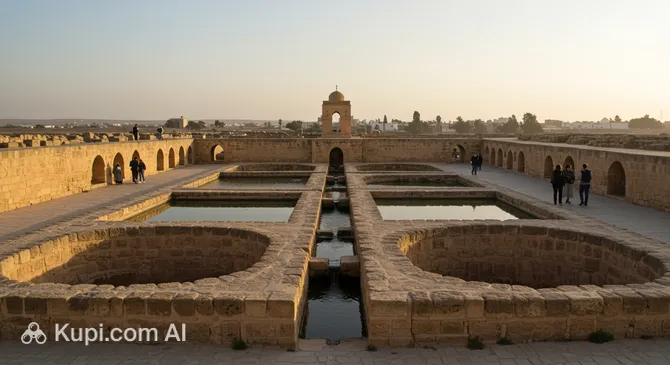
Another testament to the city's golden age is the Aghlabid Basins. Built in the 9th century, these enormous open-air water reservoirs were a sophisticated engineering feat designed to supply water to the arid city. Today, they offer a tranquil setting for a walk, where visitors can marvel at the sheer scale of the construction and the ingenuity of the Aghlabid dynasty in managing precious resources in a desert environment.

Aghlabid Basins. Source: Kupi.Binoculars

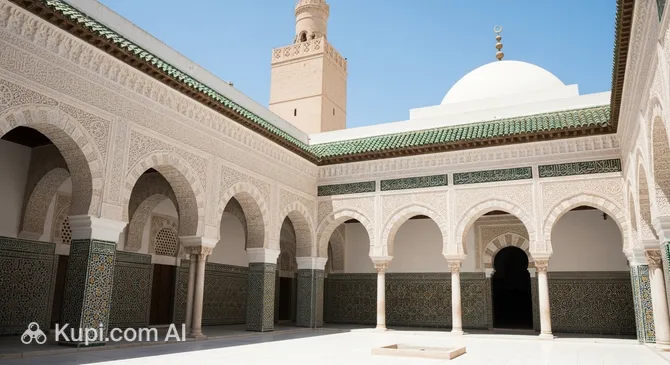
For those interested in intricate artistic details, the Barbier Mausoleum (Zaouia of Sidi Sahab) is a visual delight. This complex houses the tomb of Abu Zamaa el-Balaoui, a companion of the Prophet Muhammad. Unlike the austere stone of the Great Mosque, this site is celebrated for its stunning Andalusian-style decoration, featuring colorful tile work, carved stucco, and peaceful courtyards. It is a place of serenity and beauty that captivates photographers and culture lovers alike.

Barbier Mausoleum. Source: Kupi.Binoculars

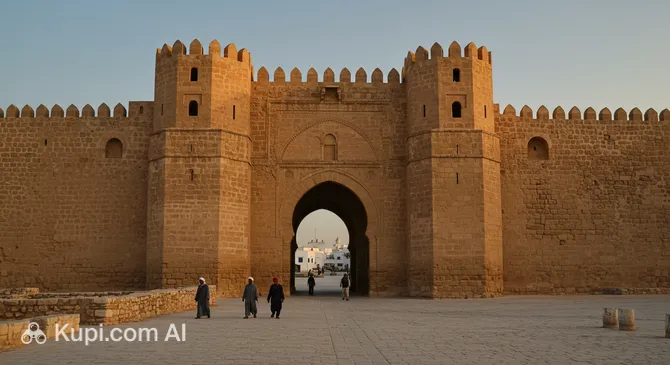
To understand the defensive history of the region, a visit to the Kasbah of Kairouan is essential. This historic fortress, integrated into the city's ancient walls, once served as the military and administrative center. Wandering through its structures provides a sense of the city's strategic importance and offers distinct views of the surrounding medina, allowing visitors to appreciate the layout of this UNESCO World Heritage city from a different perspective.

Kasbah of Kairouan. Source: Kupi.Binoculars

Local Cuisine

The culinary landscape of Kairouan is as rich and storied as its history, offering a delightful journey for the senses that goes beyond standard Tunisian fare. The city is celebrated across the country as the undisputed capital of Makroudh, a traditional pastry that has become synonymous with Kairouan’s identity. These diamond-shaped sweets are made from semolina dough filled with date paste, deep-fried, and then soaked in honey or sugar syrup. Walking through the medina, visitors will see mounds of these golden treats displayed in shop windows, often flavored with sesame seeds or almonds.

For a savory experience, the local cuisine features hearty and spicy dishes typical of the interior regions. Couscous is the staple, often prepared with lamb and a generous amount of vegetables, seasoned with the fiery red chili paste known as harissa. Another favorite worth trying is Kefteji, a mix of fried vegetables like peppers, tomatoes, and pumpkin, chopped together and served with eggs. The food here tends to be robust and flavorful, reflecting the agricultural abundance of the surrounding governorate.

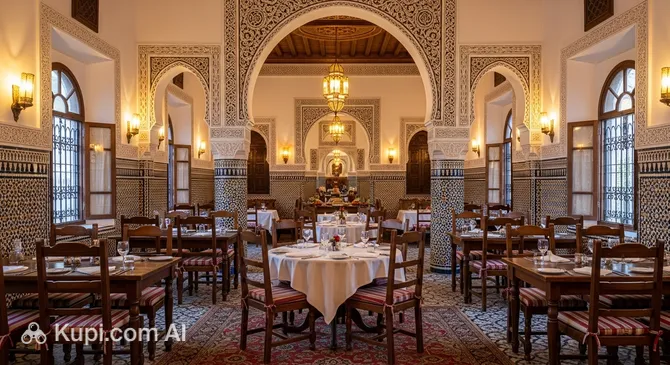
Dining in Kairouan ranges from casual street food stalls serving quick bites to more established venues where you can enjoy a leisurely meal. For those looking to enjoy traditional hospitality in a setting that complements the city's heritage, El Brija Restaurant is a notable choice. Located near the main historical sites, it offers a menu filled with authentic local specialties, allowing travelers to taste the true flavors of the region in a comfortable atmosphere.

El Brija Restaurant. Source: Kupi.Binoculars

To wash down a meal or simply take a break from sightseeing, the local beverage culture centers around mint tea. In Kairouan, this refreshing drink is often served very sweet and topped with floating pine nuts, adding a crunchy texture and a distinct nutty flavor. While alcohol is available in select tourist hotels and licensed restaurants, the traditional way to end a meal here is with a glass of hot tea and, inevitably, another piece of sweet Makroudh.

Travel Tips

Welcome to Kairouan, a city where ancient traditions and daily life are deeply intertwined. To help you navigate this spiritual capital with ease and respect for its heritage, we have compiled a list of practical suggestions for your journey.

  1. Clothing and Gear: Since Kairouan is a holy city with a conservative atmosphere, modest dress is essential. Both men and women should ensure their shoulders and knees are covered, especially when visiting religious sites like the Great Mosque or the mausoleums. In summer, wear loose, breathable fabrics to handle the heat, while a light jacket is necessary for cooler winter evenings. Comfortable walking shoes are a must for navigating the uneven cobblestones of the Medina.
  2. Transportation: The best way to explore the historic Medina is on foot, as the narrow alleys are not suitable for vehicles. For distances outside the old city, yellow taxis are plentiful, affordable, and run on meters; simply wave one down from the roadside. There is no metro or tram system here, but the city is compact enough that you won't miss them. If you plan to visit nearby towns, "louages" (shared taxis) are the most efficient option.
  3. Finances: The local currency is the Tunisian Dinar (TND). While some hotels and upscale restaurants accept credit cards, cash is king in Kairouan, particularly in the souks and small pastry shops. ATMs are widely available in the modern part of the city. It is advisable to carry small change for taxis and tips. Note that the Dinar is a closed currency, so exchange your money upon arrival and spend or exchange it back before leaving the country.
  4. Health and Safety: Kairouan is generally safe for tourists, but standard precautions against pickpocketing in crowded areas apply. Pharmacies are marked with a green cross, and many pharmacists speak French or English. It is highly recommended to drink bottled water rather than tap water to avoid stomach issues. Sun protection is vital, especially between June and September, as the inland sun can be quite intense.
  5. Communication: The official language is Arabic, and the Tunisian dialect is spoken daily. French is widely understood and serves as the primary language for commerce and tourism. English is spoken by younger generations and those in the tourism industry, but learning a few basic phrases in French or Arabic (like "As-salamu alaykum" for hello) will go a long way. SIM cards from providers like Ooredoo or Orange can be easily purchased with your passport for reliable mobile data.
  6. Local Etiquette: Tunisians are known for their hospitality. When greeting locals, a handshake is common, often accompanied by placing the right hand over the heart. Public displays of affection should be avoided out of respect for local norms. If you are invited into a home or a carpet shop, it is polite to remove your shoes if you see others doing so, and accepting a cup of tea is a gesture of friendship.
  7. What to Avoid: Do not attempt to enter the prayer halls of mosques during prayer times if you are not Muslim; tourists are typically welcomed in the courtyards but restricted from the carpeted prayer areas. Avoid taking photographs of people, especially women or those praying, without asking for their explicit permission first.
  8. Shopping Tip: Kairouan is famous for its hand-knotted carpets. If you enter a carpet shop, be prepared for a long presentation involving tea and many rugs being unrolled. This is part of the culture. If you aren't interested, a firm but polite "No, thank you" is respected. If you do buy, bargaining is expected and is considered part of the transaction process.

By keeping these tips in mind, you will be well-prepared to immerse yourself in the rich culture and history of Kairouan. Enjoy the warm hospitality and the unique spiritual aura of this magnificent city!

Entertainment & Nightlife

Entertainment in Kairouan is deeply rooted in culture and tradition, offering a distinct change of pace from the bustling nightlife of Tunisia's coastal resorts. Instead of nightclubs and loud discos, the city invites visitors to engage in immersive cultural experiences, from exploring ancient markets to witnessing time-honored festivals. The atmosphere here is one of reflection and discovery, where the activities are centered around heritage, craftsmanship, and social interaction.

One of the most engaging pastimes for visitors is exploring the vibrant souks of the Medina. Kairouan is famous as the carpet capital of Tunisia, and browsing the carpet shops is an event in itself. Watching local artisans weave intricate designs into the "Kairouan" carpets is fascinating, and shop owners often invite tourists in for mint tea to display their finest wool and silk creations. Even if you are not looking to buy, the experience of seeing hundreds of colorful rugs unrolled before you is a visual spectacle unique to this city.

For a quirky and memorable local experience, a visit to Bir Barouta is highly recommended. Located within the heart of the Medina, this 17th-century well is famous for its resident camel. The camel, adorned in colorful ribbons and fabrics, walks in circles to turn a water wheel, drawing fresh water from the depths. It is a favorite stop for families and provides a glimpse into the traditional methods of water sourcing that have been preserved for centuries.

The city comes alive in a spectacular way during the festival of the Mouled, which celebrates the birth of the Prophet Muhammad. As a holy city, Kairouan hosts one of the most significant celebrations in the Maghreb. During this period, the streets are illuminated with festive lights, and the air is filled with the sound of religious chants and Sufi music. Visitors can taste a special pudding called Assida Zgougou and witness the spiritual joy that transforms the entire city into a vibrant hub of celebration.

In the evenings, entertainment shifts to the local coffee houses and tea salons. The social life of Kairouan revolves around these gathering spots, where locals meet to discuss the day's events, watch football, or play cards. Sitting in a café near the city walls, sipping on pine-nut-topped tea and smoking a traditional shisha (water pipe), offers a relaxing way to soak up the local ambiance and observe the slow, rhythmic pace of life in this historic governorate.

Parks & Museums

While Kairouan is primarily celebrated for its religious monuments, the city also offers fascinating spaces dedicated to preserving its rich history and providing leisure opportunities. The city itself is often described as an open-air museum, where every corner of the Medina reveals centuries of architectural evolution and cultural depth.

For a comprehensive look at the region's artistic legacy, the National Museum of Islamic Art in Raqqada is a must-visit. Located approximately 10 kilometers from the city center, this museum serves as the custodian of Kairouan’s golden age. It houses an impressive collection of rare manuscripts, including pages from the famous Blue Quran, as well as exquisite ceramics, coins, and glassware that trace the history of the Aghlabid and Fatimid dynasties.

Within the city, the Zaouia of Sidi Amor Abbada, also known as the Mosque of the Sabres, offers a museum experience unlike any other. This 19th-century complex is dedicated to a blacksmith and mystic, and it displays his monumental creations. Visitors can marvel at the giant iron swords, heavy anchors, and inscribed wooden tablets that fill the space, providing a glimpse into the local folklore and the eccentric life of the saint.

When it comes to green spaces and outdoor relaxation, the area surrounding the Aghlabid Basins is the city's main recreational hub. This historical site, which once served as a vital water source, is now flanked by a public park where families and friends gather. It is an ideal spot for a peaceful evening stroll, offering a refreshing break from the bustling souks while allowing visitors to admire the grandeur of the ancient reservoirs against the backdrop of the setting sun.

Getting Around

The public transport system in Kairouan is relatively simple and reflects the city's historic and compact nature. Unlike the capital of Tunisia, Kairouan does not have a metro, tram, or train network within the city limits. The primary mode of public transportation for locals is the bus network operated by the regional transport company, SRTK (Société Régionale de Transport de Kairouan). These buses connect the city center with surrounding neighborhoods and nearby villages. However, for most short-term visitors, the bus system can be somewhat difficult to navigate due to a lack of clear route maps and signage in English.

For tourists, the most practical and popular way to get around the city outside the pedestrian-only Medina is by using the ubiquitous yellow taxis. These are officially licensed taxis and are easily recognizable. They operate on a meter system and are an incredibly affordable and efficient way to travel between attractions that are too far to walk, such as moving from the Great Mosque to the Aghlabid Basins. You can hail them directly from the street; if the light on the roof is green, the taxi is free.

Regarding payment, the transport system in Kairouan operates almost exclusively on cash. There are no travel cards, digital passes, or mobile apps for paying bus or taxi fares. It is essential to carry small denominations of the local currency (coins and small notes) with you. For buses, you purchase your ticket directly from a conductor on board. For taxis, you simply pay the driver the amount shown on the meter at the end of the trip. A typical ride within the city limits costs very little, often just a few dinars.

Travelers should be aware of a few practical tips to ensure a smooth experience. When taking a taxi, always ensure the driver turns on the meter (compteur) at the start of the ride to avoid being overcharged. If a driver refuses and asks for a fixed price, it is usually better to find another taxi. Transport operates throughout the day, but services like buses become less frequent in the late evening. Taxis run 24/7, though a legally mandated surcharge applies to the fare during night hours (typically from 9:00 PM to 5:00 AM).

As an alternative to motorized transport, walking is the undisputed best way to explore the heart of Kairouan. The historic Medina is a labyrinth of narrow alleys where cars cannot pass, making it a strictly pedestrian zone. For those wishing to visit areas outside the city or nearby towns, louages (shared minibuses) are the standard intercity option, departing from a dedicated station. While car rentals are available, they are generally unnecessary for exploring the city itself and can be a hassle due to limited parking near the historic center.

Accommodation

Accommodation in Kairouan offers a distinct shift from the sprawling all-inclusive resorts found along the Tunisian coast. Instead of massive luxury complexes, the city provides a more intimate and culturally immersive selection of places to stay. The options generally range from budget-friendly hostels and straightforward modern hotels to charming traditional guesthouses, known locally as "Dars," which offer a unique glimpse into Tunisian domestic life.

When choosing where to stay, the decision largely depends on the type of experience you seek. The most atmospheric area is undoubtedly the Medina (old city). Staying here means residing within the ancient walls, often in beautifully restored historic homes tucked away in quiet alleys. This location is perfect for those who want to be steps away from the souks and major monuments. Alternatively, the Ville Nouvelle (modern city) and the areas just outside the city walls offer larger, purpose-built hotels. These locations are generally more convenient for travelers with rental cars, as parking is easier, and they often feature amenities like swimming pools, which are a welcome relief during the hot summer months.

One of the highlights of lodging in Kairouan is the opportunity to stay in a Maison d'Hôte or Dar. These boutique accommodations are typically centered around a peaceful internal courtyard decorated with colorful tiles and lush plants. They offer a personalized service and a tranquil escape from the bustling streets outside. While standard hotels provide reliable comfort and familiar facilities, these traditional houses allow visitors to experience the celebrated local hospitality and architecture firsthand.

Regarding costs, Kairouan is generally very affordable compared to the popular coastal destinations. The price range typically spans from budget to mid-range, with very few ultra-luxury options. A comfortable stay in a well-rated guesthouse or a 3 to 4-star hotel is usually quite reasonably priced. Booking can be done easily through major online travel platforms for the larger hotels, though some smaller, family-run guesthouses may prefer direct contact or bookings through specialized boutique hotel websites.

Booking Tip: While Kairouan is often visited as a day trip, meaning accommodation is usually available, the city fills up completely during religious festivals. If you plan to visit during the Mouled (celebrating the birth of the Prophet), it is essential to book your room months in advance, as pilgrims and visitors from across the country flock to the city, and every available bed is often taken.

Nearby Cities

For those looking to explore the surroundings, Kairouan serves as an excellent base for day trips to several interesting nearby locations.

One of the most popular destinations is Sousse, often referred to as the "Pearl of the Sahel." Located on the coast, it offers a striking contrast to the inland atmosphere of Kairouan. Visitors can explore its UNESCO-listed Medina, climb the ancient Ribat for panoramic views of the harbor, or simply relax on its sandy beaches. It combines rich history with a lively modern resort vibe.

Another fascinating coastal city is Monastir, situated a bit further south along the shoreline. It is renowned for its impressive Ribat, a fortress that has stood guard over the sea for centuries and has been used as a filming location for several historical movies. The city is also home to the grand Mausoleum of Habib Bourguiba, a masterpiece of modern Islamic architecture dedicated to Tunisia's first president.

Closer to Kairouan, the town of Msaken acts as a bustling transit hub with a local charm, while the surrounding region is dotted with olive groves that define the landscape. These locations provide travelers with a broader perspective of the Sahel region's geography and lifestyle.

City Population Distance (km)
Sousse 221,530 51
Msaken 110,000 43
Monastir 104,535 65
Djemmal 70,587 60
El Kelaa Kebira 52,685 45

These nearby destinations offer a glimpse into the diverse culture and landscapes of the region, ranging from ancient coastal fortifications to vibrant market towns.

Shopping & Souvenirs

Shopping:

Shopping in Kairouan is a captivating experience that revolves around the city's rich heritage of craftsmanship. Unlike the modern malls found in coastal resorts, the retail scene here is concentrated in the winding alleys of the Medina, where traditional skills have been passed down for generations. Visitors can explore bustling souks filled with the scents of spices and the sounds of artisans at work, offering a genuine glimpse into the local culture.

The city is most famous for its carpets, and purchasing a rug here is often the highlight of a trip. Kairouan is regarded as the carpet capital of the country, producing the celebrated "Kairouan" rugs known for their durability and intricate geometric designs. Shoppers can choose between the classic knotted wool zerbiya, which can have thousands of knots per square meter, and the lighter, woven mergoum or klim, which feature colorful Berber motifs. Authentic high-quality carpets usually come with a stamp from the National Handicrafts Office, certifying their origin and knot count.

Beyond textiles, the markets offer a treasure trove of other handmade goods. The souks near the Great Mosque of Kairouan are particularly lively, featuring stalls laden with hammered copper trays, leather bags, and traditional ceramics. For a smaller, edible souvenir, boxes of Makroudh are a popular choice. These sweet, date-filled pastries are the city's signature delicacy and travel well, making them perfect gifts for friends and family back home.

When shopping in the souks, bargaining is not just accepted; it is expected. Prices are rarely fixed, and negotiating is considered a social interaction as much as a transaction. It is advisable to take your time, compare prices at different shops, and maintain a friendly attitude. While many shops accept foreign currency, paying in Tunisian Dinars is standard, and carrying cash is recommended as credit card facilities may be limited to larger carpet emporiums.

Reached the end of the page?

That means the route is fully explored