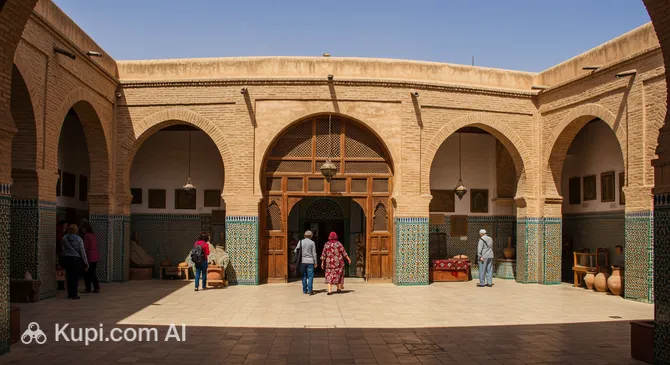
Shopping in Tozeur offers a delightful journey into the heart of Berber craftsmanship and Saharan agriculture. Unlike the large commercial hubs of the north, the retail experience here is intimate, traditional, and centered around local production. Visitors will not find high-street fashion chains or sprawling modern complexes; instead, the city provides a treasure trove of handmade artisanal goods, woven textiles, and the world-renowned dates that drive the local economy. For those who prefer a fixed-price environment over bargaining, the gift shop at the Dar Cherait Museum offers a curated selection of high-quality crafts and art.
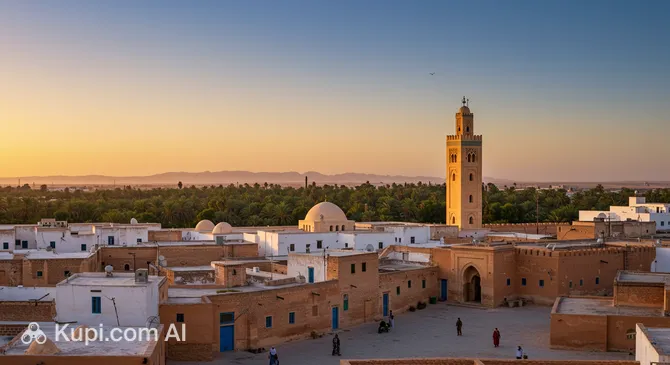
The heartbeat of the city's commercial life is located along Avenue Habib Bourguiba and the streets radiating from the central Place Ibn Chabbat. This area is lined with small boutiques, souvenir stands, and local vendors selling everything from spices to ceramics. For a more atmospheric experience, the entrance to the Medina (Ouled el Hadef) features numerous small stalls tucked into the distinctive brick architecture, where artisans display their wares in a setting that feels unchanged by time.
Travelers should be aware that Tozeur does not feature large western-style shopping malls. The shopping scene is defined by independent retailers and traditional "Centres d'Artisanat" (Craft Centers). These smaller arcades or gallery-style shops gather various artisans under one roof, allowing visitors to browse a collection of carpets, leather goods, and silver jewelry in a convenient, often air-conditioned, environment.
The Central Market (Marché Central) is an essential stop for anyone wanting to witness the daily life of the locals. It is a bustling hub of activity, particularly in the morning, filled with the scents of cumin, coriander, and fresh mint. Here, you can find mounds of colorful spices, fresh produce, and local honeys. While primarily a food market, it is also a great place to buy traditional woven baskets and affordable kitchenware used by Tunisian families.
The undisputed king of souvenirs in Tozeur is the Deglet Nour date. Often sold still on the branch, these "fingers of light" are sweet, translucent, and best purchased during the harvest season in late autumn. Beyond food, the region is famous for Berber carpets (Margoum and Klim), which feature geometric patterns and vibrant colors. Another unique item is the "Sand Rose" (Rose des Sables), a natural crystallized rock formation found in the desert that resembles a flower. Woven palm-leaf items, such as hats, fans, and baskets, are also lightweight and authentic gifts to bring home.
Store hours in Tozeur generally follow a split schedule to accommodate the desert heat. Shops typically open around 8:00 AM or 9:00 AM, close for a midday break (siesta) from roughly 1:00 PM to 3:00 PM or 4:00 PM, and then reopen until late in the evening, often until 8:00 PM or 9:00 PM. Cash is the primary method of payment; while some upscale carpet shops and hotel boutiques accept credit cards, the souks and smaller vendors deal exclusively in Tunisian Dinars. It is highly advisable to carry small denominations for easier transactions.
Tax-free shopping (VAT refund) is theoretically available in Tunisia for substantial purchases made by non-residents in participating stores. However, in a smaller city like Tozeur, shops offering this service are extremely rare. It is best not to rely on obtaining tax refunds here unless you are making a significant investment in a major carpet store or a government-sanctioned artisan center that explicitly displays the "Tax Free" signage.