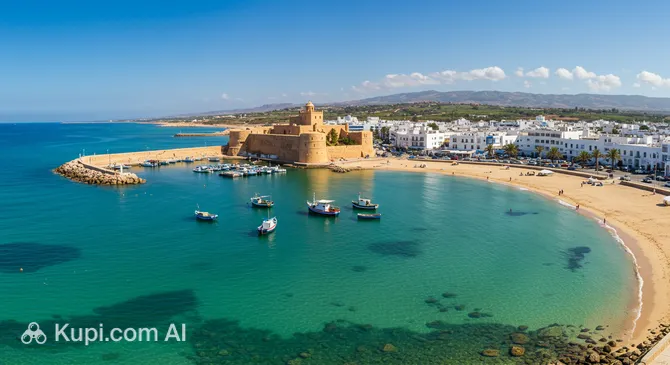
Tabarka is a picturesque resort town often referred to as the "northern pearl" of Tunisia. Located on the northwest coast, just 22 kilometers from the Algerian border, it stands in stark contrast to the familiar desert landscapes of the south. Here, emerald hills covered with cork oaks and pines slope down directly to the azure waters of the Mediterranean, creating unique scenery where mountains meet the waves.
With a population of about 41,000, the town maintains an atmosphere of comfort and tranquility, staying away from noisy mass tourism. The mild climate and fresh air, filled with the scents of pine and sea, make it an ideal place for wellness and relaxation. Tabarka is famous for its outdoor activities: it is a renowned diving center thanks to its rich coral reefs, as well as a popular destination for golf enthusiasts and hikers exploring its scenic trails.
Tabarka. Illustration.
Source: Kupi.com AI
The city's cultural heritage and unique natural landmarks lend it a special charm. The resort's hallmarks are the famous "Needles" rocks and the majestic Genoese Fort overlooking the harbor. The ancient and fascinating history of Tabarka is felt in every stone of the old town, inviting travelers to immerse themselves in the atmosphere of past eras.
Anyone who wants to discover "green" Tunisia and enjoy the harmony of nature should visit this amazing corner of the world. Tabarka will give you unforgettable impressions through its combination of magnificent beaches, dense forests, and authentic hospitality.
Weather Overview
The climate of Tabarka can be described as mild Mediterranean, which makes the city a pleasant holiday destination at any time of year. The proximity of the sea and the wooded hills surrounding the city soften the summer heat and create a unique microclimate. Expect warm, sunny summers with minimal rainfall and cool winters, when rain is much more frequent.
The summer months, especially July and August, are the hottest: the average temperature stays at 26.3–26.5°C, and daytime highs reach 30°C. At this time, rain is a great rarity; for example, in July, an average of only one rainy day is recorded. If you are planning a trip during the shoulder season, it is worth checking the latest information provided by the Tabarka weather forecast to pack your suitcase correctly.
In winter, the city is transformed. In January and February, the average temperature drops to 11.5–11.9°C, and at night it can cool down to 9°C. This period is characterized by high humidity: in December and January, the number of days with precipitation reaches 15 per month. Spring and autumn offer a "happy medium": in May, the air warms up to a comfortable 18°C, and in October, the velvet season pleases with temperatures around 20.5°C.
Average monthly temperature
Average monthly precipitation
Interesting Facts
Tabarka hides many amazing stories and natural phenomena beyond its famous beaches and hotels. This city, located at the crossroads of the sea and mountains, is ready to surprise even seasoned travelers with its unique features and rich past.
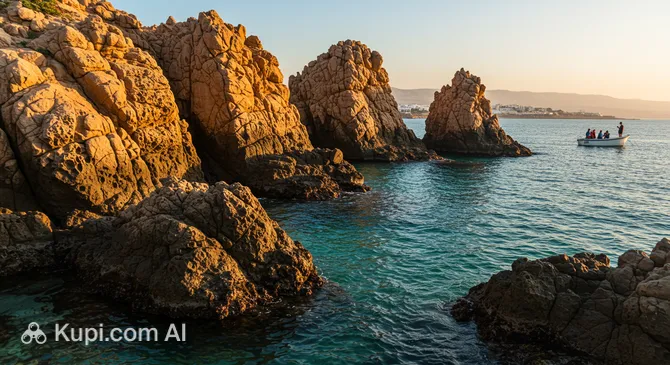
Stone Guardians of the Sea. The main natural symbol of the city is the Needles of Tabarka rocks. These pointed sandstone formations, up to 25 meters high, rise directly from the water, creating a fantastic landscape. The bizarre shape of the rocks is the result of thousands of years of wind and wave action, and today it is one of the most photographed places in the entire region.
Coral Capital. Tabarka is the only place in Tunisia with a truly large-scale coral reef. This makes the city a mecca for divers: underwater, you can not only admire colorful corals but also dive to a merchant ship that sank here in the 1950s, adding a spirit of adventure to your vacation.
Genoese Heritage. The city's history is closely intertwined with the extraction of "red gold"—coral. In the 16th century, merchants from Genoa seized control of this profitable trade and built the famous fort on the island. The fortress served not only as a defensive structure but also as the center of a commercial empire linking Africa with Europe.
City of Jazz. Despite its small size and calm pace of life, Tabarka transforms into a bustling musical capital every year. It hosts a famous international jazz festival that brings together virtuosos from around the world. During these days, the city is filled with a special creative atmosphere, and concerts often take place against the backdrop of ancient walls and sea sunsets.
Tabarka Needles. Illustration.
Source: Kupi.com AI
Traveler photos:
How to Get There
When planning a trip to this picturesque corner of North Africa, it's worth thinking about the route in advance. Tabarka is located on the northwest coast of the country, and although the town has its own small airport, regular international flights there are rare. Most often, tourists fly into larger air hubs and reach the resort by land. You can find more about how to get to Tabarka by studying all available options, and below we will look at the most popular routes through the main airports in the region.
The most convenient option for most travelers is Tunis–Carthage International Airport (IATA: TUN). Please note that it is located not in Tabarka itself, but in the capital of the country, Tunis, at a distance of about 131 km. This is the main air gateway of the state with a high passenger flow. A trip from here to the resort by taxi or transfer will take approximately 3 hours 40 minutes. The road passes through picturesque landscapes, which will brighten up the travel time.
Another option, especially popular during the tourist season due to charter programs, is Enfidha-Hammamet International Airport (IATA: NBE). It is also located not in Tabarka, but near the city of Sousse (the distance is about 179 km). This modern airport receives many flights from Europe. The journey to Tabarka from here will be longer, taking approximately 4 hours 50 minutes by car.
For clarity, here is a summary of the main airports located relatively close to the city:
Since there is no direct rail connection convenient for tourists in Tabarka itself, the main ground transport remains cars and buses. From the arrival airports, you can use long-distance buses or the "louages" (shared taxis) popular in Tunisia, which are a budget-friendly and colorful way to get to your destination. The road network in this region is well-developed, making a trip by rental car or taxi quite comfortable.
Main Attractions
Tabarka is an amazing town where history intertwines with incredible nature. Despite its modest size, this resort offers travelers a rich program: from walking through ancient fortifications to contemplating unique geological monuments and immersing themselves in the world of luxury vacations.
The main signature of the region is undoubtedly the famous Needles of Tabarka. These bizarre sandstone rock formations, rising up to 25 meters above the sea surface, were created by nature itself under the influence of wind and waves. Their pointed peaks resemble a stone forest growing directly out of the water and serve as a favorite spot for sunset photo shoots.
Tabarka Needles. Illustration.
Source: Kupi.com AI
Traveler photos:
The Genoese Fort rises majestically over the town harbor—a silent witness to Tabarka's rich past. Built in the 16th century, this fort on the top of a rocky island (now connected to the mainland by a dam) served as protection for coral harvesters. Climbing up to its walls, you can enjoy a breathtaking panorama of the city, the endless sea, and the green hills surrounding the resort.
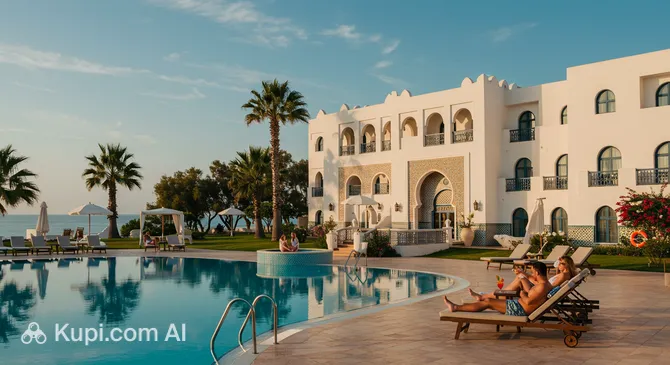
For connoisseurs of elite recreation and sports, La Cigale Tabarka Hotel, Thalasso & Spa, Golf has become a true center of attraction. This place has long gone beyond simple accommodation and is considered an attraction in its own right, thanks to one of the best golf courses in Tunisia. The picturesque landscape of the field, surrounded by forests and the sea, attracts players from all over the world, while the modern thalassotherapy center offers unique wellness programs.
La Cigale Tabarka Hotel, Thalasso & Spa, Golf. Illustration.
Source: Kupi.com AI
Traveler photos:
We must also mention what is hidden under the water. Tabarka is known as the country's "coral capital." The city's coastline is famous for its reefs and rich underwater world, making it a mecca for divers. Even if you don't plan to scuba dive, a glass-bottom boat trip will allow you to experience this hidden beauty of the Mediterranean.
Local Cuisine
Tabarka's culinary scene is a vivid reflection of its geographical position at the junction of the sea and forested mountains. The local cuisine has absorbed the best Mediterranean traditions, adding a characteristic Tunisian flavor. Seafood plays the leading role on the menu here. Thanks to the coastal location, town restaurants always feature the freshest mussels, oysters, and octopus, which arrive in the kitchen straight from the fishing boats.
If you want to experience the true taste of the region, be sure to order Tabarka coral lobsters (langoustines). This is a delicacy for which many gourmets specifically visit the town. It is also worth paying attention to fish baked with aromatic herbs and spices, and traditional seafood couscous. Unlike the meat variations of the south, this dish is prepared here with a generous addition of squid, shrimp, and fish. Sea urchin dishes, which local chefs prepare masterfully, are considered a special exotic treat.
For a quick snack during walks, street food is perfect. Tunisian sandwiches with tuna are popular in local markets and small snack bars. This is a hearty dish where vegetables, eggs, olives, and, of course, spicy harissa paste are added to a crispy bun or flatbread. You should also try the crispy briks and various salads generously dressed with olive oil and lemon juice.
The drink culture in Tabarka also has its own characteristics. It is customary to end a meal with a glass of hot mint tea with pine nuts—a northern tradition perfect for leisurely relaxation. As for alcohol, Tunisia produces excellent wines (both white and rosé) that pair beautifully with fish. You can enjoy a glass of quality wine or local beer in an exquisite setting at the restaurants of major hotels, such as the La Cigale Tabarka Hotel, where high service is combined with gastronomic excellence.
Eating in Tabarka is not just about satisfying hunger, but a part of the lifestyle. Locals love to dine on open terraces, enjoying the sea breeze. In addition, the city is known for its gastronomic events: seafood festivals are regularly held here, where you can watch chefs at work and immerse yourself in the atmosphere of a true feast of taste.
Travel Tips
A trip to Tabarka is an introduction to the "other," green, and mountainous side of Tunisia, which requires special preparation. To make your holiday as comfortable as possible and without surprises, we have compiled a list of important recommendations that will help you feel confident in this cozy coastal town.
Clothing and Climate. Tabarka is located in the north and surrounded by forests, so it is cooler and windier than the southern resorts. Even in summer, be sure to bring a light windbreaker or sweater for evening walks by the sea. Since the city is hilly and visiting sights (such as the fort) requires climbing, pack comfortable flat shoes in your suitcase. For going into the city, outside the beach area, choose clothes that cover shoulders and knees as a sign of respect for local traditions.
Transport Nuances. The usual international taxi apps like Uber do not work in Tabarka. To get around the city, use yellow taxis: they are inexpensive, but always ask the driver to turn on the meter before boarding or agree on a fixed price in advance. It is only worth renting a car if you plan trips to the mountains or neighboring cities, as the resort center itself is compact and ideal for walking.
Finance and Cash. Bank cards are only accepted in large hotels and some restaurants in the tourist zone. In souvenir shops, taxis, and small cafes, you can only pay in cash—Tunisian dinars. Exchange currency at banks or official exchange offices (ask for a receipt, you will need it for the reverse exchange at the airport) and always have small bills with you, as change for large banknotes is often unavailable.
Health and Water. Tap water here is treated, but due to its unusual mineral composition, it is not recommended for tourists to drink—buy bottled water. Given the abundance of forests around the city, mosquitoes may appear in the evening, so bring repellent. Pharmacies are marked with a green cross; many pharmacists speak French and will be able to help with the selection of medicines.
Language and Communication. The main foreign language of communication here is French. Hotel staff understand English, but there may be difficulties with this in the city. Download an offline translator or learn a couple of phrases in Arabic ("Aslema" for hello, "Shukran" for thank you); this is very welcoming to the locals. It is better to buy a SIM card immediately upon arrival or at the offices of operators (Ooredoo, Tunisie Telecom) in the city center, as Wi-Fi in public places is not always stable.
Etiquette and Photography. Tunisians are very friendly but value politeness. It is customary to say hello when entering a store. If you want to take a photo of a colorful local, be sure to ask permission. It is strictly forbidden to photograph military and police facilities, as well as people in uniform—this is a strict security rule.
What to Avoid. Do not buy red coral products from individuals or on the beach without a certificate. Tabarka is famous for its corals, but exporting unprocessed material or fakes can cause questions at customs. Purchase jewelry only in specialized stores that issue an official document.
Gourmet Hack. In Tabarka, seasonality plays a huge role in the menu. If you come in summer, don't miss the opportunity to try local lobsters and sea urchins—at this time they are the freshest and most affordable. Ask in restaurants for the "fish of the day" (poisson du jour) to get a catch delivered to the port just a couple of hours ago.
Tabarka is an incredibly hospitable place where a sincere smile and respect for the local way of life open any door. By following these simple tips, you can enjoy the unique atmosphere of this corner of the Mediterranean without unnecessary worries.
Entertainment & Nightlife
Nightlife in Tabarka differs significantly from the loud parties in Sousse or Hammamet. Here, you won't find massive metropolitan clubs with raves until dawn. The evening atmosphere of this city is one of elegant relaxation, live music, and leisurely dinners with sea views. Most activity after sunset is concentrated around the Marina (the port area) and within the grounds of major hotels, where all conditions for comfortable leisure are provided.
The waterfront near the port becomes the center of attraction in the evening. There are cozy cafes and restaurants here, many of which are licensed to sell alcohol (which is not the case everywhere in Tunisia). Tourists and locals come here to enjoy the sea breeze, smoke shisha, and listen to music. During high season, especially in July and August, there is a lively but relaxed atmosphere. The crowd is generally sophisticated, the dress code is casual, but it's better to choose smart casual for hotel venues.
If you are looking for a more refined format of relaxation with high-level service, you should pay attention to the infrastructure of five-star complexes. One of the main centers of evening life is La Cigale Tabarka Hotel, Thalasso & Spa, Golf. Lounge bars and restaurants operate on its territory, where you can spend an evening with a glass of wine accompanied by piano music or DJ sets. This place is ideal for those who value comfort, safety, and quality drinks.
La Cigale Tabarka Hotel, Thalasso & Spa, Golf. Illustration.
Source: Kupi.com AI
Traveler photos:
The Tabarka Jazz Festival holds a special place in the city's cultural life. If your trip coincides with the festival (usually in summer), the city turns into one big open-air concert venue. Major performances often take place in the historical Basilica, creating unique acoustics and ambiance. During these days, the city's nightlife becomes truly vibrant, attracting music lovers from all over the world.
Practical Tips and Safety:
Safety: Tabarka is a quiet city, and walking in the tourist zone (Marina, center) is safe even late in the evening. However, avoid unlit outskirts and deserted beaches at night.
Transport: To move between the hotel and the center, it is best to use yellow taxis. They are easy to catch on the street or call through reception. The night fare (after 21:00) is usually 50% higher than the daytime rate.
Alcohol and Prices: The average bill in hotel bars will be higher than in city cafes. Remember that on Friday (a holy day for Muslims), alcohol sales in some shops may be limited, but this usually does not apply to bars.
As for daytime entertainment, Tabarka offers excellent opportunities for active recreation that smoothly transitions into evening relaxation. In addition to the beaches, walks to natural attractions such as the Needles of Tabarka, diving, and golfing are popular. History buffs can visit small museums or simply wander through the colorful streets of the old town, enjoying the architecture before heading to dinner.
Parks & Museums
Tabarka is a unique city where the boundaries between natural parks and museum halls are blurred, as the main treasures here are located in the open air. This green corner of Tunisia offers travelers the chance to immerse themselves in the world of wild nature and touch living history captured in stone.
When talking about natural areas, it is impossible not to mention the famous Needles of Tabarka. These majestic sandstone rocks protruding from the sea are not just a symbol of the city, but also a unique geological monument created by wind and waves. For lovers of larger green spaces, the Kroumirie forests will be a real discovery. Tabarka is surrounded by dense masses of cork oak, which create ideal conditions for walking, hiking, and bird watching in their natural habitat.
Those who prefer manicured landscapes to wild nature should visit the grounds of the La Cigale Tabarka Hotel, Thalasso & Spa, Golf. Its magnificent golf courses are a true landscape masterpiece, harmoniously integrated into the coastal scenery, where the green of the lawns contrasts with the blue of the sea.
La Cigale Tabarka Hotel, Thalasso & Spa, Golf. Illustration.
Source: Kupi.com AI
Traveler photos:
The city's cultural heritage is concentrated around historical monuments that function as open-air museums. The dominant feature is the Genoese Fort, rising on a hill above the harbor. Although there is no classic museum exhibition inside, the walls of the 16th-century fort themselves tell the story of the confrontation between empires and coral harvesting, and the panoramic views from here serve as the best illustration of the city's geographical importance.
Another important cultural site is the Basilica—a former Roman reservoir, later converted into a church, and now serving as a venue for cultural events. This place breathes history, and it is here, surrounded by ancient walls, that concerts of the famous jazz festival often take place. Also of interest is the small Cork Museum, which introduces visitors to the region's main craft—the processing of cork oak bark, from which local craftsmen create amazing products.
For those looking for non-touristy experiences, we suggest taking a walk to the old lighthouse on the cape. This quiet spot, hidden from the eyes of most vacationers, will give you the opportunity to enjoy solitude and take stunning photos of the rocky coast without the extra fuss.
Getting Around
The public transport system in Tabarka is simple and adapted to the size of this small coastal town. There are no metros, trams, or trolleybuses here, which is quite natural for a resort of this scale. The city center and the tourist zone are compact enough that many distances are easily covered on foot, allowing you to enjoy the sea air and views while walking.
The main and most convenient means of transport for tourists are yellow taxis. They are easy to find at special stands near large hotels, in the port area, or simply by hailing them on the street. Vehicles should officially be equipped with meters; however, in practice, drivers often offer a fixed price for a trip, especially in the evening. It is recommended either to insist on turning on the taximeter upon boarding or to clearly agree on the fare before starting the journey to avoid misunderstandings.
For trips to the suburbs or neighboring towns, "louages" are widely used—shared taxis, white with colored stripes (a red stripe means an intercity route, blue means regional). Louages depart from special stations as they fill up with passengers. This is a colorful, fast, and budget-friendly way to travel, popular among locals. There are also regular scheduled buses, but their schedule may not always be convenient for tourists, and they move significantly slower.
During the high season, a tourist train often runs through the resort area. This type of transport links the chain of hotels with the city center and the marina. The ride is more for entertainment and is great for families with children, allowing you to see the surroundings without tiring walks.
It is important to know that the payment system for travel in Tabarka is conservative: only cash is accepted. There are no transport cards, validators, or the possibility to pay for a trip with a smartphone. Global ride-hailing apps usually do not function in the city, so you should rely on classic methods. We advise you to always carry small bills and coins, as taxi and bus drivers often do not have change for large banknotes.
A popular alternative to public transport is car rental. Since the roads in the region are picturesque and the traffic is calm, personal transport allows you to comfortably explore mountain serpentines, forests, and wild beaches inaccessible to taxis or buses. Rental points can be found in the city center, or a car can be ordered through the hotel receptionist.
Accommodation
Choosing accommodation in Tabarka is different from the mass tourist destinations in Tunisia. You won't find an endless succession of identical high-rise hotels here. Instead, the city offers a more exclusive and intimate format of accommodation, harmoniously integrated into the surrounding landscape of wooded hills and coastline. Options range from luxury five-star resorts to modest city hotels and cozy guesthouses.
Geographically, accommodation areas can be divided into two main parts. The Tourist Zone (Zone Touristique) is located east of the city center, along wide sandy beaches. This is an ideal place for those looking for a quiet all-inclusive holiday with direct access to the sea. The second popular area is the city center and the port vicinity. Staying here, you will be within walking distance of restaurants, shops, and historical sights, immersing yourself in the authentic atmosphere of local life.
Among high-end accommodation options, the absolute leader is La Cigale Tabarka Hotel, Thalasso & Spa, Golf. This complex is considered one of the best not only in the region but in the entire country. It caters to discerning travelers, offering luxurious rooms, a modern thalassotherapy center, and access to famous golf courses. This is a great example of how natural beauty and premium service are combined in Tabarka.
Booking Tips: Tabarka is a popular holiday destination not only for foreign tourists but also for locals, especially during the summer months. The peak season is in July and August, when the famous jazz festival is held. During this period, hotels fill up very quickly, so it is recommended to book accommodation 2–3 months before the trip.
Regarding prices and payment methods, the range here is quite wide: from budget options in the city to high bills in luxury resorts. Large hotels can be easily booked through international online platforms and accept cards. If you choose small apartments or private villas, be prepared for the fact that payment in cash dinars may be required on-site.
Nearby Cities
For those who want to explore the surrounding area, Tabarka serves as an excellent starting point for day trips to several interesting nearby locations:
Just 45 km from the coast is the ancient city of Beja. Located among green hills and wheat fields, it is known as the agricultural capital of the region. People come here to walk through the authentic medina, see the ancient Great Mosque, and try famous local cheeses and sweets.
For history buffs, El Kef, located 87 km away, will be a real discovery. This picturesque city, perched on a mountain, is famous for its majestic Ottoman fortress (Kasbah), which offers breathtaking panoramas. El Kef has preserved a unique atmosphere of its multicultural past with Roman baths, Byzantine basilicas, and a Jewish synagogue.
Also worth noting is the city of Jendouba (50 km). As an important administrative and commercial center, it is interesting for its colorful weekly markets. In addition, Jendouba serves as a convenient base for visiting the nearby archaeological site of Bulla Regia, known for its unique underground Roman villas.
City
Population
Distance
Ain Draham
35 400
21 km
Bou Salem
35 192
43 km
Sejenane
40 166
44 km
El Tarf
25 594
44 km
Beja
109 299
45 km
These nearby destinations provide insight into the diverse culture and landscapes of the region.
Shopping & Souvenirs
Shopping in Tabarka is not a hunt for global brands or a stroll through huge shopping malls, but rather a fascinating immersion into the world of local crafts and authentic culture. The city is famous for its unique natural resources, which local craftsmen turn into true works of art. The main focus here is on handmade items, so the shopping process turns into a leisurely exploration of small shops and colorful markets.
Most commercial life is concentrated in the city center and in the old port area (the Marina). Walking along the main street, Avenue Habib Bourguiba, and its adjacent alleys, you will find many souvenir shops, jewelry stores, and small clothing boutiques. A calm atmosphere reigns here, and the sellers are friendly and not as pushy as in Tunisia's large popular resorts, making shopping particularly pleasant.
There are no large European-style malls or shopping centers in Tabarka. For everyday goods and groceries, locals and tourists head to small supermarkets of the Monoprix or General chains. If you are interested in more exclusive shopping, such as high-quality clothing, accessories, or perfumes, it's worth checking out the boutiques at large hotel complexes. For example, within La Cigale Tabarka Hotel, Thalasso & Spa, Golf, you can find shops with high-end goods corresponding to the level of a five-star resort.
La Cigale Tabarka Hotel, Thalasso & Spa, Golf. Illustration.
Source: Kupi.com AI
Traveler photos:
Special attention should be paid to the local markets (souks). The weekly bazaar is the heart of city life. Here you can buy the freshest fruit, aromatic spices, locally produced olive oil, and traditional ceramics. The market is a place where you need to haggle: the price can often be reduced by 30–50%, and the bargaining process itself is seen as a friendly conversation.
The main treasure of Tabarka is, undoubtedly, red coral. The city is called the coral capital of Tunisia, and jewelry made from this material is the most coveted souvenir. Specialized shops offer a huge selection: from simple beads to exquisite items in gold and silver. It is important to buy corals only in official stores that issue a certificate of authenticity to avoid fakes made of dyed plastic and problems at customs.
Besides corals, you should bring back from Tabarka:
Cork products. The region is surrounded by cork forests, and local craftsmen make everything from coasters to bags and hats from this material.
Smoking pipes. Tabarka is famous for the production of pipes made from heather (briar), which are valued by collectors worldwide.
Ceramics and carpets. Traditional Tunisian crafts are also widely represented here.
Shops in the city usually operate from 09:00 to 19:00, but keep in mind that many close for a lunch break (siesta) during the hottest time of the day. On Friday, the holy day for Muslims, some shops may work on a reduced schedule. Almost everywhere, only Tunisian dinars in cash are accepted. Bank cards may only be accepted in large hotels, state stores (Magasin Général), and some restaurants, so always carry small change with you.
The Tax Free (VAT refund) system exists in Tunisia, but in a small town like Tabarka, it is difficult to use. it is only relevant for large purchases in stores with a special "Tax Free" sign, of which there are few here. If you have made an expensive purchase (usually over 200 dinars on one receipt), be sure to ask for a special receipt to present at the departure airport.