Support

The Genoese Fortress

About

The majestic Genoese Fortress is one of the most recognizable symbols of Tabarka. Situated on the picturesque northern coast, this historic outpost attracts travelers with its rugged beauty and rich past. Tunisia is famous for its antiquities, and this 16th-century defensive structure holds a worthy place among them.
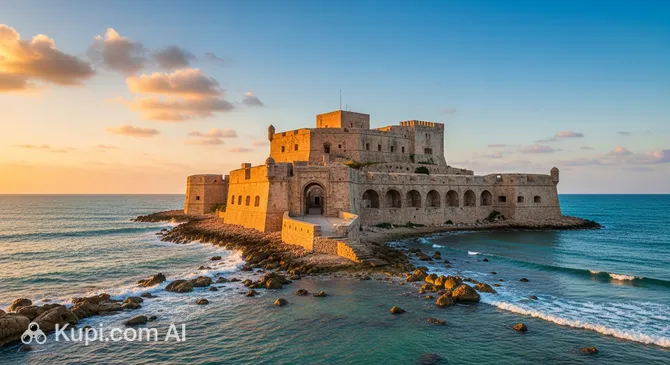
Genoese Fortress
Genoese Fortress. Иллюстрация. Источник: Kupi.com AI

The fortress was built on a rocky island that was once separated from the mainland by a narrow strait. Later, a protective causeway was constructed, turning the island into a peninsula and providing easy access to the citadel. Today, the fort stands proudly above the sea, guarding the entrance to the local port and offering guests a chance to immerse themselves in a medieval atmosphere.

The structure's architecture has been preserved in excellent condition: massive stone walls, watchtowers, and an inner courtyard allow visitors to imagine the life of the garrison hundreds of years ago in great detail. It is not just a fortification but a true cultural treasure, harmoniously integrated into the rugged coastal landscape.

Contacts

For those planning a visit to the Genoese Fortress, it is helpful to know its exact location. The fortress is situated in the immediate vicinity of the port, and its monumental silhouette is visible from almost any point along the coast.

We recommend checking the possibility of visiting the interior rooms in advance, as access to certain parts of the ancient structure may be restricted by local authorities.

How to contactContact
AddressXQ85+6J4, Табарка, Тунис

What to Do

A stroll through the grounds of the Genoese Fortress promises a wealth of impressions for history enthusiasts. One of the main activities here is climbing to the viewpoints, which offer breathtaking panoramic views of the harbor and the rugged, rocky shores. Taking in the fresh sea breeze while standing atop an ancient bastion is a must-do part of the program.

Inside the fortress walls lies a museum of ancient mosaics, featuring unique artifacts from various eras, ranging from the Numidian to the Byzantine periods. Visitors can see beautifully preserved panels that once decorated necropolises. Exploring the internal structures, such as the Tower of St. Joseph, allows you to literally touch the stones that have witnessed the succession of civilizations.

Architecture enthusiasts should take note of the Roman cisterns, which were adapted for the fortress's needs in later times. Examining the massive defensive walls and cannons creates the feeling of being in a real military fort that protected this coast for centuries.

Getting There

Reaching the Genoese Fortress is easy, as it is located right in the city's port. It can be reached on foot in a few minutes from the central part of the resort, allowing you to enjoy views of the marina and moored yachts. This is the simplest and most pleasant way to reach the main entrance via the causeway.

If you are traveling to the city from the capital or other regions, it is most convenient to use an intercity bus or a taxi. The journey from the country's capital takes about 3 hours, covering a distance of 180 kilometers along the scenic hilly roads of the northern coast.

Ближайший город: Tabarka

History & Facts

The history of this site began in 1542, when the Republic of Genoa was granted the right to develop the island for precious coral fishing. The influential Lomellini family maintained a garrison here for two centuries, turning a tiny piece of land into a flourishing overseas territory of Genoa with its own fleet and developed infrastructure.

For a long time, the island remained an important trading enclave on the Ottoman coast. However, in 1741, the Sultan of Tunisia captured the fortress, bringing Genoese rule to an end. Many residents were forced to leave these walls, leaving behind the architectural legacy we see today.

An interesting fact: after the fall of the fortress, some of the Genoese relocated to Spain, where they founded a settlement of the same name. Surprisingly, a unique dialect — Tabarkino — is still preserved there today, serving as a living monument to the history of this impregnable citadel.

Time Needed

To explore all the corners of the Genoese Fortress without rushing, travelers usually need 1 to 2 hours. This is plenty of time to walk the defensive walls and look through the museum exhibition located inside.

If you plan to have a photoshoot against the backdrop of the seascapes or simply want to enjoy the antique atmosphere for longer, it’s worth setting aside a bit more time. Visiting the fort is an excellent choice for a morning or evening walk, when the soft lighting emphasizes the grandeur of the stone walls.

Working Hours

According to available information, the area around the Genoese Fortress is open for exterior viewing 24 hours a day. You can admire its powerful walls at any time of day or night, which is particularly valuable for lovers of atmospheric evening strolls.

Nevertheless, to visit the interior rooms and the museum, we strongly recommend checking the official website or confirming the current schedule on-site. Museum opening hours may vary depending on the season or ongoing restoration work.

Круглосуточно

Nearby

Exploring the Genoese Fortress can easily be combined with a walk to other interesting sites in the city. The area around the port is literally filled with monuments of the past and natural beauty, each of which complements the overall picture of this maritime region's history.

NameDistance
Tabarka Needles0.8 km
PureNature Tabarka2.7 km
La Cigale Tabarka Hotel, Thalasso & Spa, Golf3.2 km

Reached the end of the page?

That means the route is fully explored