Support

Poetto

About

Imagine an endless ribbon of golden sand washed by the crystal-clear waters of the Mediterranean. Poetto Beach is the main coastal jewel of Cagliari and one of the longest beaches in Italy. Its coastline stretches for nearly 11 kilometers, offering travelers a perfect blend of wild nature and convenient urban infrastructure.
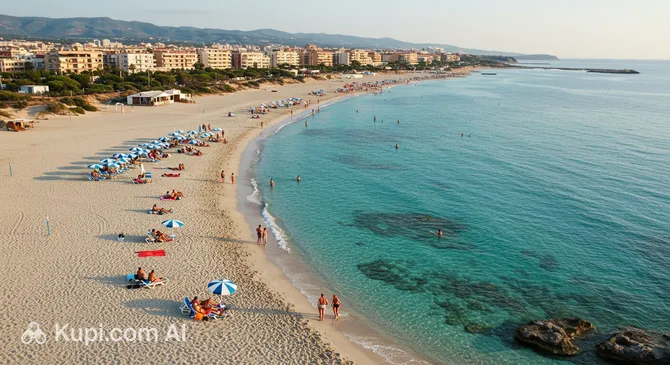
Poetto Beach
Poetto Beach. Иллюстрация. Источник: Kupi.com AI

One of the unique features of this place is its location: on one side, the beach is framed by the picturesque Sella del Diavolo (Devil's Saddle) promontory, and on the other by the Molentargius protected lagoon, where elegant pink flamingos live in their natural habitat. The gentle entry into the sea and soft, fine sand make Poetto a favorite spot for families with children, while the wide shoreline ensures plenty of space even at the height of the tourist season.

For ease of navigation, the coast is historically divided into sections corresponding to bus stop numbers — known as "fermate." At the beginning of the beach, guests are welcomed by the cozy Marina Piccola port, and along the entire promenade, there are numerous kiosks (chioschi), restaurants, and relaxation zones equipped with everything needed for a perfect day in the sun.

Contacts

To help plan your visit to the coast, it is useful to have the main coordinates on hand. Since the beach is a public natural area, it does not have a direct telephone number, but you can always find your way using official map data.

How to contactContact
AddressPoetto, Italy

What to Do

There is something for everyone here: from quiet sunbathing on rented loungers to active water sports. You can try your hand at SUP surfing, canoeing, or rent a catamaran to see the shore from the sea. Sailing regattas are regularly held near the Marina Piccola port, and beach volleyball and tennis championships are often organized in the open-air courts.

Be sure to set aside time for a leisurely stroll along the waterfront to watch the pink flamingos in the neighboring Molentargius lagoon — it is a sight that leaves no one indifferent. If you get hungry, local bars and trattorias offer the freshest seafood or authentic Sardinian takeaway pizza, which is so pleasant to eat right by the water's edge.

As dusk falls, life at Poetto doesn't slow down; it just changes its rhythm. The beach transforms into the center of the city's nightlife: disco lights flicker, live music plays, and dance lessons and karaoke parties are held. The most popular hotspots are traditionally the 2nd (Daquila) and 3rd (Il Lido) "fermate," where the most stylish clubs and cafes are concentrated.

Getting There

Getting to this corner of paradise from the city center is easy. The most popular method is public transport. Buses run regularly from the center of Cagliari along the entire Viale Poetto waterfront. The stops here are called "fermate," and there are ten in total — from the Marina Piccola port to the very border with Quartu Sant'Elena. The trip takes only 5–10 minutes.

If you prefer to travel by car, follow Viale Armando Diaz, which turns into Viale Poetto. The route is intuitive, and parking spaces are available all along the coastline. You can also use taxi services, which is particularly convenient if you are traveling with bulky beach gear.

For those who enjoy an active lifestyle, it is possible to reach the beach on foot, though you should keep the distance in mind: the walk from the center can take about an hour. Given the hot Mediterranean climate, most tourists prefer a short bus or car ride to save their energy for relaxing by the water.

Ближайший город: Cagliari

History & Facts

The transformation of this area into a popular resort began in the early 20th century. This was when the first iconic establishments appeared — the Lido and D'Aquila beach resorts, as well as the legendary Ospedale Marino hospital. The origin of the name itself is interesting: according to one version, it goes back to the Catalan word "pohuet" (well); according to another, it is associated with the Torre del Poeta tower, which rises on the Sella del Diavolo cliff.

Right next to the sand dunes lies the Molentargius lagoon, which for centuries was a center for salt production. The industry thrived here until 1985. Interestingly, the salt was transported by donkeys, which are called "molenti" in the Sardinian dialect — this is where the name of the salt pans comes from.

Since 1993, the lagoon has been home to a colony of pink flamingos. The birds chose this place for nesting, and today the Molentargius-Saline Regional Park is a strictly protected state nature reserve. The beach is harmoniously integrated into this ancient landscape, combining the history of a Phoenician trading port with Sardinia's unique ecosystem.

Time Needed

To simply get a feel for the atmosphere and relax a bit, you will need at least 4–6 hours. This is enough time to choose your favorite "fermata," take a swim, and enjoy lunch at one of the seaside establishments. The easiest way to move between different sections of the coast is by bus.

However, if your goal is total relaxation, we recommend dedicating an entire day to your visit. The wide coastline is perfect for long walks from the cape to the lagoon, and an evening program with live music is a great way to end the day to the sound of the waves.

Working Hours

As a natural site, the coastline is open for visits 24/7. You can come here in the early morning to catch the sunrise or late in the evening for a moonlit walk. The main tourist season lasts from late April to late October, when the weather is most favorable for swimming.

The operating hours of beach clubs, equipment rentals, and restaurants may vary depending on the season. Generally, in the summer, establishments are open from early morning until late at night. To check the schedule for specific services or events, we recommend visiting the city's official tourism portals.

Nearby

A visit to the coast can easily be combined with exploring other iconic city sights. The proximity to the historic center and natural parks allows you to create a rich itinerary, alternating beach relaxation with cultural discoveries.

A walk through the surrounding areas will reveal ancient towers, majestic bastions, and cozy city gardens that hold centuries of the island capital's history.

NameDistance
Molentargius Park1.1 km
Molentargius - Saline Regional Park2.7 km
Fortino di Sant'Ignazio3.6 km
Sardegna Arena3.6 km
Lazzaretto of Cagliari4 km
Virgilio Porcu Stadium4.3 km
Sanctuary of Our Lady of Bonaria4.4 km

Reached the end of the page?

That means the route is fully explored