Support

Parcheggio Sa Testa

About

When planning a trip to the sunny city of Olbia, be sure to note a remarkable spot known as Parking Sa Testa. At first glance, it may seem like just a convenient parking lot, but it serves as the key gateway to one of the most mysterious archaeological monuments that Italy is proud of — the Sa Testa Sacred Well (Pozzo Sacro Sa Testa).
\n
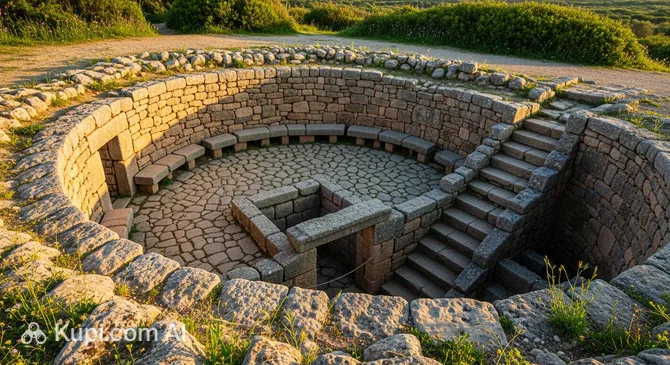
Sa Testa Parking Area
Sa Testa Parking Area. Иллюстрация. Источник: Kupi.com AI
\n

This location is the starting point for discovering the Nuragic civilization, which flourished in Sardinia thousands of years ago. The parking lot itself is located right at the entrance to the ancient sanctuary, dating back to the 15th–13th centuries BC. This site draws history and archaeology buffs with its atmosphere of tranquility and ancient magic, preserved within massive stone blocks and an eternal spring.

\n

The primary value of the site lies in its architectural integrity: here, you can see a well-preserved structure 18 meters long, built from granite and schist. The complex includes a ritual courtyard and an underground chamber with a dome, accessed via 17 steps. It is a stunning testament to how ancient people revered the natural elements and created monumental structures in honor of their deities.

Contacts

To plan your visit to this archaeological site, it is helpful to know the exact coordinates and contact information for the managing organizations. While the parking lot itself is a public space, having the location details will help you find your way around the outskirts of the city more easily. Below is the current contact information for your convenience.

How to contactContact
Address07026 Sa Testa Provincia della Gallura Nord-Est Sardegna, Италия
Phone+39 334 980 9802
Websitewww.donnanuragica.com

What to Do

The main reason to visit this site is the opportunity to touch the mysteries of Nuragic culture. After leaving your car, you immediately find yourself on the path leading to the Sacred Well. The primary activity here is a thoughtful exploration of the ancient temple: be sure to walk through the circular courtyard, where collective rituals were held thousands of years ago, and descend the stone staircase to the spring itself. Even on the hottest summer day, the water remains cool, creating a special mystical atmosphere.

Notice the unique shape of the building, which resembles a keyhole. This is an ideal spot for atmospheric photos: the play of light and shadow on the ancient stones and the seven-meter corbelled dome (tholos) in the underground chamber are truly impressive. Entrance to the site is free, allowing you to enjoy the history without unnecessary haste or restrictions.

For those who want to get the most out of their trip, a visit to the well can easily be combined with exploring other attractions in Gallura. For example, the Riu Mulinu nuraghe and the famous Giant's Grave Su Monte 'e S'Ape are located very close by. Such a route will allow you to gain a complete picture of Sardinia's prehistoric past in a single day.

Getting There

The easiest way to reach this historical site is by car, as it is located on the outskirts of Olbia. Drive toward Lido Pittulongo beach and then turn at the sign for Porto Industriale. Immediately after the large roundabout, you will see the turn-off to the archaeological zone — this is the parking area, located directly across from the Hotel dP. The drive from the city center takes no more than 10–15 minutes.

If you prefer public transport, you can take city buses heading toward the port or the industrial zone, but be prepared for a 2–3 kilometer walk from the nearest stop. For maximum comfort and to save time, it is recommended to use a taxi or a rental vehicle, which will also allow you to easily combine your visit with other Nuragic sites in the surrounding area.

Ближайший город: Olbia

History & Facts

The history of this site dates back to antiquity, approximately to the 15th–13th centuries BC. The Sa Testa Sacred Well was built by the Nuragic civilization and served for centuries as a major center for the water cult. The name "Sa Testa" likely derives from the Latin "Caput Acquae," which translates as "Head of Water," highlighting the sacred status of the spring for the ancient inhabitants of Sardinia.

Remarkably, the monument remained hidden from modern eyes until the 1930s. It was discovered by chance by local shepherds searching for water for their livestock. Following extensive excavations in 1938 and subsequent restoration in the late 1960s, the sanctuary was revealed to the world in its original grandeur, showcasing the impressive skill of ancient architects who worked with granite and schist.

The architectural plan of the complex is unique: from above, it resembles a keyhole, which in Nuragic tradition symbolized a kind of doorway between the world of the living and the world of the dead. During excavations, archaeologists found not only everyday ancient items but also ritual objects, such as a bronze dagger and fragments of figurines, which continue to help researchers unravel the mysteries of ancient Sardinian beliefs.

Time Needed

To park your car, walk to the archaeological zone, and carefully explore all the details of the sanctuary, 30 to 60 minutes is usually sufficient. This gives you enough time to descend the stone steps to the water, appreciate the architecture of the tholos (dome), and take some memorable photos against the backdrop of the ancient megaliths.

If you plan to include this site in a larger itinerary of Gallura’s attractions, allow an extra couple of hours. The short visit time makes this spot an ideal stop for those heading to the beaches or returning to the city after a full day of sightseeing.

Working Hours

The convenience of visiting this site lies in the fact that the parking area and the adjacent archaeological zone are accessible to tourists 24/7. You can come here in the early morning or at sunset to enjoy the silence and the ancient ruins in the rays of the fading sun.

Since entry to the territory is free and not regulated by ticket offices, there are no strict opening hours. However, before your trip, it is recommended to check the region's official tourism website to ensure there are no temporary restrictions due to restoration work.

Круглосуточно

Nearby

Exploring the outskirts of Olbia offers travelers amazing opportunities to delve into Sardinia's ancient history. After visiting the sacred spring, it is worth checking out other archaeological and cultural sites located just a few minutes' drive away.

NameDistance
Pittulongu Beach2 km
Lido del Sole Beach2.9 km
Archaeological Museum of Olbia3.2 km
Olbia Mare Shopping Center3.2 km
Ferris Wheel3.3 km
My Soul Irish Pub3.5 km
Ristorante Piperita3.6 km

Reached the end of the page?

That means the route is fully explored