Support

Cattedrale di Santa Maria Assunta e Santa Cecilia

About

In the heart of the historic Castello district, the Cagliari Cathedral rises majestically—the city's primary religious shrine and one of its most recognizable architectural landmarks in Italy. Officially named the Cattedrale di Santa Maria, this monumental temple is not just a place of prayer, but a true stone chronicle of Sardinia.

The building is a fascinating synthesis of eras: its appearance harmoniously blends Pisan-Romanesque, lush Baroque, and Neo-Romanesque styles. The cathedral draws the eye with its pale limestone facade and high dome, which is clearly visible from many points in the city.
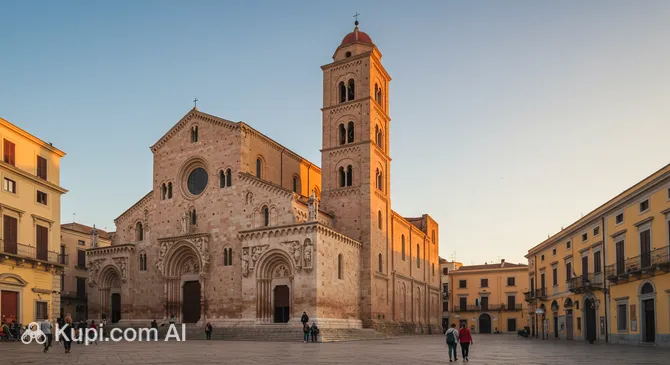
Cagliari Cathedral
Cagliari Cathedral. Иллюстрация. Источник: Kupi.com AI

Inside, visitors will find rich decorations: from unique 12th-century medieval pulpits to a luxurious marble floor with polychrome inlays. The cathedral is considered a cultural treasure, where every altar and statue tells its own story of faith and the skill of the great artists of the past.

Contacts

For those planning a visit to this spiritual sanctuary, we have prepared up-to-date contact information. Cagliari Cathedral is open to parishioners and tourists, offering a chance to touch the rich heritage of Sardinia in the very heart of the city. Below are the contact details and the exact location of the temple.

How to contactContact
AddressPiazza Palazzo, 4/a, 09124 Cagliari CA, Italy
Phone+39 070 663837
Websitewww.duomodicagliari.it

What to Do

At Cagliari Cathedral, visitors can immerse themselves in an atmosphere of solemn tranquility while admiring the opulent interiors. Pay special attention to the unique 12th-century medieval pulpits, created by the sculptor Guglielmo and originally intended for the cathedral in Pisa.

While strolling through the cathedral, be sure to look into the twelve side chapels, each decorated with works of art, intricate marble carvings, and ancient paintings. Don't forget to notice the magnificent dome and ornate arches, demonstrating the skill of architects across different centuries.

Beyond visual exploration, the cathedral offers acoustic delight: organ music concerts are frequently held here. After visiting the temple itself, it is recommended to step out onto Piazza Palazzo to enjoy a breathtaking panoramic view of Cagliari's historic center and the sea horizon.

Getting There

The cathedral is located on Piazza Palazzo in the historic Castello district, which is easiest to reach on foot while strolling through the old town. The path to it leads through picturesque narrow streets that are an attraction in their own right.

If you are in a more distant area, you can use public transport: the nearest bus stops are located within a few minutes' walk of the square. You can also always use a taxi, which will take you as close as possible to the edge of the pedestrian zone.

For drivers, it is important to remember that the historic center has traffic restrictions (ZTL zone). It is recommended to leave your car in one of the paid parking lots at the foot of the hill and walk up to the cathedral or take the special elevator.

From the city airport, the most convenient way to reach the center is by train or taxi, then continue to the top of the Castello district, where the city's main temple rises majestically.

Ближайший город: Cagliari

History & Facts

The history of the temple began in the early 13th century when it was erected on the site of the old church of Santa Maria di Castello. In 1258, after the destruction of the island's former capital, the building acquired the prestigious status of a cathedral, becoming the regional spiritual center.

In the 14th century, the cathedral was significantly expanded with the addition of a transept and elegant side portals. However, the most radical turn in the building's architectural fate occurred in the 17th century: under the direction of architect Domenico Spotorno, the interior was completely redesigned in a lavish Baroque style.

Interestingly, the current facade of the cathedral is the result of a massive reconstruction in the 1930s. The old Baroque decor was dismantled in an attempt to return the building to its medieval appearance, resulting in the modern Neo-Romanesque look in the Pisan style that we see today.

The interior of the cathedral also bears the marks of time: the marble floor, updated in 1956, exactly replicates the complex geometric pattern of the 17th century, carefully preserving the continuity of generations.

Time Needed

For a thoughtful exploration of Cagliari Cathedral, tourists are recommended to set aside 40 minutes to 1.5 hours. This time is sufficient to see the main nave, descend into the crypt, and study the artistic details of the interior.

If you are a connoisseur of sacred art or plan to examine each of the twelve side chapels in detail, your visit may take longer. It is also worth allowing extra time to enjoy the panoramic views from the square in front of the cathedral entrance.

Working Hours

According to the official schedule, Cagliari Cathedral is open to visitors daily from 9:00 AM to 8:00 PM. This allows tourists to choose a convenient time for their visit, whether in the morning hours or before sunset.

However, it is important to note that during religious services, weddings, or special church events, access for tours to certain parts of the temple may be temporarily restricted. It is recommended to maintain silence and show respect to the parishioners.

9:00 – 20:00

Nearby

The temple's location in the heart of the historic district makes it an ideal starting point for a walking tour. Exploring the surroundings will allow you to dive deeper into the atmosphere of Cagliari and see unique monuments from different eras.

In the immediate vicinity of the cathedral, you will find both majestic royal residences and austere medieval towers that have protected the city for centuries.

NameDistance
Old City Hall0 km
Royal Palace of Cagliari0.1 km
Elephant Tower0.2 km
Amalfi Pizza & Gin0.2 km
Bastion of Saint Remy0.3 km
San Pancrazio Tower0.3 km
enTRAPment Escape Room0.4 km

Reached the end of the page?

That means the route is fully explored