Support

Kabaka's Palace

About

Kabaka's Palace, also known as Lubiri Palace, is one of the key historical attractions in Kampala, the capital of Uganda. It is not just a building but the former official residence of the Kings of Buganda, playing a central role in the life of this ancient kingdom.
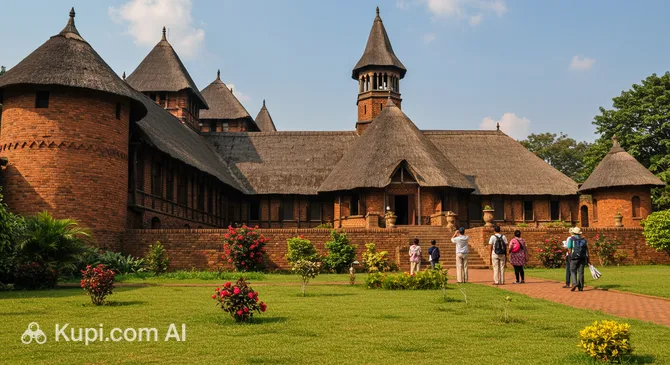
Kabaka's Palace. Illustration.
Source: Kupi.com AI

Traveler photos:

Built in 1855, the palace served for many years as the home and administrative center for the rulers of Buganda, who held the title of "Kabaka." Today, Kabaka's Palace stands as an important symbol of the rich cultural and historical heritage of the Buganda Kingdom, which is the largest traditional kingdom within modern-day Uganda.

Visiting the palace provides a unique opportunity to connect with the history and traditions of this significant African region. This site will be particularly interesting to those who seek to better understand the culture and past of Buganda, allowing for immersion into a rich heritage and learning about the lives of its former inhabitants.

Contacts

To get the latest information about Kabaka's Palace opening hours, admission prices, or tour availability, we recommend checking official tourism sources for Kampala or confirming details just before your visit. Current information can often be found on the attraction's official website, if available, or at local tourist information centers.

How to contactContact
AddressThe Twekobe, Lubiri Ring Road Lubiri Ring Rd, Kampala, Uganda
Websitewww.buganda.com

What to Do

The primary way to experience Kabaka's Palace is by taking a guided tour, which is typically included in the price of admission. This allows visitors to not only see the grounds and buildings but also gain a deep insight into the significance of the site accompanied by a guide who shares interesting details and answers your questions.

During the tour, you will delve into the rich history of the Buganda Kingdom. Guides share fascinating stories about the traditions and customs associated with the royal family, shed light on the lives and roles of the kings (Kabakas) in society, and explain how the palace functioned during its time as an official residence and administrative center.

A visit to the palace also opens up opportunities for further study of the region's culture and history. For those wishing to expand their knowledge, other significant sites related to Buganda's heritage are located near Kabaka's Palace. Among them, the Kasubi Royal Tombs, a UNESCO World Heritage site, are particularly notable. Exploring such places helps to form a more complete picture of the grandeur and traditions of this ancient kingdom.

Getting There

Kabaka's Palace is conveniently located in the central part of Kampala, the capital of Uganda, making it easily accessible for visitors. No matter which part of the city you are staying in, reaching this iconic landmark is quite simple.

The most common ways to reach Kabaka's Palace are by taxi or public transport. Taxis are easy to find anywhere in Kampala and are perhaps the most comfortable option for tourists. If you prefer public transport, it is recommended to check the current routes and stops leading to the palace complex in advance, as the system may be unfamiliar to newcomers.

It is particularly noteworthy that a direct road with no turns leads from the Parliament of Uganda to Kabaka's Palace. This not only makes the route from the parliament especially convenient and quick but also symbolizes the historical connection between these two important capital landmarks. If you plan to visit the parliament as well, you can easily combine these two visits.

Nearest city: Kampala

History & Facts

Kabaka's Palace, built in 1855, served as the official residence of the Kings of Buganda for over a century. It was more than just a royal home; it was an important administrative and cultural center for the kingdom, playing a key role in the life of the Buganda people until 1966. This is where destinies were decided, significant decisions were made, and ancient traditions were preserved.

The year 1966 was a turning point for the palace when Prime Minister Milton Obote led a coup. Kabaka Mutesa II, who at the time was both the King of Buganda and the President of Uganda, was inside the palace during the attack. Thanks to the bravery of the royal guard, who held off the assault, the monarch managed to escape—first to a nearby church, then through Burundi to England. This event marked the end of an era for royal rule from this palace.

Following the coup, Kabaka's Palace faced difficult times. The new authorities, Milton Obote and General Idi Amin, turned it into military barracks. Later, during the tragic 1970s, under the orders of Idi Amin, part of the palace premises was converted into a prison. These dark pages of history left a deep mark, transforming a symbol of royal grandeur into a witness of political upheaval.

Despite these trials, Kabaka's Palace is today a significant historical monument and one of Kampala's key tourist attractions. It allows visitors to learn about the rich culture, complex traditions, and dramatic history of the Buganda Kingdom. Visiting the palace is an opportunity to touch the past and understand the depth of the historical events that shaped modern Uganda.

Time Needed

To fully explore Kabaka's Palace, the average visitor is recommended to set aside approximately 1-2 hours. This time is usually sufficient to participate in a standard guided tour, which introduces you to the history and significance of the site, while leaving a bit of time for a self-guided exploration of the palace grounds and its architectural features.

If you plan a deeper immersion into the region's history and culture and wish to also visit nearby attractions related to the Buganda Kingdom—such as the famous Kasubi Royal Tombs—you should certainly plan for extra time. In this case, the total time for your visit to this historical district of Kampala may increase to half a day or more, depending on your interest and pace.

Working Hours

When planning a visit to Kabaka's Palace, keep in mind that the exact schedule may change. While significant historical sites like this are generally open to guests year-round, their operations may be adjusted on Uganda public holidays or during special events held on the palace grounds. Therefore, despite its general accessibility, a quick check of the current schedule before your trip will help avoid surprises and make your visit more comfortable.

Regarding the need for advance ticket booking or tour registration, this is also worth noting. For individual visitors, entry is usually through tickets purchased on-site. However, if you plan to visit Kabaka's Palace as part of a large group or during the peak tourist season, pre-booking might be not only desirable but mandatory. Confirming these details in advance will help you avoid unnecessary hassle and guarantee your visit.

8:30 – 17:00

Nearby

Visiting Kabaka's Palace will undoubtedly be a highlight of your trip to Kampala. However, to make your experience even more complete and multifaceted, it's worth paying attention to other interesting sites located nearby. Exploring the surrounding area will allow you to immerse yourself deeper in the city's atmosphere, see it from different perspectives, and discover new facets of the Ugandan capital.

Near Kabaka's Palace are other attractions, each interesting in its own way and worthy of attention. These can range from historical sites to modern centers that offer a better understanding of life in contemporary Kampala. Below is a list of some of these sites with their approximate distances.

NameDistance
Uganda National Mosque1.5 km
Namirembe Cathedral1.6 km
St. Mary's Cathedral Rubaga1.6 km
Arena Mall2 km
Mayfair Casino2.2 km
Independence Monument2.3 km
Georgina Gardens Hotel3.9 km

Have you reached the end of the page?

So the route has been studied inside and out