Support

Kasese Airport

About the Airport

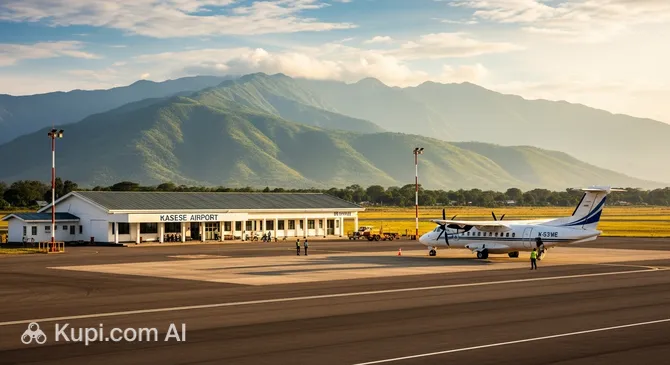
Kasese Airport. Source: Kupi.com Binoculars

Kasese Airport is not merely a transit point, but a true gateway to a world of wildlife and majestic mountains. Located at the foot of the legendary Rwenzori "Mountains of the Moon," this small airfield immerses travellers in the atmosphere of an African adventure from the very first minute. There is no bustle of huge international hubs here; instead, there is a sense of proximity to some of Uganda's most breathtaking national parks and sincere hospitality that begins right at the aircraft steps.

IATA Code KSE
ICAO Code HUKS
City Kasese
Distance to Centre ~3 km
Status Domestic (Regional)
Passengers per Year No official data publicly available
Schedule Please check with local airline websites

The airport possesses a number of unique features that make it an important point on the country's tourism map:

  • Ideal Starting Point: The airport is strategically located in the immediate vicinity of two iconic attractions — Queen Elizabeth National Park and the Rwenzori Mountains National Park. This allows tourists to get from the plane to the start of a safari or trek as quickly as possible.
  • Breathtaking Views: Since flights here are often operated by small aircraft, the flight turns into an excursion in itself. Upon approach, stunning panoramas of mountain ranges, crater lakes, and salt deposits open up.
  • Speed and Convenience: Thanks to the compact size of the terminal, all pre-flight and post-flight procedures take mere minutes. Passengers do not need to traverse kilometres of corridors — the exit to the city is literally two steps from the runway.
  • City Accessibility: The airfield is actually located within the city limits of Kasese. Reaching the centre or the nearest hotel is very quick and inexpensive by local taxi, eliminating long transfers after the flight.

Contact Information

Finding direct contacts for a small regional airport like Kasese Airport can be challenging. Most issues are resolved through the airlines operating flights or through the national civil aviation authority. Below is the main available information.

  • Official Website: Kasese Airport (KSE) is managed by the Uganda Civil Aviation Authority (UCAA). The airport does not have its own separate website. Information on the airfield's status may be available on the UCAA website, but for flight data, it is best to contact the air carriers directly.
  • Information Desk Phone: There is no direct public phone number for enquiries at Kasese Airport. For all questions regarding schedules, ticket bookings, and flight status, please contact your airline.
  • Airport Address: The airport is located near the city of Kasese, in the Western Region of Uganda.
  • Email: A dedicated email address for passenger enquiries is not published. It is recommended to use the communication channels provided by your airline.
  • Social Media: Kasese Airport does not have official pages on social networks.
  • Lost Luggage Information: If your luggage has been lost or damaged, you should immediately contact the Lost & Found service of the airline you flew with.
  • Passenger Support Contacts: Passenger support, including assistance for people with reduced mobility, flight check-in, and other services, is provided by airline staff.

Getting to the Airport

Getting to Kasese Airport (KSE) from the city centre of Kasese is quite simple, as it is located very close by. The trip from central districts usually takes no more than 15-25 minutes, depending on the chosen transport and traffic conditions. Travellers in this part of Uganda have access to both budget local options and more comfortable modes of transport.

For economical and adventurous travellers, local modes of transport will be the ideal choice. "Boda-boda" (motorcycle taxis) are the fastest and most popular way for short-distance trips, perfectly suited for a single person with a backpack. The cost of the trip is minimal, but do not forget about safety. Another cheap option is "matatu" minibuses. They travel along main roads but do not have a fixed schedule and are often overcrowded. This method allows you to experience the local atmosphere but requires a buffer of time.

If you value comfort and are travelling with luggage, it is better to choose a private taxi, which is called "special hire" here. This is significantly more expensive than a "boda-boda," and the price should always be negotiated before starting the trip. The most convenient and safe option is a pre-booked transfer. Many hotels and tour operators in the region offer this service. This is the best choice for tourists arriving in Kasese for the first time or travelling with family.

Car rental is an excellent idea for those planning to explore the surroundings independently, for example, Queen Elizabeth National Park or the Rwenzori Mountains. It is better to book a car in advance through one of the national or international rental companies. Directly at Kasese Airport, there is basic parking. It is quite suitable for leaving a car while waiting for a flight or for a longer period, although the level of service and security may be minimal.

When planning your route, it is also worth considering other air gateways in the region. The nearest Ugandan airfields, Kihihi (KHX) and Kisoro (KXO), serve as starting points for visiting Bwindi Impenetrable National Park. For most international travellers, the main hub is Kigali International Airport (KGL) in neighbouring Rwanda, from where a ground transfer to western Uganda can be organised. Other nearby options include Goma Airport (GOM) in the DR Congo and Bukoba Airport (BKZ) in Tanzania.

Terminals and Map

Kasese Airport (KSE) is a small regional airport serving the city of Kasese and its surroundings in Uganda. Its infrastructure is extremely simple and functional, which is typical for airports of this scale. There is only one small terminal here, which is used to handle all flights — both arrivals and departures. Thanks to this, navigating the airport is very easy, and you will not have to worry about complex transfers or finding the right gate.

The terminal layout is intuitive. Upon entering the building, you will immediately find yourself in the general hall where the check-in counters are located. The departure and arrival zones here are, in essence, parts of the same space. After check-in, passengers proceed to a small waiting area, from where boarding takes place. The arrival zone is also very simple: luggage is usually delivered directly to the main hall, where it can be quickly collected.

Check-in and security procedures at Kasese Airport generally proceed very quickly due to the low passenger flow. There are no long queues characteristic of large international hubs. Nevertheless, it is recommended to arrive at the airport approximately one hour before the departure of your domestic flight. This time will be more than sufficient to check in luggage, pass security control, and wait for boarding without rushing.

Navigating the terminal will not cause any difficulties even for an inexperienced traveller; it is practically impossible to get lost here. All key areas — the entrance, check-in counters, waiting lounge, and exit to the aircraft — are within walking distance of each other. If you have any questions, the small but friendly staff of the airport is always ready to help and point you in the right direction.

Airport History

Kasese Airport (KSE), located in the west of Uganda, has a history closely linked to the development of tourism and the region's economy. It was founded as a small airfield to serve local needs and, more importantly, to provide access to the natural treasures of this part of the country. Although the exact date of foundation is not widely known, its emergence was dictated by the need to connect the remote city of Kasese with the rest of the country, primarily to support the mining industry and nascent tourism in the second half of the 20th century.

A major stage in the airport's development was its modernisation, during which the dirt runway was replaced with an asphalt one. This key improvement allowed for the accommodation of larger turboprop aircraft, which significantly increased flight safety and capacity. Kasese Airport has never been a major international hub; its development has always focused on domestic air travel and charter flights delivering travellers to famous national parks.

The main achievement and an interesting fact in the airport's history is its role as the air gateway to two UNESCO World Heritage sites: Rwenzori Mountains National Park and Queen Elizabeth National Park. It is thanks to this small but strategically important airport that thousands of tourists have gained the opportunity to quickly and comfortably reach the starting points for trekking in the "Mountains of the Moon" and safaris. Today, the airport continues to play a crucial role in the tourism infrastructure of Western Uganda, remaining a vital link between the capital and unique natural attractions.

Services and Amenities

Kasese Airport (KSE) is a small regional airfield, serving mainly tourists heading to national parks in the west of Uganda. Due to its size and specific nature, the range of services here is quite basic and focused on meeting the essential needs of passengers before departure.

Restaurants, Cafés, and Shops: You will find a very limited selection at the airport. Usually, this is a small kiosk or counter where you can buy bottled water, soft drinks, and light snacks. Full-service restaurants and shops, including Duty Free, are absent. It is recommended to have everything you need with you or to have a meal before arriving at the airport.

Waiting Lounges and Wi-Fi: A general waiting hall is available to passengers. Specialised VIP lounges or business lounges are not provided. Access to Wi-Fi may be unstable or non-existent, so it is better to rely on mobile data. The number of power outlets for charging devices is also extremely limited, so it is worth bringing a portable power bank.

Financial and Medical Services: There are no bank branches, ATMs, or currency exchange points within the airport terminal. All financial transactions, including currency exchange, should be done in advance in the city of Kasese or other large settlements. Medical services are limited to a basic first aid kit. In emergencies, staff will call an ambulance from the city.

Additional Amenities: Special services for passengers with children, such as play areas or mother-and-child rooms, are absent. Passengers with reduced mobility are advised to notify their airline in advance of the need for assistance so that airport staff can provide support during boarding and disembarking. There are no hotels directly on the airport grounds, however, many hotels and lodges are located in Kasese city itself and near the national parks. Business centres and conference rooms are not provided at the airport.

Dining

When planning your journey through Kasese Airport (KSE), it is important to understand that this is a small regional airport serving mainly tourists heading to the national parks of Uganda. Consequently, the infrastructure, including food outlets, is quite modest and not comparable to large international hubs.

Typically, one small kiosk or café operates within the terminal building. Here you can purchase basic beverages, such as bottled water and carbonated drinks, as well as packaged snacks — crisps, biscuits, or nuts. Sometimes the assortment may include simple local snacks, for example, samosas or roasted peanuts. This is sufficient for a quick snack before departure, but not for a full meal.

The selection of dishes for passengers with specific dietary requirements (vegetarian, vegan, gluten-free, or Halal) is practically non-existent. If you have strict dietary restrictions, it is strongly recommended to bring food with you.

For those who wish to have a proper meal, the best solution is to do so at one of the cafés or restaurants in the city of Kasese before arriving at the airport. Do not count on a wide selection or 24-hour operation of establishments at the airport itself — they are usually open only during hours tied to the flight schedule.

Travel Tips

Travelling through a regional airport like Kasese Airport has its own specificities. By following these simple tips, you can make your trip as comfortable as possible and avoid unpleasant surprises.

Arrival Time at the Airport: Although the airport in Kasese is small and large crowds are rare, it is recommended to arrive at least 1.5–2 hours before the departure of your domestic flight. This time will be sufficient to complete all formalities without rushing.

Check-in and Security: Check-in and security screening procedures here usually proceed significantly faster than at major international airports. However, always keep your passport, visa (if required), and ticket ready. This will help speed up the process.

Seat Selection: Flights from Kasese are often operated by small turboprop aircraft. If you want to enjoy stunning views of the Rwenzori Mountains or Queen Elizabeth National Park, which are located nearby, try to get a window seat. The views during take-off and landing can be truly impressive.

Hand Luggage: Rules for carrying hand luggage are standard: liquids in containers of no more than 100 ml, packed in a transparent bag; no sharp objects or flammable substances. Always check the exact allowances and restrictions on your airline's website, as they may differ.

Connecting Passengers: Kasese Airport mainly serves direct domestic flights. If you have a transfer planned at another airport in Uganda, check with the air carrier in advance whether your luggage will be automatically transferred to the next flight or if you will need to collect it and check it in again.

Customs Control: This procedure is relevant only for those arriving on an international flight (which is a rarity for this airport). When travelling within the country, there is no need to pass customs control.

How to Save Time and Money:

  • If possible, complete online check-in for your flight.
  • To avoid paying for excess weight, weigh your luggage at home and pack only the essentials.
  • The choice of food and drinks at the airport may be limited and expensive. Bring a small snack and an empty water bottle, which can be filled after security screening.

If Your Flight is Delayed: In case of a flight delay, immediately contact a representative of your airline for information about the new departure time or possible alternatives. Since the waiting area in a small airport may be modest, download films, music, or books to your devices in advance to pass the time.

Reached the end of the page?

That means the route is fully explored